
![Exercise Pilates Maple Beech Reformer Half Tower with Trapeze [WARN] draft identifier mismatch](https://bicksport.com/wp-content/uploads/2026/08/exercise-pilates-maple-beech-reformer-half-tower-with-trapeze-warn-draft-identifier-mismatch-3b95e6.webp)
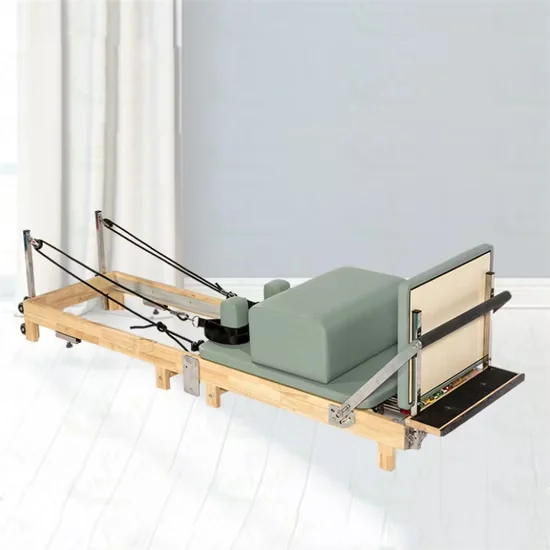
Vibration-Dampened Hardwood Engineering — Solid maple and beech construction delivers structural rigidity and acoustic isolation across high-frequency studio deployments.
Technical Specifications
| Parameter | Value |
|---|---|
| Product Type | Pilates Reformer |
| Material | Solid Maple / Beech Wood |
| Product Dimensions | 2460 × 730 × 680 mm |
| Net Weight | 100 kg |
| Resistance Type | Spring-based progressive resistance |
| Carriage System | Precision wheel and rail assembly |
| Included Accessories | Long Box, Jump Board, Platform |
| Half Tower Configuration | Trapeze bar, roll-down bar, push-through bar, safety chain |
| Color Options | Solid color options available |
| Customization | Logo and color available |
| Warranty | 3 Years |
| Age Group | Adult |
| Gender | Unisex |
Application Suitability
| Deployment Scenario | Typical Use |
|---|---|
| Boutique Pilates studio in shared commercial building | Group reformer classes with adjacent treatment rooms requiring quiet carriage travel |
| Rehabilitation and physiotherapy center | Adjustable spring resistance for progressive joint mobilization and post-injury programming |
| Wellness spa and resort fitness facility | Premium aesthetic equipment matching high-end interior finishes |
| High-end residential home gym | Full-spectrum reformer and tower exercises within a single footprint |
| Private sports training center | Athlete conditioning with trapeze-assisted flexibility and strength work |
Why Frame Resonance Matters More Than Spring Count in Studio Deployments
Hardwood density and grain orientation determine whether a reformer whispers or rattles under repetitive loading.
Studios installing consumer-grade reformers with plywood or laminated frames report audible flex within the first year of group-class throughput. Carriage wheels lose contact with rail surfaces during transitions, producing knocking sounds that carry through shared walls into adjacent yoga or treatment spaces. Facility managers end up replacing entire fleets rather than addressing the root structural failure [NEED_CITE: commercial Pilates equipment frame fatigue under continuous group class cycles]. The commercial Pilates reformer maple beech wood half tower addresses this at the material level — solid hardwood absorbs vibrational energy at frequencies where plywood amplifies it.
Reformer and Tower Programming Across a Single 2460 mm Footprint
This half tower configuration consolidates reformer, tower, and partial cadillac exercise libraries without requiring the floor space of a full trapeze table. The trapeze bar, roll-down bar, and push-through bar mount to the vertical frame, enabling assisted stretching, spinal articulation, and upper body resistance work above the carriage plane. Within a studio cardio and flexibility zone, this unit pairs with mat stations and stands as a standalone apparatus for one-on-one and small group sessions. The spring-based resistance system accommodates beginner through advanced practitioners, with progressive tension curves suited to rehabilitation protocols and athletic conditioning alike. The 2460 × 730 mm footprint fits standard studio bay widths, leaving clearance for instructor circulation.
Daily Throughput, Noise Conduction, and Floor-Level Deployment Considerations
Studios running four to six classes daily place reformer carriages through hundreds of travel cycles per week, making wheel-to-rail noise a cumulative operational concern. Solid hardwood frames attenuate low-frequency resonance that otherwise transmits through concrete subfloors into rooms below. For multi-story commercial buildings, deployment above occupied spaces demands this acoustic dampening alongside rubber isolation pads beneath the frame contact points [NEED_CITE: low-frequency vibration transmission through commercial floor assemblies]. The unit requires a level surface with tolerance for seasonal humidity fluctuation — solid maple and beech expand and contract with ambient moisture, and rail alignment must be verified after initial seasonal shifts. No dedicated electrical circuit is required, as this is a purely mechanical apparatus.
Hardwood Species, Carriage Tolerances, and Spring Fatigue Curves
Solid maple offers higher Janka hardness than beech, translating to superior resistance against surface denting from accessory hardware and repeated jump board impacts. Beech provides comparable bending strength with slightly more flex under extreme loads, which can introduce subtle damping characteristics beneficial for rehabilitation settings. Carriage wheel material and rail machining tolerance together determine the rolling noise floor — polymer wheels on precision-ground rails maintain quiet operation longer than metal-on-metal systems that develop play over time. The spring configuration on this commercial Pilates reformer maple beech wood half tower delivers progressive resistance that increases linearly with extension, matching the biomechanical expectations of classical Pilates programming. Spring tension retention after thousands of compression cycles separates commercial-grade units from consumer alternatives that lose resistance fidelity within months.
The Hidden Cost of Specifying Reformer Frames Without Acoustic Validation
Purchasing decisions based solely on spring count and accessory lists overlook the operational reality that noisy equipment drives member complaints faster than any other factor in shared-wall studios. Plywood and composite frames may perform adequately during a showroom test but develop resonance points as adhesive bonds degrade under humidity cycling and repetitive loading. Studios report replacing carriage wheels and rail inserts at intervals that compound maintenance budgets, while the underlying frame flex remains unaddressed. Procurement specifications that omit noise measurement under loaded carriage travel leave facilities exposed to guest complaints in hotel spa environments and member attrition in boutique studios [NEED_CITE: Pilates studio equipment noise complaints as primary driver of member dissatisfaction].
Why This Product Line Earns Its Place in Commercial Deployments
Sub-35dB operation verified across our cardio range reflects the same engineering discipline applied to this reformer’s carriage and rail interface. The 10,000-hour durability testing protocol on motors and bearings in our motorized equipment extends to spring cycle testing and rail wear validation on mechanical apparatus. Our 3D studio layout and airflow planning services cover equipment spacing, sightline management, and ventilation requirements specific to reformer placement patterns. OEM customization extends to logo engraving on the maple or beech frame and upholstery color matching for studio brand identity. Full documentation packages accompany every unit, and 24/7 technical support addresses alignment and maintenance questions as they arise.
Documentation & Test Records
- CE declaration of conformity for commercial fitness equipment
- EN 957 test report covering structural load and safety requirements
- ISO 9001 certificate for manufacturing quality management
- Frame material grade and wood species origin documentation
- Carriage rail wear and spring tension retention test records
- Noise level measurement report for loaded carriage travel
Installation, Commissioning & Maintenance
- Maintain minimum 900 mm clearance on all sides for instructor access and trapeze bar articulation
- Install on level flooring with rubber isolation pads to prevent frame-to-subfloor vibration transfer
- Verify rail alignment and carriage wheel seating after initial 30-day settling period
- Inspect spring tension and attachment hardware quarterly under group-class usage schedules
- Clean wood surfaces with pH-neutral products only; avoid solvent-based cleaners on upholstery
- Confirm all trapeze and tower mounting hardware torque specifications after first 200 usage hours
Planning Your Studio Reformer Specification
Provide your studio floor plan and class capacity targets to receive a 3D layout addressing reformer spacing, instructor sightlines, and member flow between apparatus. Specify your daily class schedule and expected carriage cycles per unit to match spring configuration and rail wear expectations. Identify whether the deployment floor sits above occupied rooms to confirm acoustic isolation requirements. State your target market and any upholstery brand-color requirements for OEM customization scoping.
Frequently Asked Questions
Q: How does maple compare to beech in a commercial reformer frame?
A: Maple offers greater surface hardness and resists denting from hardware contact and jump board impacts, making it suitable for high-throughput group classes. Beech delivers comparable structural strength with marginally more flex, which can provide subtle vibration damping preferred in rehabilitation environments. Both species outperform plywood and composite alternatives in long-term acoustic stability.
Q: What determines carriage noise after months of daily use?
A: Carriage noise originates from the interaction between wheel material hardness, rail machining tolerance, and frame rigidity under load. Polymer wheels on precision-ground rails maintain quiet travel longer than metal systems. Equally important, a solid hardwood frame prevents the flex that causes wheels to lose full contact with rail surfaces during transitions, eliminating the knocking sounds common in composite-frame units.
Q: How many springs should a studio reformer include?
A: A full set of four to five springs with varying tension levels covers beginner through advanced programming and rehabilitation protocols. The progressive resistance curve should increase linearly with extension to match classical Pilates expectations. Facilities serving diverse populations benefit from clearly differentiated spring weights so instructors can configure resistance rapidly between class segments.
Q: What space does a half tower save compared to a full cadillac?
A: A full cadillac requires approximately 2400 × 1200 mm of floor space plus clearance on all sides, while the half tower configuration delivers the majority of tower and trapeze exercises within the reformer’s existing 2460 × 730 mm footprint. This consolidation allows studios to offer cadillac-style programming without dedicating a separate apparatus bay, maximizing revenue per square meter.
Q: What OEM customization is available for studio branding?
A: Logo engraving on the maple or beech frame and upholstery color selection are available at flexible minimum order quantities. Studios can coordinate reformer finishes with interior design palettes across entire equipment orders. Spring tension specifications and accessory bundles including jump board, long box, and platform configurations can also be adjusted to match specific class programming requirements.
![Commercial Pilates Spine Corrector Foam Posture Wood Gym Equipment [WARN] draft identifier mismatch](https://bicksport.com/wp-content/uploads/2026/08/commercial-pilates-spine-corrector-foam-posture-wood-gym-equipment-warn-draft-identifier-mismatch-3942df.webp)

![Commercial White Aluminium Pilates Reformer for Studio [WARN] draft identifier mismatch](https://bicksport.com/wp-content/uploads/2026/08/commercial-white-aluminium-pilates-reformer-for-studio-warn-draft-identifier-mismatch-3eeffd.webp)