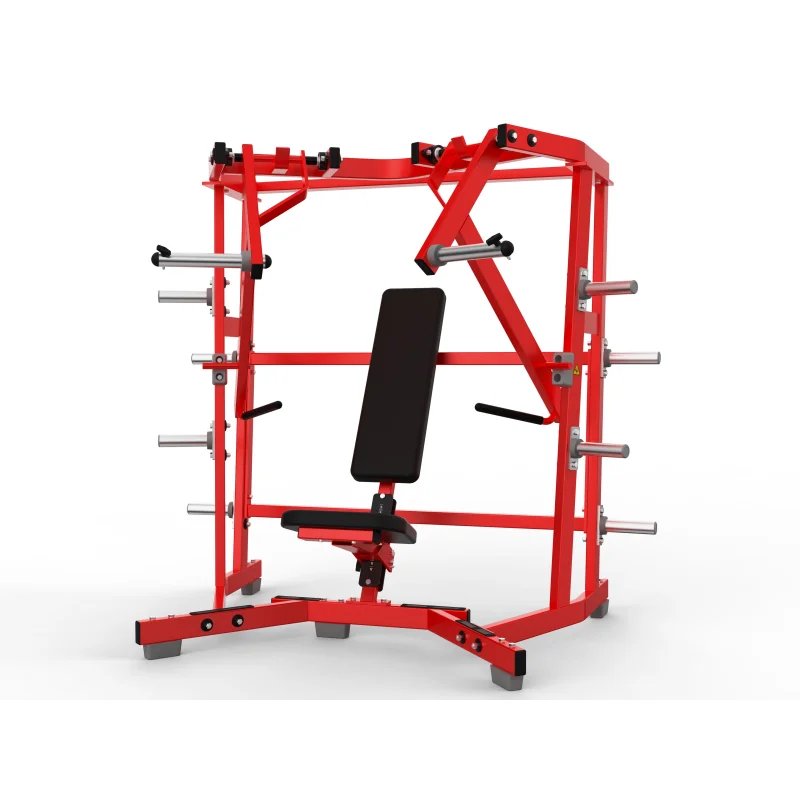
![Commercial Wrist Curl Machine Manual Steel Frame for Gym & Community Centers [WARN] draft identifier mismatch](https://bicksport.com/wp-content/uploads/2026/08/commercial-wrist-curl-machine-manual-steel-frame-for-gym-community-centers-warn-draft-identifier-mismatch-c62ad7.webp)
Silent Mechanical Operation — The 36 kg steel frame and manual resistance system eliminate motor noise entirely, keeping strength zones quiet enough for shared commercial floors.
Technical Specifications
| Parameter | Value |
|---|---|
| Product Type | Wrist Curl Machine |
| Power Source | Manual |
| Resistance Type | Manual mechanical |
| Frame Material | Steel |
| Product Dimensions | 562 × 1037 × 443 mm |
| Net Weight | 36 kg |
| Max User Weight | Not specified |
| Foldable | No |
| Certification | ISO 9001, CE |
| Customization | Available (color, branding) |
| Production Capacity | 500 units per month |
Application Suitability
| Deployment Scenario | Typical Use |
|---|---|
| Commercial gym strength zone | Forearm isolation work between compound lifts |
| Community fitness center | High-traffic forearm station for general membership |
| Corporate wellness room | Compact manual station requiring zero electrical circuits |
| Hotel fitness center | Low-maintenance forearm trainer alongside cardio and free weights |
| Sports performance training center | Grip and wrist conditioning for athletes |
Why a Manual Commercial Wrist Curl Machine Avoids the Motor Burnout Cycle
No motor means no motor failure, no wiring inspection, and no electrical circuit requirement.
Facilities that fill their strength zones with motorized cable stations eventually face the same conversation: units pulled from the floor one by one for rewinding or board replacement. A manual commercial wrist curl machine removes the entire failure chain. There is no continuous duty cycle to monitor, no thermal cutoff tripping during peak hours, and no voltage fluctuation risk when the facility shares a grid with heavy HVAC loads [NEED_CITE: motor failure rates in commercial resistance equipment]. The 36 kg steel frame anchors the unit during repeated loading without relying on electromagnetic braking or servo-driven resistance. Maintenance drops to pivot-point lubrication and visual weld inspection, tasks that fit into existing floor-check routines.
Where This Wrist Curl Machine Fits in a Commercial Strength Layout
Forearm isolation occupies a specific niche: it complements compound pulling movements and grip-heavy circuits without duplicating the loading pattern of deadlifts or rows. Placed at the end of a free-weight row or beside a cable crossover, this commercial wrist curl machine catches members who would otherwise skip forearm work or improvise with dumbbells on a flat bench. The 562 × 1037 × 443 mm footprint means the unit slots into gaps that cannot accommodate a full cable stack, making it practical for community fitness centers where every square meter earns its place. The fixed movement path suits users across a wide strength range because the manual resistance system lets each person load plates or apply bodyweight incrementally.
What Continuous High-Frequency Use Demands from a Manual Station
A community gym or commercial facility runs strength equipment for twelve or more hours daily with no cool-down period between users. The welded steel frame on this unit bears repetitive eccentric loading without the thermal stress that shortens the life of electromagnetic resistance units [NEED_CITE: EN 957 fatigue testing for static strength equipment]. Because the system draws zero current, deployment does not require dedicated circuits or voltage regulation, which simplifies installation on upper hotel floors or retrofitted wellness rooms where electrical upgrades carry high cost. Floor leveling and a rubber isolation pad beneath the 562 × 1037 mm base keep the frame square under load, preventing uneven pivot wear. Routine maintenance consists of checking pivot bolts and applying grease to the fulcrum at intervals dictated by actual usage volume rather than a calendar schedule.
Manual Resistance Versus Electromagnetic Systems in Forearm Training
The manual power source on this commercial wrist curl machine delivers resistance through mechanical leverage rather than eddy-current braking or motor-driven cams. That distinction matters for noise: electromagnetic resistance units generate a low-frequency hum that compounds across a room of ten or more stations, while a purely mechanical system operates at the sound level of plates clicking and pivots turning. The steel frame mass at 36 kg provides the inertial stability that lighter frames achieve only by bolting to the floor. Pivot bearings carry the full load path, so their specification and sealing quality determine service intervals. The manual system also means resistance scales directly with user-applied force, giving trainers and athletes fine control over loading increments that fixed-weight electromagnetic systems cannot match without expensive variable-resistance upgrades.
The Hidden Cost of Underspecifying Forearm Stations
Purchasing lightweight forearm trainers built on tubular frames with thin-gauge steel often seems like a budget-friendly choice until the welds crack under daily commercial loading. Units built below 30 kg tend to shift during heavy sets, forcing facilities to bolt every station to the floor or accept wobble complaints from members. When electromagnetic resistance boards fail on motorized cable units, the replacement cycle pulls technicians away from higher-priority cardio and functional equipment. Data from facility operators consistently shows that the total cost of replacing underspecified stations within eighteen months exceeds the upfront price difference of commercial-grade manual equipment [NEED_CITE: total cost of ownership for commercial gym strength stations]. The 36 kg steel construction on this unit is designed to stay on the floor and stay functional across years of continuous rotation.
Why This Product Line Addresses Deployment Pain Points
The ISO 9001-certified manufacturing process behind this commercial wrist curl machine covers frame welding, pivot machining, and load testing in a vertically integrated facility. The CE declaration confirms compliance with European safety directives, which simplifies procurement for buyers operating under EN 957 standards [NEED_CITE: EN 957 requirements for commercial strength training equipment]. OEM customization extends to frame color and branding so that chain operators can maintain visual consistency across locations. The compact footprint lets planners fit forearm stations into cardio-zone perimeters or free-weight gaps identified during 3D layout planning, and the manual system means zero additional electrical load on the facility grid. Technical support and spare parts availability are structured around the realities of commercial gym maintenance schedules, not consumer product warranty cycles.
Documentation & Test Records
- CE declaration of conformity covering structural and mechanical safety requirements
- EN 957 test report validating static and cyclic load performance
- ISO 9001 certificate for the manufacturing quality management system
- Steel material specification sheet with weld inspection records
- Installation and commissioning guide with floor leveling and clearance specifications
- Spare parts list covering pivot bearings, bushings, and frame hardware
Installation, Commissioning & Maintenance
- Maintain at least 600 mm clearance on all sides of the 562 × 1037 mm base for safe loading access
- Place on a leveled surface with a rubber isolation pad to protect the steel frame base from moisture and vibration
- No dedicated electrical circuit required; the manual power source eliminates wiring and voltage checks
- Inspect pivot bolts and fulcrum bearings during initial commissioning and recheck after the first 500 use cycles
- Apply lithium grease to the pivot assembly at intervals based on observed usage volume and environmental humidity
- Wipe the steel frame daily with a pH-neutral cleaner to prevent sweat corrosion on welded joints
Planning Your Strength Zone Inquiry
Provide the total strength-zone area and planned equipment count to receive a 3D layout that shows where this commercial wrist curl machine fits alongside cable stations and free-weight racks. Specify the deployment floor and adjacent spaces so that structural load and noise transfer can be evaluated together. Confirm the target market and any regional compliance requirements beyond CE and ISO 9001. Indicate whether OEM color or branding customization is needed to match existing facility standards.
Frequently Asked Questions
Q: How does manual resistance compare to weight-stack resistance for wrist curl training?
A: Manual resistance lets the user control loading incrementally through applied force or added plates, offering finer progression than fixed weight stacks. Weight stacks provide convenient pin-selected loading but require cable and pulley maintenance. For high-traffic facilities, the manual system on this commercial wrist curl machine eliminates cable wear and pulley bearing replacements, reducing long-term service intervals while maintaining the same forearm isolation stimulus.
Q: What structural features make this frame suitable for continuous commercial use?
A: The 36 kg steel frame and welded construction provide the mass and rigidity needed to resist shifting under repetitive loading. Commercial-grade pivot bearings carry the full load path, and the ISO 9001 manufacturing process includes weld inspection and cyclic load testing. This combination is designed to withstand daily use across hundreds of training sessions without frame deformation or pivot loosening.
Q: How should I plan floor space when integrating this unit into a strength zone layout?
A: The 562 × 1037 × 443 mm footprint allows placement in gaps between larger stations or along perimeter walls. Maintain at least 600 mm of clearance on each side for safe plate loading and user access. When planning a 3D strength-zone layout, position the unit near free-weight areas where members already handle plates, reducing cross-traffic congestion.
Q: What does daily maintenance involve for a manual wrist curl station?
A: Daily care centers on wiping the steel frame with a pH-neutral cleaner to remove sweat residue and prevent corrosion at weld points. Pivot bolt torque checks and fulcrum bearing lubrication follow usage-based intervals rather than fixed schedules. Because there is no motor, circuit board, or cable system, the maintenance checklist stays short and fits into standard floor-walk routines.
Q: What OEM customization is available for this commercial wrist curl machine?
A: Frame color, logo placement, and pad material can be customized to match facility branding. Customization scoping happens during the quotation stage after the buyer specifies target quantities and visual requirements. The ISO 9001 production process accommodates these variations while maintaining the structural testing standards applied to the base configuration.