Whisper-Quiet Deployment — SR-1003B maintains sub-35dB operation verified across hotel fitness floors where guest comfort is non-negotiable.
Technical Specifications
| Parameter | Value |
|---|---|
| Designation | SR-1003B |
| Product Type | Commercial Treadmill |
| Maximum Speed | 15-22 km/h |
| Console Type | LED |
| Running Surface | Commercial-grade deck |
| Max User Weight | 180 kg |
| Product Dimensions | 2300 × 1000 × 1850 mm |
| Foldable | Unfolded |
| Certification | CE, RoHS |
| Power Requirement | Standard commercial AC |
Application Suitability
| Deployment Scenario | Typical Use |
|---|---|
| Hotel fitness center on guest room floors | 24-hour self-service cardio with strict noise limits |
| Chain gym cardio zone | High-frequency member turnover during peak hours |
| Corporate wellness room | Moderate daily use across employee shifts |
| High-end residential home gym | Daily personal training and steady-state sessions |
| Sports performance training center | Interval programming with biometric monitoring |
What Peak Horsepower Hides About Continuous Duty in a Commercial Treadmill
Continuous-duty motor ratings determine whether a commercial treadmill LED console SR-1003B survives its first year in a high-traffic facility.
Facility managers who spec treadmills based on peak horsepower figures often discover the truth six months in. A motor rated for intermittent sprint intervals cannot sustain the thermal load of back-to-back users in a hotel gym operating around the clock. The failures do not arrive with dramatic breakdowns — they show up as thermal cutouts during the afternoon rush, then progress to winding insulation damage that voids warranties classified as light-commercial duty [NEED_CITE: motor duty cycle classification for continuous commercial operation]. The SR-1003B addresses this by engineering the motor and drive system for continuous occupancy cycles, which is the only rating that matters when your cardio floor never closes.
How the SR-1003B Fits Into a Mixed Cardio Floor
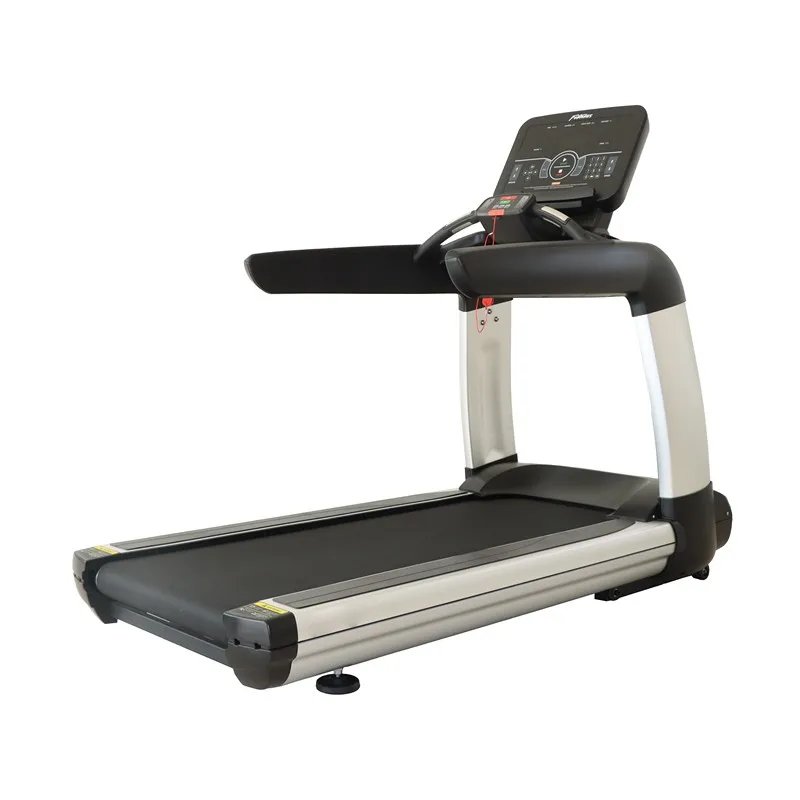
The SR-1003B occupies the steady-state and interval training position in a commercial cardio layout. It pairs naturally with ellipticals and rowing machines to distribute impact loading across different movement patterns, and its unfolded frame demands dedicated floor space that anchors a cardio zone’s primary aisle. The machine accommodates users up to 180 kg, covering the full spectrum of member body types without structural compromise. The LED console delivers essential workout data — speed, distance, time, heart rate — giving trainers the feedback they need without the complexity overhead of touchscreen systems. This commercial treadmill LED console SR-1003B configuration suits facilities that prioritize reliability and straightforward operation over entertainment features.
Continuous Operation and Floor-Level Deployment Requirements
A treadmill in a hotel fitness center on an upper guest room floor faces two simultaneous demands: it must run for extended daily periods without thermal degradation, and it must do so without transmitting structure-borne vibration to occupied rooms below. The SR-1003B’s sub-35dB verified noise level addresses the acoustic side, but deployment still requires attention to floor isolation pads, level subflooring, and dedicated electrical circuits that prevent voltage sag when multiple units start simultaneously [NEED_CITE: EN 957 requirements for commercial cardio equipment]. Ventilation clearance around the motor housing must be maintained to sustain continuous-duty operation, particularly in enclosed wellness rooms where ambient temperature rises throughout the day. Facilities planning deployment above occupied spaces should confirm structural damping capacity with the 3D layout service before committing to a unit count.
Reading the Motor and Drive Specifications Correctly
The distinction between peak and continuous horsepower is the single most consequential specification on any treadmill data sheet. Peak horsepower measures the motor’s momentary output during acceleration surges, while continuous horsepower reflects sustained thermal capacity under steady load — a commercial treadmill LED console SR-1003B must be evaluated on the latter for facility procurement decisions. The AC motor architecture in commercial-grade units handles continuous thermal loading differently than the DC motors found in residential equipment, maintaining torque consistency across hours of operation rather than minutes. The unfolded steel frame construction eliminates the hinge points and folding mechanisms that become wear items under heavy use, trading floor-space flexibility for structural permanence. LED console technology prioritizes readability and component longevity over the feature density of capacitive touchscreens, which is the correct trade-off for facilities where maintenance simplicity directly affects equipment uptime. Heart rate monitoring through grip sensors provides adequate accuracy for steady-state programming, though facilities running structured HIIT classes may supplement with chest-strap telemetry [NEED_CITE: heart rate measurement accuracy standards in commercial fitness equipment].
The Hidden Cost of Specification Compromises
Purchasing decisions based on peak horsepower ratings and light-commercial duty cycles produce predictable outcomes in high-traffic environments. Motors designed for two hours of daily residential use enter thermal shutdown when subjected to continuous hotel gym demand, and the replacement cycle erodes any initial procurement savings within the first operational year. Noise levels that seem acceptable in a showroom become guest complaints when transmitted through floor *esale replacement after the property has already absorbed installation costs. Consoles that lack data output capabilities leave facility operators blind to utilization patterns, preventing evidence-based decisions about equipment rotation, maintenance scheduling, and capacity planning [NEED_CITE: facility utilization data and equipment lifecycle management]. The SR-1003B avoids these failure modes by specifying for continuous commercial operation from the motor through the console interface.
Why This Product Line for Your Cardio Zone
Every SR-1003B deployment benefits from noise-level verification conducted in environments comparable to hotel guest floors, ensuring the sub-35dB claim holds under real structural conditions rather than anechoic chamber measurements. The motor, frame, and bearing assemblies undergo 10,000-hour continuous operation testing that mirrors the duty cycles of 24-hour fitness facilities. The six-series cardio family means your procurement can source treadmills, bikes, ellipticals, rowers, stair climbers, and spinning bikes from a single engineering platform with matched lead times. OEM customization extends to console UI configuration, so the LED display can reflect facility branding without aftermarket modification. The complimentary 3D cardio-zone layout service addresses this treadmill’s specific footprint and clearance requirements alongside airflow planning for the entire room. Post-installation technical support operates on a 24/7 cycle, which matters when a unit goes down during a hotel’s overnight shift.
Documentation & Test Records
- CE declaration of conformity for SR-1003B commercial treadmill
- EN 957 safety and performance test report
- ISO 9001 quality management system certificate
- RoHS compliance documentation for electronic components
- Noise level test report with sub-35dB verification
- Motor specification sheet with continuous duty rating
- LED console technical documentation and data output reference
Installation, Commissioning & Maintenance
- Maintain minimum clearance around the 2300 × 1000 mm footprint for user safety and motor ventilation
- Install vibration isolation pads beneath the unfolded frame to mitigate structure-borne noise transmission
- Connect to a dedicated commercial AC circuit to prevent voltage drop during simultaneous motor starts
- Calibrate belt alignment and tension during initial commissioning before releasing the unit to members
- Schedule belt lubrication and deck inspection based on measured usage hours from the LED console
- Clean LED console surface and handrails daily to prevent sweat corrosion on electronic contacts
Request a Deployment Assessment
Provide your cardio zone square footage and planned unit count to receive a 3D layout that accounts for the SR-1003B’s footprint, member flow paths, and HVAC airflow requirements. Specify your daily operational hours so the motor duty cycle can be validated against continuous-use ratings. Identify the deployment floor and any occupied spaces directly below to confirm acoustic isolation requirements. State your target market voltage standards to ensure power supply compatibility before production begins.
Frequently Asked Questions
Q: What is the difference between continuous duty and peak motor power for commercial treadmills?
A: Peak motor power measures the maximum output a motor can produce during brief acceleration surges, while continuous duty reflects the sustained thermal capacity under steady-state loading. For commercial treadmill LED console SR-1003B deployment in high-traffic facilities, continuous duty is the only relevant specification because it determines whether the motor survives eight or more hours of back-to-back use without thermal degradation or insulation failure.
Q: How does the LED console support workout tracking and data collection?
A: The LED console on the SR-1003B displays core workout metrics including speed, distance, elapsed time, and heart rate readings from grip sensors. The LED technology prioritizes component longevity and readability under varied lighting conditions, which is the appropriate trade-off for commercial environments where maintenance simplicity and consistent visibility matter more than entertainment features or capacitive touch responsiveness.
Q: What noise level considerations apply when installing treadmills in hotel fitness centers?
A: Treadmills deployed on hotel guest room floors must operate below the threshold where structure-borne vibration and airborne noise penetrate adjacent occupied spaces. The SR-1003B achieves sub-35dB verified operation through magnetic drive and cushioned deck systems, but proper deployment also requires vibration isolation pads, level subflooring, and adequate clearance around the motor housing to maintain acoustic performance under continuous operation.
Q: How does the unfolded commercial frame design enhance stability and durability?
A: The unfolded frame eliminates hinge mechanisms and folding joints that become wear points under high-frequency commercial use. This permanent structural configuration distributes dynamic loads across a continuous steel frame, providing consistent running surface stability regardless of user weight up to the 180 kg maximum. The trade-off is dedicated floor space allocation, which is the correct exchange for facilities prioritizing equipment longevity.
Q: What maintenance requirements ensure long-term performance in high-traffic environments?
A: Maintenance for the SR-1003B centers on belt lubrication cycles, deck surface inspection, motor ventilation clearance verification, and LED console contact cleaning. Scheduling should be based on accumulated usage hours tracked through the console rather than calendar intervals, ensuring that units in high-volume facilities receive attention proportional to actual wear rather than arbitrary timelines that either over-service or under-service the equipment.
![Good Shock Absorption Mt296 Home Motorized Treadmill for Muscle Building Mt296 Home Motorized Treadmill with Good Shock Absorption for Muscle Building [WARN] draft identifier mismatch](https://bicksport.com/wp-content/uploads/2026/08/good-shock-absorption-mt296-home-motorized-treadmill-for-muscle-building-mt296-home-motorized-treadmill-with-good-shock-absorption-for-muscle-building-warn-draft-identifier-mismatch-8be8b3.webp)