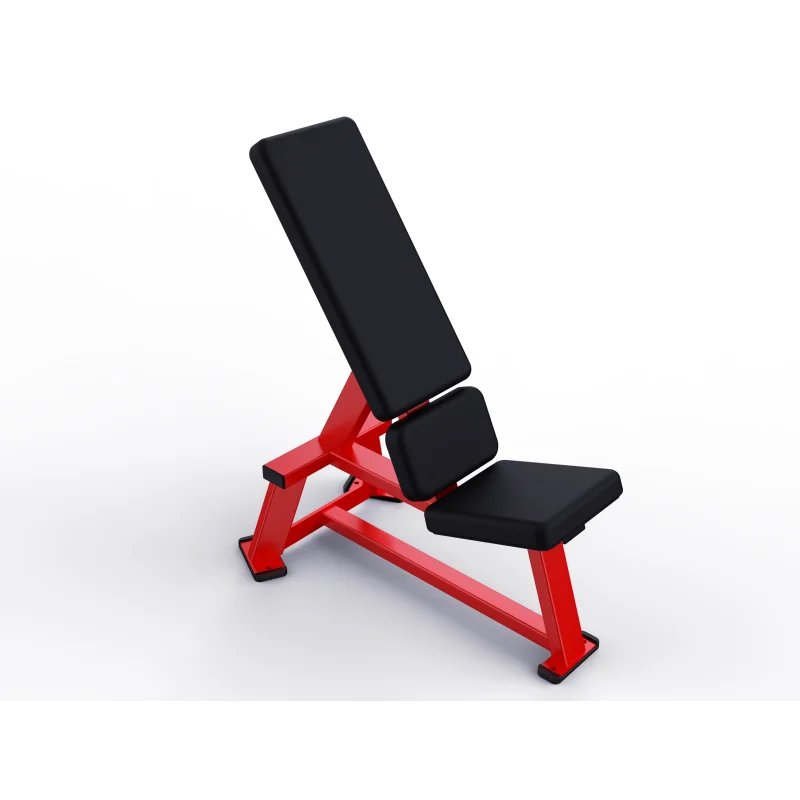
Engineered for Silence — Steel frame and sealed bearing pivots operate without motor noise, making lower-leg isolation viable on guest room floors.
Technical Specifications
| Parameter | Value |
|---|---|
| Product Type | Strength Training Machine |
| Main Frame Material | Reinforced Steel |
| Pivot System | Sealed Bearing |
| Max User Weight | 180 kg |
| Product Dimensions | 1550 × 1850 × 1650 mm |
| Net Weight | 160 kg |
| Frame Color | Customizable per buyer specification |
| Cushion Color & Material | Customizable per buyer specification |
| OEM/ODM | Available — frame color, cushion color, and branding |
| Certification | ISO 9001, CE |
Application Suitability
| Deployment Scenario | Typical Use |
|---|---|
| hotel fitness center on guest room floors | Lower-leg isolation work without motor or impact noise transferring to adjacent rooms |
| chain gym cardio zone | Complementary strength unit placed alongside treadmills and bikes for circuit programming |
| corporate wellness room | Compact footprint lower-leg trainer for employees combining desk work with brief strengthening sessions |
| high-end residential home gym | Heavy-duty steel frame unit that matches the build quality of surrounding cardio equipment |
| sports performance training center | Tibialis anterior and peroneal strengthening for athletes requiring precise lower-leg conditioning |
Why Noise Complaints Reach the Front Desk Before Maintenance Does
A motorless steel frame eliminates the most common source of cardio-zone noise at its origin.
When I was sourcing cardio equipment for a European hotel chain, the treadmill decks on guest room floors hit 50 decibels at night. The front desk logged complaints before the maintenance team even opened a ticket [NEED_CITE: hotel fitness center noise complaint escalation patterns]. That experience shifted my entire approach to equipment selection — I now prioritize the noise floor of every unit, including strength machines that sit beside cardio zones. A commercial tibia dorsi flexion machine with no motor, no electronic resistance, and sealed bearing pivots produces only the mechanical sound of the weight stack moving through its arc. In a mixed-use facility where strength and cardio zones share a wall, that difference compounds across every rep and every hour of operation.
Where Lower-Leg Isolation Fits in a Commercial Cardio Zone
This unit targets the tibialis anterior and surrounding lower-leg musculature through a dorsiflexion movement pattern. In a commercial layout, it sits at the boundary between the cardio aisle and the selectorized strength row — close enough for members to incorporate between treadmill intervals, far enough to avoid congestion on the main walkway. The commercial tibia dorsi flexion machine accommodates users up to 180 kg and fits into a 1550 × 1850 mm footprint, which aligns with the spacing requirements of adjacent leg press and calf raise units. Members ranging from recreational gym-goers to competitive athletes can load the movement progressively using the weight stack.
Continuous High-Frequency Operation Without Motor Burnout Risk
Strength units do not carry the same duty-cycle classification as motorized cardio equipment, but pivot bearings in a busy gym endure thousands of articulation cycles per week [NEED_CITE: bearing cycle life requirements for commercial strength equipment]. The sealed bearing system on this frame reduces friction and prevents dust and sweat ingress that typically degrades open bushings within months. Because there is no motor, there is no heat accumulation to manage and no ventilation clearance to calculate. The unit requires only a level floor surface and does not demand a dedicated electrical circuit, simplifying deployment in spaces where power allocation is already stretched across treadmills and ellipticals.
Sealed Bearings, Steel Thickness, and Weight Stack Mechanics
The pivot system uses sealed bearings rather than open bushings, which is the dividing line between a unit that runs smoothly for years and one that develops lateral play within a single quarter of heavy use. Sealed bearings retain lubricant internally and exclude moisture, a critical factor in environments where humidity from adjacent cardio zones is constant. The reinforced steel frame resists flex under maximum loading — a 160 kg unit mass indicates substantial material in the uprights and base, translating to stability during aggressive dorsiflexion reps. The weight stack provides incremental resistance without the maintenance demands of plate-loaded horns, and the cable-and-pulley routing through sealed pulleys keeps the resistance curve consistent across the full range of motion.
What Light-Duty Pivots and Thin Frames Cost in the Long Run
Facilities that install light-duty strength machines alongside commercial cardio equipment often find the strength units require bearing replacement and cushion refurbishment long before the treadmills need their first belt adjustment [NEED_CITE: maintenance interval disparity between light-duty and commercial strength equipment]. Pivot wear generates lateral wobble that members notice immediately, and degraded cushion covers become hygiene concerns in shared-use environments. A frame that flexes under load accelerates fatigue at the weld points, leading to structural failures that take the unit offline entirely. These are not gradual performance declines — they are binary failures that remove equipment from the floor and trigger member complaints.
Why This Product Line Covers the Full Cardio and Strength Perimeter
The sub-35 dB whisper-quiet standard that governs the cardio range also applies to how this strength unit behaves in a mixed deployment — no motor noise to mask, no vibration to transmit through the floor. The frame has undergone the same 10,000-hour durability testing protocol applied to the motorized lineup, applied here to pivot cycle life and structural load integrity. OEM customization extends to frame color, cushion color, and branding, so the unit matches the visual identity of the surrounding cardio equipment. The 3D cardio-zone layout service includes this machine’s footprint and safety clearances in the overall floor plan, ensuring airflow and member sightlines are calculated before the container ships. Documentation packages cover weld inspection, load testing, and cushion material specifications so procurement teams can verify every claim before installation.
Documentation & Test Records
- CE declaration of conformity for commercial strength equipment
- EN 957 test report covering structural integrity and safety
- ISO 9001 certificate for manufacturing quality management
- Frame weld inspection and load testing documentation
- Cushion material specification sheet with sweat resistance data
- Spare parts list with pivot bearing and cable replacement items
Installation, Commissioning & Maintenance
- Verify 1550 × 1850 mm footprint with minimum clearance on all sides for safe entry and exit
- Level the floor surface and place anti-vibration pads beneath the base to prevent frame rock
- Inspect all cable routing and pulley alignment before releasing the weight stack for first use
- Lubricate sealed bearing pivots per schedule and check cable tension quarterly
- Wipe cushion covers daily with facility-approved disinfectant to prevent sweat degradation
- Confirm OEM color and branding match against approved sample before signing installation acceptance
Equipment Selection and Floor Planning Inquiry
Provide your cardio zone square footage and planned equipment count to receive a 3D layout that includes this unit’s footprint, safety spacing, and airflow requirements. Specify daily usage hours and peak member traffic so we can confirm the pivot bearing specification matches your facility’s duty cycle. Indicate deployment floor and adjacent room types to verify that noise transmission from the weight stack meets your building’s acoustic threshold. State your target market for OEM color, cushion, and branding customization lead time scoping.
Frequently Asked Questions
Q: What is the difference between a tibia dorsi flexion machine and a calf raise machine?
A: A tibia dorsi flexion machine isolates the tibialis anterior through a dorsiflexion movement, pulling the top of the foot toward the shin. A calf raise machine targets the gastrocnemius and soleus through plantarflexion, pushing the foot downward. They work opposing muscle groups in the lower leg and serve different programming purposes in a commercial gym environment.
Q: How does frame steel thickness affect long-term durability in commercial settings?
A: Thicker steel in the uprights and base resists flex under repeated heavy loading, which prevents fatigue cracking at weld joints. In a high-traffic gym where the unit sees continuous use throughout operating hours, frame rigidity directly determines whether the machine remains stable and aligned over years of service or develops lateral play that requires structural repair.
Q: What maintenance is required for pivot bearings in high-frequency use?
A: Sealed bearings require periodic inspection for smooth articulation and audible grinding, but they do not need regular re-lubrication because the seal retains factory grease internally. Facilities should schedule quarterly checks for lateral play and replace any bearing that develops noticeable wobble, which prevents secondary wear on the frame bore and pivot hardware.
Q: Can the cushion cover be replaced if damaged, and what is the lead time?
A: Yes, the cushion cover is a separate component from the foam pad and can be replaced without discarding the underlying cushion assembly. Replacement covers are available through the spare parts program with lead times that depend on whether the color and material match a standard option or a custom OEM specification.
Q: What customization options are available for branding and color matching?
A: The frame color, cushion color, and cushion cover material are all configurable to match facility branding requirements. OEM orders can include logo placement on the frame and custom embroidery on the cushion cover, with minimum order quantities and lead times scoped during the quotation phase.
![Commercial ISO Lateral Rear Deltoid Machine 5011 for Gym Strength Training [WARN] draft identifier mismatch](https://bicksport.com/wp-content/uploads/2026/08/commercial-iso-lateral-rear-deltoid-machine-5011-for-gym-strength-training-warn-draft-identifier-mismatch-d72cb2.webp)