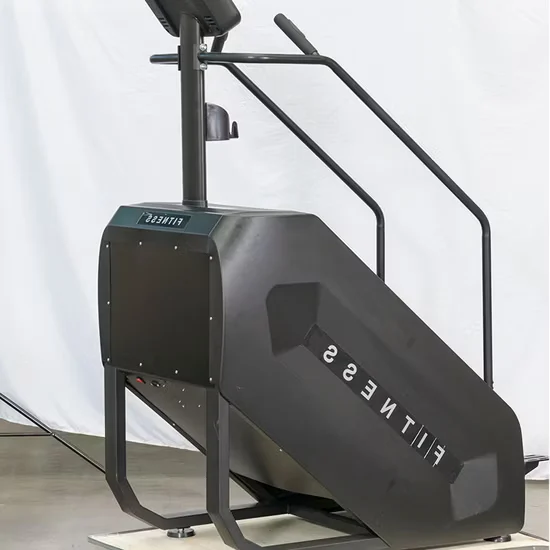
Sub-35dB Operation — Verified on hotel guest floors where noise complaints reach the front desk before maintenance tickets do.
Technical Specifications
| Parameter | Value |
|---|---|
| Designation | SQ1017 |
| Product Type | Stair Climber |
| Drive Type | Motor Drive |
| Running Velocity | 15 steps/min – 164 steps/min |
| Max User Weight | 180kg |
| Step Area | 560x235x220mm |
| Console Display (OSD) | Time, Climb, Calories, Steps, Heart Rate |
| Connectivity | IoT-enabled (app sync, facility management integration) |
| Power Requirement | AC220V±10% / AC110V±10% |
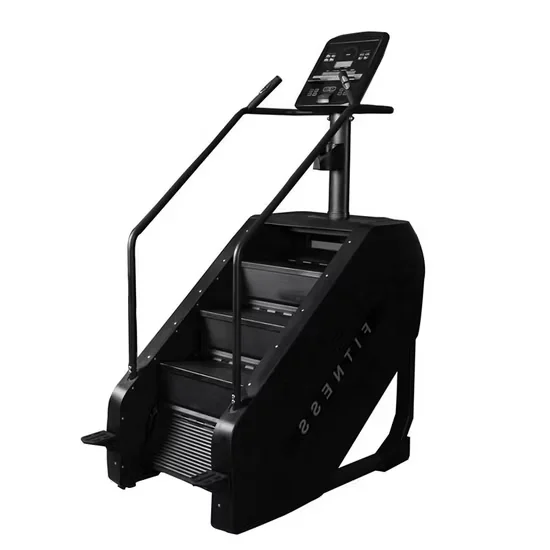
| Product Dimensions | 1450x820x2080mm |
| Net Weight | 148kg |
| Material | Steel Pipe + PP Plastic |
| Folded | Unfolded |
| Color | Black (customization available) |
| Certification | CE |
Application Suitability
| Deployment Scenario | Typical Use |
|---|---|
| Five-star hotel fitness center on guest room floors | 24-hour access with minimal acoustic disturbance to adjacent rooms |
| International chain gym cardio zone | High-frequency continuous operation with member app data sync |
| Corporate wellness room | Low-noise environment compatible with open-plan office acoustics |
| High-end residential home gym | Shared space deployment where noise transfer is a primary concern |
| Sports performance training center | Athlete biometric tracking with reliable heart rate data capture |
Why Noise Complaints Reach the Front Desk Before Maintenance Does
A motor-driven stair climber operating above 35dB on a hotel guest floor generates complaints before the maintenance team even logs the ticket.
When cardio equipment sits directly above or beside occupied rooms, the acoustic signature of the drive system becomes a guest experience problem, not just a mechanical one. Light-commercial motors pushing through continuous duty cycles generate harmonic vibrations that transmit through floor slabs, and by the time the bearing noise is audible in the lobby, the damage to guest satisfaction is already done. [NEED_CITE: acoustic transmission standards for fitness equipment on multi-use floors]
Strategic Positioning Within the Cardio Floor Plan
This commercial stair climber motor drive 180kg unit covers the high-intensity vertical climbing movement pattern, filling the gap between steady-state ellipticals and sprint-interval treadmills. It complements adjacent rower and bike stations by targeting different muscle groups and energy systems, preventing congestion at peak hours when members rotate through circuit-based sessions. The 1450x820mm footprint and 2080mm height clearance require specific sightline planning to avoid blocking airflow or visual corridors across the cardio zone. The 180kg user weight capacity accommodates a broad range of body types without requiring separate heavy-duty equipment allocation.
Continuous Duty Cycles and Deployment Environment Demands
A commercial stair climber deployed in a 24-hour hotel gym or high-traffic chain facility operates under duty cycles that would destroy light-commercial motors within months. The motor drive system must handle sustained thermal loading without derating, which demands adequate ventilation clearance around the 1450x820x2080mm frame and a dedicated electrical circuit matching the local voltage standard. [NEED_CITE: motor thermal derating curves under continuous commercial load] Floor-mounted units on upper levels require vibration isolation pads to prevent structure-borne noise transmission to occupied spaces below. The IoT-enabled console requires stable network connectivity for real-time data sync with facility management software, and voltage mismatches between AC220V±10% and AC110V±10% markets must be resolved before the container ships.
Motor Drive Architecture and Control System Specifications
The motor drive system in this stair climber is engineered for continuous high-frequency operation, distinguishing it from peak-rated motors that deliver short bursts but cannot sustain thermal stability under 10+ hour daily runtimes. The 15–164 steps/min velocity range covers rehabilitation-paced climbing through high-intensity interval work, with the motor controller managing torque delivery to maintain consistent step cadence regardless of user weight up to 180kg. The IoT-enabled touchscreen console captures workout analytics including time, climb distance, calories, steps, and heart rate, with data integration capabilities that connect directly to facility management systems and member apps. [NEED_CITE: IoT console data protocol standards for commercial cardio] Sealed bearings and reinforced steel frame construction support 10,000+ hours of continuous operation, reducing the preventive maintenance burden on facility operators.
The Hidden Cost of Specifying Below Commercial Grade
When light-commercial motors are deployed in 24/7 public facilities, the failure pattern is predictable: bearing degradation accelerates, thermal protection trips interrupt member sessions, and replacement cycles compress from years to months. Noise complaints from adjacent hotel rooms or residential units force reactive equipment relocation or wholesale replacement, disrupting revenue-generating floor plans. Consoles that cannot integrate with facility management software leave usage data stranded, preventing operators from tracking equipment utilization and making data-driven decisions about cardio zone optimization. [NEED_CITE: cost impact of equipment downtime on commercial gym member retention]
Why This Product Line Meets Commercial Deployment Standards
Sub-35dB operation has been verified in hotel deployments where acoustic performance is contractually specified, not just marketed. The 10,000-hour durability testing protocol covers motors, frames, and bearings under continuous high-frequency load, providing the reliability data that facility operators need for capital equipment planning. The IoT console delivers workout analytics and app sync capabilities that integrate with existing member platforms, eliminating the data isolation problem common in standalone cardio units. Full OEM and ODM customization covers logo, color, and console UI configuration at flexible MOQ, while the free 3D cardio zone layout service accounts for the SQ1017’s specific footprint and airflow requirements. 24/7 technical support ensures rapid response when operational continuity is non-negotiable.
Documentation & Test Records
- CE declaration of conformity confirming European safety compliance
- EN 957 test report validating commercial-grade structural and performance standards
- ISO 9001 certificate documenting quality management system certification
- Noise level test report confirming sub-35dB operation under load conditions
- Durability test record demonstrating 10,000-hour motor and bearing performance
- Console technical documentation with data interface specifications for system integration
Installation, Commissioning & Maintenance
- Maintain 600mm clearance on all sides of the 1450x820mm footprint for ventilation and service access
- Install vibration isolation pads under all four feet to prevent structure-borne noise transmission on upper floors
- Confirm local voltage standard (AC220V±10% or AC110V±10%) and dedicated circuit before powering the motor drive system
- Calibrate step sensor and heart rate monitor during initial commissioning to ensure data accuracy
- Update console firmware and configure network settings for facility management software integration
- Schedule quarterly inspection of sealed bearings and drive belt tension per the maintenance guide
Inquiry Guidance for Facility Planning
Provide your cardio zone square footage and equipment count to receive a free 3D layout with airflow planning optimized for this stair climber’s footprint and ventilation requirements. Specify your facility’s daily operating hours to confirm motor duty cycle matching and continuous operation suitability. Identify deployment floor level and adjacent occupied spaces to validate acoustic requirements and vibration isolation needs. State your target market voltage standard and plug type to ensure electrical compatibility before shipment, and indicate whether console data integration with existing facility management software is required.
Frequently Asked Questions
Q: What is the difference between continuous duty and peak motor power for 24/7 commercial use?
A: Peak power ratings describe short-term output capability, but continuous duty defines sustained thermal performance under extended operation. For facilities running 10+ hours daily, continuous duty rating determines whether the motor maintains stable temperature or triggers thermal shutdown. This distinction directly impacts equipment uptime and replacement intervals in high-traffic commercial environments.
Q: How does motor drive compare to other drive types in noise and maintenance?
A: Motor drive systems deliver consistent step cadence regardless of user weight and operate at verified sub-35dB levels suitable for hotel guest floors. Compared to hydraulic or manual resistance systems, motor-driven units require periodic bearing inspection and belt tension checks, but provide predictable maintenance schedules and integration with facility management software for usage tracking.
Q: Can the console sync with our existing facility management software?
A: The IoT-enabled console supports data integration protocols that connect workout analytics, member usage patterns, and equipment status to facility management platforms. Technical documentation specifies the data interface requirements, and our engineering team provides configuration support during commissioning to ensure seamless connectivity with your existing member app ecosystem.
Q: What noise level should we expect on hotel floors or residential spaces?
A: Independent testing verifies sub-35dB operation under load conditions, making this stair climber suitable for deployment on hotel guest floors and shared residential spaces where noise complaints are a primary concern. Vibration isolation pads are recommended for upper-floor installations to prevent structure-borne transmission to occupied rooms below.
Q: How do we confirm voltage compatibility for our target market before ordering?
A: The motor drive system supports AC220V±10% and AC110V±10% configurations, but plug type and circuit requirements vary by market. Specify your deployment country and facility electrical standards during inquiry to ensure correct voltage matching and plug configuration, preventing costly rewiring or equipment damage upon arrival.
![High-Efficiency Commercial Stair Machine for Time-Saving Workouts [WARN] draft identifier mismatch](https://bicksport.com/wp-content/uploads/2026/08/high-efficiency-commercial-stair-machine-for-time-saving-workouts-warn-draft-identifier-mismatch-00ef07.webp)
![High-Performance Commercial Stair Climber Motor Drive for Gym Professionals and Trainers [WARN] draft identifier mismatch](https://bicksport.com/wp-content/uploads/2026/08/high-performance-commercial-stair-climber-motor-drive-for-gym-professionals-and-trainers-warn-draft-identifier-mismatch-0b1b32.webp)