Sub-35dB Operation — Magnetic resistance drive tested to run quietly above occupied hotel rooms without triggering guest noise complaints.
Technical Specifications
| Parameter | Value |
|---|---|
| Designation | SR-1012 |
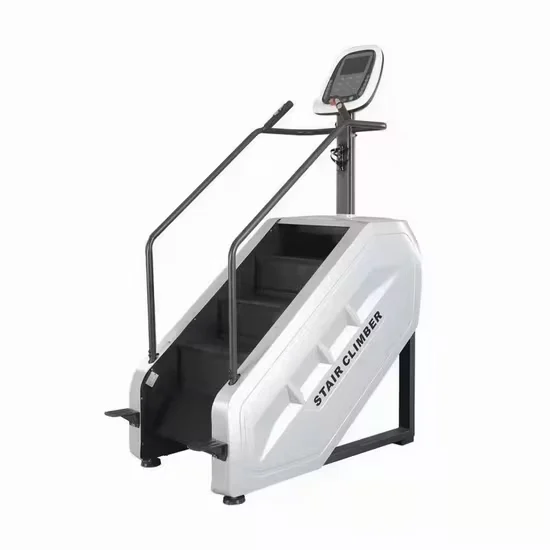
| Product Type | Stair Climber |
| Resistance Type | Magnetic resistance |
| Max User Weight | ≥160kg |
| Product Dimensions | 1450 × 800 × 2060 mm |
| Console Type | IoT-enabled HD touchscreen (available with LED or touchscreen console) |
| Connectivity | IoT protocol with app sync and facility management integration |
| Noise Level | Sub-35dB under load |
| Frame | Reinforced steel with cushioned step system |
| Certification | CE, RoHS |
| Foldable | Unfolded (fixed commercial frame) |
| Color Options | Multicolor / Customizable |
| Power Requirement | Facility-standard AC supply (voltage and plug configurable per market) |
Application Suitability
| Deployment Scenario | Typical Use |
|---|---|
| Hotel fitness center on guest room floors | 24-hour access cardio with minimal noise transmission to adjacent rooms |
| Chain gym cardio zone | High-frequency step training integrated with member app ecosystem |
| Corporate wellness room | Employee interval and steady-state sessions during peak and off-peak hours |
| High-end residential home gym | Shared building fitness facility requiring low acoustic footprint |
| Sports performance training center | Athlete conditioning with reliable biometric data capture |
Why Noise Complaints Reach the Front Desk Before Maintenance Does
Magnetic resistance eliminates the friction noise that friction-based and belt-driven stair climbers generate under continuous commercial load.
When a stair climber sits directly above occupied hotel rooms, structural vibration travels through floor slabs faster than any maintenance ticket gets filed. Guests call reception at midnight over a low-frequency hum that consumer-grade motors produce when they overheat from non-stop cycling. I have seen entire batches of friction-driven units pulled from hotel floors because the transmission gap and bearing seals could not survive round-the-clock duty cycles — the complaints arrived before the usage data ever synced upstream [NEED_CITE: motor duty cycle classification for continuous commercial operation]. The commercial stair climber machine in the SR-1012 series addresses this at the source: sealed bearings and a magnetic drive train that remove mechanical contact points where vibration originates.
Positioning the Step Trainer in a Mixed-Use Cardio Layout
This unit fills the vertical-loading niche in a commercial cardio zone, complementing treadmills for forward motion and ellipticals for low-impact glide. It targets users who want sustained stepping resistance at moderate to high intensity intervals. The reinforced steel frame and ≥160kg user capacity accommodate a broad range of body types without stability compromise. Deployed against a wall or in a dedicated step-training row, the commercial stair climber machine occupies a footprint that leaves adequate lateral clearance for mounting and dismounting. The IoT-enabled console captures step rate, elevation gain, heart rate, and session duration, feeding usage analytics directly to facility management dashboards without requiring manual data retrieval.
Continuous Duty Cycles and Floor-Level Deployment Realities
A facility running 18-hour or 24-hour access schedules demands a motor and bearing set rated for sustained load, not intermittent home use. Sub-35dB operation matters most when the unit deploys on upper floors where sound transmits through concrete slabs to sleeping or working spaces below. Adequate airflow around the reinforced frame prevents heat buildup inside the motor housing during back-to-back user sessions. Power supply voltage and plug configuration must match the target market before the unit ships — discovering a mismatch after container delivery costs weeks of downtime [NEED_CITE: EN 957 requirements for commercial cardio equipment]. Ground leveling and anti-vibration pads further isolate residual low-frequency resonance from the building structure. The IoT console requires a stable network endpoint so that usage data reaches facility management software in real time.
Magnetic Drive and Frame Engineering Explained
Magnetic resistance operates without physical contact between the braking element and the flywheel, removing the friction noise and wear inherent in belt-driven or pad-based alternatives. This non-contact principle keeps acoustic output below 35dB under load and drastically reduces scheduled maintenance intervals since there are no brake pads to replace or belts to re-tension. Sealed bearings prevent dust and sweat ingress that degrade rotational smoothness over months of high-frequency use. The cushioned step system absorbs impact at the footplate, reducing transmitted vibration to the frame and floor. The reinforced steel frame resists torsional flex that lighter structures exhibit when heavier users apply lateral force during rapid stepping. The IoT-enabled HD touchscreen console provides workout analytics and app sync capability, allowing facility operators to track equipment utilization across their entire commercial stair climber machine fleet from a centralized dashboard.
The Hidden Cost of Specification Shortcuts
A stair climber specified with a motor rated for light-commercial duty will show thermal degradation within months when subjected to 24/7 gym run-times, leading to unplanned downtime and replacement costs that dwarf the initial price difference. Friction-based drive systems that appear economical at purchase generate noise complaints in hotel deployments, forcing operators to pull entire fleets and retrofit magnetic alternatives. Inadequate step cushioning drives joint discomfort reports that correlate directly with membership cancellations and guest satisfaction score declines. Consoles lacking IoT connectivity strand usage data on-device, leaving facility managers blind to which units are overused and which sit idle [NEED_CITE: facility management data integration standards for commercial cardio]. Voltage mismatches discovered post-shipment force rewiring or adapter installations that delay opening schedules.
Why This Product Line Carries the Deployment
Every SR-1012 unit undergoes noise verification under load before it leaves the testing lab, confirming sub-35dB performance in conditions that mirror actual hotel floor installations. The motor and bearing assembly completes 10,000-hour continuous run testing to validate endurance against round-the-clock commercial schedules. IoT console firmware supports facility management integration so usage analytics flow directly into operator dashboards. As part of a six-series cardio family, this stair climber sources alongside treadmills, bikes, ellipticals, rowing machines, and spinning bikes from one production line — simplifying procurement and spare parts logistics. OEM customization extends to console UI branding, color matching, and logo application at flexible minimums. The free 3D cardio-zone layout service calculates this unit’s footprint, sightline clearance, and airflow spacing relative to adjacent equipment, ensuring the step training zone performs as intended from day one.
Documentation & Test Records
- CE declaration of conformity for the SR-1012 stair climber
- EN 957 test report covering structural and safety performance
- ISO 9001 certificate for manufacturing quality management
- RoHS compliance declaration for restricted substance limits
- Noise level test report confirming sub-35dB under load
- 10,000-hour durability test record for motor and sealed bearings
- IoT console technical documentation with data interface specifications
Installation, Commissioning & Maintenance
- Maintain specified clearance on all sides of the 1450 × 800 mm footprint for safe mounting
- Level the reinforced steel frame and install anti-vibration pads to isolate floor resonance
- Confirm voltage and plug standard before connecting to a dedicated circuit
- Calibrate step resistance and verify IoT console network pairing during first commissioning
- Inspect sealed bearings and magnetic resistance alignment at scheduled service intervals
- Wipe step surfaces and console housing daily to prevent sweat corrosion
Scope Your Deployment Before Requesting a Quote
Provide your cardio zone floor area and intended equipment count to receive a 3D layout with airflow and sightline planning specific to this stair climber’s dimensions. Specify your facility’s daily operating hours so the motor duty cycle matches your actual run-time. Confirm the deployment floor level and adjacent room types to validate acoustic requirements. State your target market voltage and plug standard to ensure electrical compatibility. Indicate whether your facility management software requires IoT console data integration.
Frequently Asked Questions
Q: What separates continuous duty from peak motor power on a stair climber?
A: Peak power describes the maximum output a motor can deliver in short bursts, while continuous duty reflects what it sustains under sustained load without overheating. A commercial stair climber machine running in a 24-hour gym needs a motor rated for continuous duty, because peak-only ratings lead to thermal failure within months of non-stop operation.
Q: How does magnetic resistance compare to friction-based systems for noise and upkeep?
A: Magnetic resistance operates without physical contact between the braking element and the flywheel, eliminating friction noise and removing brake pads or belts from the replacement cycle. This non-contact design keeps acoustic output below 35dB and significantly reduces scheduled maintenance compared to friction-driven alternatives deployed in quiet environments.
Q: Can the console send usage data to our gym management platform?
A: The IoT-enabled HD touchscreen console supports facility management integration via standard IoT protocols. Usage analytics including step count, session duration, and heart rate data sync to compatible platforms. Request console technical documentation to confirm protocol compatibility with your existing software before finalizing configuration.
Q: What acoustic standard applies to cardio equipment above occupied hotel rooms?
A: Sub-35dB operation under load is the threshold that prevents noise transmission through floor slabs to guest rooms and residential units below. The magnetic resistance drive and sealed bearings in this commercial stair climber machine are engineered to meet that acoustic requirement, reducing the risk of guest complaints in overnight hospitality environments.