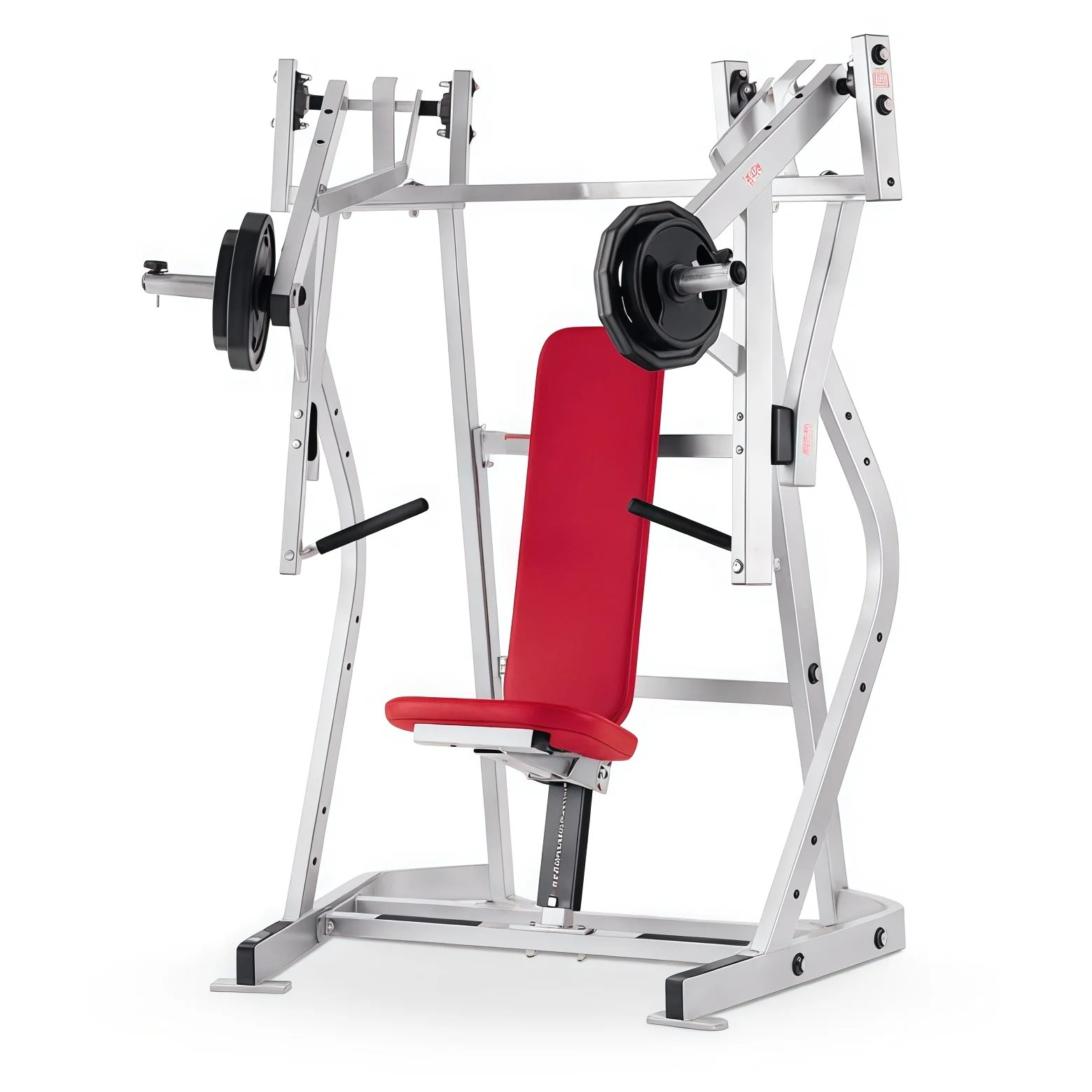
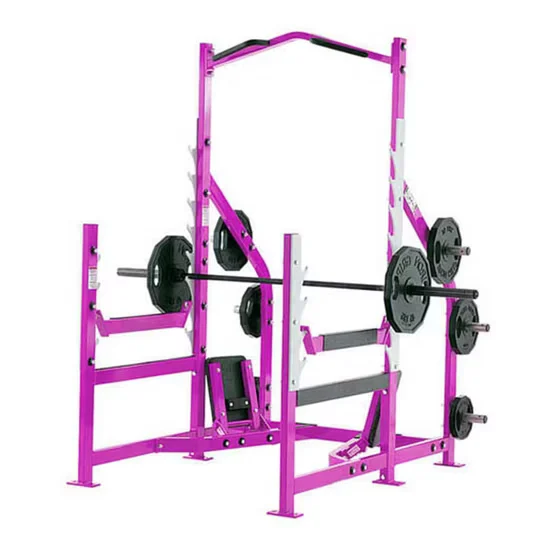
Steel Frame Rigidity — 120kg net weight and fully welded construction eliminate resonance during high-repetition posterior chain work.
Technical Specifications
| Parameter | Value |
|---|---|
| Designation | OS-H5073 |
| Product Type | Reverse Hyperextension Machine |
| Power Source | Manual |
| Resistance Type | Manual / Gravity-based |
| Exercise Target | Leg, Lower Back, Glutes |
| Frame Material | Heavy-Duty Steel |
| Product Dimensions | 1727 x 1448 x 1651 mm |
| Net Weight | 120 kg |
| Foldable | Unfolded (Fixed Structure) |
| Max User Weight | 180 kg |
| Certification | ISO 9001, CE |
| OEM/ODM | Available (Frame Color, Upholstery, Logo) |
Application Suitability
| Deployment Scenario | Typical Use |
|---|---|
| Professional Gym and Club | Dedicated posterior chain and rehabilitation zone |
| Community Fitness Center | Functional training and lower back strengthening |
| Sports Performance Training Center | Athlete recovery and hamstring/glute activation |
| High-End Residential Home Gym | Fixed-installation strength and conditioning corner |
Why Structural Wobble Ruins Member Confidence in the Weight Room
Heavy-gauge steel and fixed geometry solve the problem of frame flex under load.
Nothing clears out a functional training zone faster than equipment that shakes when a user adds weight plates. We have seen facilities pull reverse hyper machines off the floor within a year because pivot points developed play and weld seams showed stress fractures. [NEED_CITE: fatigue failure rates in light-commercial strength frames]. When a 120kg commercial reverse hyperextension machine gym equipment unit stays planted through hundreds of daily repetitions, members trust the station and keep coming back.
Positioning This Unit in the Strength and Conditioning Zone
The commercial reverse hyperextension machine gym equipment OS-H5073 fills the posterior chain gap that squat racks and deadlift platforms leave open. It targets the glutes, hamstrings, and lumbar erectors through a hip-dominant extension pattern that complements heavy compound lifts. Because the resistance is manual and gravity-based, users self-regulate load by adding or removing weight plates or ankle straps. Deploy this unit along a wall or in a dedicated rehab corner where the 1727 x 1448 mm footprint does not interrupt traffic flow.
Continuous Use Demands and Floor Requirements
A manually driven reverse hyper unit sidesteps motor burnout entirely, but the pivot bearings and frame welds absorb every repetition. Facilities running 14-hour days need sealed bearings rated for continuous oscillation [NEED_CITE: bearing lifecycle standards for oscillating commercial gym equipment]. The 1651 mm frame height and 120 kg mass demand a level concrete slab; rubber flooring mats help dampen vibration transfer to adjacent rooms. No dedicated electrical circuit is required, which simplifies deployment in older buildings where adding outlets triggers code reviews.
Manual Resistance and Frame Engineering Explained
The absence of a motor or electromagnetic brake means resistance comes entirely from gravity acting on loaded plates and the user’s own body weight. This creates a linear resistance curve—load increases proportionally with added mass—giving athletes predictable feedback. The full steel frame resists torsional flex at the hip pivot point, where repetitive lateral forces concentrate. Weld quality at this junction determines whether the unit survives three years of daily use or develops play that feels unsafe. Sealed bearings at the swing arm axis prevent sweat and chalk dust from accelerating wear.
What Cutting Corners on Frame Weight Actually Costs
Specifying a 70 kg unit to save on shipping sounds practical until the frame resonates every time a member loads two plates. Vibration travels through the floor slab and annoys adjacent yoga studios. Lighter frames also flex laterally, forcing users to brace against wobble instead of isolating their posterior chain. [NEED_CITE: member attrition linked to equipment perceived as unsafe]. Facilities that replace underweight units every eighteen months spend more on freight and downtime than they would on a commercial reverse hyperextension machine gym equipment built to stay put.
Why This Product Line Holds Up in the Field
Every unit undergoes 10,000-hour continuous-load testing at the pivot and weld junctions before shipping. The sub-35 dB noise benchmark our cardio line established carries over here: sealed bearings and tight-tolerance pivot bushings keep metal-on-metal sound below the threshold that disturbs neighboring hotel rooms. OEM customization covers frame powder-coat color, upholstery grade, and logo placement at flexible MOQs. We provide a free 3D layout showing the OS-H5073 footprint, user swing clearance, and sightline integration with surrounding racks. 24/7 technical support covers bearing replacement and alignment questions long after installation.
Documentation & Test Records
- CE declaration of conformity covering OS-H5073 mechanical safety
- EN 957 test report for stationary strength training equipment
- ISO 9001 quality management system certificate
- Frame fatigue and weld integrity test record
- Bearing lifecycle and pivot wear test documentation
- Installation guide with floor-anchor and spacing specifications
Installation, Commissioning & Maintenance
- Reserve a 1727 x 1448 mm footprint with 600 mm clearance on all sides for user swing arc.
- Place on level concrete; use 20 mm rubber mats to dampen vibration transfer to adjacent spaces.
- Inspect pivot bearing seals and re-lubricate every six months under daily commercial use.
- Check all frame bolts at 30-day intervals during the first quarter to confirm settlement tightness.
- Wipe upholstery with non-solvent cleaner daily to prevent sweat corrosion on contact surfaces.
Planning Your Strength Zone Deployment
Share your facility floor plan and unit count to receive a 3D layout showing clearance zones and traffic flow around the OS-H5073. Specify your average daily operating hours so we can confirm bearing and pivot lifecycle alignment. Let us know the target market voltage if you are also ordering console-driven cardio units for the same room.
Frequently Asked Questions
Q: How does manual resistance affect long-term maintenance costs compared to motorized equipment?
A: Manual systems eliminate motors, circuit boards, and wiring—components that account for most commercial equipment service calls. With no electrical parts to fail, maintenance focuses on periodic bearing lubrication and bolt torque checks. This typically cuts annual service spend and removes the need for dedicated electrical circuits, reducing both installation complexity and ongoing operational overhead.
Q: What lifespan can a facility expect from a heavy-gauge steel frame under daily use?
A: Frames built from thick-wall steel and finished with commercial-grade powder coat routinely exceed a decade in high-traffic gyms when weld junctions and pivot bearings receive scheduled inspections. The 120 kg net weight of the OS-H5073 reflects the material mass needed to resist fatigue cracking and lateral flex over thousands of loaded repetitions.
Q: What training value does a reverse hyperextension machine add to a commercial gym?
A: It isolates the posterior chain—glutes, hamstrings, and lumbar erectors—through a hip-extension movement pattern that squat racks and leg presses do not replicate. Athletes use it for injury-prevention work and active recovery because the movement decompresses the spine while strengthening supporting musculature, filling a gap most free-weight stations leave open.
Q: How should a facility plan floor spacing and structural support for this unit?
A: Allow the full 1727 x 1448 mm footprint plus at least 600 mm clearance on each side for the user’s leg swing arc. The 120 kg frame plus loaded plates can concentrate point loads exceeding 200 kg; confirm the floor slab rating and use rubber matting to distribute weight and reduce vibration transfer to adjacent rooms.
![Reverse Hyper Extension Machine OS-H5073 Commercial Gym Equipment [WARN] draft identifier mismatch](https://bicksport.com/wp-content/uploads/2026/08/reverse-hyper-extension-machine-os-h5073-commercial-gym-equipment-warn-draft-identifier-mismatch-4ecf9f.webp)