

Structural Durability — Reinforced steel frame tested for continuous high-frequency strength training in commercial gym environments.
Technical Specifications
| Parameter | Value |
|---|---|
| Product Type | Strength Equipment (Power Rack / Pull Up Station) |
| Model NO. | 5057 |
| Material | Steel |
| Exercise Part | Leg, Waist, Arm |
| Product Dimensions | 183012001876mm |
| Net Weight | 98kg |
| Age Group | Adult |
| Gender | Unisex |
| Fit Area | Professional Gym and Club |
| OEM/ODM | Available |
| Production Capacity | 500 PCS/Month |
| Certification | ISO 9001, CE |
Application Suitability
| Deployment Scenario | Typical Use |
|---|---|
| Professional gym and club strength zone | Heavy-duty compound lifts, pull-ups, and functional training |
| Community fitness center | Multi-user full-body resistance training and circuit work |
| Corporate wellness room | Compact strength training for employee fitness programs |
| Hotel fitness center | Versatile strength station for guest self-guided workouts |
When High-Frequency Lifting Exposes Weak Welds and Loose Joints
Commercial strength equipment must withstand repetitive heavy loading without structural fatigue or hardware failure.
In high-traffic commercial gym environments, a commercial power rack pull up machine strength equipment unit endures thousands of repetitions daily. Light-commercial frames often develop micro-fractures at welded joints or suffer from bolt loosening under continuous dynamic loading. Facility operators frequently discover these issues only after members report instability or audible creaking during lifts. Structural integrity is non-negotiable when athletes are loading heavy barbells overhead or performing explosive movements [NEED_CITE: structural load testing standards for commercial strength stations].
Multi-Plane Movement Integration for Compound Training
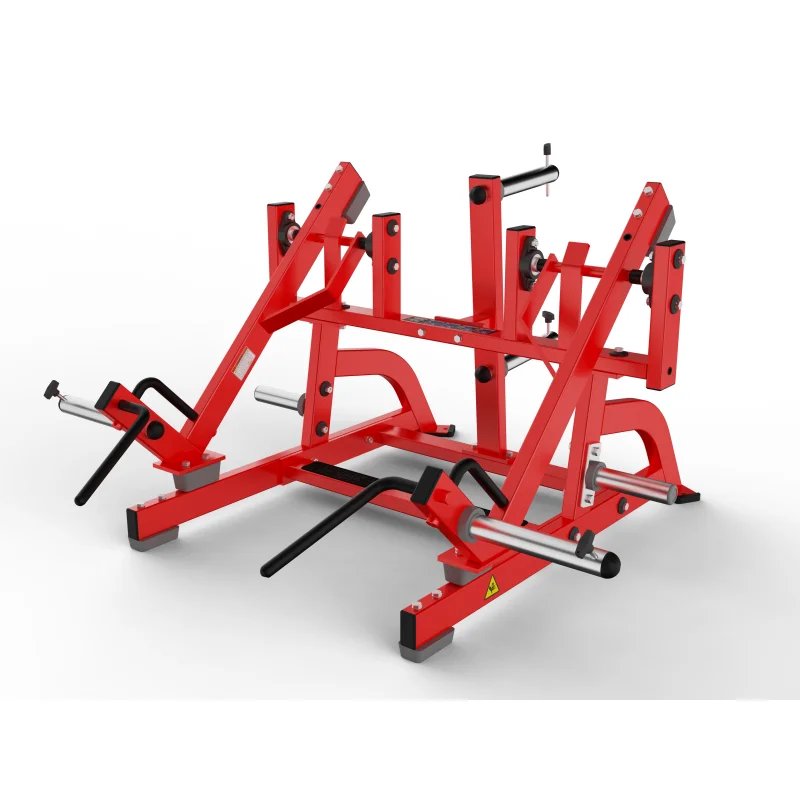
This commercial power rack pull up machine strength equipment supports deep squat patterns, overhead presses, and vertical pulling within a single footprint. It complements free-weight platforms and plate-loaded machines by providing a contained zone for barbell work and bodyweight progressions. The 183012001876mm footprint fits standard commercial ceiling clearances while allowing adequate bar path clearance. The steel construction accommodates users across a wide weight range performing both slow controlled reps and dynamic athletic movements.
Continuous Operation and Facility Environment Demands
Commercial strength zones operate twelve to eighteen hours daily with near-constant equipment rotation. This station requires a level concrete subfloor to maintain frame geometry under asymmetric loading. Adequate clearance on all sides ensures safe barbell loading and spotter movement. The powder-coated steel finish resists corrosion from ambient humidity and perspiration contact [NEED_CITE: environmental durability requirements for commercial gym flooring and equipment]. Proper ventilation prevents moisture accumulation around floor-mounted anchor points.
Steel Gauge and Connection Hardware Specifications
The 98kg net weight reflects substantial steel mass distributed through the vertical uprights and cross-members. Heavier frames resist lateral sway during unilateral movements and reduce harmonic vibration when bars are re-racked forcefully. Bolted connections at primary joints allow periodic torque verification and hardware replacement without welding. The 1876mm height accommodates full pull-up range for tall users while maintaining structural rigidity at the top crossbar. Steel thickness at load-bearing junctions determines long-term fatigue resistance under repetitive heavy use [NEED_CITE: steel gauge requirements for commercial power rack uprights].
The Hidden Cost of Underspec’d Residential Frames in Commercial Settings
Residential-grade racks deployed in commercial facilities typically exhibit frame flex and joint degradation within months of high-frequency use. Welded connections on lighter frames crack under dynamic loads that exceed design specifications. Bolted joints require constant re-tightening as vibration loosens hardware between maintenance cycles. Facilities face member complaints about equipment stability and eventually incur replacement costs that exceed the initial savings from purchasing underspecified units [NEED_CITE: commercial vs residential strength equipment duty cycle differences].
Why This Product Line Addresses Commercial Demands
The steel frame construction undergoes load testing that verifies structural behavior under continuous commercial duty cycles. The 98kg mass provides inherent stability without requiring floor anchoring in most installations. OEM customization extends to frame color and branding integration for facility identity consistency. The 1830*1200mm footprint allows efficient spacing in multi-station layouts while maintaining safe clearance zones. Full documentation packages include material specifications and load test records for facility compliance records. Technical support covers installation verification and long-term maintenance protocols.
Documentation & Test Records
- CE declaration of conformity for strength equipment safety requirements
- EN 957 test report verifying structural load capacity and stability
- ISO 9001 certificate covering manufacturing quality management systems
- Material specification sheets documenting steel grade and welding standards
- Installation guide with floor anchoring and clearance requirements
- Spare parts list for hardware and connection components
Installation, Commissioning & Maintenance
- Verify 183012001876mm clearance including safety margins on all sides
- Ensure level concrete subfloor before positioning the 98kg frame
- Torque all bolted connections to specification after initial assembly
- Schedule quarterly hardware inspection and re-tightening cycles
- Clean steel surfaces regularly to prevent perspiration-induced corrosion
- Inspect weld points and connection hardware for fatigue indicators monthly
Equipment Selection and Facility Planning
Provide your strength zone dimensions and equipment count to receive a 3D layout plan that accounts for traffic flow and spotting clearances. Specify expected daily user volume to verify the frame specification matches your facility’s duty cycle requirements. Confirm ceiling height accommodates the 1876mm frame plus overhead bar clearance. Identify your target market voltage standards if integrating electronic accessories. Communicate branding requirements early for OEM color and logo integration.
Frequently Asked Questions
Q: What distinguishes commercial-grade power racks from residential versions?
A: Commercial power racks use heavier steel gauges and reinforced welding patterns designed for continuous multi-user loading. The 98kg frame mass provides inherent stability during dynamic lifts. Connection hardware is specified for periodic maintenance rather than permanent assembly. Commercial units undergo load testing that simulates years of high-frequency use, while residential racks are engineered for intermittent single-user sessions with significantly lower cumulative stress.
Q: How should I evaluate steel frame load capacity for my facility?
A: Request material specification sheets that document steel grade and wall thickness at critical junctions. Verify EN 957 test reports confirm the frame handles loads exceeding your members’ typical working weights. The 98kg net weight indicates substantial steel distribution through uprights and cross-members. Ask for documented load testing protocols that demonstrate structural behavior under both static and dynamic loading conditions relevant to your member population.
Q: What spacing requirements apply when planning multiple stations?
A: Allow adequate clearance around each 1830*1200mm footprint for barbell loading and spotter positioning. Consider member flow patterns between adjacent stations during peak hours. Maintain sufficient distance between pull-up bars and nearby equipment to prevent collision risk during dynamic movements. A 3D layout plan helps visualize spacing efficiency while preserving safe operational zones around each commercial power rack pull up machine strength equipment installation.
Q: What does the OEM customization process involve?
A: OEM options include frame color selection, logo application, and minor dimensional adjustments to match facility specifications. Customization scoping occurs during the quotation phase after reviewing your branding requirements and deployment context. Production capacity supports 500 units monthly for volume orders. Early communication of customization needs ensures accurate lead time estimation and prevents delays in the proforma invoice and production scheduling process.
Q: What maintenance intervals should I establish for commercial strength stations?
A: Schedule monthly inspections of all bolted connections and weld points for early detection of loosening or stress indicators. Quarterly torque verification ensures hardware maintains specification under continuous vibration from barbell re-racking. Clean steel surfaces weekly to remove perspiration residue that accelerates corrosion. Document maintenance activities to track component wear patterns and plan proactive replacement before structural integrity becomes compromised [NEED_CITE: preventive maintenance schedules for commercial strength equipment].

![Professional Hammer Strength H5027 Commercial Adductor Gym Equipment [WARN] draft identifier mismatch](https://bicksport.com/wp-content/uploads/2026/08/professional-hammer-strength-h5027-commercial-adductor-gym-equipment-warn-draft-identifier-mismatch-55e5b8.webp)
