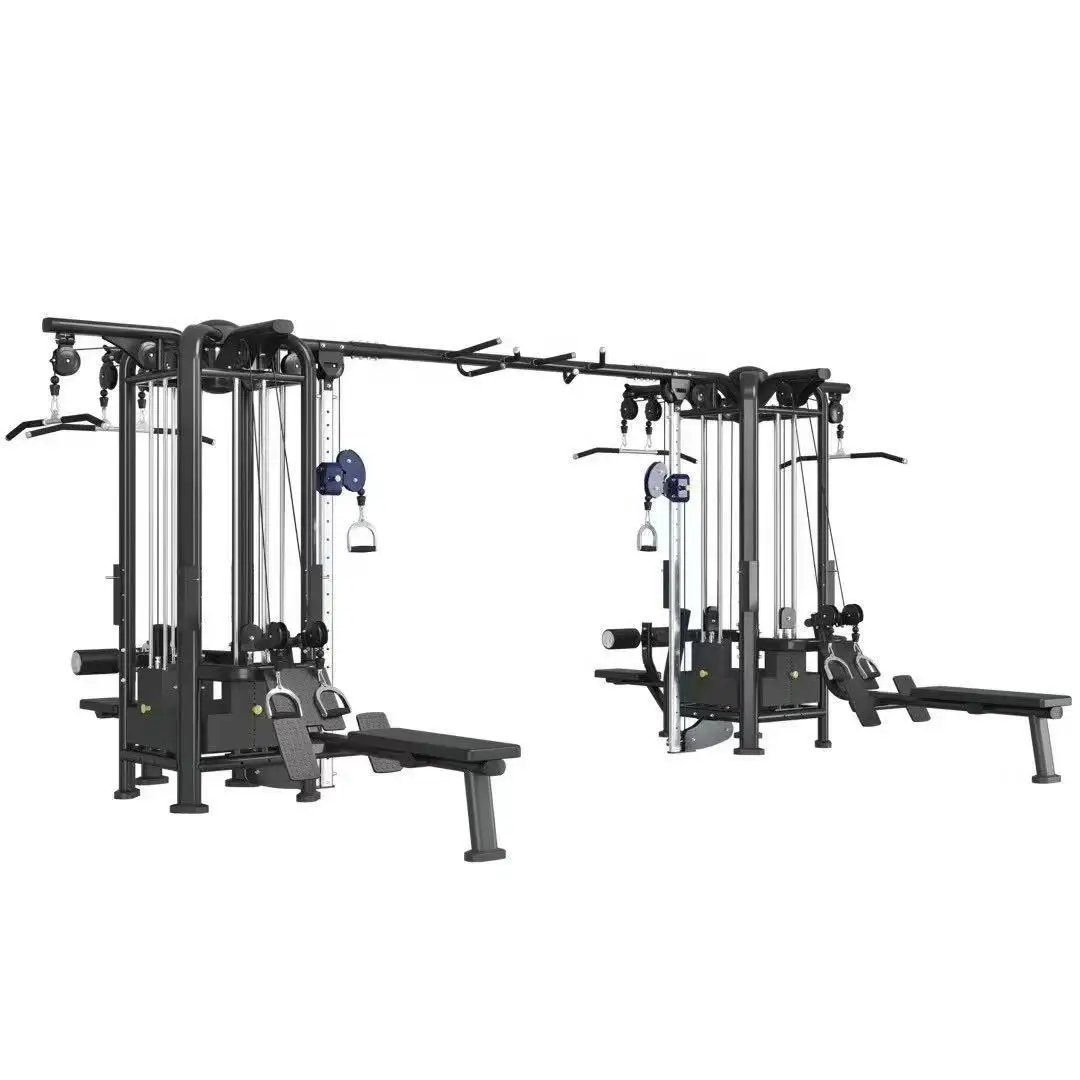
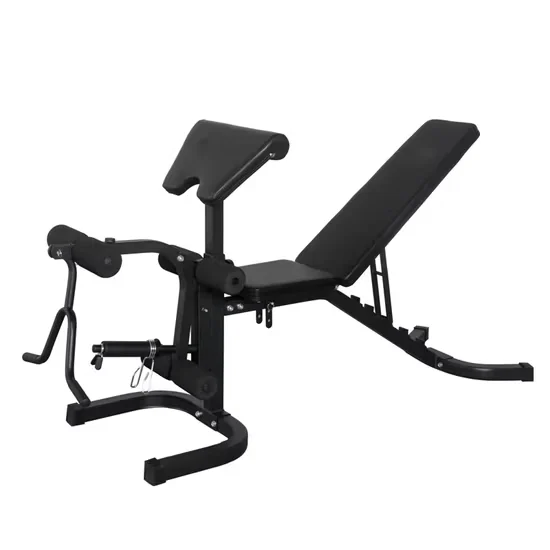
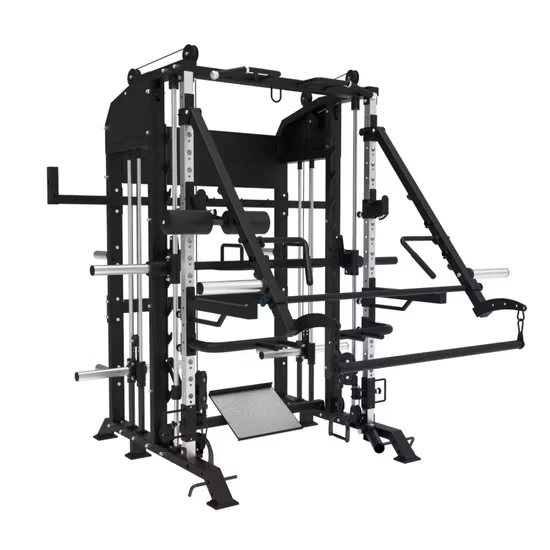
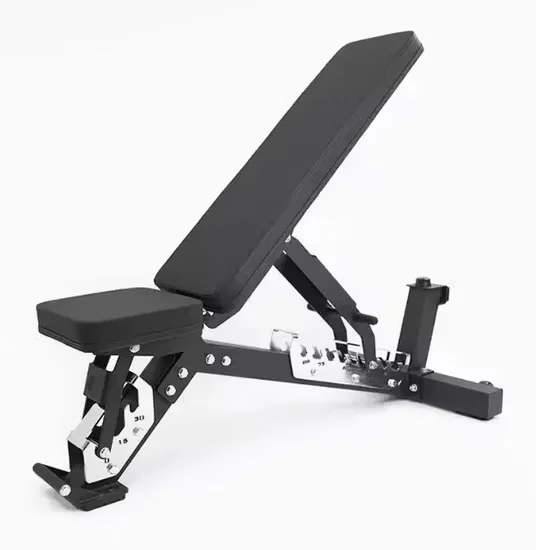
![Commercial Multi-Functional Smith Machine Power Rack Gym Strength Training Equipment [WARN] draft identifier mismatch](https://bicksport.com/wp-content/uploads/2026/08/commercial-multi-functional-smith-machine-power-rack-gym-strength-training-equipment-warn-draft-identifier-mismatch-f2da17.webp)
Structural Rigor Meets Acoustic Discipline — a 3mm steel frame paired with a manual resistance system eliminates motor noise, keeping strength zones quiet even during high-load repetitions.
Technical Specifications
| Parameter | Value |
|---|---|
| Product Type | Smith Machine / Power Rack (Strength Training Equipment) |
| Model NO. | PX1070C |
| Material | Steel |
| Tube Thickness | 3mm |
| Net Weight | 200kg |
| Product Dimensions | 1590 2005 2210mm |
| Frame Color | Customized (Yellow, Black, Orange, Pink etc.) |
| Cushion Color | Customized (Yellow, Black, Orange, Pink etc.) |
| Power Source | Manual |
| Max User Weight | 180kg |
| Resistance Type | Manual |
| Foldable | Unfolded |
| Certification | CE |
| Appliance | Gymnasium, Home |
Application Suitability
| Deployment Scenario | Typical Use |
|---|---|
| hotel fitness center on guest room floors | Silent strength training without disrupting guests in adjacent rooms |
| chain gym cardio zone | High-frequency full-body workouts with multi-joint guidance |
| corporate wellness room | Compact footprint covering diverse employee fitness needs |
| high-end residential home gym | Heavy-load training in shared apartment spaces without noise complaints |
| sports performance training center | Controlled barbell paths for athlete biometric tracking and safety |
Why Static Equipment Generates More Noise Complaints Than You Expect
Rigid frames absorb kinetic energy; thin frames broadcast it.
When facility managers think about noise, they usually think about motors. But in strength zones, the real acoustic offenders are thin-gauge frames that vibrate during heavy drops and plate clatter that travels through floor joists into occupied spaces below. A commercial smith machine power rack strength training equipment built with 3mm steel walls dampens harmonic resonance, keeping the kinetic energy inside the training zone rather than transferring it to the structure [NEED_CITE: structural vibration transmission in multi-story fitness facilities]. Home-grade 2mm tubing flexes and rings, generating low-frequency hum that migrates through concrete. Over time, that flex fatigues weld points, turning a noise nuisance into a structural liability.
Positioning the Smith Machine Power Rack in a Commercial Strength Zone
This commercial smith machine power rack strength training equipment anchors the fixed-track portion of a strength zone, bridging the gap between free-weight stations and selectorized machines. It covers squats, presses, rows, and pull-ups within a single footprint, which matters when square footage is constrained. Deploy it where spotters are unavailable, as the guided barbell path lets users train to failure safely. The 180kg user weight capacity and reinforced frame accommodate a wide range of body types. It pairs with adjacent free-weight benches and cable crossovers to form a complete resistance training cluster.
Continuous Load Cycles and Deployment Environment Requirements
A commercial smith machine power rack strength training equipment does not draw electricity, so there is no motor duty cycle to calculate—but deployment planning still matters. The 2210mm height requires adequate ceiling clearance, especially in basement hotel gyms with suspended ductwork. The 200kg frame weight demands level flooring; uneven surfaces shift load distribution and accelerate guide rod wear [NEED_CITE: floor load distribution requirements for static strength equipment]. Rubber减震 pads beneath the base decouple plate-loading impacts from the slab, reducing structural vibration transmission to lower floors. Since there are no electronics, the unit tolerates humid environments and poolside fitness rooms without circuit corrosion risk.
Interpreting the Structural and Mechanical Specifications
The 3mm tube thickness is the primary durability indicator. Commercial-grade 3mm steel resists lateral deflection during off-axis barbell loading, maintaining guide rod alignment over years of use. Thinner tubing ovalizes under repeated stress, increasing friction and creating the grinding noise that signals premature failure. The manual power source means resistance comes entirely from loaded plates—no solenoids, no magnetic eddy brakes, no electronic drift. This eliminates the most common failure points in motorized strength equipment: burnt-out actuators and fried control boards. The 200kg net weight provides a low center of gravity, preventing tip-up during aggressive rack pulls. Frame and cushion colors are available in Yellow, Black, Orange, Pink or custom runs to match brand identity.
The Hidden Cost of Compromised Frame Specifications
Facilities that spec 2mm tubing to save on initial procurement often face replacement cycles within 24 months. Weld seams on thin-gauge frames crack under commercial drop-load scenarios, generating liability exposure and member injury risk. Guide rods mounted to flexing uprights develop play, causing barbell path deviation that users perceive as poor equipment quality. Noise complaints from floor-transmitted vibration force relocations, and the cost of moving and reinstalling heavy steel exceeds the original savings [NEED_CITE: total cost of ownership comparison for commercial vs. home-grade strength frames].
Why This Product Line Addresses Facility Pain Points
Sub-35dB operation matters in strength zones too—plate loading on a rigid, well-damped frame is noticeably quieter than on flexing home-grade racks. Components are tested for 10,000+ hours of continuous high-frequency use, which translates to years of commercial operation without guide rod replacement. OEM customization extends to frame color and cushion color, so brand-consistent visual identity is achievable at flexible MOQ. A free 3D strength-zone layout covering square footage, member flow, and equipment spacing ensures this unit integrates without crowding adjacent stations. Full documentation and 24/7 technical support reduce downtime risk.
Documentation & Test Records
- CE declaration of conformity for commercial strength training equipment.
- EN 957 test report covering structural integrity and entrapment hazards.
- ISO 9001 certificate for manufacturing quality management systems.
- Durability test record for 3mm steel frame under cyclic loading.
- Noise level test report for structural vibration during plate drops.
- Installation and commissioning guide with anchor bolt specifications.
Installation, Commissioning & Maintenance
- Verify 2210mm ceiling clearance and 1590mm width with 600mm lateral safety margins.
- Install on level concrete with high-density rubber pads to decouple impact vibration.
- Inspect guide rod lubrication monthly and reapply synthetic grease as needed.
- Torque-check all frame bolts quarterly under the 200kg static load.
- Wipe steel surfaces with pH-neutral cleaner to prevent sweat corrosion.
- Confirm anchor bolt tension if the unit is deployed on suspended flooring.
Request a Strength Zone Equipment Proposal
Provide your strength zone dimensions and target equipment count to receive a 3D layout with airflow and member flow analysis. Specify whether the deployment floor sits above occupied rooms so we can recommend appropriate vibration isolation pads. Confirm your target market’s ceiling height standards to ensure the 2210mm frame clears suspended fixtures. Let us know if frame or cushion color customization is required to match your brand guidelines.
Frequently Asked Questions
Q: How does a Smith Machine Power Rack differ from a standalone squat rack in a commercial setting?
A: A Smith Machine integrates a guided barbell path, making it safer for unsupervised training in hotel gyms and corporate wellness rooms where spotters are unavailable. A standalone squat rack requires more floor space for user movement and barbell clearance. The Smith Machine’s fixed track also allows for a wider variety of exercises, including inverted rows and calf raises, within a single station footprint.
Q: What is the lifespan difference between 3mm and 2mm steel tubing in high-frequency commercial use?
A: Commercial 3mm tubing resists ovalization and weld fatigue under repeated heavy loading, maintaining structural integrity for years. Home-grade 2mm tubing flexes under commercial drop-load scenarios, accelerating guide rod misalignment and generating noise complaints. Facilities operating 12+ hours daily typically see 2mm frames require replacement or major repair significantly sooner than 3mm equivalents.
Q: How does maintenance cost compare between manual resistance and motorized strength equipment?
A: Manual resistance systems like this Smith Machine eliminate electronic failure points—no motors, solenoids, or control boards to replace. Maintenance is limited to mechanical wear items: guide rod lubrication, bolt torque checks, and cosmetic touch-ups. Motorized equipment requires periodic actuator calibration, circuit board diagnostics, and software updates, increasing both parts cost and technician labor hours over the equipment lifespan.
Q: What are the floor loading and vibration isolation requirements for this equipment?
A: The 200kg frame weight plus loaded plates and user weight creates concentrated point loads. Deploy on structural concrete with adequate load-bearing capacity. High-density rubber pads beneath the base decouple impact vibration from the slab, which is critical when the unit sits above occupied floors. Suspended flooring installations may require supplemental anchoring to prevent lateral drift during use.
Q: What is the process and lead time for customizing frame and cushion colors?
A: Color customization is available across Yellow, Black, Orange, Pink, and custom Pantone matches. The OEM process involves color swatch approval, powder-coating formulation matching, and a sample frame inspection before full production runs. Cushion upholstery follows a similar approval workflow. Lead times depend on order volume and current production queue; request a quotation with your target color codes for a precise schedule.