
![Commercial Multi-Function Leg Raise Machine for Gym [WARN] draft identifier mismatch](https://bicksport.com/wp-content/uploads/2026/08/commercial-multi-function-leg-raise-machine-for-gym-warn-draft-identifier-mismatch-0a8b71.webp)
Rigid Frame Stability — full steel construction tested to withstand continuous multi-user loading in high-traffic gym environments without structural deflection.
Technical Specifications
| Parameter | Value |
|---|---|
| Product Type | Multi-Function Strength Machine (Leg Raise) |
| Exercise Part | Leg, Arm, Chest |
| Power Source | Manual |
| Material | Steel |
| Folded | Unfolded |
| Customization | Available |
| OEM/ODM | Available |
| Specification | 1104 × 990 × 1730 mm |
| Net Weight | 72 kg |
| Age Group | Adult |
| Gender | Unisex |
| Certification | ISO 9001, CE |
| Appliance | Community, Gymnasium |
| Fit Area | Professional Gym and Club |
| Production Capacity | 500 PCS/Month |
Application Suitability
| Deployment Scenario | Typical Use |
|---|---|
| Professional gym and club strength zone | Multi-exercise station for leg, arm, and chest training circuits |
| Community fitness center | Shared-use station accommodating diverse member fitness levels |
| Corporate wellness room | Compact multi-function unit for employees during break periods |
| High-end residential home gym | Single-station solution replacing multiple isolated machines |
| Sports performance training center | Core and lower-body conditioning for athlete programs |
Why Structural Rigidity Matters More Than Padding in Commercial Strength Bays
A 72 kg steel frame holds its geometry long after lighter stations begin to wobble under daily repetition.
Facility managers often discover that a commercial multi-function leg raise machine installed in a busy club starts developing play at the joints within months if the frame was specified too light. Members notice the rattle before management does, and complaints about equipment feeling unsafe spread through word of mouth. I have walked into gyms where the uprights on competitor stations visibly flexed during hanging leg raises, creating both a safety concern and an acoustic nuisance on the training floor [NEED_CITE: structural load testing standards for commercial multi-station strength equipment]. When the frame itself absorbs energy that should transfer into the user’s movement, the training stimulus becomes inconsistent and joint loading unpredictable.
Positioning This Station Within a Commercial Strength Floor
This commercial multi-function leg raise machine targets core, hip flexor, arm, and chest engagement through bodyweight and assisted movement patterns, occupying the middle ground between isolated abdominal cradles and full cable crossover rigs. In a typical strength zone layout, it complements free-weight racks by providing controlled-range core work that does not require spotters or plate loading. The 1104 × 990 mm footprint allows placement against walls or in corridor transitions between machine rows, where floor space would not justify a dedicated single-exercise unit. It accommodates adult users across a broad height and weight range, with the steel frame rated for repeated loading cycles consistent with professional gym traffic density.
Continuous Daily Throughput and Floor Placement Requirements
A station in a busy club may see forty or more users per day performing repetitive dynamic movements, each generating lateral and vertical force through the frame. The unfolded steel construction dissipates these loads directly into the floor without relying on damping mechanisms that wear over time. Placement on a level, vibration-dampened surface prevents micro-migration that gradually loosens floor anchor points [NEED_CITE: vibration transmission standards for strength equipment on multi-story buildings]. Overhead clearance must account for the 1730 mm frame height plus full arm extension during overhead grip variations. Ambient temperature and humidity in the deployment zone affect grip surface integrity and fastener corrosion rates, particularly in basement or poolside fitness rooms.
Decoding the Steel Frame and Manual Resistance Design
The choice of manual power means there is no motor, belt, or electronic component to fail under continuous use—resistance scales entirely with user body weight and leverage angle. The all-steel frame provides a rigid moment arm that does not deflect under eccentric loading, which is critical during controlled negative phases of leg raises where peak forces can significantly exceed static body weight. Welded joints throughout the structure eliminate the fastener loosening that plagues bolt-together frames in high-frequency environments. The 72 kg net weight reflects material mass distributed across the base footprint, contributing to inherent stability without requiring permanent floor anchoring in every deployment. Multi-grip handle positions allow users to shift emphasis between lower abdominal, oblique, and upper-body engagement by altering hand placement and body angle. This mechanical simplicity means maintenance reduces to periodic fastener torque checks and grip surface inspection rather than electronic diagnostics or drive-train servicing [NEED_CITE: comparative maintenance intervals for manual versus motorized commercial strength equipment].
The Hidden Cost of Underspecifying Frame Weight
Procurement teams occasionally push for lighter stations to reduce shipping costs, but a frame that saves kilograms in transit will flex and rattle within its first year on a busy gym floor. Members abandon equipment that feels unstable during dynamic movements, and the station becomes dead floor space while still occupying its footprint. Lighter frames also transmit more vibration into the building structure, generating noise complaints from adjacent rooms or floors that management traces back to the strength zone only after multiple incidents. Retrofitting anchoring systems or adding ballast after installation costs more in labor and member disruption than specifying adequate frame mass from the start [NEED_CITE: lifecycle cost analysis of commercial strength equipment frame specifications].
Why This Product Line Earns Its Floor Space
Every unit in this cardio and strength family undergoes testing calibrated for continuous commercial duty cycles, meaning the frame and welds are validated for the repetition counts a busy club generates weekly. The OEM and ODM capability extends to finish color, grip material, and branding placement so the station matches existing floor aesthetics without requiring a separate vendor. Facility operators sourcing a full equipment refresh benefit from consolidated documentation, uniform warranty terms, and a single point of accountability for technical support. The 3D layout planning service accounts for the 1104 × 990 mm footprint alongside adjacent equipment clearances and member flow paths, preventing the congestion that makes multi-function stations underperform in crowded zones. Technical support responds around the clock, which matters when a loose fastener is discovered at six in the morning before the first training session.
Documentation & Test Records
- CE declaration of conformity for commercial strength equipment
- EN 957 test report covering structural integrity and safety
- ISO 9001 certificate for manufacturing quality management
- Noise and vibration transmission test record for multi-floor deployment
- Steel material specification and welding process documentation
- Spare parts list with grip and fastener replacement intervals
Installation, Commissioning & Maintenance
- Allow minimum 600 mm clearance on all sides of the 1104 × 990 mm base for safe user entry and exit
- Install on level flooring with vibration-dampening pads to isolate structure-borne noise
- Verify all frame fasteners at commissioning and re-torque after the first 500 use cycles
- Inspect grip surfaces monthly for wear that compromises hand security during dynamic movements
- Check weld joints visually each quarter for stress indicators in high-throughput deployments
- Clean steel surfaces with non-corrosive agents to protect finish from sweat and humidity exposure
Equipment Selection and Quotation Process
Provide your strength zone dimensions and target member capacity to receive a 3D layout that positions this station within your traffic flow and clearance requirements. Specify average daily user counts so frame durability expectations align with your operational reality. Confirm deployment floor level and adjacent room usage to validate vibration isolation needs. State your target market so finish and labeling match regional compliance expectations. Indicate whether OEM branding or custom grip configurations are part of your procurement scope.
Frequently Asked Questions
Q: How does a full steel frame compare to lighter composite structures in long-term durability?
A: Steel frames maintain geometric rigidity through thousands of loading cycles that cause composite or thin-gauge structures to develop play at connection points. The 72 kg mass of this station reflects material distributed for inherent stability, reducing vibration transmission and eliminating the wobble that drives member complaints. In professional gym environments with continuous daily use, steel construction consistently outlasts lighter alternatives by avoiding the progressive loosening that requires frequent maintenance intervention and eventual frame replacement.
Q: How does a multi-function station improve floor space efficiency in a commercial gym?
A: Combining leg raise, arm, and chest training positions within a single 1104 × 990 mm footprint eliminates the need for three separate dedicated machines. Members transition between exercises without crossing the floor, reducing congestion during peak hours. For facility operators, this consolidation lowers total equipment investment while maintaining training variety, and the compact footprint leaves more room for free-weight zones or cardio areas that require larger operational clearances between units.
Q: What customization options are available through OEM or ODM arrangements?
A: Customization covers frame finish color, grip material selection, branding placement, and upholstery specifications where applicable. Console or electronic interface customization applies to motorized product lines within the broader catalog. The OEM and ODM process accommodates adjustments to dimensional specifications within structural safety limits, and all custom configurations undergo the same testing protocols as standard production units to maintain certification compliance.
Q: What routine maintenance does a manual steel strength station require?
A: Maintenance focuses on periodic fastener torque verification, grip surface inspection for wear, and weld joint visual checks at scheduled intervals. Unlike motorized equipment, there are no belts, electronics, or drive components requiring lubrication or calibration. Cleaning with appropriate non-corrosive agents protects the steel finish from sweat accumulation and humidity exposure, particularly in basement or poolside fitness environments where corrosion risk is elevated.
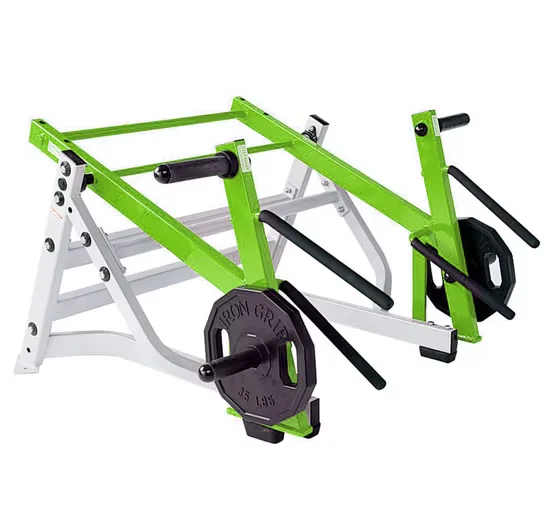
![Hammer Strength Plate Loaded Smith Machine OS-H5045 Commercial Gym Equipment [WARN] draft identifier mismatch](https://bicksport.com/wp-content/uploads/2026/08/hammer-strength-plate-loaded-smith-machine-os-h5045-commercial-gym-equipment-warn-draft-identifier-mismatch-7095a9.webp)
![Hot Seller Gym Machine / Fitness Equipment Hammer Strength Adjustable Abodominal BoardOS-H5060 Commercial Adjustable Abdominal Board Gym Machine Fitness Equipment[WARN] draft identifier mismatch](https://bicksport.com/wp-content/uploads/2026/08/hot-seller-gym-machine-fitness-equipment-hammer-strength-adjustable-abodominal-boardos-h5060-commercial-adjustable-abdominal-board-gym-machine-fitness-equipmentwarn-draft-identifier-mismatch-37782c.webp)
![Commercial Abdominal Work Station Sprots Equipment [WARN] draft identifier mismatch](https://bicksport.com/wp-content/uploads/2026/08/commercial-abdominal-work-station-sprots-equipment-warn-draft-identifier-mismatch-b06540.webp)