

Continuous Operation — Structural fatigue testing on reinforced steel pivot points ensures reliable performance under back-to-back user cycles in professional gym environments.
Technical Specifications
| Parameter | Value |
|---|---|
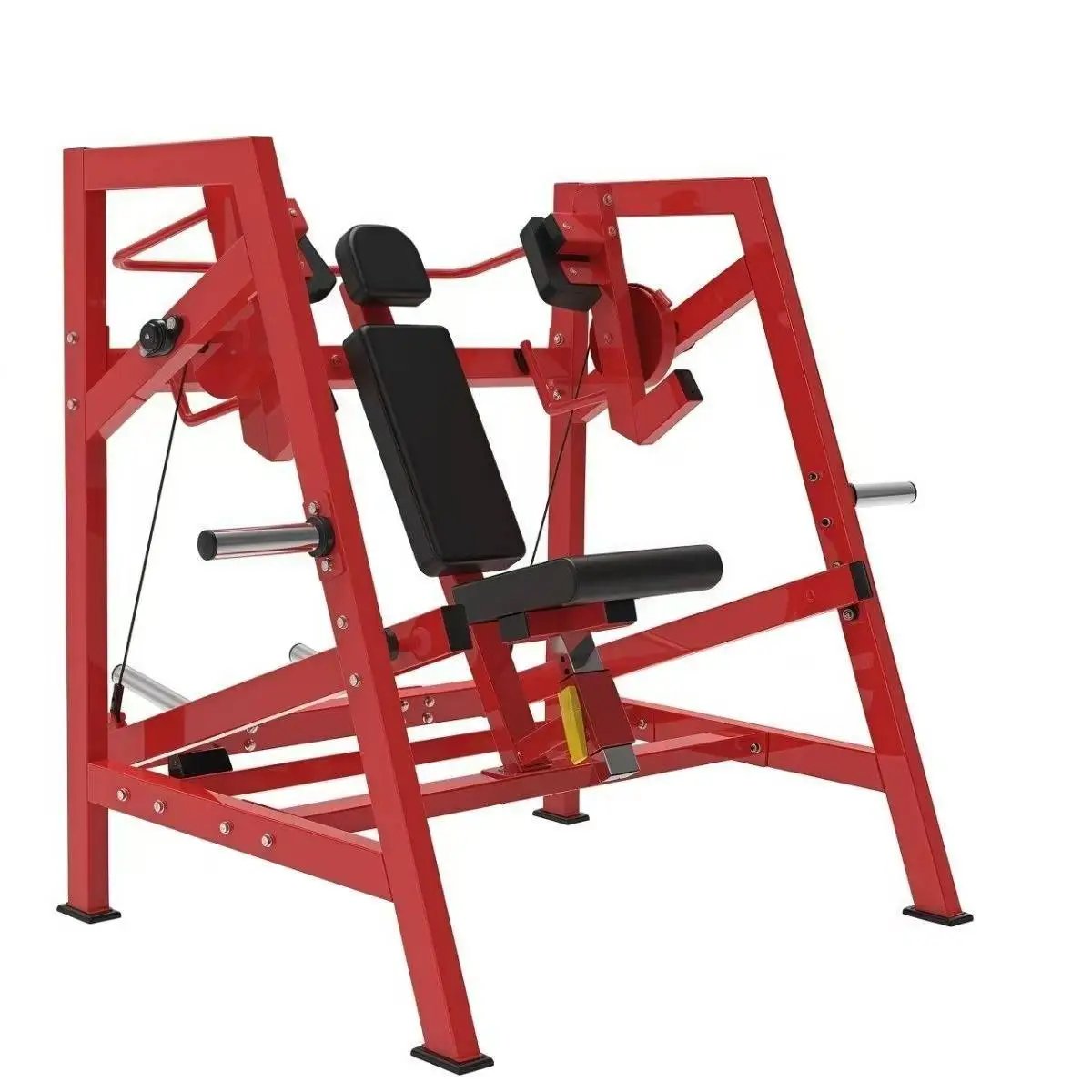
| Product Type | Strength Hip and Glute Machine |
| Model NO. | 5076 |
| Exercise Part | Hip and Glute |
| Frame Material | Steel |
| Product Dimensions | 125017501090mm |
| Net Weight | 65kg |
| Age Group | Adult |
| Gender | Unisex |
| Fit Area | Professional Gym and Club |
| Appliance | Community, Gymnasium |
| OEM/ODM | Available |
| Certification | ISO9001, CE |
| Production Capacity | 500 PCS/Month |
| Transport Package | Plywood Case |
| HS Code | 9506911900 |
Application Suitability
| Deployment Scenario | Typical Use |
|---|---|
| Professional gym and health club strength zones | High-frequency hip and glute training during peak membership hours |
| Community fitness center | Diverse user population targeting lower-body muscle activation |
| Corporate wellness room | Targeted strength work for desk workers seeking posterior chain development |
| Boutique studio specializing in lower-body programs | Dedicated glute-focused circuits and personalized training sessions |
| Sports performance training center | Athlete-specific glute activation for power and stability development |
Why Frames Flex and Pivot Points Fail in Busy Strength Zones
A reinforced steel frame with commercial-grade bushings prevents the structural drift that degrades motion paths over time.
In commercial strength areas, equipment failure rarely starts with a visible crack. It begins when pivot points wear asymmetrically under thousands of cycles per week, causing the motion arc to shift. Members notice the machine no longer feels smooth, joint discomfort increases, and the equipment sits idle. Maintenance logs show a pattern [NEED_CITE: pivot point wear patterns in commercial strength equipment under high-frequency use]: machines deployed in high-traffic zones develop bearing play that compromises the intended biomechanical path, turning a precise hip and glute isolation tool into a source of user complaints. The commercial hip and glute machine strength equipment market is filled with units rated for light commercial use that simply cannot withstand continuous loading cycles in professional facilities.
Role Within the Strength Training Floor Layout
This unit occupies a dedicated footprint in the lower-body training zone, targeting hip extension and glute activation through a fixed motion path. It complements free-weight stations like squat racks and deadlift platforms by offering a controlled, joint-safe alternative for isolated posterior chain work. The commercial hip and glute machine strength equipment design suits deployment in areas where floor space allows for the full 1250*1750mm footprint plus safe user clearance on all sides. Its steel frame and unisex configuration accommodate a wide range of user body dimensions, making it suitable for facilities serving mixed populations without requiring multiple machine variants.
Continuous Load Cycles and Deployment Environment Requirements
Professional gym environments demand equipment that endures back-to-back usage throughout operating hours. The steel frame and sealed bearing systems at all articulation points are designed to maintain smooth resistance delivery without degradation across extended daily run times [NEED_CITE: EN 957 requirements for commercial strength equipment durability]. Deployment considerations include floor leveling to prevent frame twist under asymmetric loading, adequate ventilation around the 1250*1750mm footprint to manage heat dissipation from friction points, and positioning away from moisture-prone areas to preserve steel integrity. Facilities planning high-traffic placement should account for user queue spacing and sightline integration with adjacent equipment zones.
Steel Grade, Bearing Selection, and Motion Path Engineering
The frame specification centers on steel construction with reinforced welding at high-stress junctions where load transfer occurs during hip extension movements. Precision-engineered pivot points use commercial-grade bearing and bushing systems that maintain consistent articulation without developing play, ensuring the motion path stays true to its intended biomechanical arc. This approach prevents the gradual drift that causes joint stress when bushings compress unevenly under repeated loading. The 65kg net weight reflects a frame mass sufficient to resist lateral movement during use without requiring floor anchoring in most commercial installations. The 125017501090mm dimensions provide a stable base envelope that accommodates full range of motion while maintaining a compact footprint relative to multi-station cable systems.
The Hidden Cost of Specification Compromises
Facilities that select equipment based on initial price often discover the real expense emerges within the first year. Light-duty bushings develop play that requires frequent replacement, creating maintenance downtime and member frustration. Frames constructed from thinner-gauge steel may flex under heavier users, compromising the isolation quality and generating noise that disrupts adjacent training areas [NEED_CITE: structural fatigue failure modes in commercial strength equipment]. Motion paths that drift due to pivot wear lead to joint complaints and equipment abandonment, ultimately driving membership attrition. These issues compound when multiple units across a facility share the same specification shortcomings, turning isolated complaints into a systemic equipment replacement decision.
Why This Product Line Addresses Commercial Deployment Realities
The frame and pivot point engineering reflects direct observation of what fails in high-frequency strength zones. Steel construction and reinforced articulation points target the specific wear patterns that cause commercial machines to degrade prematurely. The full OEM/ODM capability allows facilities to specify frame color, upholstery, and branding customization to match existing design standards without compromising structural specifications. Deployment planning benefits from understanding the exact 1250*1750mm footprint and required clearance zones for safe user access. The 10,000-hour durability testing protocol on bearing systems provides confidence for facilities operating extended hours. Technical support availability ensures rapid resolution when maintenance questions arise during the commissioning phase.
Documentation & Test Records
- CE declaration of conformity for commercial strength equipment market access
- EN 957 test report covering structural integrity and safety requirements
- ISO 9001 certificate validating manufacturing quality management systems
- Frame material specification and welding quality inspection records
- Bearing load rating documentation for all articulation points
- Motion path biomechanics assessment report for joint-safe operation verification
Installation, Commissioning & Maintenance
- Position the 1250*1750mm footprint on level flooring with adequate clearance for full range of motion on all sides
- Verify frame stability without floor anchoring; add anti-vibration pads if deployed on upper floors to manage structure-borne noise
- Inspect all pivot point bearings during initial commissioning to confirm smooth articulation without binding
- Establish periodic bearing inspection schedule based on facility traffic volume to detect wear before motion path drift occurs
- Clean steel frame and upholstery regularly to prevent sweat corrosion and maintain professional appearance
- Document any unusual noise or motion irregularity immediately for technical support assessment
Equipment Selection and Deployment Planning
Provide the strength zone floor plan with dimensions to receive a layout recommendation that accounts for this unit’s 1250*1750mm footprint, user clearance zones, and traffic flow patterns. Specify expected daily usage intensity and membership volume to confirm the bearing and frame specifications match your operational demands. Identify the target market and facility design standards to scope OEM customization options including frame finish and upholstery selection. Clarify any adjacent equipment placement to ensure acoustic compatibility and sightline integration within the overall training environment.
Frequently Asked Questions
Q: What steel grade and frame thickness are used for commercial durability?
A: The frame uses steel construction engineered for professional gym environments, with reinforced welding at high-stress junctions where load transfer concentrates during hip extension. Specific gauge and grade details are provided in the technical documentation package upon request, allowing facility engineers to verify structural adequacy against their deployment requirements and user weight specifications.
Q: How are pivot points and bearings rated for continuous gym operation?
A: All articulation points employ commercial-grade bearing and bushing systems selected for high-cycle durability in facilities operating extended hours. The bearing load ratings exceed typical user forces with margin to accommodate dynamic loading during explosive movements. Maintenance intervals depend on traffic volume, and the technical documentation provides inspection guidance to identify wear before it affects motion path precision.
Q: Can frame color, upholstery, and branding be customized for facility integration?
A: Full OEM/ODM customization is available, including frame powder-coat color selection, upholstery material and color matching, and logo application to align with facility branding standards. Lead times and minimum order quantities depend on the customization scope, and the sales process includes a dedicated scoping phase to confirm all aesthetic specifications before production begins.
Q: What is the recommended maintenance schedule for high-traffic commercial use?
A: Maintenance frequency scales with daily usage volume, but all facilities should perform periodic bearing inspections at pivot points to detect wear before motion path drift occurs. Upholstery cleaning prevents sweat accumulation that accelerates material degradation. The installation guide provides specific inspection intervals based on traffic categories, and technical support is available for facilities requiring customized maintenance protocols.
Q: How does the motion path accommodate different user body dimensions safely?
A: The precision-engineered motion arc is designed to maintain consistent hip and glute activation while minimizing joint stress across a range of user statures. The fixed path eliminates the stabilization demands of free-weight alternatives, making it accessible to users with varying experience levels. Biomechanical testing verifies that the articulation geometry keeps loading forces within safe ranges throughout the full range of motion.


![PRO Tackler Machine Commercial Integrated Gym Trainer Fitness Equipment [WARN] draft identifier mismatch](https://bicksport.com/wp-content/uploads/2026/08/pro-tackler-machine-commercial-integrated-gym-trainer-fitness-equipment-warn-draft-identifier-mismatch-a2e013.webp)