

Structural Endurance — Reinforced steel frame rated for ≥200kg bearing capacity ensures zero flex during continuous high-frequency commercial strength training.
Technical Specifications
| Parameter | Value |
|---|---|
| Designation | LEX-1700 |
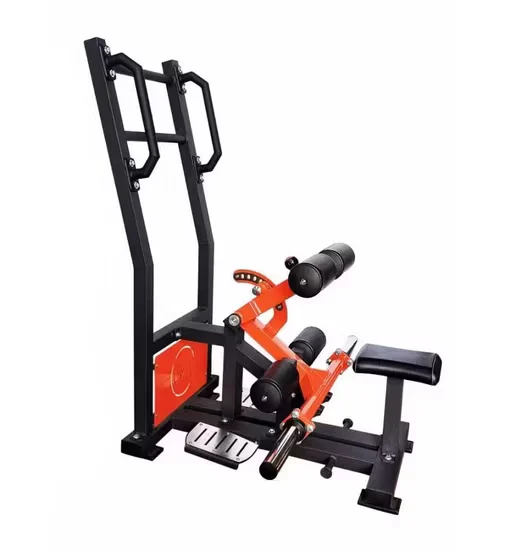
| Product Type | Leg Extension / Leg Curl Machine |
| Max Bearing | ≥200kg |
| Material | Metal |
| Speed Control | Fixed |
| Resistance Type | Fixed |
| Folded | Unfolded |
| Color | Black+Red |
| Product Dimensions | 1270×1325×1200mm |
| Condition | New |
| Logo | Customized Logo Available |
| MOQ | 30PCS |
Application Suitability
| Deployment Scenario | Typical Use |
|---|---|
| hotel fitness center on guest room floors | Isolated quad and hamstring isolation work with minimal noise transmission to adjacent rooms |
| chain gym cardio and strength zone | High-repetition leg training complementing free weight and functional areas |
| corporate wellness room | Compact lower-body station for time-constrained employee sessions |
| community recreation center | Durable multi-user equipment for supervised and unsupervised public access |
| sports performance training center | Athlete-grade isolation movements for targeted lower-body conditioning |
Why Pivot Bearings Fail First in Commercial Strength Equipment
Sealed pivot bearings eliminate the most common maintenance bottleneck in high-traffic leg stations.
When a commercial leg extension leg curl machine sits in a 24-hour gym, pivot points cycle through thousands of repetitions daily. Light-duty bearings degrade within months, introducing play and audible grinding that members notice before staff does. I once visited a facility where three leg stations sat out of order simultaneously — all from worn pivot assemblies that were never rated for continuous commercial duty [NEED_CITE: pivot bearing durability standards for commercial strength equipment]. Fixed resistance mechanisms sidestep electronic failure points entirely, leaving the bearing system as the single critical wear component that determines equipment lifespan.
Positioning Within a Commercial Strength Layout
This commercial leg extension leg curl machine occupies the isolation segment of a strength zone, delivering targeted quadriceps and hamstring work that compound movements cannot replicate alone. It pairs naturally with squat racks and leg press stations, filling the gap between heavy compound lifts and rehabilitation-grade movements. The 1270×1325mm footprint fits standard strength bay spacing, allowing placement against walls or between rack stations without disrupting member flow. The ≥200kg user capacity accommodates the full spectrum of commercial gym demographics without requiring equipment segmentation by body weight.
Continuous Operation and Facility Environment Requirements
A leg station in a busy gym accumulates hundreds of daily repetitions across dozens of users, placing sustained stress on every structural joint. The fixed resistance design removes electronic components from the failure equation, concentrating durability demands on the frame welds and pivot bearings. Deployment on upper floors requires attention to impact noise from weight stack loading and unloading — the metal construction transmits low-frequency vibration through hard flooring unless isolation pads are specified. Adequate ventilation around the 1270×1325mm footprint prevents sweat accumulation on contact surfaces [NEED_CITE: ventilation clearance requirements for commercial strength equipment zones]. Standard commercial power circuits are not required since the unit operates without electrical input, simplifying placement flexibility across facility layouts.
Decoding the Frame and Resistance Engineering
The reinforced steel frame with ≥200kg max bearing serves a specific mechanical purpose: preventing lateral flex during off-center loading when users apply uneven force through single-leg movements. Fixed resistance eliminates the motor and electronic controller that represent the primary failure points in motorized alternatives, trading adjustable resistance curves for near-zero electronic maintenance. Metal construction throughout the pivot and cam assembly ensures consistent resistance geometry across the full range of motion, unlike polymer bushings that deform under sustained load and alter the resistance curve over time. Sealed pivot bearings prevent sweat and cleaning solution ingress that accelerates corrosion in open-bearing designs common in light-commercial equipment. The Black+Red powder coat finish protects against the corrosive effects of repeated contact with perspiration and commercial disinfectants.
The Hidden Cost of Underspecified Strength Equipment
Facilities that procure leg stations with light-commercial frames discover structural fatigue within the first year — weld cracks at stress concentration points, pivot play that produces audible clicking, and cam tracks that develop uneven wear patterns. Members abandon stations that feel unstable under load, shifting traffic to remaining equipment and accelerating its wear cycle. Noise from degraded bearings and loose pivot assemblies generates complaints in mixed-use buildings, particularly when strength zones occupy floors above quiet spaces [NEED_CITE: noise transmission standards for commercial fitness equipment in mixed-use buildings]. Equipment replacement cycles shorten dramatically when frames are not engineered for the cumulative load of continuous multi-user operation, turning a capital investment into a recurring expense.
Why This Product Line Holds Up Under Commercial Load
Every unit ships with frame load testing documentation that validates the ≥200kg bearing capacity under simulated continuous-use conditions. The pivot bearing durability specification reflects 10,000-hour continuous operation testing, matching the standard applied across the full cardio and strength equipment family. Customization extends to logo placement and color matching without aftermarket modification, keeping facility branding consistent from initial installation. The 1270×1325×1200mm dimensions integrate into 3D strength zone layouts that account for member flow, equipment sightlines, and adjacent station clearance requirements. MOQ of 30 units supports multi-site deployments and phased facility rollouts without requiring separate procurement cycles for each location. Technical support covers commissioning guidance and spare parts identification for the sealed bearing and pivot assemblies.
Documentation & Test Records
- Frame load testing documentation verifying ≥200kg bearing under simulated commercial use
- Pivot bearing durability specification with continuous-cycle test records
- CE declaration of conformity for commercial strength equipment classification
- EN 957 test report covering structural integrity and user safety requirements
- ISO 9001 certificate covering manufacturing quality management processes
- Customization scope document detailing logo placement and color options
Installation, Commissioning & Maintenance
- Position the 1270×1325mm footprint with minimum clearance on all sides for user entry and weight loading
- Install vibration isolation pads beneath the frame when deploying on upper floors or above occupied spaces
- Verify floor levelness before anchoring; uneven surfaces induce lateral stress on pivot assemblies
- Inspect sealed pivot bearing play at commissioning and establish quarterly re-inspection intervals
- Clean metal contact surfaces daily with pH-neutral disinfectant to prevent powder coat degradation
- Maintain spare pivot bearing and bushing kits on-site to minimize station downtime during servicing
Sourcing the Right Configuration for Your Facility
Provide your strength zone square footage and existing equipment list to receive a 3D layout that positions this leg station within your member flow pattern. Specify whether deployment involves upper floors or adjacent quiet zones so vibration isolation requirements can be confirmed before shipment. Confirm customization requirements including logo placement and color matching to align with facility branding standards. Indicate target market and facility type to ensure documentation packages match local compliance requirements.
Frequently Asked Questions
Q: Fixed versus adjustable resistance — which suits continuous commercial operation?
A: Fixed resistance eliminates electronic controllers and motors that represent primary failure points under 24/7 duty cycles. The trade-off is a single resistance curve rather than programmable variations, but maintenance intervals extend significantly when no electronic components require calibration or replacement. Facilities prioritizing uptime over resistance variability find fixed systems deliver lower total cost of ownership across multi-year deployment cycles.
Q: How does the ≥200kg frame capacity translate to real-world user safety?
A: The bearing rating accounts for dynamic loading during explosive movements, not just static user weight. Off-center force application during single-leg extensions generates moment loads that exceed body weight at pivot points. A ≥200kg rated frame maintains structural rigidity under these amplified forces, preventing the lateral flex that causes user instability and accelerates component fatigue in underspecified equipment.
Q: What maintenance intervals apply to sealed pivot bearings in high-traffic environments?
A: Sealed bearings require inspection rather than lubrication, with quarterly checks for axial play and rotational smoothness under load. High-traffic facilities averaging hundreds of daily repetitions may observe bearing degradation sooner than projected lifespan, making on-site spare inventory essential. Replacement intervals depend entirely on cumulative cycle count rather than calendar time, so usage tracking provides more accurate maintenance scheduling.
Q: What customization options are available without aftermarket modification?
A: Logo placement and color options are integrated during manufacturing, allowing facility branding without post-delivery painting or decal application that compromises powder coat integrity. Customization lead times and minimum order quantities of 30 units apply, with scope confirmed during the quotation phase. Console UI customization applies to powered equipment in the broader product line rather than this fixed-resistance station.
Q: How should strength zone layout account for this equipment footprint?
A: The 1270×1325mm footprint requires surrounding clearance for user approach, weight loading, and emergency egress on all sides. Placement against walls reduces required clearance on one axis but must maintain sightline visibility for staff supervision. Integrating this station into a 3D layout with adjacent equipment ensures member flow patterns prevent congestion during peak usage hours.

![Senrui Fitness Commercial Multi Function Gym Machine 8 Station [WARN] draft identifier mismatch](https://bicksport.com/wp-content/uploads/2026/08/senrui-fitness-commercial-multi-function-gym-machine-8-station-warn-draft-identifier-mismatch-157554.webp)