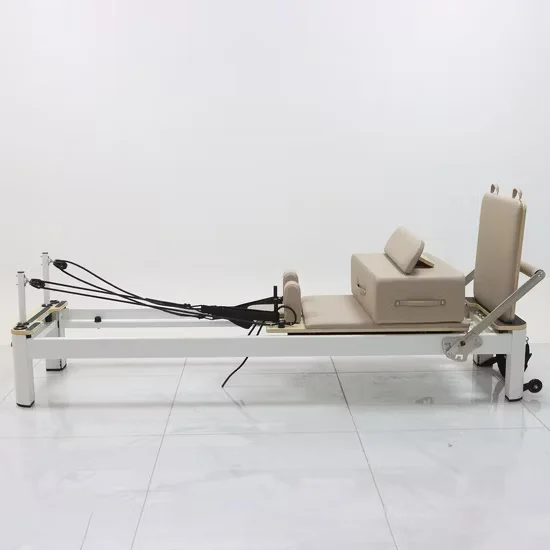
Rigid Metal Frame — folding Pilates reformer maintains carriage alignment under loaded spring tension across thousands of repetitions.
Technical Specifications
| Parameter | Value |
|---|---|
| Product Type | Pilates Reformer |
| Frame Material | Metal Frame |
| Foldable | Yes |
| Accessories | Long Box / Jump Board / Platform |
| Color | Solid Color (customizable) |
| Net Weight | 50 kgs |
| Product Dimensions | 2000 × 500 × 340 mm |
| Customization | Available (Logo, Color) |
| Warranty | 3 Years |
Application Suitability
| Deployment Scenario | Typical Use |
|---|---|
| Boutique Pilates studio | Multiple reformers in compact floor plans with folding storage between classes |
| Multi-purpose fitness center | Converting space between yoga mat sessions and reformer classes |
| High-end residential wellness room | Limited square footage requiring equipment to fold away after use |
| Rehabilitation center | Controlled spring-resistance movements for guided recovery sessions |
| Corporate wellness room | Flexible equipment that clears the floor for alternate programming |
Why Carriage Rattle Reaches the Studio Owner Before the Instructor Does
Frame flex at the hinge is the first thing members notice when a folding reformer ages.
Studios that convert between class formats need equipment that reconfigures quickly without introducing play at the folding joint. Lightweight aluminum frames often develop lateral movement over time, producing audible rattles during carriage travel that disrupt the controlled atmosphere a Pilates session demands. When a commercial folding pilates reformer metal frame uses steel instead, the hinge points and locking pins resist deformation through repeated deployment cycles, keeping the carriage tracking true. The difference shows up within the first year of daily studio use, where cheaper mechanisms begin to knock during jump board work and explosive spring transitions [NEED_CITE: folding mechanism cycle testing standards for commercial Pilates equipment].
Where This Reformer Fits in a Multi-Discipline Studio Layout
This unit covers full-range reformer work from foundational spring sequences to jump board plyometrics, occupying a single footprint that folds vertically between sessions. In a studio running both mat and equipment classes, the commercial folding pilates reformer metal frame pairs with mat zones and pairs well alongside tower or Cadillac units that remain stationary. The 180 kg user capacity accommodates a wide range of body types, and the metal frame handles the lateral forces generated during standing platform work. Spring tension calibration stays consistent across high-frequency daily scheduling, so instructors do not need to adjust resistance between back-to-back classes.
Daily Deployment Cycles and Floor-Level Noise Transmission
A studio running four to six reformer classes per day subjects the folding mechanism to constant open-close cycles, making hinge durability critical to maintaining a quiet environment. The metal frame absorbs vibration rather than transmitting it through the floor, which matters when the studio sits above occupied commercial or residential space. Adequate clearance around the 2000 × 500 mm footprint allows instructors to move between units without collision, and ceiling-mounted airflow should account for the heat generated by groups working at elevated heart rates. Floor leveling is essential; an uneven surface causes the carriage to drift and accelerates wear on the rail surfaces [NEED_CITE: floor flatness requirements for commercial Pilates studio installations].
What the Spring and Rail Specs Actually Mean for Class Flow
Metal frame construction provides rigidity that aluminum cannot match under loaded spring tension, keeping the carriage centered on the rail through thousands of repetitions without lateral drift. The folding mechanism relies on locking pins at the hinge rather than friction-based clamps, which eliminates the gradual loosening that produces rattle during carriage return. Accessory mounting points for the jump board and long box are precision-machined into the frame, preventing the play that develops when bolt-on brackets shift under explosive movements. Commercial-grade springs maintain their tension calibration through sustained daily use, where light-duty alternatives lose resistance within months and force instructors to compensate verbally. The solid color finish and customizable logo options let studios match the equipment to their interior design without aftermarket wraps.
The Cost of Compromising on Frame Rigidity and Hinge Design
Aluminum frames that save weight upfront develop flex at the folding joint, and the resulting carriage misalignment forces studios into premature rail replacements. Hinge mechanisms built for light commercial duty cannot survive the open-close cycles of a full-class schedule, and the knocking sound during carriage travel becomes the most common member complaint within the first year. Springs that lose tension calibration turn advanced classes into guesswork, as instructors spend time adjusting resistance instead of coaching movement patterns. Studios that source reformers without verifying accessory mounting precision end up with jump boards that shift mid-class, creating safety concerns and liability exposure [NEED_CITE: spring tension drift in commercial Pilates equipment under daily use].
Why This Product Line Was Selected for Commercial Deployment
The metal frame construction is tested to maintain structural integrity through folding cycles that match a multi-class daily schedule. Spring tension calibration records document consistency across extended use, and accessory mounting points are load-tested for jump board impact. Studios receive a 3D layout plan that accounts for reformer spacing, instructor walkways, and ventilation requirements specific to group class density. OEM customization covers logo placement and color matching so the equipment aligns with studio branding without post-purchase modification. Documentation includes installation guides and a spare parts list covering springs, carriage wheels, and hinge components for straightforward long-term maintenance.
Documentation & Test Records
- CE declaration of conformity covering structural and mechanical safety
- Frame weld integrity and load testing records for metal construction
- Folding mechanism cycle test documentation for repeated deployment
- Spring tension calibration records verifying resistance consistency
- Noise assessment report during loaded carriage travel
- Installation guide and spare parts list for springs, wheels, and hinge pins
Installation, Commissioning & Maintenance
- Allow clearance around the 2000 × 500 mm footprint on all sides for safe carriage access and instructor circulation
- Level the floor surface before placement to prevent carriage drift and uneven rail wear
- Inspect folding hinge locking pins monthly for wear and re-grease pivot points per the maintenance schedule
- Verify spring tension calibration quarterly and replace springs showing visible stretch or loss of resistance
- Check accessory mounting slots on the metal frame for play after every 500 jump board sessions
- Wipe down rails and carriage wheels after each class to prevent sweat corrosion on the metal surfaces
Planning Your Reformer Deployment
Provide your studio floor plan and target reformer count to receive a 3D layout covering unit spacing, instructor sightlines, and airflow planning for group class heat loads. Specify whether the space sits above occupied floors so we can address vibration transmission through the metal frame contact points. Indicate any branding requirements for logo placement and color matching during the OEM customization stage. Share your class schedule density so we can confirm spring duty cycles match your daily usage pattern.
Frequently Asked Questions
Q: What is the difference between a steel frame and an aluminum frame for commercial reformer use?
A: Steel frames resist flex under loaded spring tension, maintaining carriage alignment through thousands of repetitions without lateral drift. Aluminum saves weight but develops play at the folding hinge over time, producing audible rattle during carriage travel. For studios running multiple classes daily, the rigidity of a metal frame preserves the quiet, controlled environment that Pilates instruction requires.
Q: How often does the folding mechanism need maintenance under daily studio use?
A: Locking pins and hinge pivot points should be inspected monthly for wear and re-greased according to the maintenance schedule provided with the unit. Studios running four or more classes per day may need to shorten this interval. Catching hinge play early prevents the carriage rattle that becomes the most common member complaint in folding reformer deployments.
Q: When should springs be replaced in a commercial reformer running daily classes?
A: Commercial-grade springs maintain tension calibration through extended use, but visible stretch or measurable resistance loss signals replacement time. Most high-frequency studios schedule quarterly calibration checks and replace springs showing deviation from factory spec. Keeping a spare spring set on hand prevents class cancellations while waiting for parts.
Q: Are the jump board and long box compatible across different reformer models in this line?
A: Accessory mounting points are precision-machined into the metal frame, and the long box, jump board, and platform share standardized slot dimensions across the product range. This means accessories can be swapped between units without modification. Confirm compatibility when ordering replacement parts by referencing the model documentation provided at delivery.
Q: How should a studio plan floor space for folding reformer storage between classes?
A: The 2000 × 500 mm footprint folds vertically, but studios should allocate wall clearance and a dedicated storage zone so units can be moved without collision. A 3D layout plan accounts for folded storage positions, instructor walkways during deployment, and the circulation space needed to unfold units safely before each class begins.