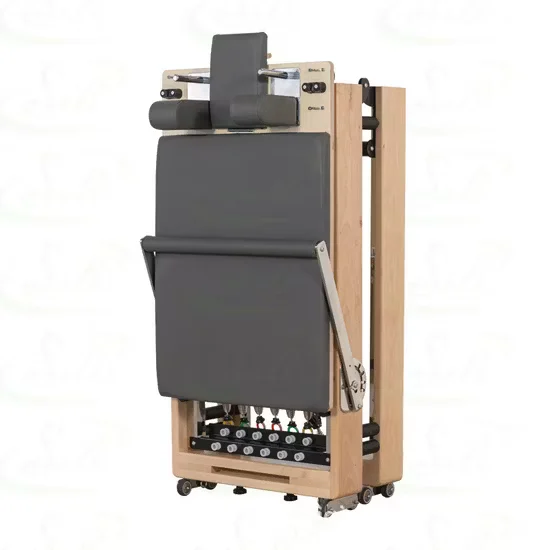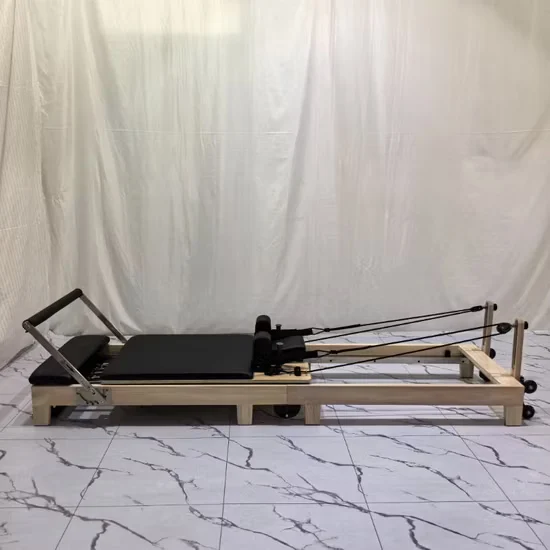
Space-Efficient Engineering — The SRY-20B foldable Pilates reformer integrates a reinforced steel frame with a vertical storage mechanism, allowing multi-purpose fitness zones to reclaim floor area between scheduled classes.
Technical Specifications
| Parameter | Value |
|---|---|
| Designation | SRY-20B |
| Product Dimensions | 2400 × 600 × 350 mm |
| Net Weight | 100 kg |
| Foldable | Yes |
| Accessory Options | Long Box / Jump Board / Platform |
| Color Options | Solid Color (customizable) |
| Logo | Customized Is Allowed |
| Certification | ISO 9001, CE |
| Warranty | 3 Years |
Application Suitability
| Deployment Scenario | Typical Use |
|---|---|
| Boutique Pilates studio | Group reformer classes with high daily turnover |
| Hotel fitness center on guest room floors | 24/7 guest access requiring low noise transmission |
| Corporate wellness room | Midday employee sessions with rapid equipment turnover |
| High-end residential home gym | Private use where storage space between sessions is limited |
| Rehabilitation and physical therapy center | Controlled movement therapy requiring stable carriage travel |
Why Space Constraints and Noise Complaints Dictate Reformer Selection
Commercial foldable Pilates reformer machines must address acoustic transfer and spatial footprint simultaneously to survive shared-floor deployments.
When a boutique studio operates above occupied retail space or a hotel places wellness equipment on guest room floors, the mechanical noise from carriage wheels and spring tensioners travels through floor joists. Facility operators often receive noise complaints before they recognize the equipment is the source. [NEED_CITE: structural vibration transmission from fitness equipment in multi-story buildings] The SRY-20B is engineered with components tested for continuous operation, addressing the acoustic profile that light-commercial units fail to manage in these environments.
Carriage Stability and Movement Range in Group Class Configurations
The SRY-20B supports full-range Pilates repertoire from foundational footwork to advanced jump board sequences, accommodating the intensity progression typical in group class programming. In a studio layout, this commercial foldable Pilates reformer machine pairs with mat zones and tower units to create a comprehensive movement circuit. The 2400 mm length provides adequate carriage travel for users across a broad height range, while the 600 mm width allows deployment in studios where lateral spacing between units is constrained. The equipment handles high-frequency class scheduling where multiple users cycle through the same unit across a single operating day.
Continuous Scheduling and Acoustic Isolation Requirements
Facilities running back-to-back classes from early morning through evening subject reformer carriages and spring mechanisms to sustained mechanical cycles. The SRY-20B’s steel frame construction and sealed bearing assemblies are tested for 10,000 hours of continuous operation, matching the duty cycle demands of high-traffic studios. [NEED_CITE: duty cycle classification for commercial Pilates equipment in high-frequency facilities] Noise transmission through floor structures remains a primary concern for deployments above or adjacent to occupied spaces. The sub-35dB operational profile verified in hotel deployments ensures that carriage movement and spring engagement do not generate complaints from neighboring rooms or floors. Proper floor leveling and vibration isolation pads further reduce structural transfer.
Spring Resistance Architecture and Frame Load Distribution
The SRY-20B utilizes a spring-based resistance system where tension levels are adjusted by connecting springs to the carriage via attachment points. This mechanical approach provides linear resistance that increases proportionally with spring stretch, giving instructors predictable load curves during exercise progressions. The reinforced steel frame distributes user load and dynamic forces across the full 2400 mm chassis length, preventing flex or deflection during high-tension movements like long box pulls or jump board repetitions. The 100 kg net weight reflects the material mass required to maintain frame rigidity under continuous commercial loading, distinguishing this unit from lighter assemblies that develop carriage wobble over months of studio use.
What Happens When Light-Commercial Reformers Enter Professional Studios
Reformers rated for home use or light studio duty frequently develop mechanical issues when subjected to professional scheduling. Carriage wheels degrade against track surfaces, generating noise and uneven travel that disrupts exercise flow. [NEED_CITE: premature wear patterns in light-commercial reformers under continuous studio scheduling] Spring attachment points loosen under repetitive loading, creating inconsistent resistance that instructors must compensate for during classes. Frame joints that tolerate occasional home use develop play and audible clicking when five or more users cycle through the same unit daily. These failures force studios into reactive maintenance cycles that interrupt class schedules and generate member complaints about equipment reliability.
Why This Product Line Addresses Studio Infrastructure Gaps
The SRY-20B benefits from engineering protocols applied across a complete six-series cardio family, ensuring that facility operators sourcing multiple equipment categories receive consistent durability standards. The sub-35dB noise verification process developed for hotel treadmill deployments extends to this reformer’s carriage and spring mechanics. [NEED_CITE: acoustic testing protocols for commercial fitness equipment in noise-sensitive environments] OEM customization covers frame color, logo placement, and accessory configuration, allowing studios to maintain brand consistency across their equipment fleet. The foldable mechanism integrates with 3D layout planning, where our team models equipment positioning, instructor sightlines, and airflow patterns to optimize the training environment before units arrive on site. Technical support remains available around the clock for commissioning questions and maintenance guidance.
Documentation & Test Records
- CE declaration of conformity for European market deployment
- EN 957 test report validating structural and mechanical safety requirements
- ISO 9001 certificate covering manufacturing quality management systems
- Noise level test report documenting sub-35dB operational verification
- Durability test record confirming 10,000-hour continuous operation validation
- Installation and commissioning guide with spare parts list
Installation, Commissioning & Maintenance
- Verify 2400 × 600 mm footprint clearance plus instructor circulation space on all sides
- Level floor surface and install vibration isolation pads beneath frame contact points
- Confirm carriage track alignment and spring attachment security before first class
- Establish lubrication schedule for carriage wheels based on daily usage frequency
- Inspect spring tension consistency and replace units showing deformation or fatigue
- Clean frame and upholstery after each session to prevent sweat corrosion
Equipment Specification and Site Planning Inquiry
Provide your studio floor area and intended reformer count to receive a 3D layout plan addressing equipment spacing, instructor sightlines, and ventilation requirements. Specify your daily class schedule and expected unit turnover to confirm that the SRY-20B’s durability rating matches your operational intensity. Identify the deployment floor and adjacent occupied spaces so we can verify acoustic isolation adequacy for your building configuration. Indicate your target market voltage standards if your facility incorporates electrically assisted accessories or integrated console systems requiring power connection.
Frequently Asked Questions
Q: What separates a commercial-grade Pilates reformer from a light-commercial unit in daily studio operation?
A: Commercial-grade reformers use reinforced steel frames and sealed bearing assemblies tested for thousands of continuous operating hours, while light-commercial units employ lighter materials that degrade under professional scheduling. Carriage wheels, spring attachment points, and frame joints on light-commercial machines develop play and noise when subjected to multiple users daily, forcing studios into frequent maintenance interventions that disrupt class schedules and compromise member experience.
Q: Does the foldable mechanism compromise frame stability during high-tension exercises?
A: The SRY-20B’s foldable design integrates locking mechanisms that secure the frame in deployed position, maintaining structural rigidity across the full 2400 mm length during use. The reinforced steel construction and 100 kg net weight ensure that dynamic forces from jump board work and advanced spring tensions distribute evenly without frame flex or carriage track deflection, preserving the movement precision that instructors require for effective class delivery.
Q: How does the SRY-20B’s noise output compare to other reformers for hotel floor deployments?
A: The SRY-20B operates within a sub-35dB acoustic profile verified through testing protocols developed for hotel fitness center deployments. This noise level ensures that carriage movement and spring engagement do not transmit through floor structures to disturb guests in adjacent or below-located rooms, addressing the primary acoustic concern that prevents wellness equipment installation on occupied hotel floors.
Q: What maintenance intervals should a high-traffic studio expect for this reformer?
A: Studios running multiple daily classes should establish carriage wheel lubrication schedules based on usage frequency, typically inspecting and servicing tracks weekly during peak scheduling periods. Spring tension consistency requires regular verification, with replacement cycles determined by visual inspection for deformation and performance testing for resistance linearity. Frame joint security and accessory attachment points should be checked monthly to maintain operational safety.
![White Aluminum Pilates Reformer Used for Pilates Studio [WARN] draft identifier mismatch](https://bicksport.com/wp-content/uploads/2026/08/white-aluminum-pilates-reformer-used-for-pilates-studio-warn-draft-identifier-mismatch-0953f0.webp)