

Whisper-Quiet Operation — Magnetic resistance system verified below 35dB in hotel deployments where cardio zones sit directly above occupied guest rooms.
Technical Specifications
| Parameter | Value |
|---|---|
| Designation | CTC60 |
| Product Type | Elliptical Trainer |
| Resistance Type | Magnetic |
| Resistance Levels | 1-25 |
| Pedal Center Distance | 230mm |
| Stride Grade | 1-10 |
| Step Depth Grade | 1-15 |
| Console Type | LED |
| Max User Weight | 180kg |
| Product Dimensions | 21207901680mm |
| Net Weight | 240kg |
| Foldable | Unfolded |
| Certification | ISO 9001, RoHS, CE, EN 957 |
Application Suitability
| Deployment Scenario | Typical Use |
|---|---|
| Hotel fitness center on guest room floors | 24-hour access cardio with noise containment for adjacent rooms |
| Chain gym cardio zone | High-frequency daily operation across mixed user profiles |
| Corporate wellness room | Mid-day and after-hours employee training with minimal supervision |
| High-end residential home gym | Shared household use with multi-user weight accommodation |
| Sports performance training center | Interval and endurance sessions requiring consistent magnetic resistance output |
Why Magnetic Resistance Eliminates the Noise Complaints That Reach the Front Desk
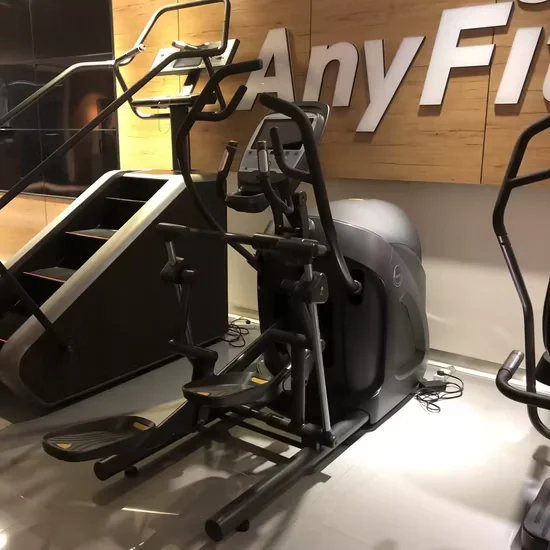
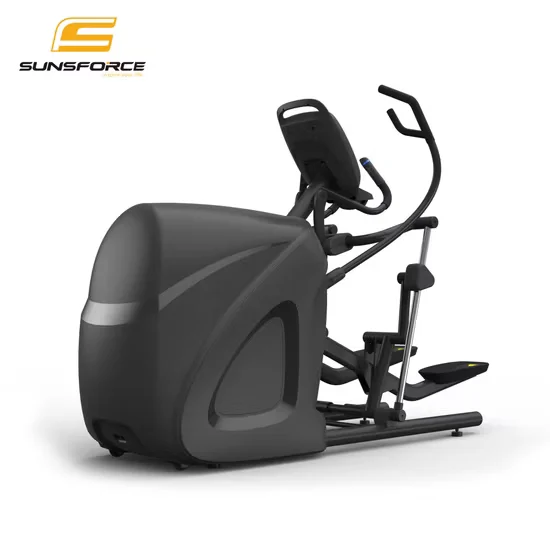
The CTC60 commercial elliptical trainer magnetic resistance LED console system produces operational noise below the threshold that triggers guest complaints in hotel deployments.
I spent years sourcing cardio equipment for hotel properties before moving to the production side. The pattern was always the same: friction-based resistance units ran acceptably for the first few months, then the felt pads wore unevenly and started generating audible scraping on the flywheel housing. Maintenance crews would adjust them weekly, but the noise always crept back. With magnetic resistance, there is no physical contact between the braking element and the flywheel, which means the noise profile stays consistent from day one through year five. Facilities deploying cardio zones on guest room floors or directly above conference spaces need that consistency. [NEED_CITE: operational noise standards for fitness equipment on occupied floors]
Where This Unit Fits in a Mixed Cardio Zone
The CTC60 covers steady-state endurance work through high-intensity interval training across its 25 magnetic resistance levels, filling the gap between treadmills and stationary bikes in a commercial layout. Its 230mm pedal center distance accommodates users across a broad height range without requiring stride adjustment between sessions. In a typical cardio zone, this commercial elliptical trainer magnetic resistance LED console configuration pairs with rowing machines for upper-body complement and stair climbers for vertical loading variety. The 180kg maximum user weight rating means the facility does not need to restrict access based on body composition, which matters in corporate wellness and community fitness environments where user demographics vary widely.
Continuous Operation Requirements and Deployment Environment Constraints
This unit weighs 240kg net, which keeps it stable during high-resistance intervals without floor anchoring, but the deployment surface must be level within tolerance to prevent frame stress over time. In hotel environments, vibration transmission through structural floors becomes the limiting factor rather than airborne noise — placing the unit on isolation pads at the four contact points addresses this. The LED console requires a standard power connection and draws minimal current compared to touchscreen units, which simplifies circuit planning when multiple units share a single breaker. [NEED_CITE: electrical circuit planning for commercial cardio zones with mixed console types] For facilities integrating usage data into management systems, the console data interface documentation should be reviewed during the specification phase to confirm protocol compatibility. Adequate clearance behind and beside the unit — typically the machine length plus half a meter on each side — allows proper airflow around the magnetic resistance housing during extended sessions.
Reading the Magnetic Resistance and Stride Specifications
Magnetic resistance operates through an adjustable magnetic field opposing the flywheel rotation, creating braking force without physical contact. This eliminates the wear cycle that affects friction-based systems and keeps the resistance curve linear across all 25 levels. The CTC60 stride grade adjustment from 1 to 10 changes the horizontal travel arc, while the step depth grade from 1 to 15 alters the vertical component of the pedal path — together, these allow movement pattern variation without requiring the user to switch machines. The 230mm pedal center distance sits within the range that biomechanics research associates with natural gait width, reducing lateral hip stress during longer sessions. The LED console provides real-time feedback on time, distance, resistance level, and heart rate input, delivering the data points facility operators need for usage tracking without the complexity and failure points of touchscreen assemblies.
What Cutting Resistance Specifications Costs in Real Deployments
Facilities that specify elliptical trainers based on resistance level count alone frequently discover that the braking mechanism matters more than the range. Friction-based systems deliver the advertised levels when new, but the felt or brake pad contact surface degrades under the sustained heat generated by high-frequency commercial use, and the resistance curve flattens. Members notice the inconsistency within weeks and gravitate toward treadmills and bikes where the feedback feels predictable. [NEED_CITE: resistance system degradation rates in commercial versus residential use cycles] The resulting underutilization of the elliptical section leaves a dead zone in the cardio layout that squanders floor space and reduces perceived equipment variety.
Why This Product Line Addresses the Specification Gaps
Every CTC60 undergoes magnetic resistance calibration verification on the production line — I check this personally because an improperly set magnetic gap causes resistance steps to skip or feel inconsistent, which I learned the hard way when a batch had to be reworked after a member lost footing during a transition. The 10,000-hour durability testing covers the flywheel bearings, frame joints, and console electronics under continuous load simulation. The LED console option keeps the failure rate low in environments where airborne humidity and cleaning chemicals degrade touchscreen assemblies. For facilities planning complete cardio zones, the six-series product family covers every discipline from a single engineering platform, and the 3D layout service accounts for this unit’s 2120mm length and required airflow clearance when positioning it relative to walls and adjacent machines.
Documentation & Test Records
- CE declaration of conformity covering the CTC60 commercial elliptical trainer
- EN 957 test report documenting structural and operational safety compliance
- ISO 9001 certificate for the manufacturing quality management system
- Noise level test report with measured values under loaded operation
- Magnetic resistance durability test record across extended cycle counts
- LED console technical documentation with data interface specifications
- Installation guide and spare parts list for the CTC60 platform
Installation, Commissioning & Maintenance
- Maintain minimum clearance of 800mm behind and 600mm beside the 2120*790mm footprint for user access
- Level all four contact points before loading; the 240kg frame requires stable, flat substrate
- Connect to a dedicated circuit matching local voltage standards; the LED console draws minimal but constant power
- Verify magnetic resistance calibration at all 25 levels during commissioning before member access
- Inspect pedal bearings and stride adjustment mechanism quarterly under commercial use conditions
- Clean LED console surface with non-abrasive solution to maintain display legibility
Equipment Specification and Zone Planning Inquiry
Provide your cardio zone square footage and target unit count to receive a 3D layout that accounts for the CTC60 dimensions and required spacing between machines. Specify daily operating hours so the duty cycle can be matched to your usage intensity. Indicate the deployment floor level and adjacent room types to confirm whether additional vibration isolation is needed. State your target market voltage and plug standard to ensure electrical compatibility before shipment. Identify whether console data integration with your facility management software is required so the interface documentation can be reviewed during specification.
Frequently Asked Questions
Q: How does magnetic resistance compare to air resistance for commercial elliptical trainer applications?
A: Magnetic resistance provides consistent braking force independent of pedal speed, which means the resistance level selected on the console matches what the user feels regardless of cadence. Air resistance increases with speed, creating a different load profile suited to sprint-focused training. For facilities serving broad user demographics, magnetic systems deliver more predictable feedback across varying fitness levels.
Q: What structural differences separate commercial elliptical trainers from residential models?
A: Commercial units like the CTC60 use reinforced steel frames and sealed bearings rated for continuous operation under loads up to 180kg, while residential models typically specify lighter duty cycles. The magnetic resistance housing, pedal arms, and stride adjustment mechanisms are built to withstand thousands of hours of use across multiple daily users without recalibration or component replacement.
Q: Can the LED console connect to a facility management system for usage tracking?
A: The LED console provides data output through its interface port, and the technical documentation specifies the communication protocol and data format available. Facility operators should review the console interface documentation during the specification phase to confirm compatibility with their management software before finalizing equipment orders.
Q: How do stride grade and step depth adjustments affect the training stimulus?
A: Stride grade modifies the horizontal travel distance of the pedal path, while step depth changes the vertical component. Adjusting these parameters alters which muscle groups receive primary loading emphasis and changes the movement pattern enough to reduce repetitive stress during longer sessions, without requiring the user to move to a different machine.
Q: What maintenance does the magnetic resistance system require under commercial use?
A: Magnetic resistance systems have no contact surfaces to wear, so they eliminate the brake pad or felt replacement cycles required by friction-based designs. Maintenance focuses on periodic inspection of the flywheel bearings for smooth rotation, verification of resistance calibration across the 25 levels, and cleaning of the magnetic gap area to prevent dust accumulation that could affect field consistency.
![Commercial Gym Touch Screen Cross Trainer Elliptical Machine CTC60-T [WARN] draft identifier mismatch](https://bicksport.com/wp-content/uploads/2026/08/commercial-gym-touch-screen-cross-trainer-elliptical-machine-ctc60-t-warn-draft-identifier-mismatch-e7407f.webp)
![Commercial Cross Trainer Elliptical Trainer Exercise Gym Equipment CTC60-T [WARN] draft identifier mismatch](https://bicksport.com/wp-content/uploads/2026/08/commercial-cross-trainer-elliptical-trainer-exercise-gym-equipment-ctc60-t-warn-draft-identifier-mismatch-db8f96.webp)