Acoustic-Verified Operation — Sub-35dB noise level confirmed across Middle East five-star hotel floor deployments, enabling 24-hour cardio access without guest disturbance.
Technical Specifications
| Parameter | Value |
|---|---|
| Designation | Savo-006M(Air Bike) |
| Product Type | Air Bike |
| Resistance Mechanism | Power-Style Air Resistance |
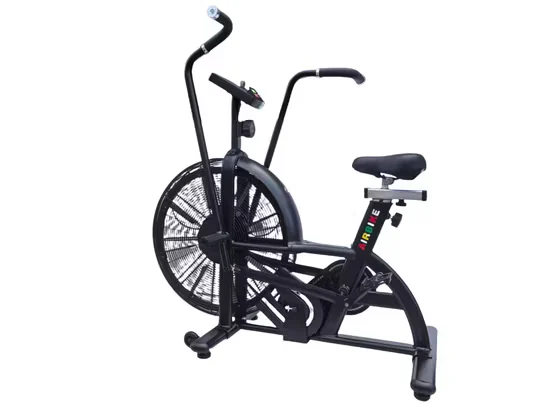
| Fan System | 27-Inch Steel Fan Blades |
| Display | High-Definition Screen |
| Max User Weight | 150kg |
| Net Weight | 49kg |
| Product Dimensions | 1300 × 590 × 1290 mm |
| Folded | Unfolded |
| Condition | New |
| Certification | CE, GS, RoHS, FCC |
| Origin | Shandong, China |
Application Suitability
| Deployment Scenario | Typical Use |
|---|---|
| hotel fitness center on guest room floors | 24-hour self-service cardio with minimal noise transfer to adjacent rooms |
| chain gym cardio zone | High-frequency interval training and metabolic conditioning stations |
| corporate wellness room | Short-duration stress-relief sessions during work breaks |
| high-end residential home gym | Compact full-body cardio for dedicated home fitness spaces |
| sports performance training center | Athlete conditioning with scalable air resistance and biometric tracking |
Why Air Resistance Eliminates the Noise Complaints That Reach the Front Desk First
The fan blade system generates resistance through airflow, removing mechanical friction points that create structure-borne vibration in magnetic and friction-based bikes.
Noise complaints in hotel fitness centers rarely originate from the equipment itself — they travel through floor slabs and wall cavities as low-frequency vibration. When a magnetic resistance bike develops gap drift over months of continuous use, the resulting torque pulsation transmits directly into the building structure. Air resistance systems bypass this failure mode entirely because the 27-inch steel fan blades create drag proportionally to pedal cadence, with no physical contact between resistance elements [NEED_CITE: structure-borne vibration transmission in commercial cardio equipment on elevated floor slabs].
The Savo-006M(Air Bike) operates within the sub-35dB range verified in hotel deployments, meaning the dominant sound signature is broadband airflow rather than tonal mechanical noise. Broadband sound attenuates rapidly through standard floor assemblies, while tonal vibration at specific frequencies can resonate with structural elements and propagate across multiple floors.
Positioning Within the Cardio Zone Layout
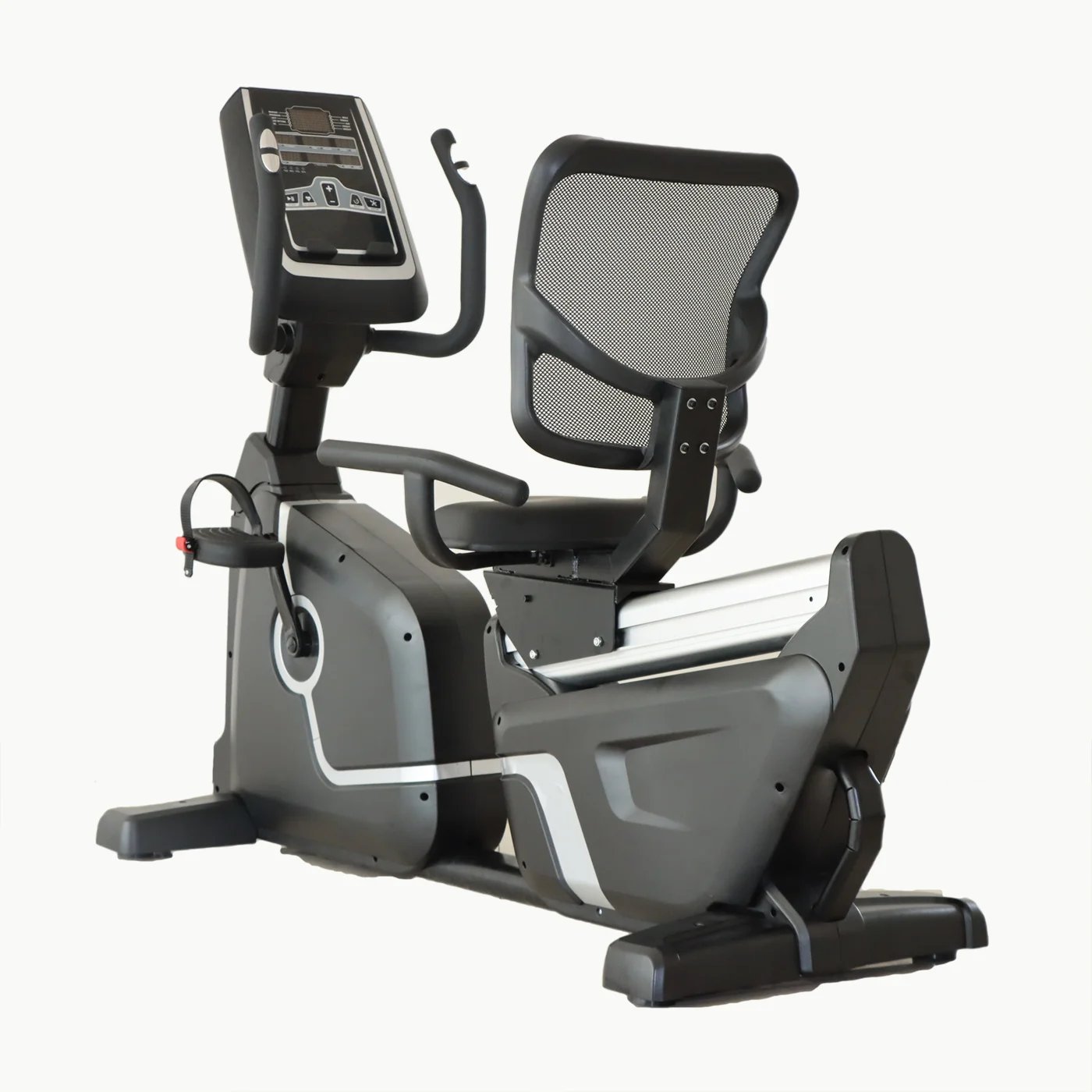
This commercial air bike fan bike gym equipment spinning platform occupies the high-intensity interval segment of a facility’s cardio mix. It pairs naturally with steady-state machines such as recumbent bikes and ellipticals, giving members a complete intensity spectrum within a compact footprint. The 1300 × 590 mm footprint allows deployment in dedicated HIIT bays or alongside strength racks in hybrid training zones. The 150kg max user weight accommodates a broad member demographic, and the self-regulating air resistance means users of any fitness level can scale effort without manual adjustment.
Continuous Duty and Deployment Environment Requirements
Facilities running 16- to 24-hour access schedules need equipment rated for sustained thermal loads. The air resistance system generates minimal internal heat compared to eddy-current magnetic brakes, reducing the thermal management burden in enclosed fitness rooms [NEED_CITE: thermal load comparison between air and magnetic resistance systems in continuous commercial operation]. Adequate ventilation around the fan intake is essential — placing the unit flush against a wall restricts airflow and degrades resistance linearity. A dedicated electrical circuit with correct voltage and plug configuration for the target market prevents nuisance tripping during peak usage windows. Floor leveling and anti-vibration pads further isolate the 49kg frame from structure-borne transmission paths, particularly on suspended floor slabs above occupied guest rooms.
Air Resistance Mechanics and Drive System Behavior
Air resistance scales with the square of fan blade velocity, producing a naturally progressive load curve that differs fundamentally from the stepped increments of magnetic systems. The 27-inch steel fan blades carry sufficient rotational mass to smooth the pedal stroke through dead-center positions, reducing the jerky torque delivery common in smaller-diameter fan designs. Because resistance is generated entirely by aerodynamic drag, there are no magnets to recalibrate, no friction pads to replace, and no gap tolerances that drift with thermal expansion. The power-style resistance adjustment allows users to modulate effort through cadence alone, which simplifies the drivetrain and eliminates the servo motors and control boards that represent common failure points in electronically adjusted systems. The high-definition screen provides real-time workout analytics while drawing minimal current relative to the console’s processing capability.
The Hidden Cost of Specifying Below the Duty Cycle
Choosing a light-commercial air bike for a 24-hour hotel fitness center typically surfaces problems within the first year. Bearings rated for intermittent use develop axial play under continuous rotation, introducing wobble into the fan assembly and generating audible flutter that propagates through floor structures. Frame joints welded for static loads fatigue under the cyclic torque of high-cadence interval work, eventually developing audible creaks that guests report to front desk staff. When console electronics are not rated for continuous power-on operation, screen burn-in and capacitor degradation produce erratic display behavior [NEED_CITE: commercial duty cycle classification for continuously powered fitness console electronics]. Facilities that replace an entire cardio zone within eighteen months due to cascading component failures absorb costs far beyond the initial price differential between light-commercial and full-commercial rated equipment.
Why This Product Line Holds Up Across Deployments
The sub-35dB acoustic signature has been verified in actual hotel floor installations, not just laboratory bench tests. Components undergo 10,000-hour continuous operation testing covering motors, frames, and bearings at simulated peak usage loads. The IoT-enabled HD console supports workout analytics and app sync, allowing facility managers to track utilization without manual audits. OEM customization extends to console UI branding, so hotel groups and gym chains can match the interface to their member-facing applications. The six-series cardio family means a facility can source treadmills, ellipticals, rowers, stair climbers, and spinning bikes from one production line, simplifying spare parts inventory and service protocols. Free 3D cardio-zone layout planning accounts for the Savo-006M(Air Bike) footprint, member flow corridors, and airflow clearances needed for the fan intake. Technical support is available around the clock for commissioning and field diagnostics.
Documentation & Test Records
- CE declaration of conformity for the Savo-006M(Air Bike)
- EN 957 test report covering structural and safety requirements
- ISO 9001 certificate for manufacturing quality management
- RoHS compliance statement for restricted substance limits
- Noise level test report confirming sub-35dB operation
- Durability test record documenting 10,000-hour component validation
Installation, Commissioning & Maintenance
- Maintain minimum 600mm rear clearance for unobstructed fan intake airflow
- Level the 1300 × 590mm footprint and fit anti-vibration pads on suspended slabs
- Connect to a dedicated circuit matching target market voltage and plug standard
- Calibrate the high-definition console and verify data sync on first power-up
- Inspect 27-inch steel fan blade mounting bolts at scheduled service intervals
- Wipe frame and console daily with non-corrosive cleaner to prevent sweat damage
Equipment Selection and Inquiry Guidance
Provide the cardio zone floor area and intended unit count to receive a 3D layout with airflow and sightline planning. Specify expected daily operating hours so the duty-cycle rating can be confirmed against the deployment schedule. Identify the installation floor and adjacent occupied spaces to verify that the acoustic profile meets local requirements. State the target market voltage and plug standard to ensure correct electrical configuration before shipment. Indicate whether console data integration with existing facility management software is required.
Frequently Asked Questions
Q: How does air resistance compare to magnetic systems for noise and maintenance?
A: Air resistance generates drag through fan blade rotation rather than magnetic proximity, eliminating the gap calibration and magnet degradation issues that affect magnetic bikes over time. The dominant sound is broadband airflow, which attenuates through building structures more effectively than the tonal vibration produced by mechanical resistance systems. Maintenance is limited to bearing inspection and fan blade cleaning.
Q: What is the difference between peak and continuous load capacity?
A: Peak load represents the maximum instantaneous force the frame and drivetrain can withstand, while continuous load reflects sustained stress during extended use. Commercial facilities running high-frequency interval programs need equipment rated for continuous duty, because repeated peak loading without adequate continuous rating accelerates bearing wear and frame fatigue at weld joints.
Q: Can the HD console integrate with facility management software?
A: The IoT-enabled high-definition screen supports workout analytics and app sync, allowing usage data to flow into facility management platforms. Integration capability depends on the specific software protocol in use, so providing console technical documentation to the IT team before deployment ensures compatibility can be verified during commissioning.
Q: How does sub-35dB operation benefit hotel deployments?
A: Fitness centers located on guest room floors or adjacent to occupied spaces require equipment that does not generate structure-borne vibration or audible tonal noise. The sub-35dB acoustic profile means the unit produces primarily broadband airflow sound, which building assemblies attenuate effectively, reducing the likelihood of guest complaints during early-morning or late-night use.
Q: What maintenance does the 27-inch fan blade system require?
A: The steel fan blades themselves are wear-free under normal operation. Periodic maintenance focuses on checking mounting bolt torque, clearing dust accumulation from blade surfaces to maintain aerodynamic efficiency, and inspecting the main bearing for axial play. These tasks fit within standard commercial preventive maintenance schedules.