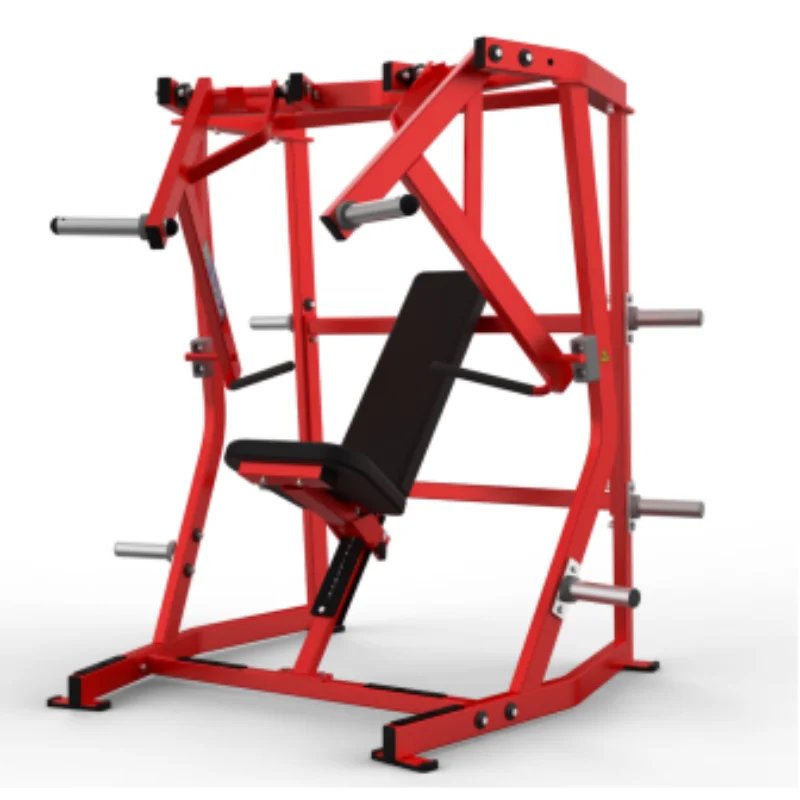
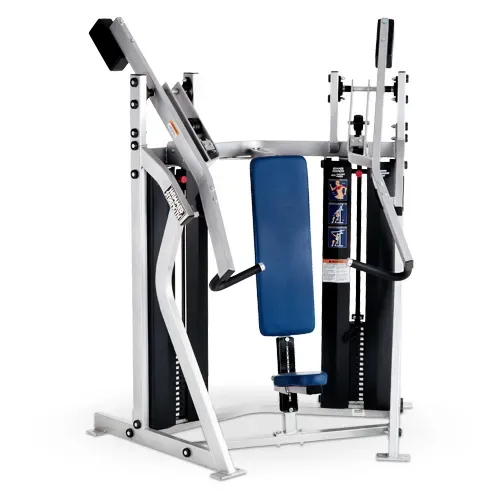
Steel Frame Rigidity — 40 kg net weight and fully welded commercial steel construction verified across continuous high-frequency gym deployments.
Technical Specifications
| Parameter | Value |
|---|---|
| Product Type | Adjustable Bench |
| Material | Steel |
| Product Dimensions | 1215 × 680 × 1070 mm |
| Net Weight | 40 kg |
| Power Source | Manual |
| Foldable | No (Unfolded) |
| Target Exercise Area | Arm, Upper Body, Full Body Compound |
| Function | Body Building, Strength Training |
| Color | Optional |
| OEM / ODM | Available |
| Certification | ISO 9001, CE |
| Max User Weight | 180 kg |
| Application | Fitness Center, Gymnasium, Commercial Gym |
Application Suitability
| Deployment Scenario | Typical Use |
|---|---|
| Chain gym strength training zone | High-frequency dumbbell and barbell pressing, flyes, and seated shoulder work across peak member traffic hours |
| Hotel fitness center | Compact footprint upper-body training for guests with limited space and minimal noise transfer to adjacent rooms |
| Corporate wellness room | Versatile multi-angle bench for employee strength circuits during short break windows |
| High-end residential home gym | Commercial-grade bench durability for daily personal training without frame flex or pad degradation |
| Sports performance training center | Adjustable incline and decline positions for athlete-specific pressing and accessory movement protocols |
Why Strength Benches Fail in Commercial Gyms Before the Warranty Expires
The failure point is almost never the user — it is the weld seam under cyclic fatigue loading.
When a commercial adjustable bench enters a busy strength zone, it endures hundreds of load cycles daily. Members drop dumbbells onto the frame, shift weight abruptly during incline presses, and drag the unit across rubber flooring. Within months, lighter benches develop frame flex at the hinge points, pad covers split along stress lines, and adjustment pins deform under off-axis loading. The bench does not collapse catastrophically; it degrades gradually until members stop using it and maintenance quietly wheels it to a storage closet [NEED_CITE: cyclic fatigue failure modes in commercial gym strength equipment].
This commercial adjustable bench addresses those failure modes through material mass and weld penetration depth rather than cosmetic reinforcement. The 40 kg net weight reflects steel gauge selection across the primary load path — the vertical support column, the horizontal base rail, and the backrest hinge bracket. Each junction receives full-penetration welding rather than spot tacking, distributing stress across a broader zone during eccentric loading phases of movements like decline dumbbell presses.
Positioning Within a Commercial Free-Weight Zone
This adjustable bench occupies the middle layer of a strength training equipment ecosystem — the interface between fixed machines and free-weight stations. In a typical commercial gym layout, it pairs directly with dumbbell racks, squat racks, and cable crossover systems. Members use it for incline dumbbell presses, flat barbell rows, seated shoulder presses, and single-arm dumbbell work that machines cannot replicate through natural movement arcs.
The multi-position backrest covers flat, incline, and decline angles without requiring separate dedicated benches, consolidating floor space in high-density commercial adjustable bench strength training zones. The 180 kg maximum user weight rating accommodates heavier athletes and loaded barbell work. Its manual adjustment mechanism eliminates electrical dependency, meaning it can be positioned anywhere in the facility without proximity to power outlets or cable management concerns.
What a 24/7 Facility Demands From a Strength Bench
A commercial gym operating sixteen or more hours daily subjects every piece of strength equipment to continuous turnover. Bench stations experience rapid user changes — one member finishes a set of incline flyes, wipes the pad, and the next member repositions the backrest for flat dumbbell presses. This cycle repeats throughout operating hours, placing cumulative stress on the adjustment mechanism, the pad mounting hardware, and the frame-to-floor contact points.
The deployment environment matters beyond the bench itself. Rubber flooring thickness affects base stability; uneven concrete subfloors transmit lateral wobble during heavy pressing. Facilities on upper floors must consider impact noise transfer when members set down loaded dumbbells beside the bench [NEED_CITE: structural vibration transfer from strength training equipment on suspended floor slabs]. Adequate spacing between bench stations — typically 1.2 to 1.5 meters on each side — prevents member collision during wide-grip movements and allows spotter access during heavy barbell work.
Dissecting the Load Path and Material Decisions
The 40 kg net weight of this bench places it firmly in the commercial adjustable bench strength training category rather than light-commercial or premium home equipment. That mass concentrates in three structural zones. The base frame uses rectangular steel tubing with wall thickness selected to resist torsional twisting when a loaded barbell creates uneven force distribution during unilateral movements. The vertical support column — the spine connecting the base to the backrest pivot — must resist bending moments generated when a member presses heavy dumbbells at a steep incline angle.
The adjustment mechanism relies on a positive-locking pin system rather than friction-based clamping. Pin-style adjustment offers discrete, repeatable angle positions that do not drift under load. The backrest pad uses high-density foam over a steel-backed mounting plate, preventing the compression hollows that develop when softer foams degrade under repeated point loading from elbows and shoulder blades. The pad covering material resists sweat absorption and tearing along the stitch lines where members grip during heavy sets [NEED_CITE: EN 957 static and dynamic load testing requirements for adjustable training benches].
The Hidden Cost of Underspecified Strength Benches
Purchasing decisions for bench equipment often focus on price per unit and cosmetic appearance — the stitch pattern on the pad, the powder coat color, the overall silhouette. These visible attributes mask the specifications that determine service life in a commercial environment. A bench weighing 25 kg or less typically achieves that mass through thinner wall tubing and shorter weld seams at critical junctions. Under continuous commercial use, the frame develops audible flex within months, the adjustment pin elonga* and the pad foam compresses into permanent channels that members notice immediately.
The operational cost of premature bench failure extends beyond replacement. Members encountering wobbly or degraded benches develop movement compensation patterns, reduce training intensity, or migrate to competitor facilities with better-maintained equipment. Facility operators then face a cycle of bench replacement every twelve to eighteen months rather than the five-year-plus service life that properly specified commercial adjustable bench strength training equipment should deliver [NEED_CITE: total cost of ownership analysis for commercial gym strength equipment replacement cycles].
Why This Bench Line Exists in a Cardio-Engineered Facility
Our manufacturing background centers on acoustic and electronic performance in cardio equipment — sub-35 dB motor operation, IoT console integration, and 10,000-hour continuous duty testing. Applying that engineering discipline to strength equipment means every adjustable bench leaves the facility with verified weld penetration, tested pin-lock engagement force, and documented pad compression recovery after cyclic loading.
The OEM and ODM capability extends beyond logo application. Frame color, pad vinyl color and texture, and overall dimensional specification can be matched to facility design requirements and existing equipment aesthetics. The 3D layout planning service addresses bench station spacing, sightline considerations from facility entry points, and airflow pathways that prevent heat accumulation in densely configured free-weight zones. Technical support coverage operates on a 24/7 basis, matching the operating windows of international gym networks and hotel fitness centers where equipment questions arise outside standard business hours.
Documentation & Test Records
- CE declaration of conformity for commercial adjustable bench strength training equipment
- EN 957 static and dynamic load test report covering frame, adjustment mechanism, and pad assembly
- ISO 9001 quality management system certificate for manufacturing facility
- Noise and vibration transfer assessment for upper-floor deployment scenarios
- Material specification sheet detailing steel grade, wall thickness, and weld procedure
- Pad density test record and upholstery tear-resistance verification
Installation, Commissioning & Maintenance
- Maintain minimum 1.2 m clearance on each side of the 1215 × 680 mm footprint for safe movement and spotter access
- Verify floor levelness before placement; use shimming pads under base feet if concrete subfloor deviation exceeds 3 mm
- Inspect all adjustment pin engagement points upon first assembly; confirm positive lock at each backrest angle position
- Schedule pad mounting hardware torque verification quarterly to prevent loosening under cyclic vibration from dropped dumbbells
- Clean pad surface with pH-neutral vinyl cleaner after each operating shift to prevent sweat salt degradation of stitch lines
- Rotate bench position within the strength zone semi-annually to distribute floor wear and UV exposure evenly
Equipment Specification and Facility Planning
Provide your strength zone floor area and equipment count to receive a 3D layout plan addressing bench station spacing, member traffic flow, and ventilation requirements. Specify daily operating hours and peak member traffic periods so we can confirm this bench configuration matches your facility’s usage density. Indicate deployment floor level and adjacent occupied spaces to assess any vibration transfer considerations. State your target market for documentation and compliance alignment, and confirm whether OEM color matching to existing equipment is required.
Frequently Asked Questions
Q: What steel grade and wall thickness define a commercial-rated adjustable bench frame?
A: Commercial adjustable bench strength training frames typically use Q235 or equivalent structural steel with rectangular tubing wall thickness of 2.5 mm or greater at primary load paths. The 40 kg net weight of this unit reflects material density across the base frame, vertical column, and hinge bracket. Thinner tubing reduces upfront cost but accelerates fatigue cracking at weld junctions under continuous gym use. Request the material specification sheet for exact grade and dimensional data.
Q: How do pin-lock, knob, and gas-spring adjustment mechanisms compare for durability?
A: Pin-lock systems use a solid steel pin engaging discrete holes, offering reliable positive locking with minimal wear components. Knob-type mechanisms rely on threaded compression and can loosen under vibration from repeated dumbbell placement. Gas-spring systems allow smooth angle transitions but introduce sealed cylinder failure risk over thousands of adjustment cycles. For high-frequency commercial adjustable bench strength training environments, pin-lock mechanisms provide the longest service interval with the fewest replacement parts.
Q: What prevents pad foam from developing permanent compression channels over time?
A: High-density polyurethane foam rated above 40 kg/m³ resists permanent deformation under repeated point loading from elbows and shoulder blades. The steel-backed mounting plate distributes force across the full pad surface rather than concentrating stress at bolt locations. Upholstery material with reinforced backing prevents stretch and tearing along high-grip zones. Ask for the pad density test record and cyclic compression recovery data specific to this bench model.
Q: How should adjustable benches integrate with dumbbell racks and squat stations in a strength zone layout?
A: Position adjustable benches with the backrest facing toward dumbbell racks to minimize carrying distance for members selecting weights. Maintain clear sightlines between bench stations and squat racks so spotters can monitor multiple training zones simultaneously. Allow 1.5 m lateral spacing between benches for wide-grip dumbbell flyes and spotter passage. Our 3D layout service models these relationships using your specific floor area and equipment count.
Q: What OEM customization is available for matching this bench to existing facility equipment?
A: OEM options include frame powder coat color, pad vinyl color and texture, embroidered or screen-printed logos on the pad surface, and custom dimensional adjustments within the structural envelope. Minimum order quantities remain flexible to accommodate single-facility deployments or multi-site rollout programs. Specify your existing equipment color references and target market compliance requirements during the inquiry stage for accurate customization scoping.

![Hammer Strength ISO-Lateral Low Row Machine Commercial Gym Equipment [WARN] draft identifier mismatch](https://bicksport.com/wp-content/uploads/2026/08/hammer-strength-iso-lateral-low-row-machine-commercial-gym-equipment-warn-draft-identifier-mismatch-218310.webp)