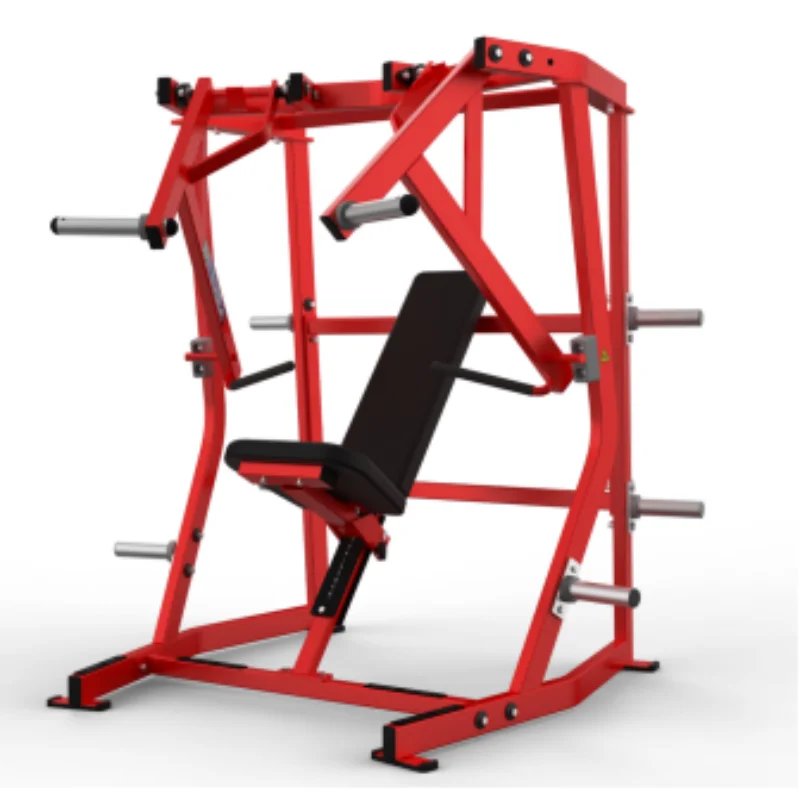
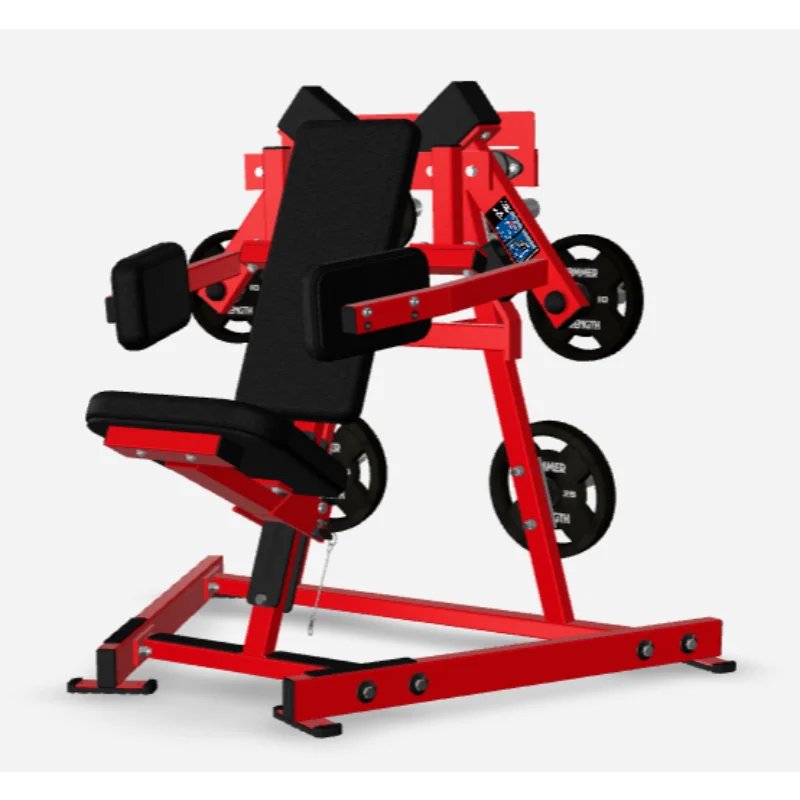
Acoustic Stability — Engineered to maintain frame rigidity and smooth resistance transitions under continuous use, ensuring quiet operation in noise-sensitive environments like hotel fitness centers and shared residential spaces.
Technical Specifications
| Parameter | Value |
|---|---|
| Designation | OS-H5027 |
| Product Type | Adductor Machine (Strength Equipment) |
| Exercise Part | Adductor |
| Material | Steel |
| Specification | 1690730750mm |
| Max User Weight | 180kg |
| Main Frame Color | According to customer requirements |
| Cushion Color | According to customer requirements |
| Net Weight | 139kg |
| Certification | ISO9001, CE |
| OEM/ODM | Acceptable |
Application Suitability
| Deployment Scenario | Typical Use |
|---|---|
| Chain gym strength training zone | High-frequency adductor isolation work by members during peak hours |
| Hotel fitness center | Guest-accessible lower body conditioning with intuitive seat adjustment |
| Corporate wellness room | Compact adductor training complementing cardio and free-weight stations |
| Community fitness center | Durable inner-thigh strengthening for varied user demographics |
| Sports performance training center | Targeted adductor activation for athletes requiring hip stability work |
Why Frame Rigidity Determines Long-Term Member Satisfaction in Strength Zones
A frame that flexes under load destroys confidence before the first set finishes.
When commercial adductor machines see back-to-back users throughout a twelve-hour gym day, any structural weakness reveals itself fast. Welds develop hairline cracks, pivot points develop play, and the entire unit begins to rattle during concentric phases. I have seen facilities replace entire strength lines because the original frames could not handle the duty cycle [NEED_CITE: structural fatigue thresholds in commercial strength equipment under continuous loading]. The commercial adductor machine strength training equipment market is full of units that pass static load tests but fail when real users cycle through hundreds of reps daily. What matters is not whether the frame holds 180kg once — it is whether the steel thickness and welding pattern maintain tolerance after thousands of articulation cycles.
Positioning Within a Professional Strength Training Layout
This commercial adductor machine strength training equipment targets the adductor muscle group through a guided isolation movement pattern, fitting into the hip and lower body station of a structured strength zone. It complements abductor machines, leg press units, and cable crossover stations by covering the inner-thigh vector that compound movements cannot fully address. The 1690730750mm footprint allows placement along perimeter walls or within dedicated machine circuits without disrupting member traffic flow. Users up to 180kg can train with full range of motion, and the fixed movement path suits both beginners learning adductor activation and experienced lifters performing high-volume finisher sets. The seat and pad configuration accommodates different femur lengths through adjustable positioning.
Continuous Use Demands and Deployment Environment Considerations
Facilities running twelve to sixteen hours daily need equipment that tolerates minimal cooldown between users. The steel frame and pivot bearings in this adductor machine are built for that cadence, but deployment planning still matters. Units placed on uneven floors develop lateral stress on the pivot assembly over time, accelerating wear on bushings and guide rods [NEED_CITE: floor leveling requirements for selectorized strength equipment]. Adequate spacing between adjacent machines — at least 600mm on each side — lets users mount and dismount safely while giving maintenance crews access to fastener points. The 139kg net weight provides inherent stability, though rubber isolation mats further reduce vibration transfer to adjacent floors in multi-story buildings.
How the Resistance Path and Pivot Mechanics Actually Work
The adductor movement requires a smooth, consistent resistance curve from the open-leg starting position through full contraction. This machine uses a guided pivot system where the movement arms connect to the resistance source through reinforced linkages. The steel construction ensures the pivot axis stays true under lateral loading — a common failure point in lighter-gauge frames where the arm develops wobble after several months of heavy use. Pad density and upholstery grade directly affect user comfort during high-rep sets; compressed foam that bottoms out causes members to shorten their range of motion, reducing training effectiveness. The seat geometry positions the hip joint at the correct axis of rotation so the resistance vector aligns with the natural adduction plane.
The Real Cost of Compromising on Frame and Bearing Specifications
Cutting corners on steel gauge or bearing quality in an adductor machine does not show up during the first month. It surfaces around month six, when pivot play develops and the movement arms no longer track symmetrically. Members notice the wobble and avoid the machine, leaving it as dead floor space. Facilities then face a choice: rebuild the pivot assembly at significant cost or replace the unit entirely [NEED_CITE: maintenance cost comparison between commercial and light-commercial strength equipment]. Noise from worn bearings also becomes a complaint in quieter environments like hotel gyms, where metallic grinding during adductor sets carries through adjacent walls. Specifying the right construction grade upfront eliminates this cycle.
Why This Product Line Holds Up in Demanding Deployments
Every unit undergoes structural and functional validation before leaving the facility, with frame welds and pivot assemblies inspected against tolerance specifications. The 180kg maximum user weight rating reflects testing that goes well beyond a single static load application. OEM customization covers frame color and cushion upholstery, letting operators match existing gym aesthetics without compromising the underlying build. The complete product range means a facility can source adductor, abductor, and complementary lower body machines from one production line, ensuring consistent dimensions and finish across the strength zone. The engineering team provides layout guidance covering machine spacing, traffic flow, and sightline planning for the entire strength training area. Technical support remains available around the clock for commissioning questions or maintenance troubleshooting.
Documentation & Test Records
- CE declaration of conformity covering mechanical safety requirements
- EN 957 test report validating structural integrity and user safety
- ISO 9001 certificate confirming quality management system compliance
- Frame and weld inspection records from production QC
- Load testing documentation for the 180kg user weight rating
- Spare parts list with recommended replacement intervals
Installation, Commissioning & Maintenance
- Maintain minimum 600mm clearance on all sides for user access and service reach around the 1690730750mm frame
- Install on level flooring with rubber isolation mats to reduce vibration transfer through the 139kg steel structure
- Inspect all pivot bolts and fasteners after the first 500 usage cycles and retorque to specification
- Check pad upholstery and foam density monthly for compression or tearing that affects user comfort
- Lubricate pivot bearings per maintenance schedule to preserve smooth adductor movement articulation
- Verify seat adjustment mechanisms operate freely and lock securely at each position
Equipment Selection and Project Scope Inquiry
Share your strength zone floor plan and target machine count to receive a layout recommendation covering spacing, user flow, and equipment grouping. Specify daily operating hours and expected member volume so the duty cycle requirements can be matched to the right construction grade. Confirm the deployment floor level and adjacent room usage to determine whether additional vibration isolation is needed. State your target market and any OEM requirements for frame color, cushion color, or branding integration.
Frequently Asked Questions
Q: What separates commercial adductor machines from light-commercial or home-grade versions?
A: Commercial units use thicker steel gauges, heavier-duty pivot bearings, and higher-density foam pads designed for hundreds of daily use cycles. Light-commercial versions typically reduce material specifications to lower cost, which leads to pivot play, frame flex, and pad compression within months when deployed in busy facilities. The weight difference between grades is often a reliable indicator of construction quality.
Q: How should I evaluate frame quality before committing to a purchase order?
A: Request weld inspection documentation and load testing records rather than relying on visual assessment alone. Check the steel tube wall thickness specification and ask for the pivot bearing type and rated lifecycle. A 180kg user weight rating backed by test records indicates the frame has been validated under dynamic loading conditions, not just static weight placement.
Q: Does cushion material choice affect long-term operating costs?
A: High-density foam retains its shape and support through thousands of compression cycles, while lower-grade foam compresses permanently and requires earlier replacement. Upholstery tear resistance also matters — vinyl grade and stitching pattern determine how well pads withstand sweat exposure and frequent cleaning. Specifying durable cushion materials upfront reduces replacement frequency and member complaints.
Q: What OEM customization options are available for this adductor machine?
A: Frame color and cushion color can be customized to match your facility design scheme or brand palette. OEM and ODM adjustments to specification are also acceptable depending on order scope. Discuss your requirements during the inquiry stage so customization lead times and minimum quantities can be confirmed before the production schedule is finalized.