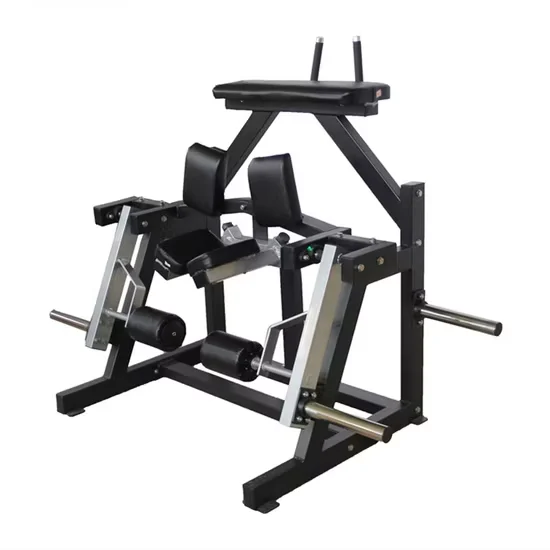
Acoustic-Zero Resistance — manual magnetic load path delivers silent, maintenance-light core training without motor burnout or power-dependency failures.
Technical Specifications
| Parameter | Value |
|---|---|
| Product Type | Abdominal Work Station |
| Model NO. | 5074 |
| Exercise Part | Multi Functional |
| Resistance Type | Manual |
| Max User Weight | 180 kg |
| Frame Material | Steel |
| Main Frame Color | Available per customer requirements |
| Cushion Color | Available per customer requirements |
| Product Dimensions | 2165 × 1020 × 1815 mm |
| Net Weight | 98 kg |
| Foldable | Unfolded |
| Certification | ISO 9001, CE |
| Appliance | Community, Gymnasium |
| OEM/ODM | Acceptable |
Application Suitability
| Deployment Scenario | Typical Use |
|---|---|
| Chain gym functional training zone | High-frequency core conditioning circuits between rack and cable stations |
| Corporate wellness room | Low-noise mid-day abdominal sessions in open-plan office fitness areas |
| Community fitness center | Durable multi-user core station for unsupervised public access hours |
| Sports performance training center | Athlete-grade trunk stabilization work integrated with periodized programs |
| Hotel fitness center on guest room floors | Silent manual resistance compatible with noise-sensitive floor deployments |
Why Frame Rigidity Matters More Than Padding in Commercial Abdominal Stations
A welded steel frame outlasts bolted assemblies under continuous member turnover.
When facility operators select a commercial abdominal work station gym fitness equipment buyers often focus on cushion thickness and adjustability knobs. What actually determines service life is how the main frame handles lateral torque when a 100-plus-kilogram user drives through repeated flexion cycles [NEED_CITE: structural load classification for commercial strength stations]. Bolted joints on light-duty frames gradually loosen under this cyclic loading, creating play at the pivot points. That play transfers directly into uneven resistance feel and accelerated wear on the guide rods. A fully welded steel chassis eliminates those failure points and keeps the movement path consistent across thousands of daily repetitions.
Where the Abdominal Work Station Fits in a Commercial Cardio and Strength Layout
This station targets the anterior core through adjustable-angle trunk flexion, fitting naturally between cable crossovers and functional rigs. In a mixed-use floor plan, it complements high-intensity cardio stations by offering a low-heart-rate recovery movement that still demands muscular effort. The 2165 mm footprint allows placement along perimeter walls or in dedicated core alcoves without disrupting primary traffic lanes. Users from 50 kg to the 180 kg maximum load can work through a full range of motion, making it suitable for general-population gyms and performance centers alike. The commercial abdominal work station gym fitness equipment operates entirely without electricity, so it can be positioned far from power outlets or in zones where cable routing would be impractical.
Continuous Throughput and Deployment Environment Requirements
A manual resistance system means zero motor duty cycle, zero heat generation, and zero dependency on facility electrical circuits. This unit can run continuously from first member entry to final lock-up without thermal shutdown risk or energy cost accumulation [NEED_CITE: energy consumption benchmarks for manual versus motorized gym stations]. Noise output is limited to pad contact and guide-rod friction, keeping ambient sound well below the threshold that triggers complaints in shared-wall or multi-story buildings. Level flooring within a few millimeters across the 2165 × 1020 mm base is essential; any tilt transfers into uneven guide-rod wear and lateral drift during use. Adequate clearance of at least 600 mm on each side accommodates loading plates and user ingress without congesting adjacent equipment paths.
What Manual Resistance Mechanics Mean for Maintenance Schedules
The absence of an electric motor removes the single most common failure point in commercial strength equipment. There are no brushes to replace, no capacitors to degrade, and no cooling fans drawing dust into the housing. Resistance comes from the user’s own body weight acting against the pivoting frame geometry, which means the load curve naturally matches the strength curve of the abdominal muscles through the flexion arc. Guide rods and pivot bearings are the only wear items, and sealed bearing designs prevent contamination from sweat and cleaning chemicals [NEED_CITE: sealed bearing service intervals for commercial strength equipment]. Cushion upholstery is the second consumable; selecting high-density foam with moisture-resistant vinyl covering extends reupholstery cycles substantially in high-humidity environments.
The Hidden Cost of Compromising on Frame Gauge and Weld Penetration
Facilities that procure light-gauge abdominal stations to save upfront capital typically face frame crack inspections within the first year of high-volume use. Hairline fractures begin at the highest-stress weld junctions and propagate under cyclic loading until the unit must be pulled from the floor for safety reasons. Member complaints about wobbling or rattling during use accumulate long before the crack becomes visible, eroding trust in the equipment lineup. Full replacement of a failed frame costs more than the original savings once labor, freight, and downtime are factored in [NEED_CITE: total cost of ownership comparison for commercial gym equipment frames]. Specifying a 98 kg net-weight steel frame from the outset avoids this cycle entirely.
Why This Product Line Earns Its Place in Commercial Procurement Lists
The 180 kg maximum user rating and 98 kg steel frame reflect durability testing aligned with continuous commercial operation expectations, including the manufacturer’s 10,000-hour component endurance protocols. Sub-35 dB ambient noise contribution makes this station deployable on hotel guest-room floors without triggering acoustic complaints. The six-series cardio family available from the same source allows a facility to consolidate procurement across treadmills, bikes, and rowers while maintaining a consistent visual and service relationship. OEM and ODM options cover frame color, cushion color, and branding, enabling chain operators to maintain brand identity across locations. Free 3D floor layout and airflow planning ensure the 2165 × 1020 mm footprint is positioned with correct sightlines and member-flow clearance from the first installation day.
Documentation & Test Records
- CE declaration of conformity covering structural and mechanical safety requirements
- EN 957 test report validating load ratings and stability under dynamic use
- ISO 9001 certificate confirming quality management system compliance
- Noise level test record documenting ambient sound contribution during operation
- Durability test record tracking pivot and guide-rod performance over extended cycles
- Installation and commissioning guide with spare parts identification list
Installation, Commissioning & Maintenance
- Verify level flooring across the 2165 × 1020 mm base; shim if tilt exceeds 3 mm
- Maintain minimum 600 mm clearance on all sides for safe user ingress and plate loading
- Anchor frame to floor using manufacturer-specified fasteners to prevent lateral shift
- Inspect sealed pivot bearings quarterly and replace if play is detected at the joint
- Clean vinyl cushions daily with pH-neutral solution to prevent sweat-salt degradation
- Check frame weld junctions visually every six months for early crack detection
Requesting a Layout and Quotation for Your Facility
Provide the total strength-zone square footage and the planned equipment list so that a 3D layout can position this station with correct clearances and member-flow logic. Specify the expected daily user count and peak-hour density to confirm whether the standard frame gauge matches your throughput requirements. If the station will sit above occupied rooms or adjacent to quiet zones, note the floor construction type so that vibration transmission can be assessed. Confirm whether OEM color matching or custom branding is required for consistency with existing facility aesthetics.
Frequently Asked Questions
Q: How does manual resistance compare to weight-stack resistance for commercial abdominal training?
A: Manual resistance uses the user’s body weight against the pivoting frame, requiring no cables, pulleys, or selectorized plates. This eliminates the maintenance burden of worn cables and stuck pins while delivering a load curve that naturally matches abdominal strength through the flexion range. Weight stacks offer finer incremental loading, which benefits rehabilitation settings, but for general commercial throughput the manual system delivers comparable training stimulus with substantially fewer service interventions.
Q: What is the durability difference between a full steel frame and mixed-material construction?
A: A full welded steel frame maintains structural rigidity under cyclic loading far longer than frames that incorporate aluminum or composite sections at stress junctions. Mixed-material designs reduce shipping weight but introduce galvanic corrosion points and differing thermal expansion rates that gradually loosen joints. For a station rated at 180 kg user weight in a facility seeing hundreds of daily repetitions, the all-steel approach prevents the frame-play issues that lead to premature equipment replacement.
Q: How should frame and cushion colors be coordinated with an existing gym interior?
A: The OEM program allows the main frame powder-coat color and cushion vinyl color to be specified independently, so operators can match brand palettes or zone-coding schemes. Request physical color swatches before confirming bulk production to verify consistency under the facility’s actual lighting conditions. Batch-to-batch color matching is controlled through standardized powder-coat formulations, ensuring that expansion orders delivered months later remain visually identical to the original installation.
Q: What maintenance cycle does an abdominal station require under high-frequency use?
A: Daily wiping of cushions and frame contact points prevents sweat-salt corrosion. Sealed pivot bearings should be inspected quarterly for play and replaced only when lateral movement is detectable. Guide rods benefit from a light silicone lubricant application every three months to maintain smooth travel. Unlike motorized equipment, there are no electrical components, cooling fans, or drive belts on the schedule, which keeps the annual maintenance cost predictable and low.
Q: How much floor space should be allocated around the station for safe operation?
A: The unit footprint is 2165 × 1020 mm. Plan at least 600 mm clearance on each side and 900 mm at the entry and exit ends to allow users to approach, load, and dismount without interfering with adjacent equipment traffic. In high-density layouts, orient the station along a perimeter wall so that only one side requires full clearance, with the back facing a boundary. This preserves member-flow lanes while still providing comfortable access during peak hours.

![Plate Loaded Hammer Strength Decline Abdominal Bench Gym Equipment [WARN] draft identifier mismatch](https://bicksport.com/wp-content/uploads/2026/08/plate-loaded-hammer-strength-decline-abdominal-bench-gym-equipment-warn-draft-identifier-mismatch-857c0f.webp)