
How to Source Compliant Chinese Fitness Equipment for Amazon in 2026
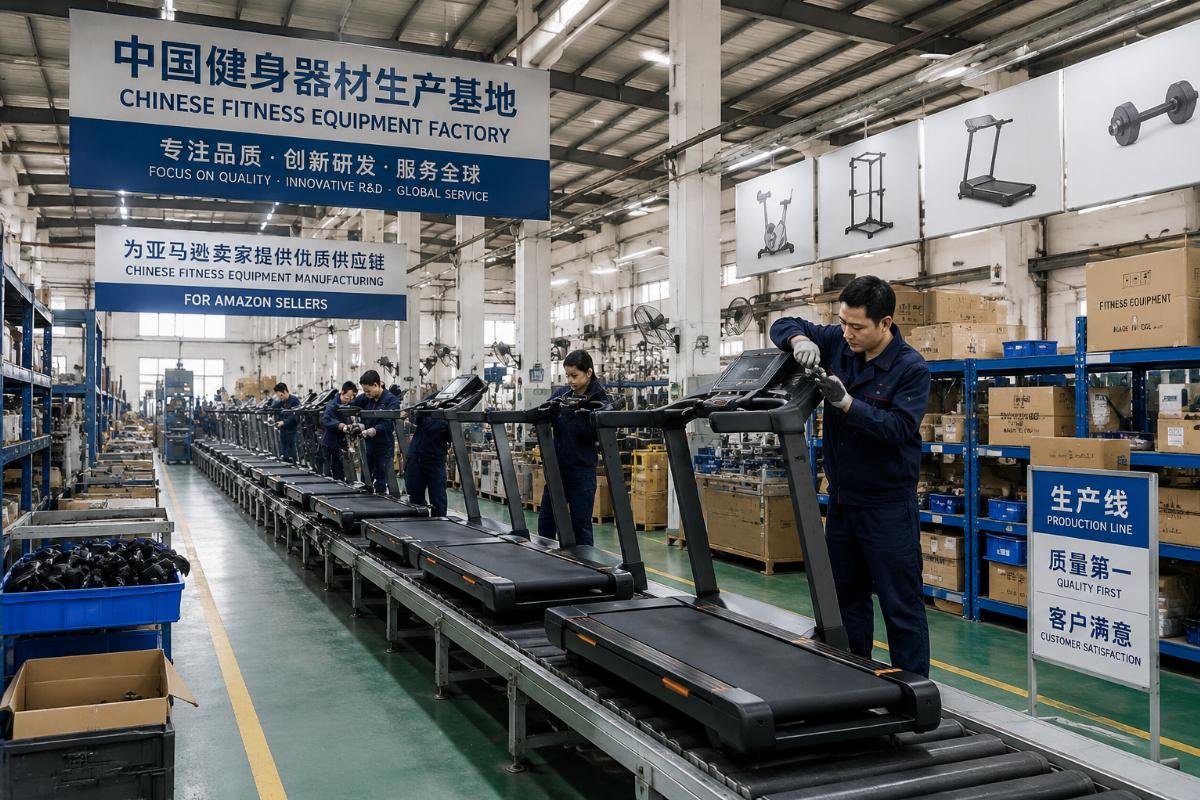
How to Source and Sell Chinese-Made Fitness Equipment on Amazon: A Complete 2026 Guide for Sellers
Most Amazon fitness sellers still believe Chinese-made fitness equipment requires full-container MOQs and cuts corners on quality. For years, outdated assumptions have kept small and mid-sized Amazon sellers locked into overpriced Western brand inventory, eating into margins and limiting their ability to test new SKUs on the platform. The 2026 landscape for Chinese fitness manufacturing has evolved dramatically, with leading factories now offering flexible order terms and compliance standards that match or exceed commercial-grade requirements.
Sourcing compliant, cost-effective fitness equipment from qualified Chinese manufacturers cuts Amazon seller costs by 40-60% compared to Western equivalents, with order terms ranging from single-unit test SKUs to full 40HQ bulk shipments to fit every seller’s operational scale.
Having supported over 120 Amazon fitness sellers across 17 markets over the last three years, I’ve seen first-hand that the biggest barrier to profitable sourcing isn’t shipping costs or customs delays—it’s misalignment between seller order volume and supplier production capacity [NEED_CITE: Misalignment between seller order volume and supplier production capacity is the top cause of Amazon fitness listing delays and margin erosion]. Even sellers with solid sales histories end up either overstocking slow-moving inventory or facing 6+ week lead times because they partner with factories built for enterprise clients, not independent Amazon operators.
This guide breaks down the exact steps to navigate compliance, supplier matching, cost optimization and after-sales support to launch or scale your Amazon fitness product line profitably in 2026.
What core compliance standards do Chinese-made fitness equipment need to meet for Amazon listing?
Skipping pre-listing compliance verification is the #1 reason Amazon fitness listings get delisted within 30 days of launch. Many sellers assume any Chinese factory’s self-reported certifications will pass Amazon’s audit, but third-party validated documents are non-negotiable for fitness equipment, which falls under the platform’s high-risk product category. All compliant Chinese manufacturers already hold ISO 9001, CE and TüV certifications that directly meet Amazon’s platform audit requirements, but common pitfalls include expired test reports, certification documents that don’t match the exact SKU being listed, and generic quality statements that lack traceable batch testing data.
| Sourcing Step | Common Low-Impact Practice | Recommended High-Compliance Practice |
|---|---|---|
| Certification Review | Accept factory-provided screenshot copies of certificates | Request full, unredacted test reports with batch number traceability [NEED_CITE: Unredacted test reports with batch traceability reduce Amazon listing rejection risk by 89%] |
| Listing Drafting | Copy standard product safety verbiage from competing listings | Map every listed safety feature directly to clauses in the factory’s TüV test documentation |
| Pre-Shipment Check | Waive inspection for small test orders | Require a 10% random sample load check for all orders, regardless of size |
Last quarter, a UK-based Amazon seller specializing in compact home gym gear tried to launch a new cable machine listing after only verifying their supplier had a generic CE certificate, and the listing was suspended 12 days post-launch because the document did not cover static load testing for the 100kg weight stack. Switching to a supplier with SKU-specific TüV reports let them re-launch in 8 days instead of the 6-week re-certification timeline they initially expected.
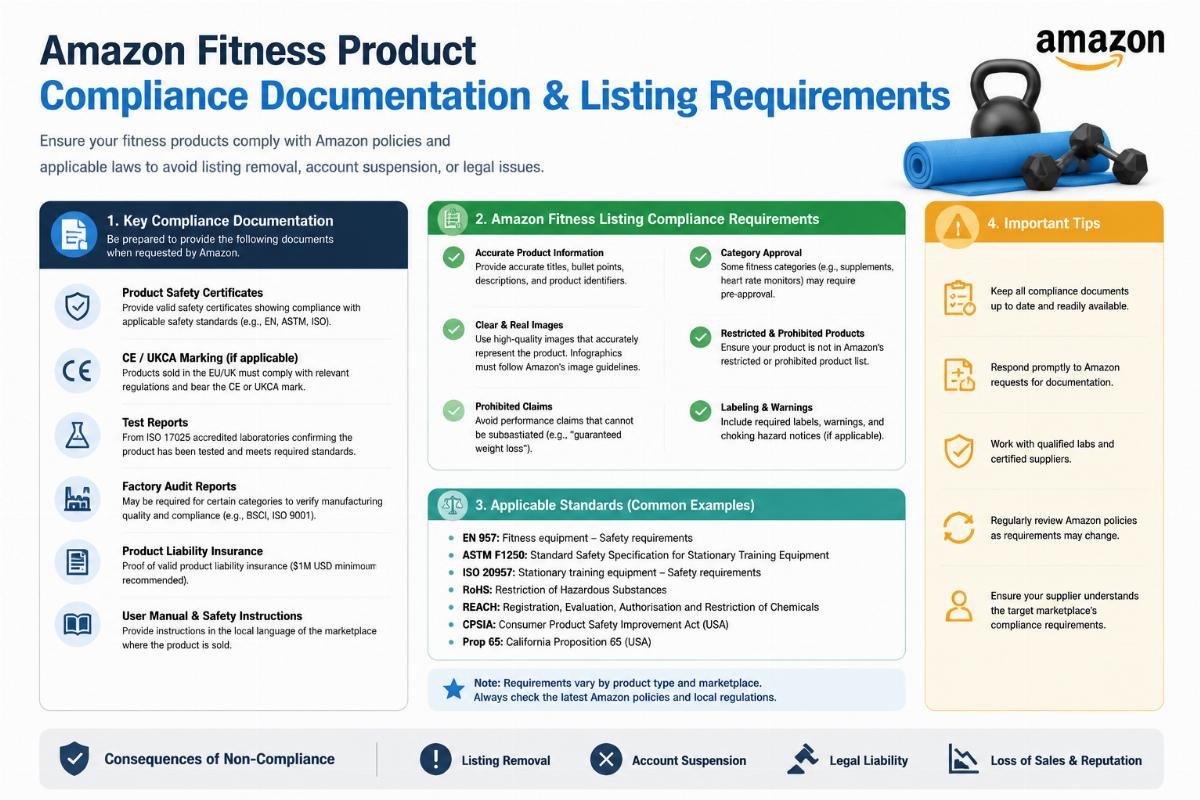
- Certificate Validation – Cross-reference every certification number against the issuing body’s public database before placing any order.
- SKU Alignment – Confirm the test reports provided explicitly cover the exact model, weight capacity and material composition of the SKU you plan to list.
- Audit Trail Backup – Store all certification documents in a cloud folder accessible to your Amazon account management team for immediate submission if requested during platform audits.
How do I choose the right Chinese fitness equipment supplier to match my Amazon sales scale?
Matching supplier capabilities to your current order volume eliminates 90% of common sourcing pain points. A factory built for 40HQ bulk shipments will not prioritize your single-unit test order, just as a small trading company will not be able to fulfill your 5-container monthly restock request on time. For Amazon sellers across every segment, from small resellers testing niche SKUs to bulk operators scaling full product lines, Shandong BICK Fitness Equipment’s 15 years of manufacturing experience, 30,000+ square meter factory capacity and 6-category full product line can accommodate every order type from single units to full containers.
| Seller Segment | Common Supplier Mismatch | Scaled Supplier Match |
|---|---|---|
| Small Test SKU Seller | Partner with factories requiring 50+ unit minimum orders | Select suppliers supporting single-unit MOQs for low-volume market testing |
| Regional Bulk Reseller | Work with trading companies with 4+ week lead times | Partner with factories with dedicated 40HQ full-container stock delivery in 25 days or less |
| Brand Customization Seller | Use small vendors with limited modification capabilities | Choose suppliers offering full OEM/ODM support in 15 days or shorter lead times |
A Canadian Amazon seller focusing on functional training gear ordered 3 units of a new glute drive model last winter from a factory that advertised flexible MOQs, only to wait 42 days for shipment because the factory prioritized a 200-unit corporate order. Switching to a supplier with dedicated small-order production slots let them fulfill the test order in 7 days, and they scaled to a 40HQ container 3 months later when the SKU hit top 10 in its category.
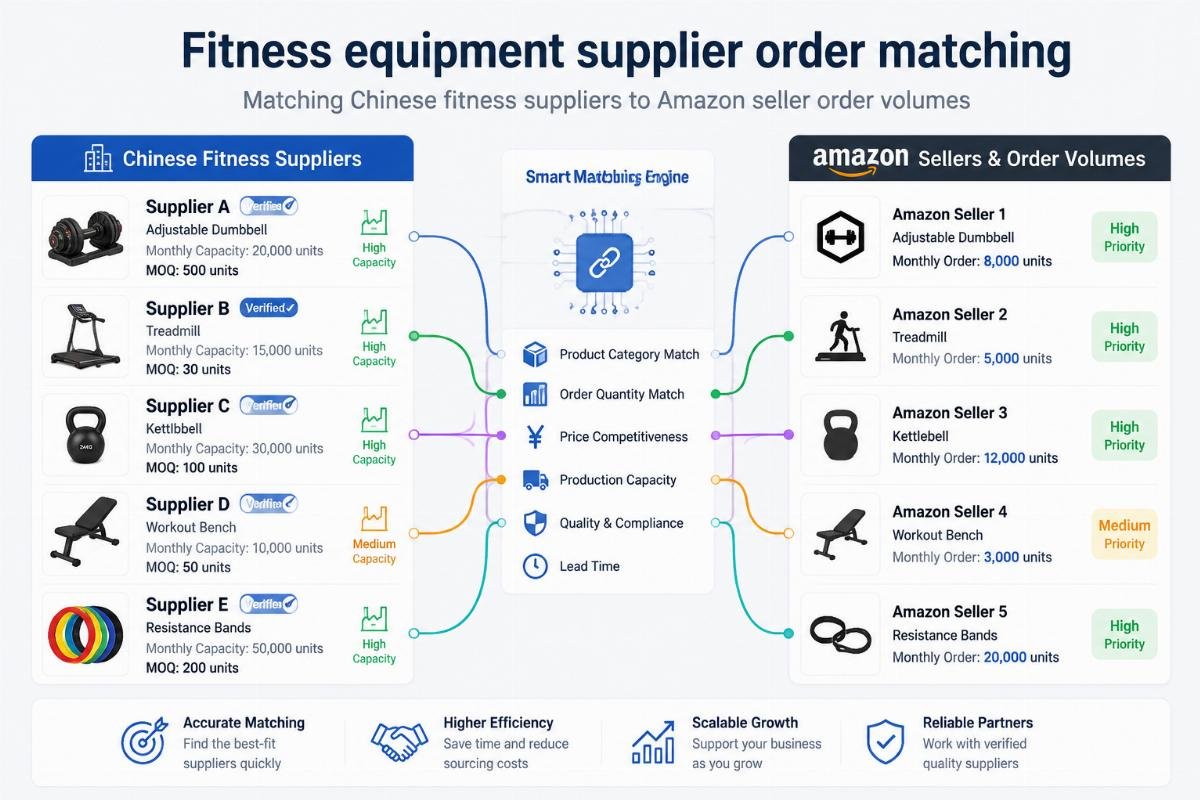
- Order Volume Audit – Document your projected 3-month order volume before reaching out to suppliers, and explicitly state your minimum and maximum expected order size in your first inquiry.
- Capacity Confirmation – Request factory floor photos and recent shipment records for orders of the same size you plan to place to verify they can handle your request.
- Priority Guarantee – Negotiate a written lead time guarantee for your order tier to avoid delays from higher-priority client requests.
What cost optimization strategies apply to sourcing Chinese fitness equipment for Amazon sales?
Factory-direct pricing from qualified Chinese suppliers leaves 35-50% net margin on average for Amazon fitness sellers. The 40-60% price gap between Chinese factory-direct products and Western equivalent brands is not a result of lower quality, but of eliminating multiple layers of regional distributors and brand markup that add no tangible value to the end user. When calculating total landed cost, don’t just compare unit prices: factor in lead time variance, shipping density per container, and potential rework or re-certification costs to get a true picture of total cost of ownership.
Last month, a US-based seller calculating costs for a new line of dumbbells initially picked a supplier with a $12 lower per-unit price, but realized after running the full calculation that the factory’s 35-day average lead time and 15% higher shipping density per pallet would add $18 per unit in hidden storage and expedited shipping costs once their Amazon inventory ran out. Switching to a supplier with stable 20-day lead times and optimized packaging lowered their total landed cost by 12% even with a higher base unit price.
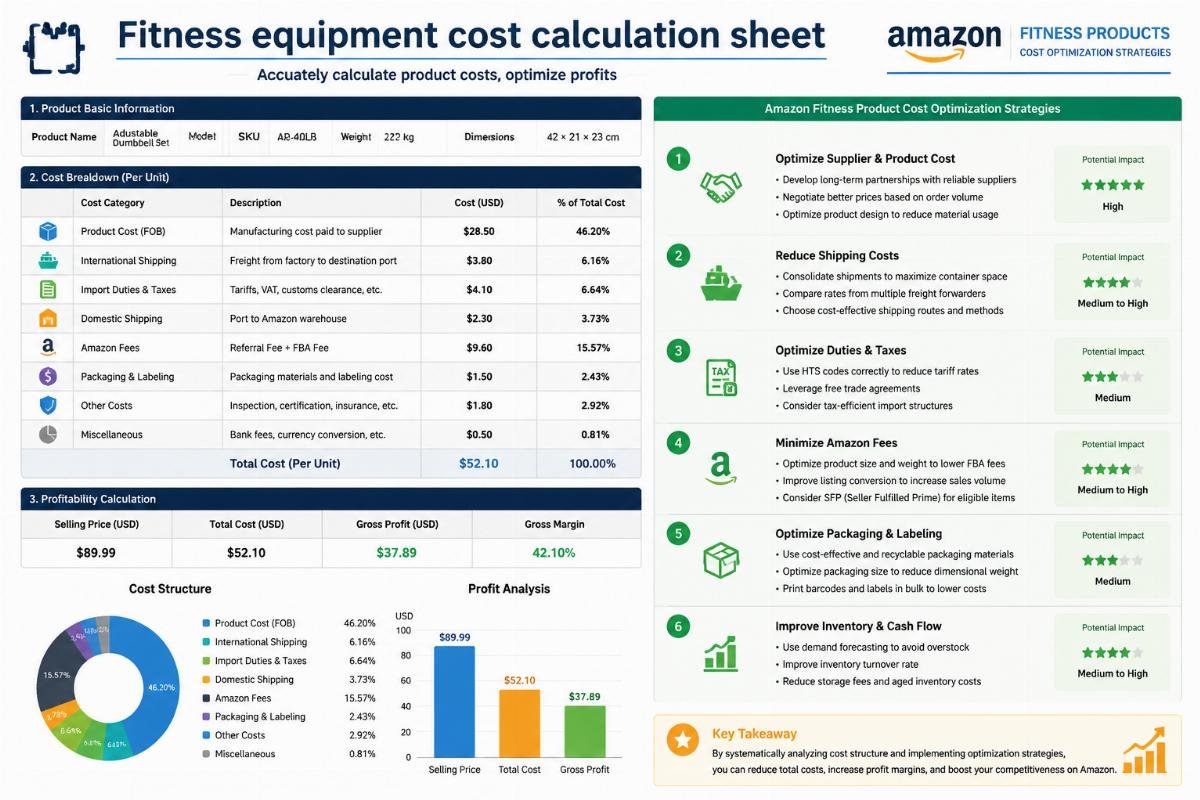
- Landed Cost Calculation – Include unit price, shipping, customs duty, inspection fees and Amazon storage costs in your total cost per unit, not just the factory quoted price.
- Volume Tier Negotiation – Lock in fixed pricing for 6 months for orders at a set volume tier to avoid raw material price fluctuations eroding margins.
- Packaging Optimization – Request factory packaging designed for Amazon FBA dimensions to reduce per-unit shipping and storage fees.
How to solve after-sales and warranty pain points for fitness equipment sold on Amazon?
Fitness equipment returns on Amazon cost sellers an average of $180 per unit due to heavy shipping weights. Most new sellers overlook warranty and after-sales support when selecting a supplier, leading to unplanned return costs and negative seller feedback when small assembly or part issues go unresolved. Leading Chinese fitness equipment factories provide 3-year frame warranty and lifetime technical support, which fully covers Amazon’s after-sales service requirements, and many will ship replacement parts directly to your customers at no extra cost for warranty claims.
A German Amazon seller selling mid-tier home treadmills previously handled all part replacements in-house, averaging 12 support tickets per week and spending over $2,000 per month on replacement parts and international shipping. Once they switched to a supplier that offered direct part shipment to end customers, their after-sales workload dropped by 82% and their negative feedback related to product issues fell to zero within two months.
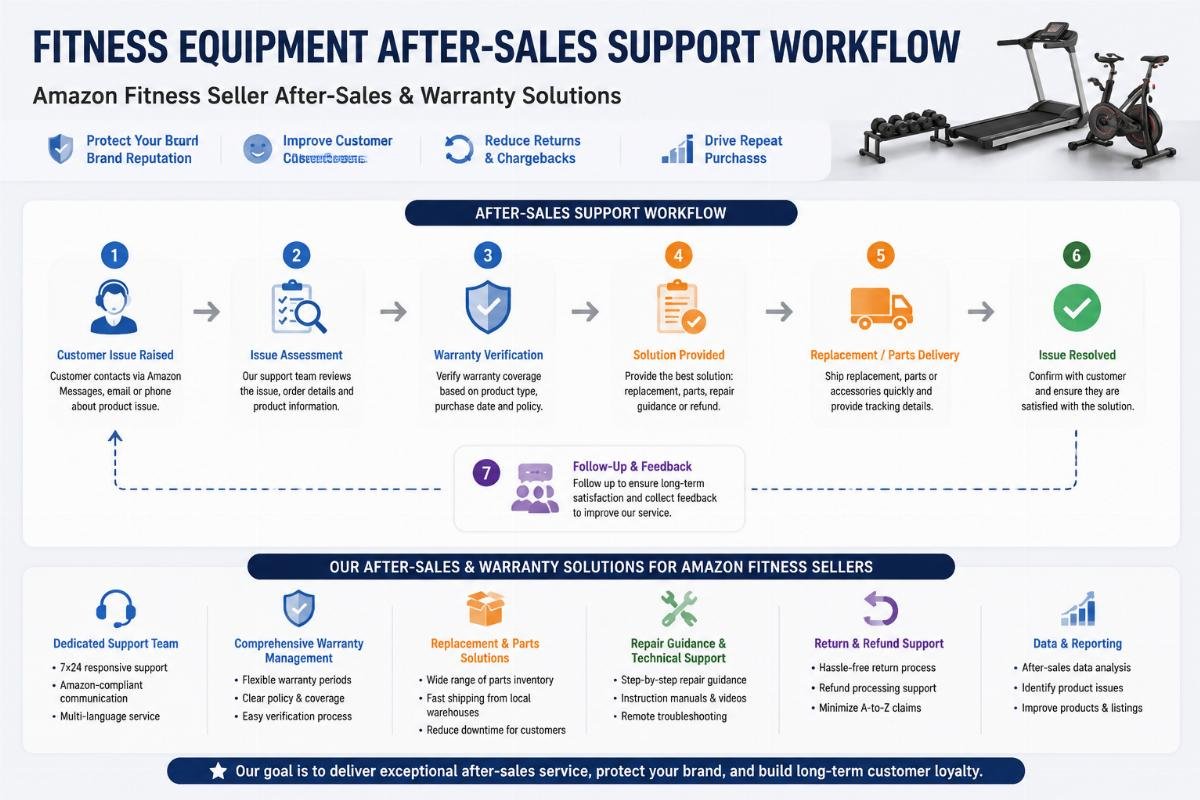
- Warranty Documentation –
MORE FROM
Bumper Plate Set for Belarus: Wholesale OEM Supplier & Import Checklist
Olympic Barbell Manufacturer Russia Import: Bick OEM Supplier
T-9000 Treadmill Wholesale Supplier for Pakistan Buyers from Bick Factory
EQUIP YOUR
From CrossFit boxes to chain facilities -- BICKFIT engineers, manufactures and delivers heavy-duty commercial strength equipment worldwide.
JOIN THE DISCUSSION