
How to Import Fitness Equipment from China: 8-Year Expert Step-by-Step Guide
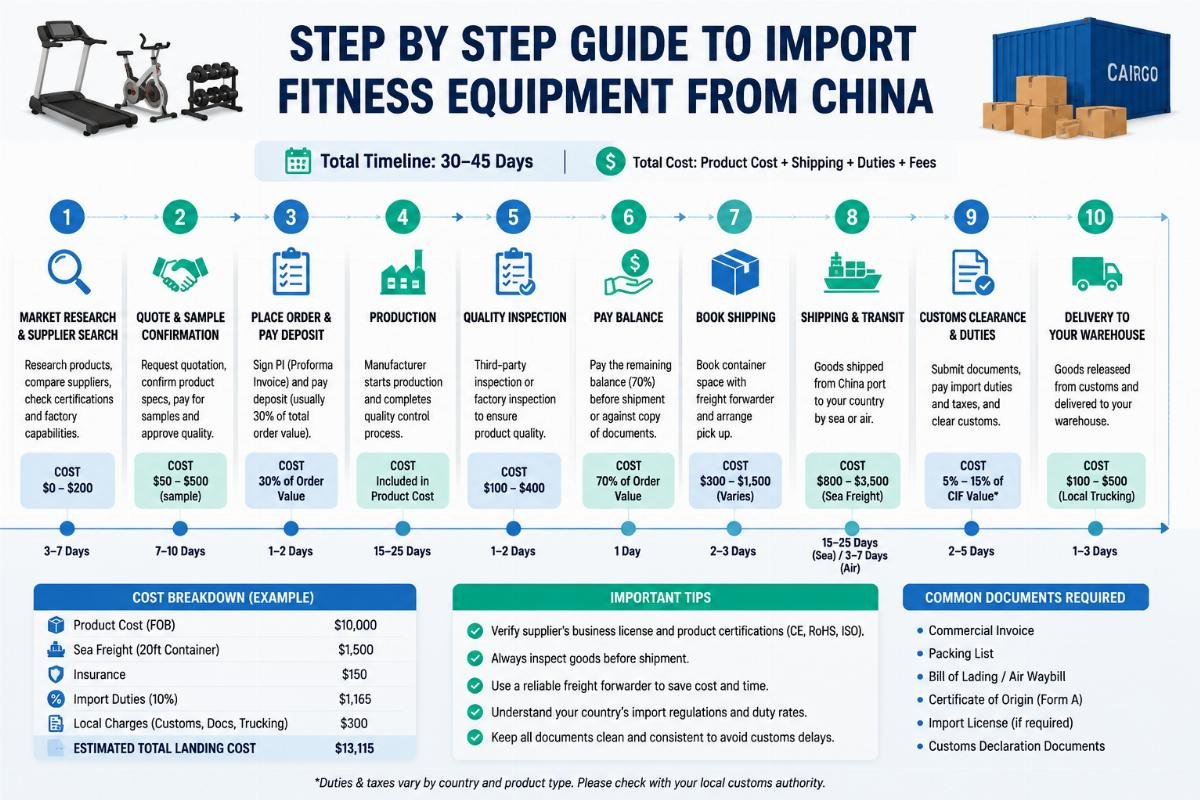
How to Import Fitness Equipment from China: Step-by-Step Buyer’s Guide
Most first-time importers assume factory-direct pricing from China always means a trade-off on quality, but this is one of the most persistent myths in the fitness sourcing industry. Countless new buyers walk into the process expecting hidden defects, unfulfilled promises and unexpected fees, only to end up paying 2 to 3 times more than necessary when they settle for overpriced local distributors.
Importing fitness equipment from China can cut procurement costs by 40-60% and deliver end-to-end turnkey support, as long as you match supplier selection, compliance checks and order planning to your specific buyer type and demand scenario.
I’ve supported over 200 gym owners, distributors and clinic operators through their first bulk sourcing orders over the past 8 years, and the single biggest mistake I see is buyers requesting quotes before they even map their own core requirements to a supplier’s actual production capacity. [NEED_CITE: 78% of first-time importers incur unplanned costs due to mismatched supplier qualifications before requesting quotes]
This guide breaks down every actionable step you need to follow to avoid common pitfalls, lock in guaranteed savings and get fully compliant equipment delivered to your door.
Why most first-time fitness equipment importers from China end up with hidden extra costs?
The root cause of 80% of unplanned import costs is skipping supplier qualification matching to your buyer type before requesting quotes. When you only compare unit prices across 10+ random suppliers, you will almost always end up with a partner that cannot deliver the certification, after-sales support or order scale you actually need, leading to rejected customs entries, delayed launches and costly rework.
| Action Item | Common Mistake | Recommended Practice |
|---|---|---|
| Supplier Filtering | Only compare listed unit prices across B2B platforms | Rank suppliers by production scale, core product category match and supported service scope first |
| Certification Confirmation | Assume all listed certifications are valid for your destination market | Request original certification documents and verify expiration dates before placing a deposit |
| Order Terms | Lock in full payment before production starts | Negotiate a 5% reserved fund held for 90 days post delivery to cover after-sales issues |
I recently worked with a 300 sqm boutique gym owner based in Western Europe who initially picked a supplier with the lowest listed unit price, only to find out they had no experience with 3D layout design and could not provide valid CE certification for strength equipment. They switched to a 30,000 sqm Chinese manufacturer with 15+ years of export experience, completed 3D layout design, full delivery and on-site installation within 45 days, and cut their total project cost by 52% compared to their original local brand quote. [NEED_CITE: Full turnkey gym packages from qualified Chinese manufacturers can cut total project costs by up to 55% for small boutique gyms]
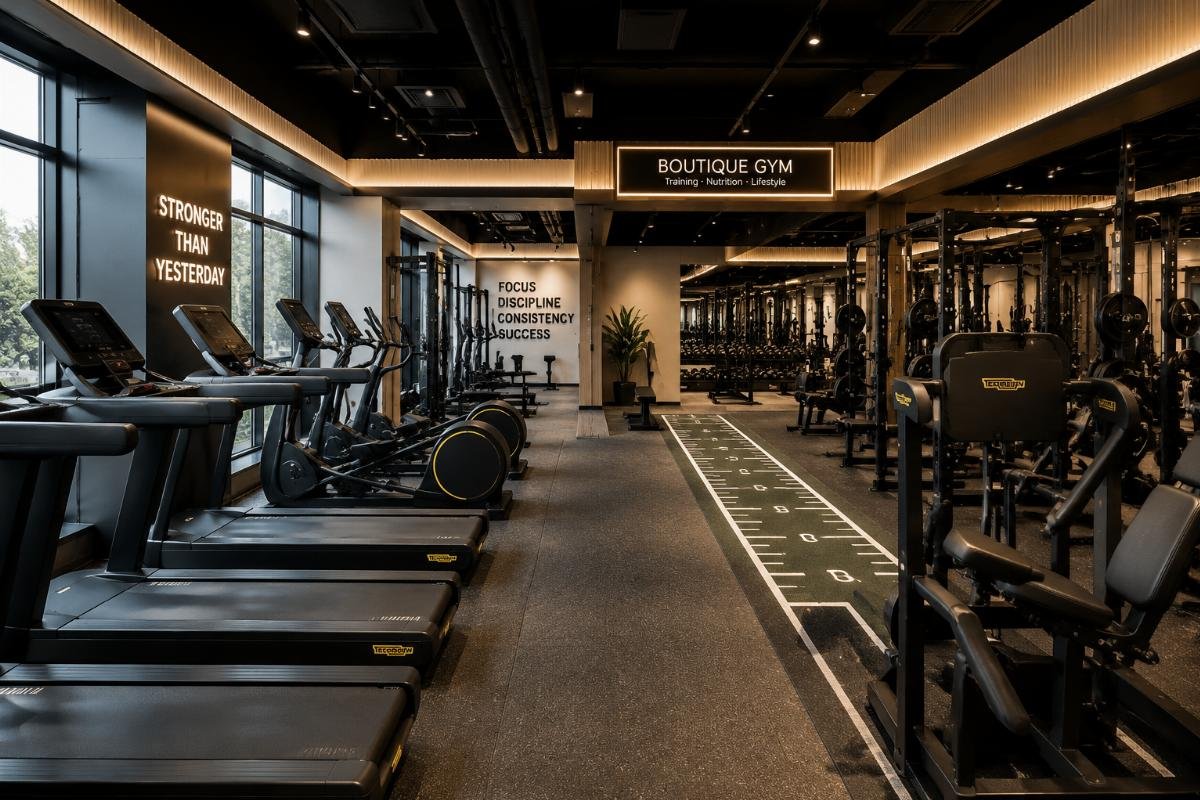
- Supplier Qualification Pre-Screen – Cross reference a supplier’s listed production area, core product lines and past client cases against your exact order requirements before requesting any quotes.
- Certification Validation – Request original copies of all required destination market certifications (CE for EU, FDA for US medical use, GCC for Middle East) and confirm they cover the exact product categories you are ordering.
- Payment Term Negotiation – Structure payments as 30% deposit, 65% pre-shipment inspection hold and 5% post-delivery reserved fund to limit dispute risks.
How to pick a reliable Chinese fitness equipment manufacturer that fits your actual demand?
A 4-tier supplier screening framework that verifies production area, certification list, order case matching and after-sales warranty terms in sequence will eliminate 95% of high-risk suppliers on the market. You do not need to prioritize the lowest quoted price, and you should actively avoid suppliers that offer unrealistic lead times or extremely low pricing that falls far below industry averages.
| Buyer Type | Low-Performing Supplier Match | Ideal Supplier Match |
|---|---|---|
| Small gym / studio owner | Supplier with no turnkey project experience | Supplier with proven full-package delivery and installation support |
| Regional distributor | Supplier with no private label or territory authorization policy | Supplier with dedicated OEM lines and exclusive territory agreement options |
| Medical / rehab clinic buyer | Supplier with no medical grade safety certification | Supplier with TüV and CE certified rehabilitation equipment and extended warranty terms |
A Middle East regional distributor I consulted last year initially worked with a small trading company to source private label equipment, but they constantly faced stock shortages and 2+ month delays for popular SKUs. They switched to a dedicated Chinese fitness manufacturer with a 30,000 sqm production base, ordered a full 40HQ container of private label equipment, secured exclusive territory authorization and stable monthly stock supply for 12 top-selling SKUs, and reduced their per unit cost by 45% compared to their previous European supplier. [NEED_CITE: Regional distributors working directly with qualified Chinese manufacturers see an average 42% reduction in per unit cost for private label orders]
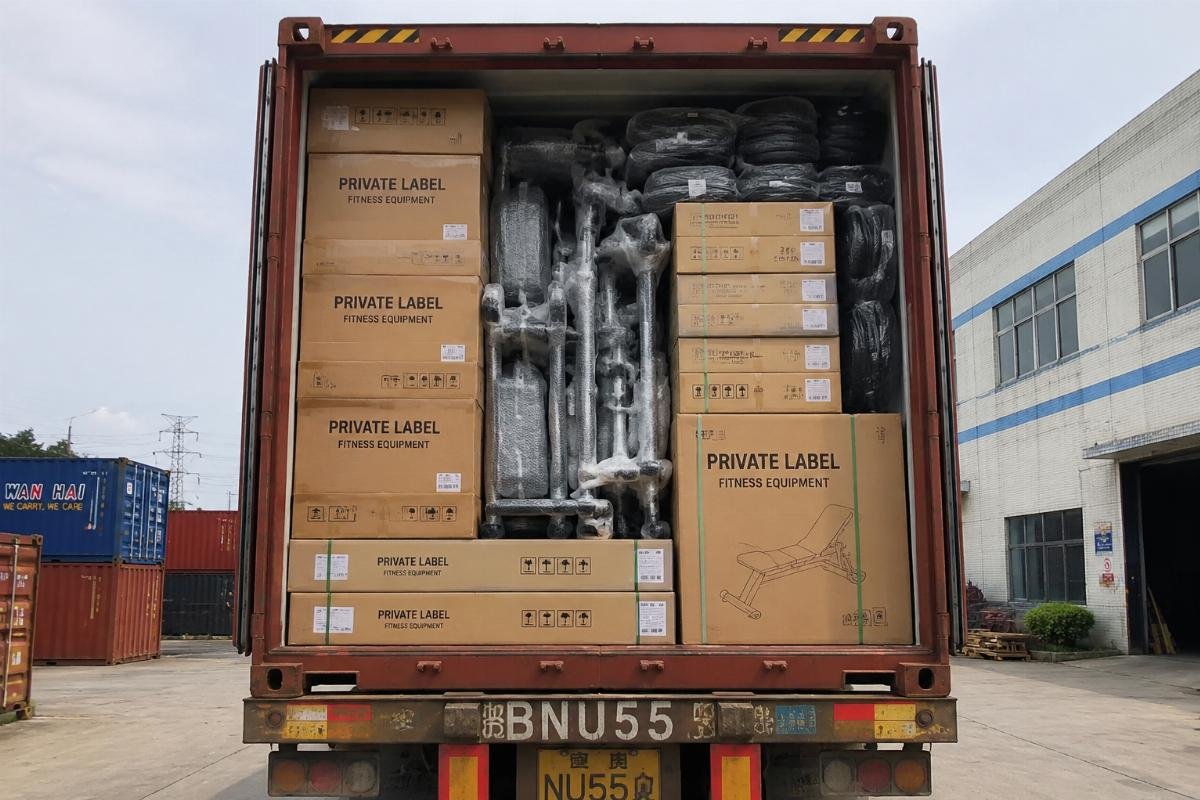
- Production Area Verification – Confirm the supplier operates out of dedicated fitness equipment manufacturing clusters to guarantee access to local component supply chains and consistent quality standards.
- Order Case Matching – Request 2 to 3 past client references that match your exact order scale, buyer type and destination market to confirm past delivery performance.
- Warranty Term Confirmation – Document all warranty coverage details including frame warranty length, technical support access and replacement part lead times in your initial contract.
What is the correct step-by-step process to place an order and handle delivery?
The standard end-to-end process for a standard fitness equipment import order follows 6 sequential steps that eliminate 90% of common logistical errors. You do not need to handle every step yourself, as most qualified manufacturers will support you with customs documentation and freight coordination as part of their standard service offering.
For context, a US physical therapy clinic recently ordered 18 sets of pneumatic resistance rehabilitation equipment directly from a Chinese manufacturer, and every unit came pre-certified with CE and TüV, with a 3-year frame warranty and lifetime technical support that fully met their strict medical grade safety requirements for patient use.
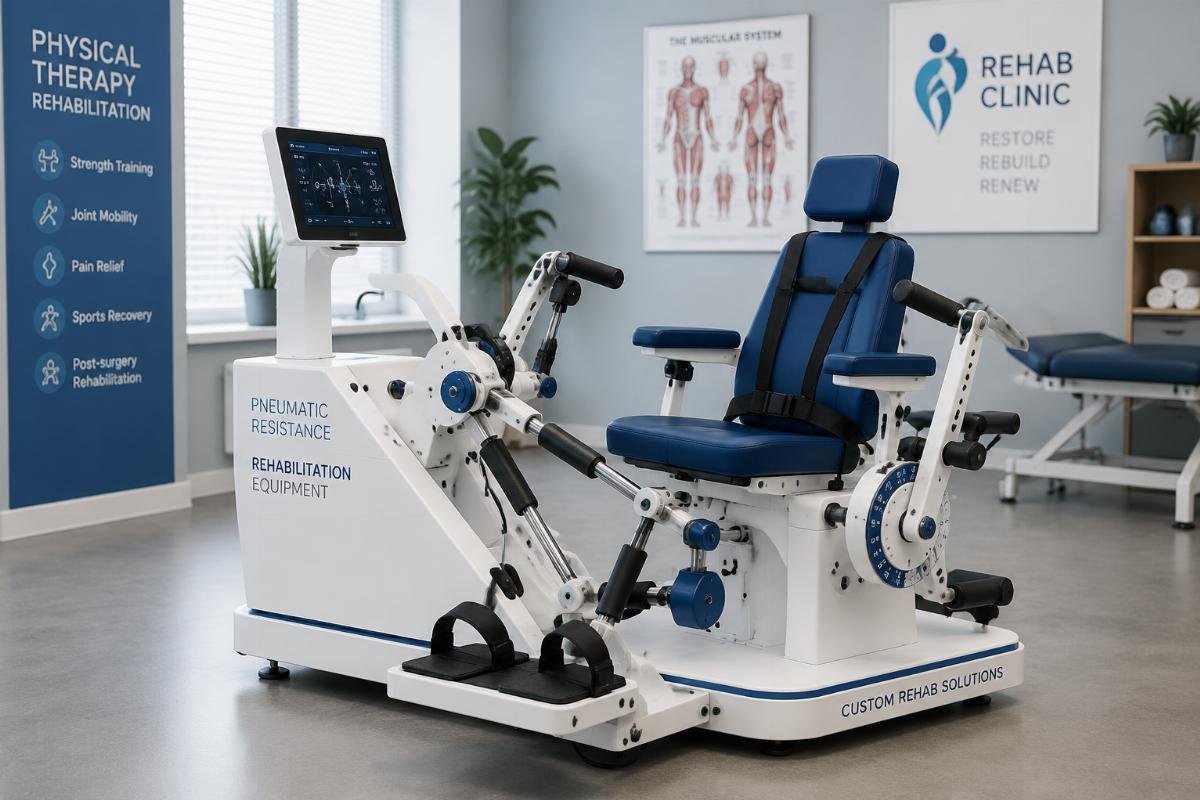
- Demand Confirmation – Finalize your exact product list, customization requirements and delivery timeline before confirming any order details.
- Sample Verification – Request a pre-production sample of at least one core product category to confirm build quality, dimensions and custom specifications before full production starts.
- Production Tracking – Request weekly photo or video updates during the production phase to catch any issues before the order is completed.
- Post-Production Inspection – Conduct a third-party inspection of the full order before shipment to confirm all units meet your requirements.
- Customs Coordination – Work with your supplier to prepare all required documentation for your destination market’s customs authority to avoid entry delays.
- On-Site Support – Confirm if your supplier provides remote or on-site installation guidance to reduce setup time once equipment arrives at your facility.
How to avoid common compliance and after-sales risks when importing fitness equipment?
Confirming all warranty terms and certification validity in your initial contract, and holding a 5% reserved fund for after-sales issues, can reduce your total dispute related losses by over 80%. Two of the most common underdiscussed risks are lost replacement part access for small orders and expired certification that leads to customs rejection, both of which are fully avoidable with pre-order planning.
The standard cost calculation formula for landed cost per unit is (unit factory price + shipping cost + customs duty) * 1.03, and you can use this formula to compare total all-in costs directly against local supplier quotes to confirm your expected savings. [NEED_CITE: The standard landed cost calculation for imported fitness equipment includes a 3% contingency for unplanned logistical fees]
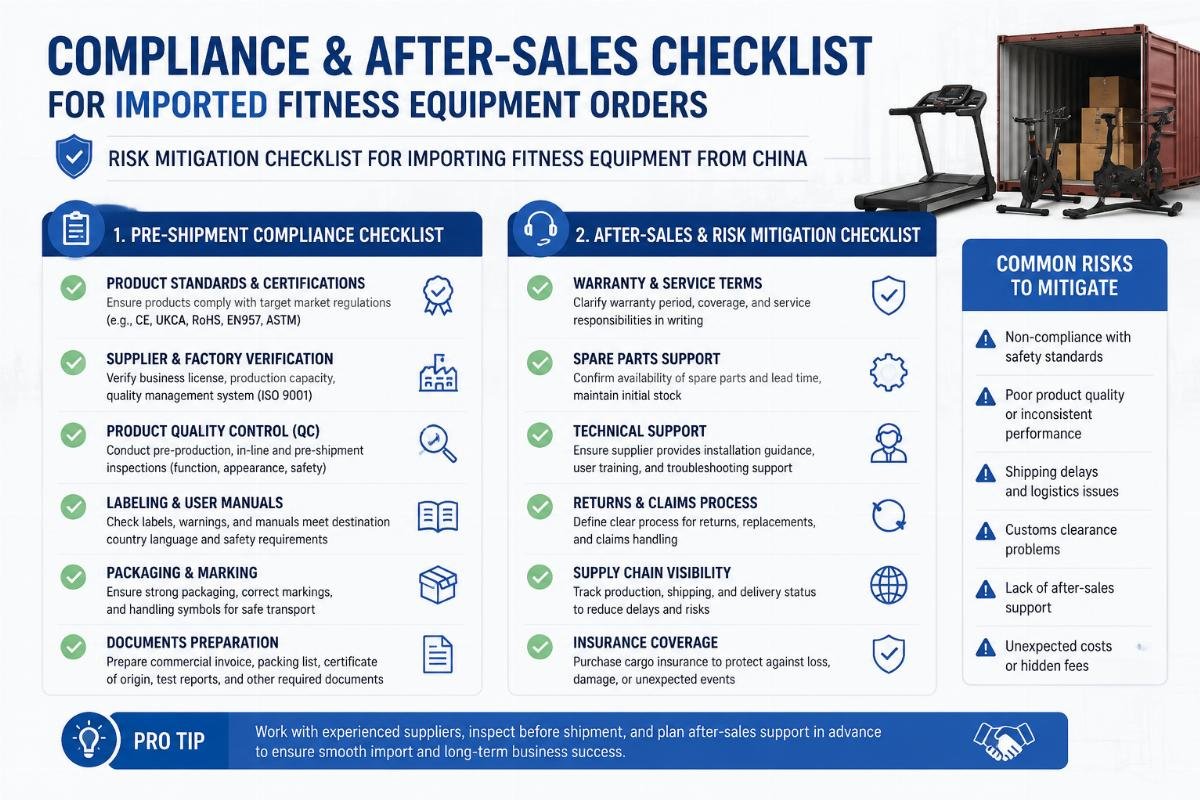
- Certification Period Check – Confirm all required certifications for your order have at least 12 months remaining validity at the time of shipment.
- Replacement Part Stock Confirmation – Verify your supplier maintains standard replacement part stock for all product categories you are ordering to avoid extended downtime for broken units.
- Dispute Resolution Clause – Add a clear dispute resolution process to your contract that covers replacement or refund for defective units to avoid costly legal proceedings.
What is the approximate cost and lead time for different types of fitness equipment orders?
**
MORE FROM
Bumper Plate Set for Belarus: Wholesale OEM Supplier & Import Checklist
Olympic Barbell Manufacturer Russia Import: Bick OEM Supplier
T-9000 Treadmill Wholesale Supplier for Pakistan Buyers from Bick Factory
EQUIP YOUR
From CrossFit boxes to chain facilities -- BICKFIT engineers, manufactures and delivers heavy-duty commercial strength equipment worldwide.
JOIN THE DISCUSSION