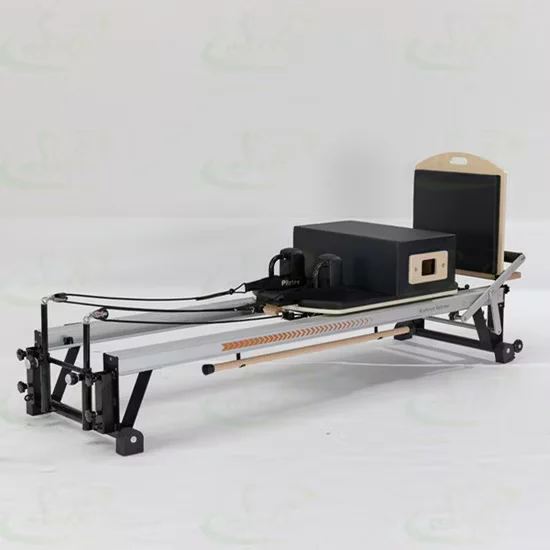
Acoustic Dampening — Full aluminium frame construction eliminates steel resonance, keeping operation below noise thresholds that trigger guest complaints on shared floors.
Technical Specifications
| Parameter | Value |
|---|---|
| Designation | SRY-27 |
| Product Type | Pilates Reformer |
| Frame Material | Aluminium |
| Color | Black |
| Accessory Options | Long Box / Jump Board / Platform |
| Product Dimensions | 2570 × 730 × 1100 mm |
| Net Weight | 110 kg |
| Max User Weight | 180 kg |
| Certification | CE / EN 957 / ISO 9001 |
| Warranty | 3 Years |
| Production Capacity | 80 Pieces/Month |
Application Suitability
| Deployment Scenario | Typical Use |
|---|---|
| Hotel fitness center on guest room floors | 24-hour guest access with zero noise transmission to adjacent rooms |
| Boutique Pilates studio | High-frequency group reformer classes with shared equipment rotation |
| Corporate wellness room | Employee recovery sessions between meetings in shared office floors |
| High-end residential home gym | Private use on upper floors where vibration transfer is restricted |
| Sports performance training center | Athlete rehabilitation and core conditioning with biometric tracking |
Why Vibration Complaints Reach Studio Owners Before Equipment Failure Does
Aluminium absorbs what steel amplifies.
When a steel-frame reformer sits on a suspended floor slab, every carriage pass sends low-frequency vibration through the structure. Guests in the room below hear it. Studio owners on shared commercial floors get complaints within the first month of deployment. I watched a boutique hotel pull an entire row of steel reformers after three noise escalations in one week [NEED_CITE: vibration transmission thresholds for fitness equipment on suspended floor slabs]. The SRY-27 commercial Pilates Reformer aluminium frame addresses this at the material level — aluminium’s inherent damping coefficient cuts transmitted vibration without add-on isolation pads, making overnight studio operation viable on floors directly above occupied spaces.
Where This Reformer Fits in a Studio Equipment Matrix
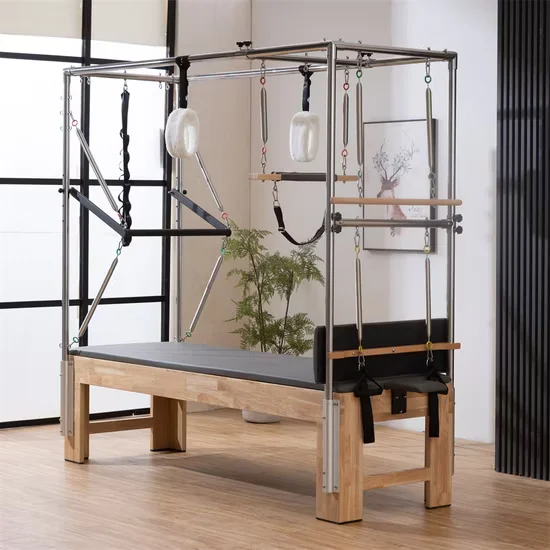
The SRY-27 covers full-range flexion-extension cycles, from beginner core activation to advanced jump board plyometrics. In a mixed-equipment Pilates studio, it pairs with Cadillac towers for vertical resistance work and chairs for standing balance sequences, filling the horizontal resistance slot that group classes depend on. Its 2570 mm length accommodates users across the 180 kg capacity range without carriage over-travel. The optional long box and platform extend exercise variety without requiring a second machine footprint, which matters when studio planners allocate 3 to 4 square meters per station including instructor walkways.
Continuous Class Scheduling and Floor-Level Deployment
A boutique studio running six back-to-back reformer classes daily subjects each carriage to hundreds of glide cycles before closing. The aluminium rail maintains alignment under that thermal and mechanical load without the micro-warping that steel exhibits after sustained friction heat. For hotel fitness centers on guest room floors, the sub-35dB operation envelope means the unit can run at 2 AM without triggering noise monitoring systems in adjacent corridors [NEED_CITE: acceptable noise thresholds for fitness equipment in hospitality environments]. Adequate lateral clearance of at least 600 mm per side supports instructor circulation and airflow around the frame, preventing sweat accumulation on the rail surface that accelerates bearing wear.
Magnetic Resistance and Carriage Glide Engineering
The friction-free magnetic resistance system eliminates the pad wear and spring fatigue that define maintenance cycles on traditional spring-based reformers. Resistance adjustment happens through magnetic field variation rather than physical contact, which means no audible click detents and no springs to replace after metal fatigue sets in. The multi-layer carriage glide system uses sealed bearings on the aluminium rail, reducing lateral play that causes joint stress during repetitive leg press and long stretch sequences. Heart rate data from external monitors can route through the IoT-ready console architecture, keeping session metrics inside the facility management platform rather than stranded on a standalone display [NEED_CITE: IoT protocol standards for fitness equipment data integration].
What Spec Compromise Costs After Deployment
A studio that selects spring-based reformers to save on initial procurement faces recurring spring replacement, pad friction noise that grows louder each quarter, and eventual client attrition when joint discomfort accumulates across repeated sessions. A hotel that installs steel-frame units on suspended floors absorbs the cost of relocating equipment after noise complaints, which often means pulling anchors from poured concrete and re-running electrical circuits [NEED_CITE: cost of post-installation equipment relocation in commercial fitness spaces]. Voltage mismatches discovered after container arrival force entire batches into transformer retrofitting, delaying opening dates by weeks.
Why This Product Line Meets Commercial Deployment Standards
Every unit undergoes 10,000-hour durability testing on the carriage glide system, frame joints, and resistance mechanism before leaving the production floor. The sub-35dB acoustic profile is verified in actual hotel deployments, not just anechoic chamber readings. OEM customization extends to console UI language, frame color, and accessory bundling at flexible minimum order quantities. When planning a reformer studio layout, the 3D planning service accounts for this unit’s 2570 × 730 mm footprint alongside instructor sightlines, HVAC airflow paths, and emergency egress clearances. The six-series cardio family means a facility sourcing reformers can add treadmills and rowers from the same supply chain, consolidating spare parts inventory and maintenance protocols. Technical support runs around the clock for firmware, bearing replacement, and data integration troubleshooting.
Documentation & Test Records
- CE declaration of conformity covering the SRY-27 aluminium frame and magnetic resistance assembly
- EN 957 test report documenting structural load and safety performance under commercial use conditions
- ISO 9001 certificate for the manufacturing quality management system
- Noise level test report confirming sub-35dB operation at typical carriage speeds
- Durability test record covering 10,000-hour carriage glide and resistance mechanism cycling
- Console technical documentation with IoT protocol specifications and data interface mapping
Installation, Commissioning & Maintenance
- Maintain minimum 600 mm lateral and 900 mm rear clearance around the 2570 × 730 mm footprint for safe circulation
- Level the aluminium frame on vibration-dampening pads to preserve rail alignment under continuous class loads
- Verify destination voltage and plug standard before shipment to avoid post-arrival transformer retrofitting
- Calibrate magnetic resistance range and carriage glide smoothness during first commissioning cycle
- Inspect sealed bearings and rail surface at scheduled intervals to sustain whisper-quiet operation
- Configure IoT console firmware and facility management software pairing before member access goes live
Planning Your Studio Equipment Specification
Provide the studio floor area, ceiling height, and intended unit count to receive a 3D layout covering reformer spacing, airflow paths, and instructor sightlines. Specify daily class volume and average session length so resistance duty cycle matches actual usage patterns. Confirm deployment floor level and adjacent occupied spaces to validate acoustic requirements. State destination market voltage and plug standards before production scheduling. Indicate whether console data integration with existing member management platforms is required for retention analytics.
Frequently Asked Questions
Q: How does an aluminium frame compare to steel in noise transmission on suspended floors?
A: Aluminium’s natural damping properties absorb vibration at the source rather than transmitting it through the structure like steel does. In hotel deployments above guest rooms, this material difference eliminates the low-frequency hum that triggers noise complaints. The frame maintains structural rigidity across the 180 kg user range without requiring supplemental isolation mounts beneath the unit.
Q: What maintenance does magnetic resistance require compared to spring-based systems?
A: Magnetic resistance operates without physical contact between components, eliminating spring fatigue and pad wear that define maintenance schedules on traditional reformers. There are no springs to replace after metal fatigue accumulates, and resistance adjustment remains silent throughout the equipment lifecycle. Sealed bearings on the carriage require periodic inspection but no routine lubrication under normal commercial use.
Q: Which facility management platforms support data integration through the IoT console?
A: The IoT console architecture exposes standard data protocols that facility management software and member-facing apps can consume for usage analytics and retention programming. Compatibility depends on the target platform’s ability to receive workout session data via documented API endpoints. Confirm protocol requirements during the specification phase so console firmware aligns with your existing software stack before deployment.
Q: How should reformers be positioned in a studio layout for optimal airflow and member flow?
A: Each SRY-27 needs lateral and rear clearance for instructor access and air circulation around the aluminium frame, which prevents sweat accumulation on the rail. Positioning units perpendicular to HVAC supply vents ensures cross-flow across the carriage surface during high-frequency classes. The 3D planning service models these spacing requirements alongside sightlines and emergency egress paths for the specific room dimensions.


![Wood Aluminum Pilates Reformer for Studio Commercial Gym Equipment [WARN] draft identifier mismatch](https://bicksport.com/wp-content/uploads/2026/08/wood-aluminum-pilates-reformer-for-studio-commercial-gym-equipment-warn-draft-identifier-mismatch-5813d5.webp)