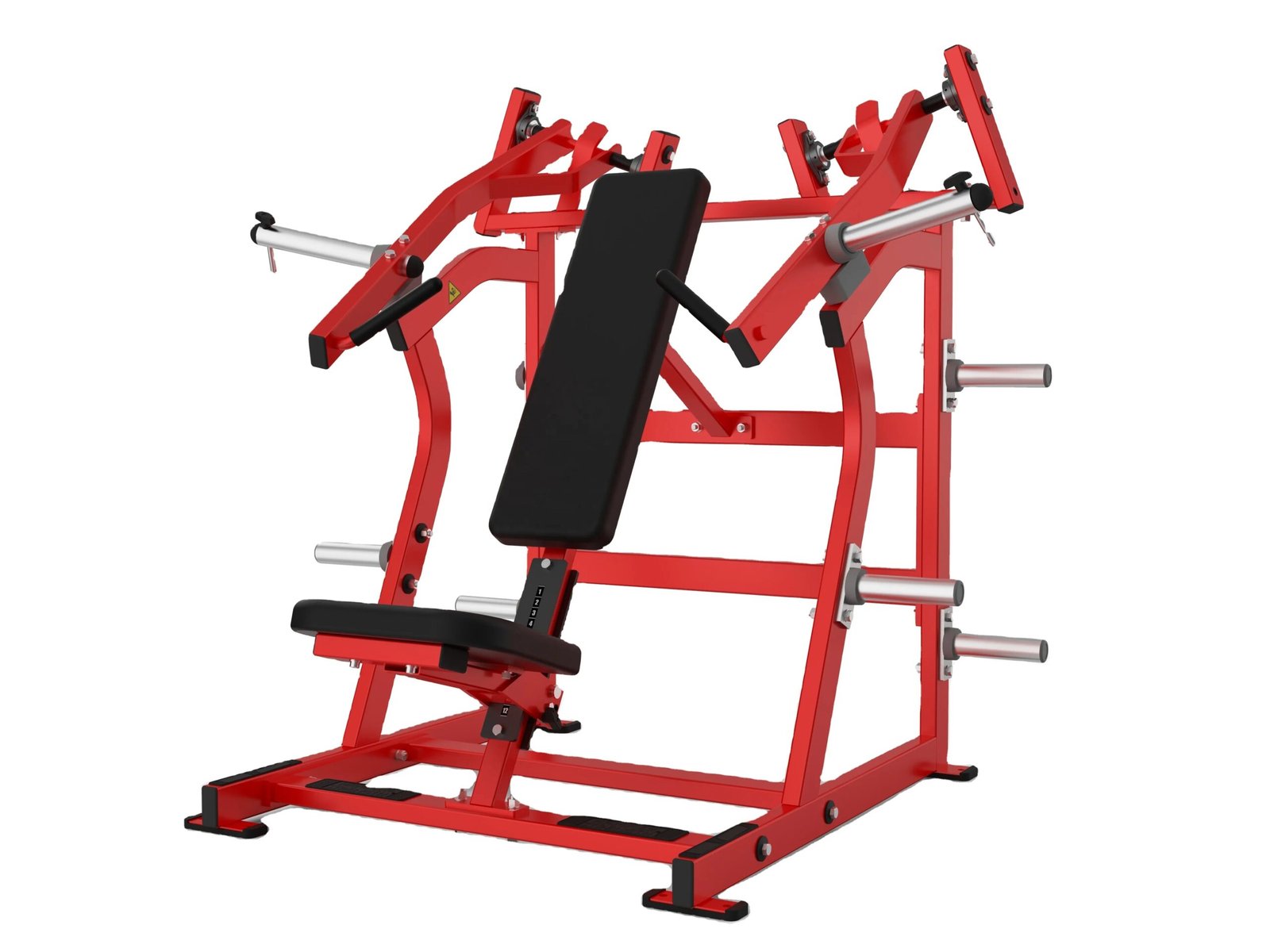
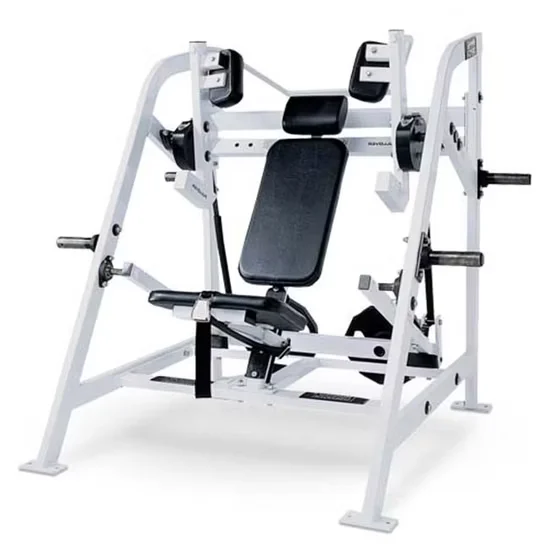
Heavy-Duty Frame Rigidity — 50×100×3mm steel tubing tested under repetitive high-load pendulum cycles to minimize frame flex in commercial strength zones.
Technical Specifications
| Parameter | Value |
|---|---|
| Designation | SRH-72 |
| Product Type | Commercial Pendulum Squat Machine |
| Tube Size | 50×100×3mm |
| Frame Material | Iron |
| Machine Weight | 170 kg |
| Product Dimensions | 1550×1480×1825 mm |
| Color | Customized |
| Age Group | Adult |
| Gender | Unisex |
| Appliance | Community, Gymnasium, Home |
| Certification | RoHS, ISO 9001, CE |
| Production Capacity | 200 Pieces/Month |
| Shipment Time | 30-40 Days by Sea |
| Transport Package | Standard Wooden Case |
Application Suitability
| Deployment Scenario | Typical Use |
|---|---|
| Commercial gymnasium strength zone | Dedicated lower-body and compound squat station in high-traffic free-weight areas |
| Community fitness center | Accessible pendulum squat station for mixed-experience members under supervised use |
| Corporate wellness room | Compact lower-body training option within multi-use strength circuits |
| High-end residential home gym | Floor-stable squat machine for private training without bolt-down requirements |
| Sports performance training center | Heavy-load pendulum movements for athlete lower-body strength development |
Why Frame Weight and Tubing Dimensions Determine Commercial Squat Machine Longevity
The SRH-72 commercial pendulum squat machine uses 50×100×3mm steel tubing and a 170 kg net weight to deliver inherent stability without floor anchoring under repetitive compound loading.
I spent years pulling burnt-out motors and cracked welds out of strength stations across Latin American gym networks. The pattern was always the same: facilities that specified lightweight frames with thin-wall tubing started calling for warranty repairs within the first season. The pendulum squat movement generates lateral torque at the pivot point with every rep, and undersized tubing develops micro-flex that compounds into visible weld fatigue within months [NEED_CITE: weld fatigue thresholds for commercial strength equipment under cyclic loading]. When a frame starts flexing under load, the bar path drifts, members notice the instability, and the machine becomes the least-used station on the floor. The 170 kg machine weight of the SRH-72 addresses this directly — mass absorbs oscillation that lighter frames transfer to the floor and the user’s joints.
Where the SRH-72 Fits in a Multi-Station Strength Floor
The SRH-72 commercial pendulum squat machine occupies the heavy compound movement slot in a strength zone, complementing hack squat racks, leg press stations, and isolated leg extension and curl machines. It covers the full pendulum arc from upright to deep flexion, targeting quadriceps, glutes, and hip stabilizers through a movement pattern that free-weight back squats cannot replicate for members with spinal loading concerns. The 1550×1480 mm footprint positions it as a dedicated station rather than a multi-use rack, meaning floor planners allocate it alongside single-purpose lower-body equipment. The reinforced steel frame accommodates users across a wide body-weight range without adjustment lag between sets. Data capture is limited to mechanical load — this is a plate-loaded or pin-selector strength station, not a telemetry-enabled device.
Operational Environment and Floor Loading Considerations
A pendulum squat machine rated for commercial gymnasium use needs adequate ceiling clearance for the full swing arc — the 1825 mm height specification dictates installation away from low-hanging HVAC ductwork or lighting rigs. Floor loading concentrates at the base contact points during heavy eccentric phases, and the 170 kg machine weight means the unit remains stationary under load without bolt-down on standard rubber-matted commercial flooring [NEED_CITE: floor loading requirements for heavy static gym equipment]. Ambient temperature and ventilation matter less for a purely mechanical strength station than for motorized cardio, but sweat corrosion on iron frames accelerates in unventilated rooms with high humidity. Voltage and power circuits are not a concern here — the SRH-72 requires no electrical supply, simplifying deployment in converted spaces where dedicated circuits are unavailable. Leveling feet or shimming may be necessary on uneven concrete subfloors to prevent frame twist under asymmetric loading.
Interpreting the 50×100×3mm Tubing and Iron Frame Specification
The 50×100×3mm rectangular steel tubing used in the SRH-72 frame addresses the primary structural demand of a pendulum squat machine: resisting bending moment at the pivot axis. Rectangular tubing with a 3 mm wall thickness provides a higher second moment of area than round tubing of equivalent weight, meaning it resists flex more effectively under the lateral forces generated during pendulum descent and ascent. Iron construction trades corrosion resistance for cost efficiency and raw mass — the 170 kg net weight is a direct result of this material choice, and that mass provides the inertial stability that lighter aluminum or thin-gauge steel frames cannot match. The trade-off is that iron requires consistent powder-coat or paint coverage to prevent oxidation in humid gym environments. Customized color options allow facilities to match existing equipment branding without aftermarket refinishing that chips under plate-loading contact and cleaning chemical exposure. Weld quality across the frame joints determines long-term structural integrity, and ISO 9001-certified manufacturing processes provide batch-to-batch consistency in penetration depth and joint preparation [NEED_CITE: ISO 9001 weld quality control procedures for fitness equipment manufacturing].
The Cost of Specifying Below Commercial Frame Standards
Facilities that accept strength equipment with thinner-wall tubing or lighter frame materials typically discover the consequences within the first year of high-frequency use. Weld cracks appear first at the pivot bracket and base gussets — the exact locations where cyclic pendulum loading concentrates stress. Members sense frame flex during heavy sets and begin avoiding the station, turning a capital investment into dead floor space. In worst-case scenarios, structural failure under load creates liability exposure that no facility operator wants to manage. Lightweight frames also transmit vibration through the floor to adjacent spaces, generating complaints in mixed-use buildings where strength zones share walls or ceilings with offices, guest rooms, or residential units [NEED_CITE: vibration transmission from commercial strength equipment in mixed-use buildings]. Replacing an entire batch of under-specified squat machines is more expensive than specifying adequate tubing and weight from the initial procurement.
Why This Product Line for Commercial Strength Deployments
The SRH-72 comes from a manufacturing system that also produces full-series cardio families, meaning facilities sourcing both strength and aerobic zones from the same supply chain reduce vendor fragmentation. The 50×100×3mm tubing specification aligns with commercial durability expectations verified through production-level quality control under ISO 9001 protocols. OEM customization covers frame color and finish to match facility branding without aftermarket coatings that degrade under gym-environment wear. CE and RoHS certifications support procurement compliance across markets with strict material and safety directives. Documentation packages include test records and specification sheets that facility managers can file for insurance and audit purposes. The 170 kg iron frame and compact 1550×1480 mm footprint simplify floor planning — the machine sits stable without anchoring and fits into standard strength-zone sightline and traffic-flow layouts. Technical support covers commissioning questions and spare-part identification throughout the equipment lifecycle [NEED_CITE: commercial fitness equipment technical support and spare parts availability].
Documentation & Test Records
- CE declaration of conformity for the SRH-72 pendulum squat frame and pivot assembly
- EN 957 test report covering structural load rating and mechanical safety verification
- ISO 9001 certificate for manufacturing process and weld quality control
- RoHS compliance documentation for material composition and restricted substance limits
- Frame load-rating and durability test records under cyclic pendulum loading
- Spare parts list with pivot bearing and structural hardware identification
Installation, Commissioning & Maintenance
- Allocate floor space per 1550×1480 mm dimensions plus safety clearance for the full pendulum swing arc
- Confirm floor leveling under the 170 kg iron base to prevent frame twist during asymmetric loading
- Inspect all weld joints and pivot bolts after initial assembly before releasing for member use
- Schedule periodic pivot bearing lubrication per the installation guide to maintain smooth arc motion
- Wipe down iron frame surfaces after operating hours to control sweat corrosion and preserve powder-coat finish
- Verify customized color coating integrity annually and touch up any chips before oxidation spreads
Requesting a Deployment Assessment for Your Strength Zone
Provide the strength-zone square footage and planned equipment list to receive a layout assessment covering sightlines, member traffic flow, and ceiling-clearance verification for the pendulum arc. Specify the expected daily usage volume so the duty-cycle recommendation matches your facility’s member throughput. Confirm the deployment floor level and adjacent space usage to evaluate vibration isolation requirements for the 170 kg iron frame. Indicate your target market to align certification documentation and any OEM customization scope including frame color and finish matching.
Frequently Asked Questions
Q: What tube dimensions and wall thickness are recommended for commercial pendulum squat machines?
A: Commercial pendulum squat machines should use rectangular steel tubing with a minimum 3 mm wall thickness to resist bending moment at the pivot axis under repetitive heavy loading. The 50×100×3mm specification in the SRH-72 provides the cross-sectional rigidity needed to prevent frame flex that causes bar-path drift and premature weld fatigue. Thinner tubing develops micro-cracks at stress-concentration points within the first year of high-frequency gym use.
Q: How does machine weight affect stability during heavy-load pendulum movements?
A: A heavier machine weight provides inherent inertial stability that prevents base shift and vibration transmission during eccentric and concentric pendulum phases. The SRH-72 at 170 kg remains stationary on standard commercial rubber flooring without bolt-down anchoring, even under maximum user loading. Lighter frames transmit oscillation to the floor structure and require mechanical fastening that complicates repositioning and floor maintenance.
Q: Can the frame finish and color be customized to match facility branding?
A: Yes, the SRH-72 supports customized color and finish options applied during manufacturing to match existing gym equipment branding. Factory-applied coatings bond to the iron substrate under controlled conditions, providing durability that aftermarket spray painting cannot achieve in humid gym environments. This avoids the chipping and peeling that occurs when facilities attempt post-delivery refinishing on assembled strength equipment.
Q: What floor-loading and ceiling-height requirements apply to pendulum squat equipment?
A: The SRH-72 stands 1825 mm tall and requires ceiling clearance above that height to accommodate the full pendulum arc without contacting overhead fixtures. Floor loading concentrates at the base contact points during heavy eccentric phases, and the 170 kg iron frame distributes this load across a 1550×1480 mm footprint. Standard commercial concrete or reinforced flooring handles this static and dynamic load without additional structural reinforcement.
Q: How does ISO 9001 certification translate to weld quality and structural durability?
A: ISO 9001 certification requires documented quality control procedures at every manufacturing stage, including weld preparation, penetration testing, and post-weld inspection. For the SRH-72, this means frame joints undergo consistent process control across production batches, reducing the risk of porosity or incomplete fusion that leads to structural failure under cyclic loading. Facilities receive traceable documentation supporting procurement audits and insurance compliance requirements.