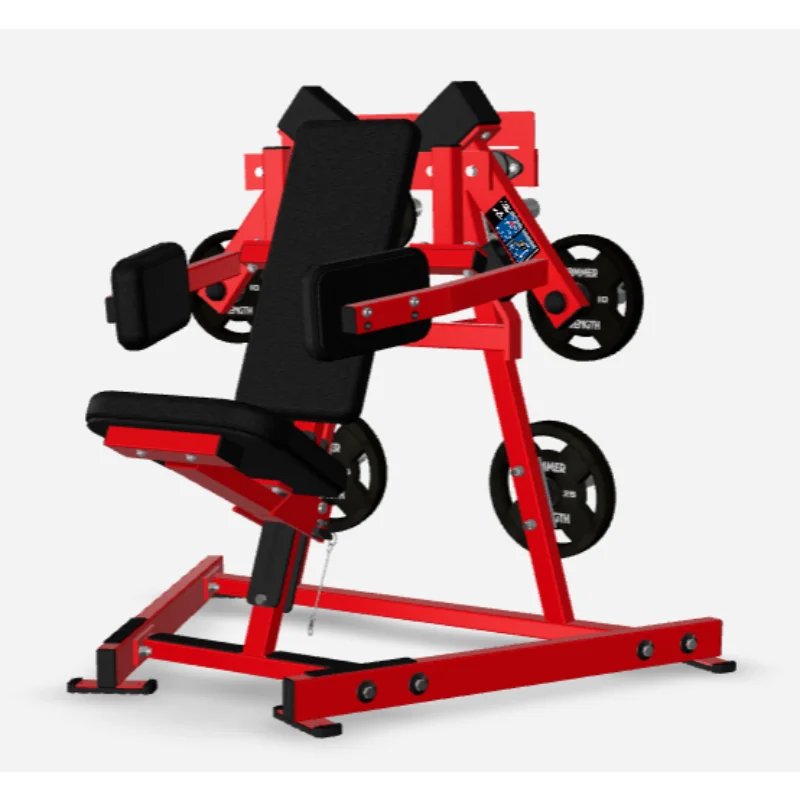
![Professional Hammer Strength H5027 Commercial Adductor Gym Equipment [WARN] draft identifier mismatch](https://bicksport.com/wp-content/uploads/2026/08/professional-hammer-strength-h5027-commercial-adductor-gym-equipment-warn-draft-identifier-mismatch-55e5b8.webp)
Engineered for endurance — Steel frame and manual resistance built to withstand continuous repetitions in commercial strength zones without structural fatigue.
Technical Specifications
| Parameter | Value |
|---|---|
| Designation | OS-H5027 |
| Product Type | Adductor Machine (Strength Equipment) |
| Power Source | Manual |
| Exercise Part | Leg |
| Material | Steel |
| Resistance Type | Manual (weight stack) |
| Product Dimensions | 1690 × 730 × 750 mm |
| Net Weight | 139 kg |
| Foldable | No |
| Color Options | Optional |
| OEM Customization | Available |
| Certification | ISO 9001, CE |
Application Suitability
| Deployment Scenario | Typical Use |
|---|---|
| International gym chain networks | High-frequency inner-thigh isolation training across peak and off-peak hours |
| Corporate wellness and community fitness centers | Lower-body strength sessions for diverse user populations throughout the workday |
| Professional sports training centers | Targeted adductor conditioning for athletes requiring lateral stability and injury prevention |
| Hotel fitness centers | Compact strength equipment placement where floor space limits full rack deployment |
Why Adductor Machines Fail Before the Warranty Expires
Frame fatigue at weld points is the leading cause of early retirement in commercial strength equipment.
I have pulled apart inner-thigh machines that lasted barely eighteen months in a busy chain gym. The pivot bearings wore through their housings, and the seat carriage developed lateral play that users felt immediately. When a commercial adductor machine gym equipment unit starts wobbling mid-set, members do not report it — they simply stop using it, and the machine becomes dead floor space [NEED_CITE: structural fatigue patterns in high-frequency selectorized strength equipment]. The OS-H5027 addresses this with a 139 kg steel frame that anchors the pivot axis firmly, reducing deflection under heavy load cycles.
Where This Adductor Machine Sits in the Strength Zone Layout
The OS-H5027 targets the hip adductor muscle group through a controlled, seated convergence movement that complements abductor machines, leg press stations, and free-weight squat racks. In a commercial adductor machine gym equipment deployment, it typically occupies a position along the selectorized strength circuit between isolation and compound movements. The 1690 × 730 mm footprint allows placement against walls or between larger multi-station units without compromising user entry clearance. It accommodates a broad range of user heights through adjustable pad positioning, and the manual resistance system lets each user select load independently without electronic calibration delays.
Deployment Environment and Continuous Use Considerations
This machine does not draw power, which eliminates electrical circuit planning but introduces other deployment requirements. The 139 kg net weight demands a level, reinforced floor surface — concrete or commercial-grade rubber over concrete subfloor [NEED_CITE: load-bearing requirements for selectorized strength equipment on elevated floors]. In multi-story hotel fitness centers, vibration from heavy repetitions can transmit through floor slabs, so isolation pads beneath the frame feet are advisable when the room sits above occupied guest floors. Ambient temperature and humidity affect pivot bearing lubrication intervals rather than motor cooling, simplifying HVAC requirements. The manual resistance system means zero electromagnetic interference with nearby cardiac telemetry or wireless access points.
Reading the Specs: Steel Grade, Pivot Geometry, and Resistance Path
The manual resistance system on the OS-H5027 relies on a weight stack connected through cables and pulleys to the movement arms. Unlike motorized resistance, this eliminates electronic component failure entirely — there are no circuit boards to replace, no firmware to update, and no power surges to protect against [NEED_CITE: maintenance comparison between selectorized and motorized resistance systems]. The 139 kg frame mass indicates substantial steel section thickness at the main uprights and base rails, which directly correlates to rigidity during eccentric loading phases. Pivot bearing diameter and sealed construction determine how long the movement arm stays true before developing lateral play. The 750 mm overall height keeps the center of gravity low, preventing any tipping tendency when users load maximum weight stack settings.
The Hidden Cost of Underspecified Strength Equipment
When a facility sources adductor machines based solely on price, the frame weight and bearing specifications tend to be the first compromises. Lightweight frames transmit user-generated vibration into the floor structure, creating complaints from adjacent rooms. Undersized pivot bearings develop play within months, and the resulting uneven pad contact causes users to favor one side — which defeats the purpose of bilateral adductor training. In high-volume gyms, machines that feel loose get abandoned, and the replacement cycle begins again. These are not manufacturing defects; they are specification decisions made at procurement [NEED_CITE: member equipment abandonment rates correlated with perceived build quality].
Why This Product Line Holds Up Under Continuous Operation
The OS-H5027 benefits from the same manufacturing discipline applied across the full six-series cardio and strength catalog. The steel frame undergoes load-cycle testing consistent with the 10,000-hour durability standard applied to motorized units in this product family. OEM customization extends to frame color, pad upholstery, and weight stack branding, allowing facility operators to maintain visual consistency across their strength zone. The 730 mm width integrates into 3D strength-zone layouts with standard clearance spacing for adjacent equipment and member traffic flow. Full documentation — including EN 957 compliance and material specification sheets — accompanies each unit, and 24/7 technical support covers pivot bearing replacement and cable tensioning inquiries long after installation.
Documentation & Test Records
- CE declaration of conformity for commercial strength equipment
- EN 957 test report covering static and dynamic load verification
- ISO 9001 manufacturing quality management certificate
- Steel material specification sheets with grade verification
- Noise and vibration transmission assessment for multi-floor deployment
- Spare parts list with cable, pulley, and bearing replacement intervals
Installation, Commissioning & Maintenance
- Allow minimum 600 mm clearance on all sides of the 1690 × 730 mm footprint for user entry and weight stack access
- Install on level concrete subfloor with isolation pads if deployed above occupied spaces
- Verify pivot bearing alignment and cable tension before opening to member use
- Inspect cable wear and pulley rotation monthly under high-frequency commercial operation
- Lubricate guide rods and pivot bearings per the maintenance schedule in the installation guide
- Wipe down steel frame and upholstery after each use cycle to prevent sweat corrosion
Planning Your Strength Equipment Inquiry
Share your strength zone square footage and adjacent equipment list to receive a 3D layout that accounts for the OS-H5027 footprint and member circulation paths. Specify the deployment floor level and adjacent occupied spaces so that vibration isolation requirements can be confirmed. Indicate your target market and any color or branding customization needs so that OEM scoping and lead times align with your project timeline.
Frequently Asked Questions
Q: How does manual resistance compare to motorized systems for commercial adductor training?
A: Manual weight-stack resistance eliminates electronic components entirely, meaning no motor burnout, no firmware updates, and no power supply failures. For high-frequency gym environments, this translates to fewer service calls and simpler maintenance routines. The resistance curve remains consistent across every repetition because it depends on gravity and pulley geometry rather than electronic calibration.
Q: What frame construction standards should buyers verify for high-frequency gym environments?
A: Buyers should request material specification sheets confirming steel grade, wall thickness at critical weld points, and bearing diameter at pivot axes. EN 957 compliance testing verifies that the frame withstands repeated loading cycles without structural deformation. A heavier net weight generally indicates more substantial steel sections, which correlates directly with long-term rigidity under continuous commercial use.
Q: What OEM customization options are available, and how do they affect lead times?
A: OEM customization covers frame color, pad upholstery material and color, weight stack branding, and logo placement. Custom console interfaces do not apply to this manual unit. Minimum order quantities and lead times depend on the scope of modification — a color change requires less production adjustment than a structural dimension modification. Confirm specifications early in the inquiry to align production scheduling with your project delivery date.
Q: How should the adductor machine be positioned within a strength zone layout?
A: Position the OS-H5027 within the selectorized isolation circuit, typically near the abductor machine for logical exercise sequencing. The 1690 × 730 mm footprint requires standard clearance spacing on all sides for user access and weight stack maintenance. A 3D layout plan accounts for member flow between machines, sightlines for trainer supervision, and ventilation paths to manage ambient temperature in the strength training area.
![Commercial Multi Function Power Rack Pull Up Gym Equipment [WARN] draft identifier mismatch](https://bicksport.com/wp-content/uploads/2026/08/commercial-multi-function-power-rack-pull-up-gym-equipment-warn-draft-identifier-mismatch-881358.webp)