
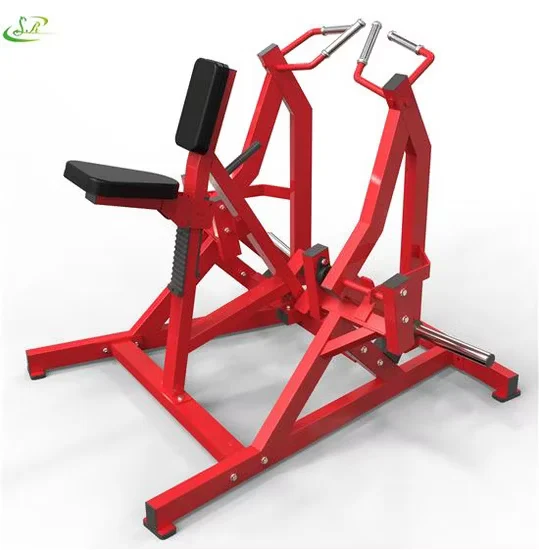
Heavy-Duty Frame Engineering — 50×100×3mm rectangular steel tubing delivers structural rigidity that prevents flex under maximum plate loads during continuous facility operation.
Technical Specifications
| Parameter | Value |
|---|---|
| Designation | SRH-11 |
| Product Type | Plate Loaded Lateral Hammer Seated Rowing Machine |
| Resistance Type | Plate Loaded |
| Frame Tube Size | 50×100×3mm |
| Machine Weight | 115 kg |
| Product Dimensions | 1570×1580×1320 mm |
| Exercise Focus | Arm and Back |
| Age Group | Adult |
| Gender | Unisex |
| Material | Iron |
| Color | Customized |
| Production Capacity | 200 Pieces/Month |
| Certification | CE, ISO 9001, RoHS |
Application Suitability
| Deployment Scenario | Typical Use |
|---|---|
| Commercial gymnasium strength zones | High-frequency back and arm training during peak membership hours |
| Community fitness centers | Durable rowing mechanics for multi-user public access environments |
| Hotel fitness facilities | Space-efficient lateral rowing alongside selectorized equipment fleets |
| High-end residential home gyms | Compact plate loaded option for dedicated strength training spaces |
| Sports performance training centers | Incremental plate progression for athlete rowing development |
Why Pivot Point Failures Empty the Strength Zone Before Anyone Reports Them
Sealed bearing construction at every pivot keeps the SRH-11 stroke smooth long after open bushings start binding under daily plate loads.
When lateral rowing machines develop play in their pivot assemblies, members notice the uneven pull before maintenance staff do. The result is abandoned equipment and complaint logs that only surface at quarterly reviews. The SRH-11 addresses this with sealed bearings at each articulation point, eliminating grease migration and contamination that degrade stroke quality in shared gym environments [NEED_CITE: bearing seal degradation rates in commercial strength equipment]. A plate loaded lateral hammer seated rowing machine commercial facility operators trust must perform consistently whether a member loads two plates or six.
How the SRH-11 Fits Into a Commercial Strength Floor
This plate loaded lateral hammer seated rowing machine covers horizontal pulling movements targeting the lats, rhomboids, and biceps across moderate to heavy resistance ranges. In a commercial cardio and strength layout, it complements plate loaded lat pulldowns and chest presses, completing the upper-body compound movement circuit without requiring selectorized weight stacks. The 1570×1580 mm footprint suits high-traffic zones where floor space must serve multiple disciplines. Its plate loaded design accommodates users progressing from rehabilitation loads to advanced athlete strength without mechanical adjustment, simply by adding or removing plates.
Continuous Operation and Deployment Environment Requirements
The SRH-11 operates without motors or electronics, which removes thermal management concerns but introduces other deployment considerations. Facility managers should verify floor leveling within tolerance, since uneven surfaces transfer lateral forces into the frame during heavy rowing strokes and accelerate bearing wear on the loaded side [NEED_CITE: floor leveling tolerances for plate loaded strength equipment]. The 115 kg machine weight provides inherent stability, but anti-vibration pads are recommended when deploying on upper floors or suspended slab construction to prevent impact transmission to occupied spaces below. Ambient humidity in pool-adjacent fitness areas requires periodic inspection of bearing seals and frame weld coatings.
Decoding the Frame and Bearing Specifications
The 50×100×3mm rectangular tubing specification matters because the 3mm wall thickness determines how much lateral deflection occurs when a user pulls asymmetrically or loads plates unevenly. Thinner-walled tubing may appear identical in product photos but develops visible flex within months of heavy commercial use, misaligning pivot geometry and creating the inconsistent stroke feel that drives member complaints. Sealed bearings at each pivot point replace the open bushings found in lighter-duty equipment; this distinction determines whether maintenance intervals are measured in months or years [NEED_CITE: sealed bearing versus open bushing service intervals in commercial strength machines]. The plate loaded resistance system eliminates cable-and-pulley complexity, meaning there are no weight stack guide rods to bend and no selector pins to fail under high-frequency use.
The Hidden Cost of Underspecified Strength Equipment
Facilities that purchase rowing machines with 2mm or 2.5mm wall tubing to save on initial procurement often face frame realignment costs within the first year. Open bushing pivot systems require scheduled greasing; when maintenance schedules slip, metal-on-metal wear produces the gritty stroke feel that members associate with poor equipment quality [NEED_CITE: maintenance schedule compliance rates for commercial gym pivot systems]. Weight stack selectorized alternatives introduce cable replacement cycles and guide rod lubrication that the SRH-11’s plate loaded design simply does not require. Equipment downtime during cable or pulley service directly reduces available stations during peak hours.
Why This Product Line Earns Its Floor Space
Biketon Sport’s 50,000㎡ manufacturing facility with in-house CNC machining and dedicated QC testing means the SRH-11 frame welds and bearing assemblies are verified before the unit leaves Shandong. Every unit undergoes transmission noise and resistance linearity testing by senior technicians — a plate loaded lateral hammer seated rowing machine commercial buyers receive has been stroke-tested under load before crating. The full OEM and ODM capability extends to frame color and finish, allowing facility operators to maintain brand consistency across equipment fleets. Free 3D strength-zone layout planning covers the SRH-11’s spacing requirements alongside adjacent plate loaded and selectorized units, accounting for member flow and plate storage positioning. Documentation includes EN 957 test reports and full spare parts lists, so maintenance teams order replacements by part number rather than measuring components. 24/7 technical support covers installation questions and bearing service procedures long after the unit is commissioned.
Documentation & Test Records
- CE declaration of conformity for the SRH-11 plate loaded rowing platform
- EN 957 test report covering structural integrity and pivot load verification
- ISO 9001 quality management certificate for manufacturing processes
- RoHS compliance documentation for frame coatings and finish materials
- Bearing seal specification sheet with expected service intervals
- Frame weld inspection and dimensional verification record
Installation, Commissioning & Maintenance
- Maintain minimum 600mm clearance on all sides of the SRH-11 for safe plate loading and member passage
- Install on level flooring with anti-vibration pads when deploying above occupied floors
- Verify all pivot bearing bolts to specified torque during initial commissioning
- Inspect sealed bearing condition and frame weld coatings quarterly in high-humidity environments
- Clean frame and seat upholstery after each use to prevent sweat corrosion on iron surfaces
- Confirm plate horn retention collars function correctly before daily facility opening
Request a Deployment Assessment
Provide your strength zone dimensions and existing equipment list to receive a 3D layout showing the SRH-11 positioned for optimal member flow and plate storage access. Specify daily usage hours and peak member counts so we can confirm bearing and frame specifications match your facility’s duty cycle. Indicate whether deployment is on ground level or upper floors so we can advise on vibration isolation requirements. State your target market to confirm finish and documentation standards align with local regulations.
Frequently Asked Questions
Q: How does plate loaded compare to selectorized for commercial gym deployment?
A: Plate loaded machines like the SRH-11 eliminate weight stack cables, guide rods, and selector pins — components that require regular replacement in high-traffic facilities. Users progress by adding standard plates, which most commercial gyms already stock in abundance. This reduces long-term maintenance costs and spare parts inventory while accommodating the full range of user strength levels without mechanical modification.
Q: Does the 50×100×3mm frame tube size affect stability under heavy loads?
A: The 3mm wall thickness provides structural rigidity that prevents visible flex when users load maximum plates or pull asymmetrically. Thinner-walled alternatives may cost less initially but develop frame deflection under continuous commercial use, which misaligns pivot geometry and creates an inconsistent stroke that members quickly notice and report to management.
Q: What maintenance do sealed bearings require in high-humidity environments?
A: Sealed bearings on the SRH-11 require significantly less attention than open bushing systems since contaminants cannot enter the raceway. In pool-adjacent or high-humidity fitness areas, quarterly visual inspection of seal integrity and frame coating condition is recommended. Replacement follows standard bearing service procedures without specialized tools or facility downtime beyond the individual unit.
Q: Can the frame color and finish be customized for facility branding?
A: Yes, the SRH-11 is available with customized color and finish options to maintain visual consistency across your equipment fleet. This applies to the iron frame coating, allowing operators to match existing brand palettes or differentiate zones within a multi-discipline facility. Confirm lead time and minimum order requirements during the quotation stage.

![Huiyang Commercial Plate Loaded Leg Extension Machine for Gym [WARN] draft identifier mismatch](https://bicksport.com/wp-content/uploads/2026/08/huiyang-commercial-plate-loaded-leg-extension-machine-for-gym-warn-draft-identifier-mismatch-e75bb9.webp)
![SRH-04 ISO Lateral Low Row Machine Commercial Strength Training Equipment [WARN] draft identifier mismatch](https://bicksport.com/wp-content/uploads/2026/08/srh-04-iso-lateral-low-row-machine-commercial-strength-training-equipment-warn-draft-identifier-mismatch-1e4b28.webp)
