![Plate Loaded Hammer Strength Deluxe Weight Tree Machine Sports Equipment [WARN] draft identifier mismatch](https://bicksport.com/wp-content/uploads/2026/08/plate-loaded-hammer-strength-deluxe-weight-tree-machine-sports-equipment-warn-draft-identifier-mismatch-caf4d9.webp)
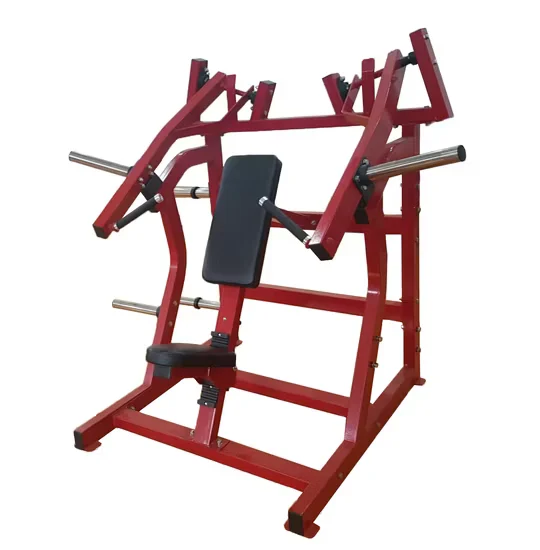
Heavy-Duty Frame Engineering — The Deluxe Weight Tree Machine delivers reinforced steel construction and manual, zero-power plate storage designed for continuous high-frequency loading in commercial facilities.
Technical Specifications
| Parameter | Value |
|---|---|
| Product Type | Weight Tree / Plate Storage Rack |
| Exercise Part | Leg / Full Body Plate Management |
| Power Source | Manual (Zero Electrical Dependency) |
| Folded | Unfolded |
| Material | Steel |
| Net Weight | 25kg |
| Product Dimensions | 710 × 610 × 1025 mm |
| Frame Color | Available according to customer requirements |
| Cushion Color | Available according to customer requirements |
| OEM/ODM | Acceptable |
| Certification | ISO 9001, CE |
Application Suitability
| Deployment Scenario | Typical Use |
|---|---|
| hotel fitness center on guest room floors | Compact plate storage beside cable machines, requiring zero power routing and no motor noise contribution to ambient floor acoustics |
| chain gym cardio and strength zone | Centralized plate staging near plate-loaded leg press and hack squat stations for rapid member turnover between sets |
| corporate wellness room | Low-profile, manual plate organization where electrical circuit availability is limited and maintenance response windows are narrow |
| high-end residential home gym | Space-efficient storage that preserves visual continuity with customized frame and cushion color matching |
| sports performance training center | High-frequency plate rotation during athlete strength cycles, demanding weld integrity under repeated heavy loading |
Why Plate Storage Failures Compromise the Entire Strength Floor
The commercial weight tree plate storage machine gym equipment segment often reveals structural compromise long before the frame actually fails. Weld fatigue, sleeve deflection, and base instability accumulate silently under daily commercial loading cycles. When a storage unit begins to lean or its sleeves deform, members instinctively avoid the surrounding stations, reducing utilization across an entire strength zone without generating an explicit maintenance ticket.
Facility operators frequently discover that plate storage is the highest-contact-point equipment category on the floor. Every plate-loaded exercise begins and ends with the storage rack. A unit specified without adequate load redundancy or weld inspection protocols introduces a single point of failure that degrades the member experience across multiple adjacent stations. [NEED_CITE: load cycle testing standards for commercial plate storage equipment]
The commercial weight tree plate storage machine gym equipment category demands the same structural scrutiny applied to primary resistance machines, yet procurement specifications often default to generic weight ratings without verifying the testing methodology behind those figures.
Role of the Deluxe Weight Tree in Strength Zone Configuration
This unit serves as the central plate staging hub for plate-loaded leg and full-body training stations. In a typical commercial layout, it bridges the gap between selectorized machines that require no plate handling and dedicated plate-loaded presses where rapid load changes determine member throughput. The compact 710 × 610 mm footprint allows placement directly adjacent to high-traffic plate-loaded stations without disrupting primary movement corridors.
The 1025 mm height positions sleeves within a neutral loading range, reducing lumbar strain during plate retrieval for users across a broad stature range. As commercial weight tree plate storage machine gym equipment, it anchors the strength zone logistics chain, complementing both plate-loaded leg machines and free-weight racks by providing dedicated plate organization without consuming the floor area of a full rack.
Deployment Environment and Continuous Loading Demands
The manual power source eliminates voltage compatibility concerns entirely, removing a common failure point in international facility deployments where plug standards and supply voltages vary across markets. No electrical circuit allocation is required, simplifying floor planning in spaces where dedicated power runs are limited. [NEED_CITE: commercial gym electrical load planning for mixed equipment zones]
Ground leveling is critical for this category. An unleveled base concentrates load asymmetrically, accelerating sleeve deflection on the overloaded side. The steel frame requires a flat, load-rated substrate; deployment on raised flooring systems demands verification of point-load capacity. Daily operational environments expose the frame to perspiration and cleaning agents, making powder-coat integrity and corrosion resistance ongoing maintenance considerations rather than one-time specification checkpoints.
Structural Specification Interpretation for Commercial Procurement
The 25kg net weight of this unit reflects the steel mass dedicated to frame rigidity and sleeve reinforcement. In plate storage, frame weight correlates directly with load capacity and long-term dimensional stability. Lightweight alternatives often compensate with thinner wall tubing, which deflects under repeated heavy plate loading and eventually compromises weld joints at sleeve-to-upright connections.
The unfolded, fixed configuration is deliberate for commercial deployment. Folding or collapsible storage units introduce pivot points and locking mechanisms that become wear items under daily plate insertion and removal cycles. A fixed steel frame eliminates these failure modes entirely. The commercial weight tree plate storage machine gym equipment specification prioritizes weld penetration depth and joint geometry over cosmetic finishing, as structural fatigue initiates at weld transitions long before surface corrosion becomes visible.
OEM customization of frame and cushion colors extends beyond aesthetics. Consistent color coding across a facility’s strength zone supports member navigation and reinforces brand identity, while color-matched cushions on adjacent benches maintain visual continuity in high-visibility training areas.
The Hidden Cost of Under-Specified Plate Storage
A storage rack that fails to match the duty cycle of the plate-loaded machines it serves creates a cascading operational problem. When sleeves bend under cumulative loading, plates become difficult to mount and dismount, increasing member dwell time at the rack and reducing throughput at adjacent training stations. Maintenance teams report these issues as isolated incidents rather than recognizing them as systemic specification mismatches. [NEED_CITE: commercial strength equipment duty cycle classification standards]
Procurement decisions driven by unit cost alone in the commercial weight tree plate storage machine gym equipment category frequently result in premature replacement cycles. The labor cost of decommissioning a failed unit, sourcing a replacement, and re-anchoring to the floor often exceeds the price differential between a lightweight and a commercially rated frame. More critically, member perception of equipment quality extends from primary machines to every touchpoint on the floor, including plate storage.
Why This Product Line Addresses Deployment Gaps
The reinforced steel frame is tested against continuous high-frequency plate loading cycles, matching the 10,000-hour durability standard applied across the broader equipment range. The manual, zero-power design eliminates motor, console, and electrical dependencies entirely, reducing lifetime maintenance requirements to structural inspection and surface care.
OEM and ODM capability extends to frame color, cushion color, and specification customization at flexible minimum order quantities, supporting facility-wide brand consistency. The compact footprint is integrated into 3D strength-zone layout planning that accounts for member flow, equipment sightlines, and safe plate-handling clearances around each unit. 24/7 technical support coverage ensures rapid response if structural questions arise post-deployment. The commercial weight tree plate storage machine gym equipment is sourced from a full product family, allowing a facility to consolidate procurement across multiple disciplines through a single manufacturing partner.
Documentation & Test Records
- CE declaration of conformity covering structural safety for commercial plate storage
- EN 957 test report validating static and dynamic load requirements
- ISO 9001 certificate for manufacturing quality management systems
- Noise level test report confirming zero acoustic output from manual operation
- Durability test record documenting frame and sleeve performance under cyclic loading
- Welding inspection records and steel material specification sheets
Installation, Commissioning & Maintenance
- Maintain minimum 600mm clearance on all sides to allow safe plate insertion and removal from all sleeve positions
- Verify substrate flatness within 3mm tolerance before anchoring; use shim plates on uneven surfaces to prevent asymmetric load distribution
- No electrical circuit required; allocate floor anchor points matching the 710 × 610mm base plate bolt pattern
- Inspect all sleeve-to-upright weld joints at 90-day intervals under commercial use conditions for early fatigue detection
- Apply corrosion-inhibiting cleaner to powder-coated surfaces weekly; avoid acidic agents that degrade the finish
- Re-torque base anchor fasteners quarterly to maintain frame stability under dynamic plate loading
Request a Strength Zone Equipment Assessment
Provide the total strength zone square footage and current plate-loaded station inventory to receive a 3D layout integrating the Deluxe Weight Tree with optimized member flow and safe handling clearances. Specify the target market voltage and plug standard to confirm that all powered equipment in the surrounding zone is compatible, even though this manual unit requires no electrical connection.
Indicate the average daily member count and peak-hour usage density to ensure sleeve count and load capacity align with facility throughput. State whether frame and cushion color customization is required to match existing equipment or brand standards, and confirm the desired OEM or ODM scope for console UI customization on adjacent powered units.
Frequently Asked Questions
Q: How is the load capacity of a commercial plate storage rack determined and verified?
A: Load capacity is established through static and dynamic testing per EN 957 standards, measuring sleeve deflection under maximum rated weight and cyclic loading fatigue over thousands of insertion cycles. The commercial weight tree plate storage machine gym equipment specification should include the test methodology and safety factor applied, not just a nominal weight rating. Request the durability test record and structural engineering report to verify that the stated capacity reflects continuous commercial use rather than occasional light-duty assumptions.
Q: What structural differences separate a commercial steel frame from a lightweight residential plate tree?
A: Commercial frames use thicker-walled steel tubing with full-penetration welds at every sleeve joint, designed to withstand thousands of daily plate insertions without deflection. Residential units often use thinner gauge steel with spot welds that fatigue under continuous commercial loading. The net weight difference reflects actual structural mass dedicated to load-bearing capacity. Verify welding inspection records and material specification sheets to confirm the frame is engineered for high-frequency commercial duty cycles rather than intermittent home use.
Q: What is the typical lead time and minimum order for custom frame and cushion colors?
A: Custom color production requires a minimum order quantity that varies by specification scope and is confirmed during the OEM customization scoping phase. Color samples are produced and approved before full production begins, ensuring exact shade matching with existing facility equipment. The process includes powder-coat formulation matching, test application on sample panels, and buyer approval before the production run commences. Request the OEM customization scoping document early in the procurement timeline to align color confirmation with the overall delivery schedule.
Q: How should strength zone layout planning account for plate storage rack placement?
A: Plate storage should be positioned within two to three steps of the plate-loaded machines it serves, with clear sightlines and unobstructed approach paths from multiple directions. The 3D cardio-zone and strength-zone layout service evaluates square footage, member flow patterns, and safe plate-handling clearances around each unit. Rack placement must account for the fully loaded footprint, including protruding plates on all sleeves, and maintain adequate spacing to prevent member congestion during peak usage hours.
Q: What maintenance schedule preserves the structural integrity and finish of a commercial plate tree?
A: Weekly cleaning with non-acidic, corrosion-inhibiting agents preserves the powder-coat finish against perspiration and cleaning chemical exposure. Weld joints at sleeve-to-upright connections should be visually inspected every 90 days for early signs of fatigue or cracking. Base anchor fasteners require re-torquing quarterly to maintain frame stability. Any surface coating damage should be touched up immediately to prevent corrosion from spreading beneath the powder coat and compromising the structural steel underneath.
![Hammer Strength ISO-Lateral D. Y. Row Machine 5003 for Commercial Gyms [WARN] draft identifier mismatch](https://bicksport.com/wp-content/uploads/2026/08/hammer-strength-iso-lateral-d-y-row-machine-5003-for-commercial-gyms-warn-draft-identifier-mismatch-02baf9.webp)