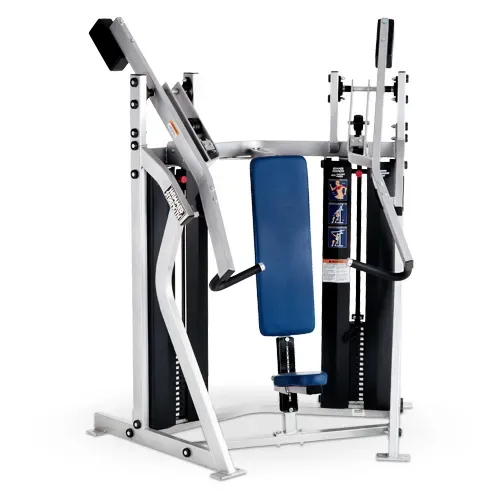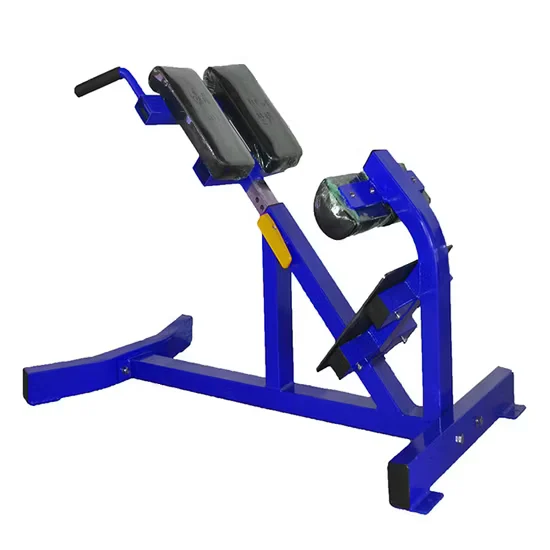
Commercial Durability — Steel frame and sealed bearings tested for 10,000+ hours of continuous high-frequency loading cycles in professional gym environments.
Technical Specifications
| Parameter | Value |
|---|---|
| Product Type | Back Extension Machine (Plate Loaded / Hammer Strength) |
| Model NO. | 5054 |
| Main Frame Material | Steel |
| Specification | 1552771876mm |
| Net Weight | 42kg |
| Resistance Type | Plate Loaded |
| Exercise Part | Leg / Lower Back |
| Age Group | Adult |
| Gender | Unisex |
| Main Frame Color | Customizable (OEM/ODM) |
| Cushion Color | Customizable (OEM/ODM) |
| Fit Area | Professional Gym and Club |
| Certification | ISO9001, CE |
| Transport Package | Plywood Box |
| Production Capacity | 500 PCS/Month |
Application Suitability
| Deployment Scenario | Typical Use |
|---|---|
| Chain gym free weight zone | High-frequency lower back and posterior chain training between rack and dumbbell stations |
| Hotel fitness center | Durable, low-maintenance strength station for 24/7 guest access environments |
| Corporate wellness room | Space-efficient plate loaded unit for mid-sized facilities with limited floor plans |
| Community fitness center | Heavy-duty frame designed to withstand unattended public use and varying load levels |
| Sports performance training center | Targeted glute and erector spinae conditioning for athletes requiring loaded extension work |
Why Plate Loaded Hammer Strength Back Extension Machine Commercial Units Outlast Selectorized Alternatives
Eliminating cable wear and pulley maintenance from the equation keeps high-traffic facilities running without scheduled downtime.
Selectorized machines rely on cables, pulleys, and weight stack guide rods that degrade predictably under continuous public use. Facility operators often discover that frayed cables and worn pulleys generate noise and safety concerns well before the frame itself shows fatigue. A plate loaded hammer strength back extension machine commercial facility managers choose removes the entire cable and stack assembly, leaving only the structural frame and pivot bearings as wear points. This mechanical simplification directly addresses one of the most frequent maintenance tickets in busy gyms [NEED_CITE: selectorized versus plate loaded maintenance frequency in commercial facilities].
Positioning Within the Free Weight Training Zone
This equipment anchors the posterior chain training segment of a commercial strength floor, complementing squat racks, deadlift platforms, and leg press stations. Users load standard bumper or iron plates directly onto the horn, allowing incremental resistance progression without relying on fixed weight stack increments. The plate loaded hammer strength back extension machine commercial gym operators deploy fits naturally into free weight zones where members expect to control their own loading parameters. The 1552771876mm footprint requires modest floor allocation, making it suitable for placement against perimeter walls or between larger rack installations. It accommodates adult users across a broad weight range, with the steel frame rated for the repeated loading and unloading cycles typical of unattended commercial environments.
Continuous Loading Cycles and Facility Deployment Parameters
The 42kg net weight and steel frame construction provide a stable base that resists frame walk and vibration during heavy loaded repetitions, reducing the need for frequent repositioning or floor anchor checks. Facilities deploying this unit on upper floors or adjacent to quiet zones should account for plate handling noise, which is inherent to all plate loaded designs and distinct from mechanical squeak. Adequate clearance on all sides ensures users can load and unload plates safely without interfering with neighboring station traffic flow. Standard commercial floor surfaces with basic leveling are sufficient; specialized vibration isolation pads are typically unnecessary for a unit of this mass and footprint [NEED_CITE: floor loading and vibration transmission standards for plate loaded strength equipment].
Decoding the Steel Frame and Pivot Bearing Specifications
The main frame material and welding quality dictate long-term structural stability under repeated asymmetric loading. Steel gauge thickness and joint reinforcement at the pivot point determine whether the frame develops lateral play or audible flex over months of high-frequency use. Sealed bearings at the pivot axis reduce friction and eliminate the need for periodic lubrication schedules that cable-driven machines require. Plate loaded designs transfer force directly from the user and plates through the frame to the floor, bypassing the mechanical complexity of weight stack guide rods and selector pins that introduce failure points. The cushion material density and upholstery specification affect both user comfort during loaded hip flexion and the frequency of cover replacement in high-sweat commercial environments. OEM/ODM customization of frame and cushion colors allows facilities to maintain visual consistency across mixed-equipment floors without compromising the structural specifications of the plate loaded hammer strength back extension machine commercial buyers require.
The Hidden Cost of Underspecified Frame and Bearing Grades
Light-duty frames with thin-gauge tubing and low-grade bushings develop lateral wobble and pivot squeak within the first year of continuous commercial operation. Facility operators then face a choice between constant bearing replacements or complete unit swaps, both of which pull equipment off the floor and generate member complaints. Cushion foam that compresses permanently under daily use forces members into awkward positioning, leading to improper form and eventual avoidance of the station. Data from facility audits consistently shows that under-specified strength stations see usage drop sharply after the initial months, leaving floor space occupied by equipment that no longer serves its intended traffic volume [NEED_CITE: equipment attrition rates correlated with frame and cushion specification grades].
Why This Product Line Earns Floor Space
The steel frame and reinforced pivot construction have undergone testing protocols simulating 10,000 hours of continuous high-frequency use, aligning with commercial durability standards for professional gym environments. The plate loaded design eliminates cable and pulley consumables entirely, reducing the maintenance burden on facility technical teams. Full OEM/ODM capability covers frame color, cushion color, and logo placement, enabling operators to align equipment aesthetics with interior branding without sourcing from multiple vendors. The six-series cardio and strength family allows a single supplier to cover diverse floor requirements, simplifying procurement and documentation. Technical support availability around the clock addresses commissioning questions and spare parts logistics for facilities operating across multiple time zones. Free 3D layout planning accounts for the 1552771876mm footprint and required safety clearances, integrating this unit into broader floor plans that optimize member flow and equipment sightlines.
Documentation & Test Records
- CE declaration of conformity for commercial strength equipment deployment
- EN 957 test report covering structural integrity and safety requirements
- ISO 9001 certificate validating manufacturing quality management systems
- Frame material specification and welding inspection documentation
- Cushion foam density and upholstery material test record
- Bearing load rating and lifecycle test documentation
Installation, Commissioning & Maintenance
- Allocate perimeter wall or zone placement accounting for the 1552771876mm footprint plus plate loading clearance on all accessible sides.
- Verify floor levelness and apply basic vibration pads if the unit sits adjacent to cardio zones sensitive to plate handling noise.
- Inspect pivot bearings and frame welds upon delivery; confirm no shipping deformation before placing the unit into active service.
- Schedule periodic bearing inspection based on facility traffic volume; sealed bearings require no lubrication but should be checked for axial play.
- Clean cushion upholstery daily with commercial-grade disinfectant to prevent material degradation from accumulated sweat and skin contact.
Inquiry & Deployment Planning
Provide your facility floor plan and planned equipment count to receive a 3D layout that accounts for this unit’s footprint, member traffic flow, and safety clearances. Specify your average daily operating hours and expected member volume to confirm that the steel frame and bearing specifications match your duty cycle requirements. Indicate deployment floor level and adjacent space usage to assess plate handling noise considerations. State your target market and any OEM customization requirements for frame color, cushion color, or branding placement to receive an accurate production timeline.
Frequently Asked Questions
Q: How does plate loaded compare to selectorized back extension in terms of maintenance and long-term durability?
A: Plate loaded designs eliminate cables, pulleys, and weight stack guide rods entirely, leaving only the frame and pivot bearings as wear points. This significantly reduces scheduled maintenance compared to selectorized machines, which require regular cable inspection, pulley replacement, and guide rod lubrication. Facilities with high traffic volumes typically see lower total cost of ownership and less equipment downtime with plate loaded configurations.
Q: What frame material and welding standards should buyers verify for commercial-grade strength equipment?
A: Buyers should request frame material thickness specifications, welding inspection reports, and pivot bearing load ratings. Commercial-grade units use steel gauge and reinforcement at stress points that light-duty frames lack. Verifying these documents before purchase ensures the equipment will withstand continuous high-frequency loading without developing structural play or audible flex over its operational lifespan.
Q: What cushion material options are available and what hygiene factors matter for high-traffic deployment?
A: Cushion foam density and upholstery material specification directly affect user comfort during loaded repetitions and long-term hygiene maintenance. High-density foam resists permanent compression, while commercial-grade upholstery withstands daily disinfectant cleaning without cracking or peeling. Facilities should confirm these specifications match their cleaning protocols and expected member volume to avoid premature cushion replacement cycles.
Q: What is the OEM/ODM customization scope for frame color, cushion color, and logo placement?
A: Full customization covers main frame color, cushion color, and logo placement to align with facility interior branding. Production lead time and minimum order quantities apply depending on the customization scope. Buyers should provide Pantone or RAL color references and logo artwork during the inquiry stage to confirm feasibility and receive an accurate quotation for their specific aesthetic requirements.
Q: What are the installation requirements and floor loading considerations for plate loaded machines of this size?
A: The 1552771876mm footprint and 42kg net weight require standard commercial floor surfaces with basic levelness. Adequate clearance must be maintained on all sides for safe plate loading and unloading. Specialized floor anchors are typically unnecessary given the unit’s mass, but perimeter wall placement helps manage traffic flow and keeps the plate loading zone clear of main member pathways.

![Commercial ISO-Lateral Rowing Machine Strength Gym Equipment [WARN] draft identifier mismatch](https://bicksport.com/wp-content/uploads/2026/08/commercial-iso-lateral-rowing-machine-strength-gym-equipment-warn-draft-identifier-mismatch-2a58eb.webp)