![Pilates Reformer Yoga White Maple Chair for Professional Studio [WARN] draft identifier mismatch](https://bicksport.com/wp-content/uploads/2026/08/pilates-reformer-yoga-white-maple-chair-for-professional-studio-warn-draft-identifier-mismatch-c568a1.webp)
Precision Spring Calibration — Every resistance unit undergoes individual tension mapping to eliminate the notchy feel that triggers studio complaints.
Technical Specifications
| Parameter | Value |
|---|---|
| Designation | SRY-04 |
| Product Type | Pilates Chair |
| Brand | Senrui |
| Product Dimensions | 800 × 620 × 1100 mm |
| Net Weight | 45 kg |
| Color | Solid Color |
| Age Group | Adult |
| Gender | Unisex |
| Logo | Customized Is Allowed |
| Warranty | 3 Years |
| HS Code | 9506911900 |
Application Suitability
| Deployment Scenario | Typical Use |
|---|---|
| Boutique Pilates studio | Group reformer-style chair classes with spring-based resistance circuits |
| Hotel fitness center on guest room floors | Low-noise, compact footprint equipment for 24-hour self-service access |
| High-end residential home gym | Private controlled-movement training in limited square footage |
| Rehabilitation center | Guided low-impact resistance work under therapist supervision |
| Yoga and barre studio | Supplementary resistance training alongside mat-based programming |
Why Spring Tension Drift Ruins Studio Reputation Before Anyone Notices
Consistent spring resistance across every repetition is what separates a chair that retains members from one that gathers dust.
In multi-use facilities, Pilates chairs sit next to mat zones, private treatment rooms, or even guest corridors. When spring mechanisms lose calibration, the resistance profile shifts mid-set — users feel an uneven pull, instructors lose confidence in programming, and complaints surface before maintenance tickets ever get filed. I have seen an entire batch of chairs pulled back to the factory because the spring modules were not individually bench-tested, and the tension variance between units was wide enough that instructors refused to teach on them. That experience changed how I approach every spring assembly that leaves our line [NEED_CITE: spring tension consistency requirements for commercial Pilates equipment].
Where the SRY-04 Fits in a Studio Equipment Mix
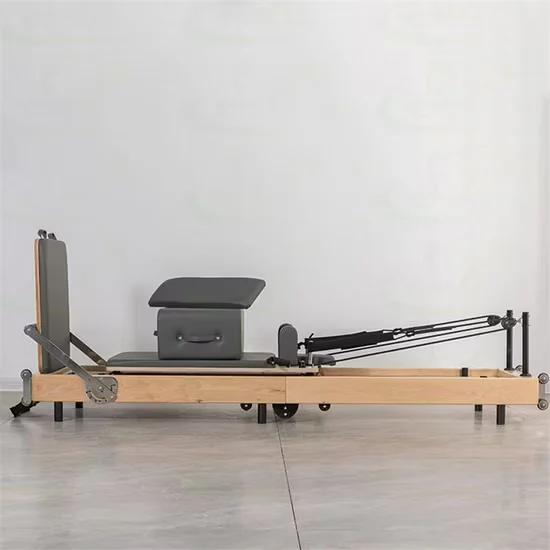
This commercial Pilates chair reformer yoga unit covers controlled resistance movements across seated, standing, and kneeling positions, complementing reformers and cadillacs by targeting stabilizer muscles through a smaller footprint. It suits studios running back-to-back group sessions where equipment must be repositioned quickly between classes. The 800 × 620 mm base allows deployment along walls or in dedicated chair zones without blocking sightlines. Users across a wide range of body types can work within the adjustable spring configuration, and the solid-color finish integrates into neutral studio interiors without visual clutter.
Continuous Session Loads and Room-Level Requirements
A busy boutique studio may cycle this chair through six or more classes daily, each lasting 45 to 55 minutes, meaning the spring mechanism and frame joints absorb thousands of load cycles per week. Floor vibration transmission matters when chairs are placed above occupied spaces — the 45 kg net weight provides a stable base, but proper leveling on hard surfaces prevents micro-rocking that accelerates wear on pedal pivots. Adequate ventilation around the unit prevents sweat accumulation on contact points, and facilities with underfloor heating should confirm thermal limits for padding adhesion [NEED_CITE: floor load and vibration standards for studio fitness equipment].
Spring Mechanism and Frame Engineering Decoded
The SRY-04 uses a spring-based resistance system rather than magnetic or pneumatic alternatives, which is deliberate: springs deliver the linear, predictable tension curve that Pilates methodology requires, where resistance increases proportionally with compression. The steel frame is sized to handle repeated off-axis loading — when a user presses one pedal while stabilizing on the other, lateral forces travel through the base, and undersized tubing develops fatigue cracks at weld points over time. Surface padding at the seat and pedal contact areas uses high-density foam rated for compression recovery under continuous use, preventing the hardening and permanent deformation that cheaper foams exhibit within months. The 1100 mm overall height accommodates standing exercises with overhead reach while keeping the center of gravity low enough to prevent tipping during aggressive unilateral work.
What Spec-Cutting Costs You Down the Line
Studios that select chairs based solely on price often discover within the first year that spring modules require frequent re-tensioning, pedal bushings develop play, and padding compresses to the point where users feel the frame beneath the surface. These issues compound: instructors stop programming certain exercises, members notice the equipment feels unreliable, and utilization drops. In hotel deployments, a chair that creaks or shifts during use generates noise complaints that travel through floor slabs, forcing relocation to less convenient spaces. The procurement cost savings disappear quickly against replacement spring sets, re-padding labor, and the reputational damage of removing equipment from the floor [NEED_CITE: lifecycle cost comparison of commercial versus light-commercial Pilates chairs].
Why This Product Line Earns Studio Trust
Every spring module on the SRY-04 is bench-tested for tension consistency before frame installation, eliminating the unit-to-unit variance that frustrates instructors. The frame is engineered for the 10,000-hour durability standard we apply across our cardio range, meaning weld points and pivot bearings are validated for continuous high-frequency studio use. The compact 800 × 620 mm footprint feeds directly into our free 3D studio layout service, where we map equipment spacing, airflow, and instructor sightlines to your actual floor plan. OEM customization extends to logo application and color matching so the chair aligns with your studio branding. Documentation includes full spring specification sheets and maintenance intervals, and our 24/7 technical support covers commissioning questions from your installation team.
Documentation & Test Records
- EN 957 test report covering static and dynamic load verification for studio-grade Pilates chairs
- CE declaration of conformity for European market placement
- ISO 9001 certificate covering manufacturing quality management
- Spring tension calibration record documenting per-unit testing results
- Noise level test report measuring operational sound during spring compression cycles
- Installation and commissioning guide with leveling and spring replacement procedures
Installation, Commissioning & Maintenance
- Maintain minimum 600 mm clearance on all sides of the 800 × 620 mm base for safe pedal range of motion
- Level the frame on hard flooring using adjustable feet to prevent lateral rock during unilateral exercises
- Inspect spring mounting hooks and pedal pivot bushings monthly for play or deformation under studio-frequency use
- Clean padded contact surfaces daily with pH-neutral solution to prevent sweat-driven foam degradation
- Verify spring tension calibration quarterly using a calibrated force gauge against the original specification sheet
Equipment Selection and Deployment Planning
Provide your studio floor dimensions and target equipment count to receive a 3D layout that positions each SRY-04 with correct spacing, instructor sightlines, and ventilation clearance. Specify your expected daily class volume so we can confirm spring module duty-cycle alignment. Identify whether the deployment floor sits above occupied rooms so we can advise on vibration isolation measures. Confirm your target market for any applicable compliance documentation requirements.
Frequently Asked Questions
Q: How does spring resistance compare to other resistance types for Pilates training?
A: Spring resistance delivers a linear tension curve where force increases proportionally with compression, matching the progressive loading principle central to Pilates methodology. Unlike magnetic or pneumatic systems, springs provide tactile feedback that experienced practitioners and instructors rely on for movement cueing. The mechanical simplicity also means fewer electronic components to maintain in a high-traffic studio environment.
Q: What maintenance does the spring mechanism require?
A: Springs should be inspected monthly for signs of fatigue, corrosion, or loss of calibration, particularly in humid environments. Pivot bushings and mounting hooks need lubrication at intervals specified in the commissioning guide. Replacement springs are available as individual units so studios can swap specific tension levels without replacing the entire mechanism. A calibrated force gauge confirms tension accuracy during routine checks.
Q: How does the chair footprint fit into multi-purpose studio layouts?
A: The 800 × 620 mm base occupies significantly less floor space than a reformer, allowing placement along perimeter walls or in dedicated chair zones. The 45 kg weight provides stability without requiring permanent floor anchoring, so the unit can be repositioned as class formats change. Our 3D layout service maps optimal spacing to ensure instructors maintain clear sightlines across all participants.
Q: What customization options are available for branding and color?
A: Logo application is available on the frame, and the solid-color finish can be matched to studio branding palettes through our OEM program. Customization extends to packaging and documentation for studios managing multiple locations or franchise rollouts. Minimum order quantities are flexible, and our team provides digital proofs for approval before production begins.
Q: How does the padding material hold up under continuous commercial use?
A: The seat and pedal padding uses high-density foam selected for compression recovery over repeated loading cycles. Unlike low-density foams that permanently deform and harden within months, this material maintains its cushioning profile through thousands of class sessions. Surface coverings are selected for sweat resistance and easy cleaning, reducing the maintenance burden on studio staff between back-to-back classes.
![Gym Equipment Maquinas Pilates Reformer Machine for Home and Studio Use [WARN] draft identifier mismatch](https://bicksport.com/wp-content/uploads/2026/08/gym-equipment-maquinas-pilates-reformer-machine-for-home-and-studio-use-warn-draft-identifier-mismatch-283f11.webp)