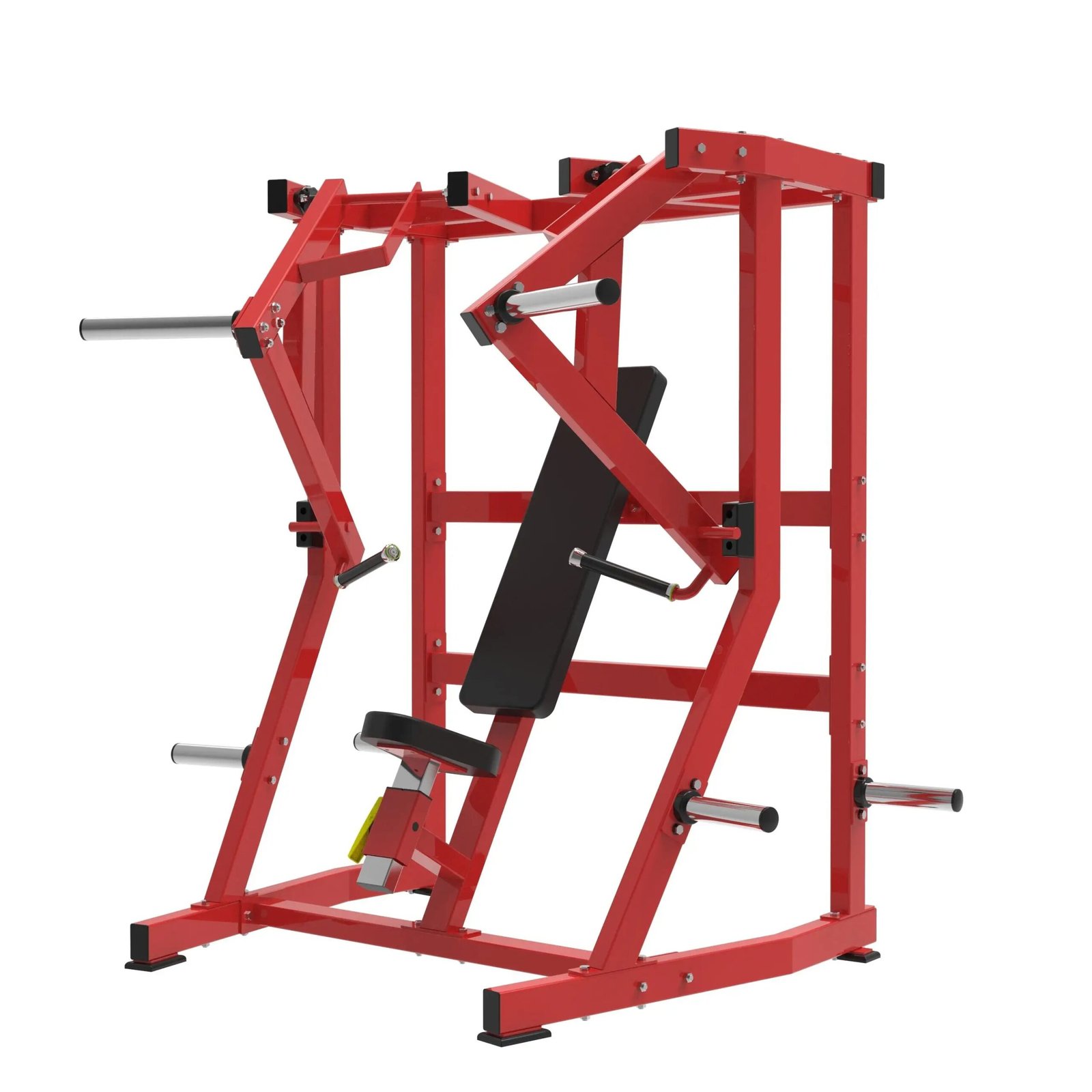
Reinforced Steel Frame — Every weld joint on this adjustable bench undergoes load-cycle testing to withstand repeated high-frequency adjustments in commercial strength zones.
Technical Specifications
| Parameter | Value |
|---|---|
| Designation | os-h5068 |
| Material | Steel |
| Product Dimensions | 18657001420mm |
| Net Weight | 58kg |
| Max User Weight | 180kg |
| Exercise Part | Adjustable Bench |
| Frame Construction | Reinforced steel with commercial-grade welding |
| Adjustment Mechanism | Multi-position locking pins |
| Upholstery | High-density foam with commercial vinyl cover |
| OEM/ODM | Available (logo, color, upholstery, specification) |
| Certification | ISO 9001, CE |
| Production Capacity | 500 PCS/Month |
| Transport Package | Plywood Case |
Application Suitability
| Deployment Scenario | Typical Use |
|---|---|
| Professional gym strength zone | Flat, incline, and decline pressing movements across free-weight programs |
| Chain gym functional training area | Multi-angle dumbbell and barbell work during peak-traffic hours |
| Corporate wellness facility | Versatile bench positioning for diverse employee fitness levels |
| Community fitness center | High-frequency public use with repeated adjustment cycles throughout the day |
| Sports performance training center | Precise angle settings for athlete-specific strength and rehabilitation protocols |
Why Facility Operators Replace Benches Sooner Than Expected
A bench rated for light-commercial use will fail structurally within months under continuous gym traffic.
I spent years on the assembly floor watching what happens when residential-grade frames enter commercial environments. The adjustment pins shear, the pivot welds crack, and the upholstery compresses to the point where members feel steel through the pad. We pulled an entire batch back from a hotel once — not cardio equipment this time, but benches that had been specified by weight rating alone without anyone asking about duty cycle or locking-pin material. That failure pattern repeats across facilities that treat adjustable benches as commodity purchases rather than engineered components of a strength zone [NEED_CITE: structural fatigue patterns in commercial adjustable bench pivot assemblies].
Where This Bench Fits in a Commercial Strength Zone
The os-h5068 covers flat through full-incline positioning, supporting pressing, rowing, and fly movements across the intensity range that commercial members demand. In a configured strength zone, it pairs with squat racks and cable systems to form a complete free-weight station without requiring members to move between areas. The 1865mm length accommodates users across a wide height range while maintaining a footprint that allows adequate spacing between units in high-density layouts. This commercial multifunction adjustable bench is designed for placement where traffic is continuous and adjustment frequency exceeds residential expectations by a significant margin.
Continuous Adjustment Cycles and Floor-Level Deployment
A commercial gym bench may be repositioned dozens of times per day as members cycle through exercises. The locking mechanism must hold secure under loaded conditions without requiring excessive force to release, and the pivot points must resist lateral play that develops over thousands of cycles. Floor protection matters equally — stabilizer feet must distribute load across rubberized gym flooring without marking or migrating during heavy dumbbell work. In multi-story facilities, the 58kg frame mass contributes to stability but also means the bench stays where placed, reducing the drifting that lighter units cause in open training areas [NEED_CITE: locking mechanism fatigue testing standards for commercial adjustable benches].
Steel Gauge, Weld Geometry, and Load Transfer
The frame uses commercial-grade steel with reinforced welding at every stress concentration point — particularly the pivot bracket where the back pad meets the base and the rear stabilizer junction. Net weight of 58kg indicates substantial material thickness compared to residential benches that often sit below 30kg. The adjustment mechanism relies on commercial locking pins rather than pop-pin systems common in light-duty equipment; these pins engage fully through the frame tube rather than relying on spring tension alone. High-density foam in the upholstery maintains structural integrity under repeated compression, preventing the hard-spot formation that members notice within weeks on lower-density pads. The vinyl cover resists sweat penetration and cleaning chemicals used in commercial sanitation cycles.
The Hidden Cost of Underspecified Benches
Facilities that specify benches by price point alone often face structural replacement within the first year of heavy operation. Pivot welds crack under cyclic loading, creating liability exposure when a bench shifts unexpectedly under a loaded barbell. Upholstery compression exposes members to frame contact, generating complaints and driving users toward competing facilities with better-maintained equipment. Adjustment mechanisms that develop play force members to stop mid-set and re-secure positions, disrupting training flow and creating negative impressions of the entire facility. These failure modes are invisible at purchase but compound into significant replacement costs and member retention damage [NEED_CITE: commercial bench replacement frequency in high-traffic fitness facilities].
Why This Product Line Earns Its Placement
Every os-h5068 unit runs through structural load testing before leaving the facility — the same 10,000-hour durability philosophy we apply across our cardio range extends to strength equipment pivot and locking components. The steel frame construction is verified against EN 957 requirements for commercial strength equipment, not residential thresholds. OEM customization covers upholstery color, logo placement, and specification modifications so the bench integrates with your facility’s visual identity. Our 3D layout planning accounts for the 1865mm footprint and required clearance zones, ensuring the bench placement supports member flow rather than creating congestion in the strength area. Full documentation accompanies every shipment, and 24/7 technical support covers commissioning questions that arise during installation.
Documentation & Test Records
- CE declaration of conformity covering commercial strength equipment classification
- EN 957 test report validating structural load capacity and stability requirements
- ISO 9001 certificate covering manufacturing process control
- Durability test record documenting adjustment mechanism cycle performance
- Upholstery material specification sheet with chemical resistance data
- Installation guide with floor anchoring and spacing recommendations
Installation, Commissioning & Maintenance
- Position the 1865*700mm footprint with minimum clearance on all sides for safe member access during loaded exercises
- Level stabilizer feet on gym flooring using adjustable pads to prevent frame rock during heavy dumbbell movements
- Inspect all locking pins and pivot bolts after the first week of commercial use and retorque to specification
- Wipe vinyl upholstery with approved commercial cleaners daily to prevent sweat degradation and bacterial buildup
- Check adjustment mechanism engagement monthly and replace locking pins showing visible wear or reduced retention
- Verify frame weld integrity at pivot junctions during quarterly facility maintenance inspections
Specify with Confidence
Provide your strength zone dimensions and equipment list to receive a 3D layout showing os-h5068 placement with proper clearance zones and member flow paths. Indicate your daily member volume and peak-hour traffic patterns so we can confirm the locking mechanism specification matches your adjustment frequency. Specify target market requirements for any regional compliance documentation. Confirm whether OEM customization including upholstery color, logo embroidery, or frame finish is required for your facility’s design standards.
Frequently Asked Questions
Q: What distinguishes commercial bench construction from residential-grade equipment?
A: Commercial benches use thicker steel tubing, reinforced weld geometry at pivot points, and locking mechanisms designed for thousands of adjustment cycles. Residential benches often rely on lighter-gauge material and spring-loaded pins that develop play quickly under continuous gym traffic, creating structural liability in professional environments.
Q: How does the adjustment mechanism perform under high-frequency daily use?
A: The commercial-grade locking pins engage fully through the frame tube rather than relying on spring tension alone. This design prevents the gradual looseness that develops in lighter mechanisms, maintaining secure positioning even after repeated daily adjustments across multiple users and loaded exercises.
Q: What weight capacity should a commercial gym bench support?
A: Commercial environments require benches rated significantly above the maximum expected user weight plus loaded equipment. The reinforced steel frame and 58kg net weight of this unit provide the structural margin needed for heavy dumbbell and barbell work without deflection or frame flex during use.
Q: What OEM customization options are available for facility branding?
A: Customization covers upholstery color selection, logo placement through embroidery or printing, frame finish options, and specification modifications. Flexible MOQ allows facilities of varying scale to order branded equipment without excessive minimum quantities or extended lead times.
Q: What maintenance extends bench longevity in high-traffic facilities?
A: Regular inspection of locking pins for wear, monthly retorque of pivot bolts, daily upholstery cleaning with approved solutions, and quarterly weld integrity checks at stress points. These routines prevent the progressive degradation that leads to premature structural replacement in commercial environments.
![Commercial Hammer Strength ISO-Lateral D.Y.Row Plate Loaded Machine OS-H5003 [WARN] draft identifier mismatch](https://bicksport.com/wp-content/uploads/2026/08/commercial-hammer-strength-iso-lateral-d-y-row-plate-loaded-machine-os-h5003-warn-draft-identifier-mismatch-6b974d.webp)