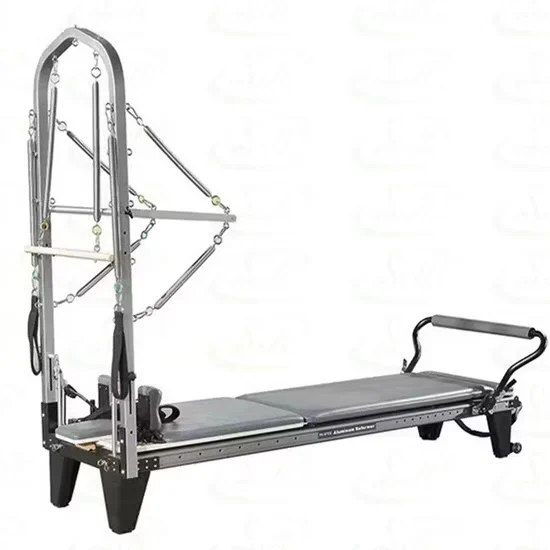
Solid Wood Stability — SRY-02 Pilates Reformer maintains vibration-free operation through reinforced oak or maple frame construction, tested for repetitive studio use.
Technical Specifications
| Parameter | Value |
|---|---|
| Product Type | Pilates Reformer |
| Designation | SRY-02 |
| Brand | Senrui |
| Frame Material | Solid Wood (Oak / Maple options) |
| Dimensions | 2460 730 680 mm |
| Net Weight | 100 kgs |
| Resistance Type | Spring-based |
| Accessories Included | Long Box / Jump Board / Platform |
| Color Options | Solid Color finishes available |
| Logo Customization | Customized Is Allowed |
| Target Demographic | Adult, Unisex |
| Warranty Time | 3 Years |
| Production Capacity | 80 Pieces/Month |
| HS Code | 9506911900 |
Application Suitability
| Deployment Scenario | Typical Use |
|---|---|
| Boutique Pilates & Yoga Studio | Group reformer classes and private instruction requiring durable wood aesthetics |
| Five-Star Hotel Wellness Center | Low-noise movement studios on guest floors accommodating varied user schedules |
| Corporate Fitness Facility | Mind-body programming zones complementing existing cardio and strength equipment |
| Personal Training Facility | One-on-one rehabilitation and conditioning sessions utilizing full accessory ecosystem |
| High-End Residential Home Gym | Private studio installations where premium wood finish matches interior design standards |
Why Vibration Complaints Surface Before Equipment Failures Do
Wood frame damping eliminates the structural resonance that metal-only frames transmit through floors.
Pilates reformers deployed in multi-story facilities often generate low-frequency vibration during jump board work and dynamic carriage movements. This vibration travels through floor assemblies, triggering complaints from occupied spaces below before any mechanical failure occurs. Studio operators replacing equipment due to neighbor disputes face operational disruption and capital waste [NEED_CITE: vibration transmission standards for fitness equipment on suspended floors]. A commercial Pilates reformer wood frame gym deployment requires understanding how material density and joinery affect acoustic isolation, not just load capacity.
Positioning Within Mind-Body Programming Zones
This reformer covers full-body conditioning from foundational footwork through advanced jump board plyometrics. In a mixed-modality studio, it complements Cadillac and Wunda Chair stations by providing the primary horizontal resistance platform. The 2460mm length accommodates users across height ranges without carriage bottom-out, while the 100kg net weight prevents unit migration during explosive movements. Facilities configuring group class layouts typically allocate 3.5 square meters per station including instructor circulation space. The commercial Pilates reformer wood frame gym specification allows branding alignment through custom logo application and coordinated color finishes.
Continuous Session Throughput and Floor Loading Considerations
Back-to-back classes in high-volume studios demand equipment that maintains calibration across 8-10 daily sessions. Spring tension drift and carriage wheel tracking require periodic verification when usage exceeds 60 hours weekly [NEED_CITE: spring fatigue testing protocols for commercial Pilates equipment]. Upper-floor deployments must verify structural load ratings account for dynamic forces during jump board exercises, not just static equipment weight. Ground-level installations benefit from isolation pads that decouple the wood frame from concrete slabs, reducing transmitted vibration to adjacent treatment rooms or quiet zones.
Spring Resistance Architecture and Frame Material Selection
Spring-based resistance provides progressive load curves matching muscular force production through range of motion. Unlike hydraulic or pneumatic systems, mechanical springs require minimal maintenance while delivering consistent tension across thousands of compression cycles. Oak frames offer higher density and natural vibration absorption compared to maple, though both species require humidity-controlled environments to prevent dimensional movement. The 100kg frame mass provides inertial stability during unilateral work and standing platform exercises, eliminating the anchoring requirements that lighter reformers demand. Accessory mounting points for the long box, jump board, and platform use standardized attachment mechanisms allowing rapid configuration changes between clients.
The Hidden Cost of Underspecified Frame Construction
Light-duty reformers in commercial environments develop carriage wobble and frame rattle within months of high-frequency use. Studios replacing entire fleets due to structural degradation face equipment downtime and member attrition during transition periods. Metal frames without adequate cross-bracing transmit spring oscillation directly to floor structures, generating noise complaints that force schedule restrictions or room reassignments. Procurement decisions based solely on initial cost ignore the operational impact of premature replacement cycles and the reputational damage of visible equipment deterioration [NEED_CITE: commercial fitness equipment lifecycle cost analysis].
Why This Product Line Addresses Deployment Reality
Sub-35dB operational verification from our cardio testing protocols extends to mind-body equipment vibration analysis. The 10,000-hour durability testing methodology we apply to motors and bearings informs spring cycle validation and carriage wheel bearing specifications. Complete facility planning includes 3D layout services covering reformer spacing, instructor sightlines, and HVAC airflow patterns that prevent humidity damage to wood components. OEM customization extends beyond logo placement to coordinate frame finish with facility brand standards. Technical support response addresses calibration questions and accessory compatibility verification without requiring service calls for routine adjustments.
Documentation & Test Records
- CE declaration of conformity for Pilates reformer safety requirements
- EN 957 test report covering structural integrity and moving part guarding
- ISO 9001 certificate for manufacturing quality management systems
- Wood species verification and finish treatment documentation
- Accessory compatibility and mounting mechanism specification sheets
- Installation guide with floor loading calculations and isolation pad requirements
Installation, Commissioning & Maintenance
- Verify 2460mm length plus 900mm clearance at each end for full carriage travel and instructor access
- Install vibration isolation pads under all four feet to decouple wood frame from floor structure
- Level frame using adjustable feet before tensioning springs to prevent carriage drift
- Lubricate carriage wheels and inspect spring attachment points every 500 operating hours
- Clean wood surfaces with pH-neutral products only; avoid ammonia-based cleaners that damage finish
- Verify accessory mounting hardware torque quarterly, especially jump board brackets under dynamic loading
Equipment Selection and Facility Planning Inquiry
Provide your studio square footage and planned reformer count to receive a 3D layout addressing spacing, sightlines, and member flow patterns. Specify whether deployment occurs on suspended floors or ground level to confirm vibration isolation requirements. Indicate target market humidity ranges to verify wood species and finish treatment suitability. Clarify whether custom color coordination with existing facility finishes is required for brand consistency.
Frequently Asked Questions
Q: Oak vs. maple wood frame — which performs better in commercial studio environments?
A: Oak provides higher density and superior vibration damping, making it preferable for multi-story deployments where floor transmission is a concern. Maple offers lighter color options and slightly lower cost while maintaining structural integrity. Both species require humidity-controlled environments between 40-60% relative humidity to prevent dimensional movement that affects carriage tracking and spring alignment over time.
Q: How does wood frame construction affect noise compared to steel frames?
A: Wood naturally absorbs vibration frequencies that metal frames transmit directly to floor structures. This damping effect reduces low-frequency resonance during jump board work and dynamic carriage movements. Steel frames without adequate cross-bracing can develop rattle at connection points, while wood joinery maintains integrity through compression and expansion cycles when properly maintained in controlled humidity environments.
Q: Can the reformer accommodate users across different height ranges?
A: The 2460mm frame length provides sufficient carriage travel for users from 150cm to over 190cm without bottom-out during full-range exercises. Shoulder rest positioning and footbar adjustment accommodate varying torso and limb proportions. The included platform extends the working surface for taller users performing standing exercises or long box work requiring extended range of motion.
Q: What maintenance schedule applies to carriage wheels and spring systems?
A: Carriage wheels require inspection every 500 operating hours for bearing play and track wear. Springs should be checked quarterly for tension consistency and replaced if permanent deformation exceeds 5% of free length. Wood frame surfaces need cleaning after each session with appropriate products, and all mounting hardware requires torque verification quarterly to maintain accessory attachment security under repeated dynamic loading.
Q: How does the accessory ecosystem reduce equipment duplication?
A: The included long box enables prone and supine upper body work without requiring a separate Cadillac station. The jump board converts the reformer for plyometric conditioning typically requiring dedicated platforms. The standard platform extends exercise options for standing work and rehabilitation protocols. This modularity allows facilities to offer comprehensive programming while minimizing floor space dedicated to specialized single-purpose equipment.