
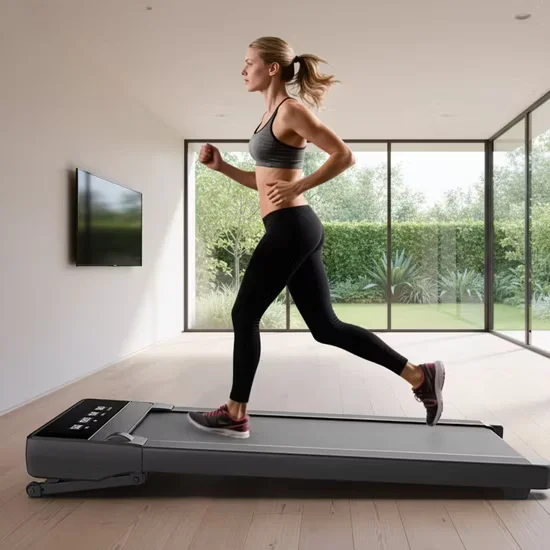
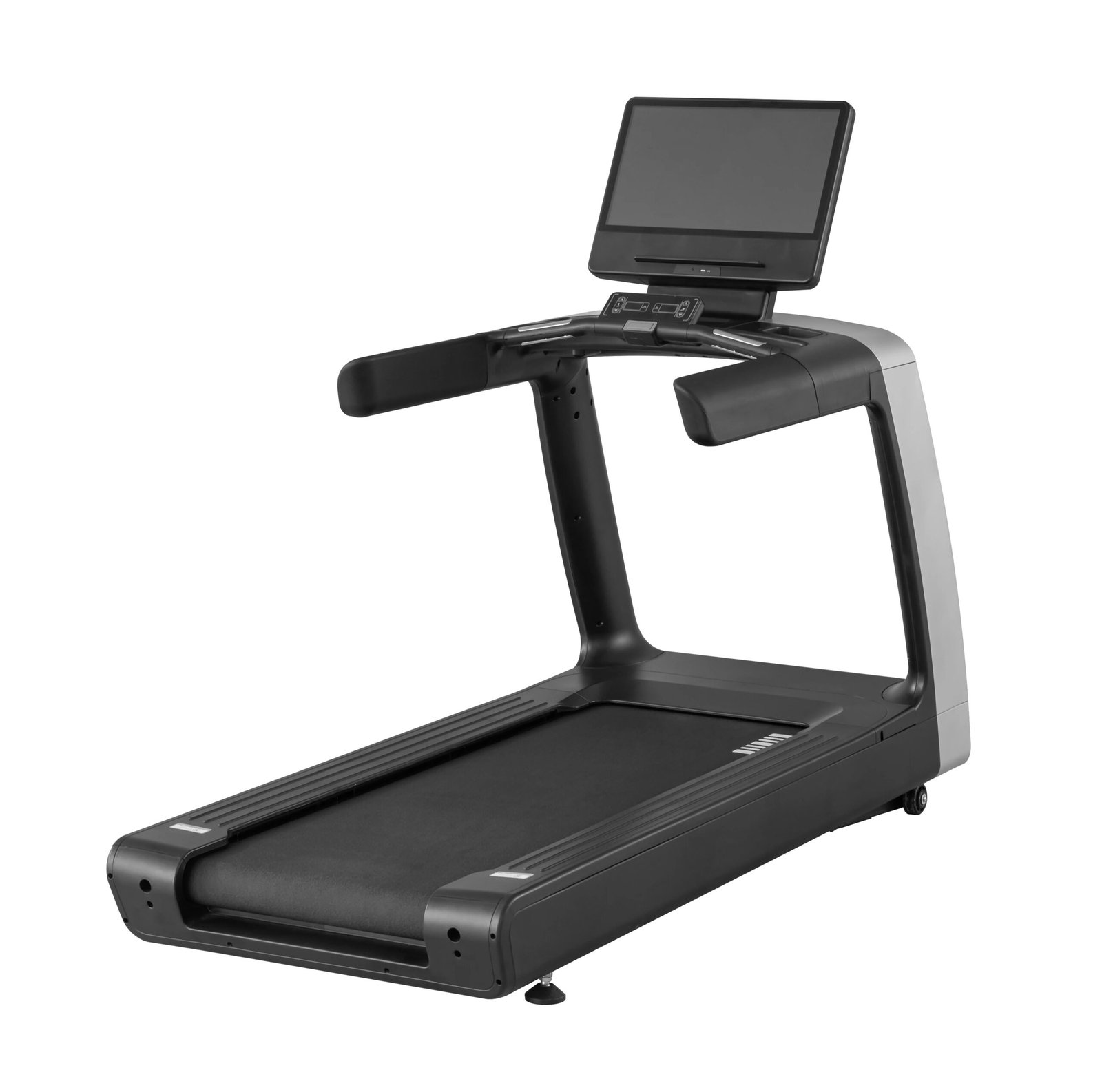
![MT296 Impact Resistant Home Electric Treadmill for Body Shape Improvement [WARN] draft identifier mismatch](https://bicksport.com/wp-content/uploads/2026/08/mt296-impact-resistant-home-electric-treadmill-for-body-shape-improvement-warn-draft-identifier-mismatch-a9334c.webp)
Foldable Frame Engineering — DC motor drive paired with a reinforced folding mechanism delivers stable operation while collapsing to a compact footprint for space-constrained residential deployments.
Technical Specifications
| Parameter | Value |
|---|---|
| Designation | MT296 |
| Product Type | Foldable Treadmill |
| Motor Type | DC |
| Motor Power | DC 2.0 HP (peak or continuous not specified in source) |
| Speed Range | 1–20 km/h |
| Running Surface | 1200 x 520 mm |
| Console Type | LCD (Speed / Distance / Time / Calories / Pulse) |
| Programs | 16 |
| Product Unfold Size | 1580 x 865 x 1300 mm |
| Product Folded Size | 910 x 865 x 1345 mm |
| Net Weight | 64.0 kg |
| Foldable | Yes |
| Material | ABS |
| Certification | CE, RoHS |
| OEM/ODM | Available |
Application Suitability
| Deployment Scenario | Typical Use |
|---|---|
| High-end residential home gym | Daily personal cardio sessions with fold-away storage between uses |
| Corporate wellness room | Intermittent staff use during breaks, stowed when room serves other functions |
| Boutique studio recovery zone | Low-speed warm-up or cool-down walks supplementing group class equipment |
| Apartment fitness center on upper floors | Compact motorized treadmill where floor space and noise transmission are concerns |
What Peak Horsepower Hides About Continuous Duty in a Foldable Home Electric Treadmill DC Motor Setup
Matching motor class to expected daily run-time prevents premature burnout and warranty disputes.
A DC 2.0 HP rating on a foldable home electric treadmill DC motor configuration does not tell you whether that output holds under continuous load or only at momentary peak. We have seen Mt296-class motors installed in light-commercial venues where daily run-times exceeded the intermittent duty envelope, leading to thermal shutdown within months [NEED_CITE: motor duty cycle classification for continuous commercial operation]. Residential users running 45-minute sessions three times daily stay well within safe thermal margins. But when that same unit ships to a corporate wellness room with eight-hour access and rotating users, the motor winding temperature climbs past insulation limits. The front desk receives noise complaints before maintenance ever logs a fault code.
Where the MT296 Fits in a Cardio Equipment Layout
This foldable treadmill covers steady-state walking through mid-speed running, fitting users who need structured cardio without the footprint of a full commercial deck. In a mixed-equipment cardio zone, it complements stationary bikes and ellipticals by offering weight-bearing movement in a collapsible frame. The 1200 x 520 mm running surface accommodates walking and jogging gaits comfortably, though taller users at higher speeds may notice stride limitation. The LCD console provides pulse readout via handgrip sensors alongside speed, distance, time, and calorie tracking, giving casual users adequate session feedback without external device dependency. Deploy it where floor space doubles as a multi-purpose room and the foldable home electric treadmill DC motor design earns its keep between sessions.
Continuous Run-Time Limits and Floor-Level Deployment Considerations
A DC motor in this class suits intermittent duty cycles — typically one to two hours of cumulative daily operation with cool-down intervals between users [NEED_CITE: thermal management for DC motors in intermittent cardio applications]. Deploying the MT296 on upper residential floors requires attention to vibration transmission through the folding hinge and frame contact points; a dedicated rubber isolation mat reduces structure-borne noise reaching rooms below. The ABS housing and compact folded profile make it practical to stow against a wall, but the unfolded 1580 mm length demands clear space ahead and behind for safe mounting. Voltage and plug standards must be confirmed with the target market before production, as a 220V unit shipped to a 110V region will underperform or fail to start. Adequate room ventilation matters even for DC motors, since enclosed closets trap heat and accelerate insulation degradation.
DC Motor Characteristics and Drive System Behavior
DC motors deliver smooth torque ramp-up at low speeds, which translates to gentle belt acceleration during walk-start transitions — a noticeable comfort advantage over AC motors that tend to engage more abruptly. The trade-off is thermal capacity: DC windings dissipate heat less efficiently under sustained load, making them suited to personal-use duty cycles rather than all-day commercial operation. The 1–20 km/h speed range covers rehabilitation walks through tempo runs, though the 1200 mm belt length means stride comfort decreases noticeably above 14 km/h for users over 175 cm. The LCD console tracks pulse through handgrip contact sensors, which provide adequate resting heart rate indication but are subject to signal drift during high-cadence intervals where hand position shifts. The 16 preset programs introduce structured intensity variation without requiring app connectivity, keeping the system self-contained. ABS deck material contributes to lighter overall unit weight at 64.0 kg net, though it transmits footstrike vibration differently than rubber-damped steel decks found on heavier commercial models.
The Hidden Cost of Specifying Below the Duty Envelope
When a foldable treadmill rated for intermittent home use gets deployed in a hotel fitness center with 24-hour guest access, the motor winding insulation degrades faster than maintenance schedules catch it [NEED_CITE: premature motor failure patterns in misapplied residential cardio equipment]. We replaced an entire batch of DC-motor units for a Middle East five-star hotel after guest noise complaints traced back to bearing wear accelerated by continuous overnight operation. Grip-based pulse sensors that drift during interval work leave personal trainers unable to verify target heart rate zones, undermining programmed session credibility. A unit that folds conveniently in a home gym becomes a liability in a commercial corridor where staff lack time to unfold, calibrate, and re-stow between walk-in users. Voltage mismatches discovered after container arrival force costly transformer additions or full reorder cycles.
Why This Product Line Holds Up Across Deployment Types
Sub-35 dB whisper-quiet operation verified in hotel deployments sets a noise floor that the MT296’s DC motor and ABS housing can approach under intermittent residential use. The 10,000-hour durability testing protocol applied across our commercial range informs component selection even in lighter-duty models, ensuring bearings and frame welds exceed their rated service environment. Our free 3D cardio-zone layout service accounts for this foldable unit’s 910 mm folded depth when planning wall clearance and member traffic flow in tight wellness rooms. OEM customization extends to console UI language and branding, letting residential developers match the interface to tenant demographics. Full documentation including motor specification sheets and noise test records accompanies each shipment so facility managers can verify performance claims on-site. Technical support coverage responds around the clock for commissioning questions that arise outside standard business hours.
Documentation & Test Records
- CE declaration of conformity covering the MT296 electrical safety requirements
- EN 957 test report validating mechanical and structural performance
- ISO 9001 certificate for manufacturing quality management
- RoHS compliance documentation for hazardous substance restrictions
- Motor specification sheet detailing DC winding and thermal parameters
- LCD console technical documentation with data readout specifications
Installation, Commissioning & Maintenance
- Maintain minimum 600 mm clearance behind the MT296 unfolded length for safe dismount
- Place vibration isolation pads under all frame contact points to reduce floor transmission
- Verify local voltage matches motor nameplate before connecting to a dedicated circuit
- Run a calibration cycle at multiple speeds to confirm belt tracking on the 1200 x 520 mm surface
- Inspect belt tension and alignment quarterly based on cumulative operating hours
- Wipe LCD console and handgrip pulse sensors after each session to prevent sweat corrosion
Planning Your Equipment Selection
Provide your cardio zone square footage and equipment count to receive a 3D layout covering sightlines, airflow, and member circulation around the foldable unit’s footprint. Specify expected daily run-time per unit so we can confirm whether the DC motor duty cycle matches your operational pattern. Identify the deployment floor and adjacent occupied spaces to determine noise isolation requirements. State your target market voltage and plug standard before proforma invoice stage to avoid post-production rework.
Frequently Asked Questions
Q: What is the difference between continuous duty and peak horsepower, and why does it matter?
A: Peak horsepower measures the motor’s maximum momentary output during startup or brief acceleration, while continuous duty rating reflects sustained output the motor can maintain without thermal degradation. A foldable home electric treadmill DC motor rated at peak only may overheat during extended sessions. Always request the motor specification sheet to confirm which rating applies, especially when deploying in shared facilities with back-to-back users.
Q: How does a DC motor compare to an AC motor for treadmill applications?
A: DC motors provide smoother low-speed acceleration and generally operate at lower noise levels, making them suitable for residential environments. However, they have lower thermal capacity under continuous load compared to AC motors. For personal use with sessions under two hours daily, a DC motor performs reliably. Commercial facilities with all-day operation should specify AC-driven units to avoid premature winding failure.
Q: Can the LCD console data be exported to external fitness apps?
A: The MT296 LCD console displays speed, distance, time, calories, and pulse locally without wireless connectivity or data export capability. Users tracking detailed workout history should pair their session with a separate wearable device. If facility management integration is required, consider models with IoT-enabled consoles that support app synchronization and usage logging.
Q: What noise level should be expected during operation in a residential setting?
A: DC motors in this class produce noticeably lower operational noise than AC equivalents, particularly at walking and jogging speeds. However, footstrike impact and belt vibration transmit through the frame to the floor structure below. Using a dedicated isolation mat and confirming sub-35 dB component-level performance through noise test reports helps set realistic expectations for upstairs or adjacent-room deployments.
Q: How should voltage and plug standards be confirmed before placing a bulk order?
A: Specify your target market’s voltage, frequency, and plug type during the inquiry stage so production can match motor winding specifications and power cord configuration. Mismatches discovered after shipment require costly transformer additions or full cable replacement. Request the motor specification sheet confirming voltage compatibility before approving the proforma invoice for international orders.
![MT296 Low Noise ABS Smart Electric Treadmill for Fitness Training[result]MT296 Low Noise ABS Electric Treadmill for Commercial Fitness Training [WARN] draft identifier mismatch[/result]](https://bicksport.com/wp-content/uploads/2026/08/mt296-low-noise-abs-smart-electric-treadmill-for-fitness-trainingresultmt296-low-noise-abs-electric-treadmill-for-commercial-fitness-training-warn-draft-identifier-mismatch-result-8e06e1.webp)
![Durable Firmly Fitting W08 Electric Folding Walking Treadmill for Training [WARN] draft identifier mismatch](https://bicksport.com/wp-content/uploads/2026/08/durable-firmly-fitting-w08-electric-folding-walking-treadmill-for-training-warn-draft-identifier-mismatch-efbc24.webp)