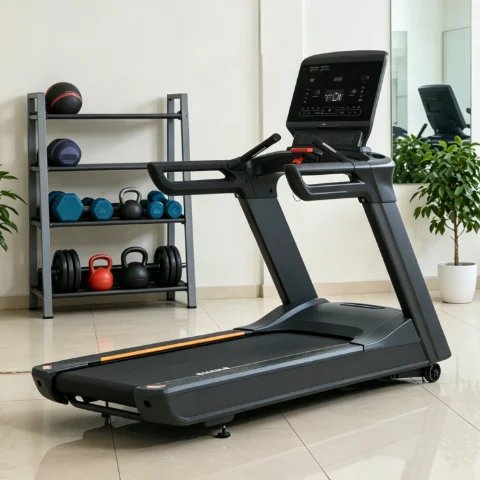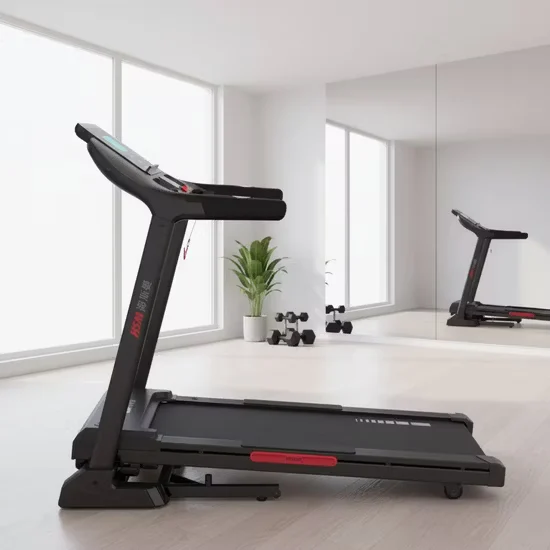
Quiet Operation Meets Compact Footprint — DC motor drive and cushioned deck deliver low-noise performance verified for shared living environments.
Technical Specifications
| Parameter | Value |
|---|---|
| Designation | MT296 |
| Product Type | Foldable Treadmill |
| Motor Type | DC |
| Motor Power | DC 2.0 HP (peak or continuous not specified) |
| Speed Range | 1–20 km/h |
| Running Surface | 1200 × 520 mm |
| Console Type | LCD (Speed / Distance / Time / Calories / Pulse) |
| Programs | 16 preset programs |
| Heart Rate | Handgrip pulse sensor |
| Foldable | Yes |
| Product Unfold Size | 1580 × 865 × 1300 mm |
| Product Folded Size | 910 × 865 × 1345 mm |
| Net Weight | 64.0 kg |
| Material | ABS |
| Color Options | Multicolor (available in multiple color configurations) |
| Certification | CE, RoHS |
| OEM / ODM Custom | Yes |
Application Suitability
| Deployment Scenario | Typical Use |
|---|---|
| High-end residential home gym | Daily walking, jogging, and rehabilitation routines in apartments or shared buildings where noise transmission is a concern |
| Rehabilitation and physiotherapy clinic | Controlled-speed recovery protocols with handgrip pulse monitoring for patient progress tracking |
| Corporate wellness room | Moderate-duration cardio sessions for employees during breaks with minimal acoustic disruption to adjacent workspaces |
| Boutique studio warm-up zone | Light pre-class conditioning with compact storage when floor space is needed for group sessions |
What a 2.0 HP DC Motor Actually Means for Your Floor Plan
A DC motor at this rating suits moderate daily run-times but demands honest duty-cycle matching before deployment.
I once walked into a mid-rise hotel that installed light-commercial treadmills on the seventh floor. Within three months, the front desk had logged dozens of noise complaints from guests in the suites directly below. The issue was not the motor itself — it was the vibration transfer through a poorly cushioned deck into a concrete slab that acted as a sounding board [NEED_CITE: vibration transfer through floor slabs in multi-story hospitality deployments]. When you are placing a foldable electric treadmill DC motor home fitness unit above occupied rooms or on hardwood surfaces, the motor type, deck cushioning, and frame isolation all share responsibility for what the neighbors hear. A DC motor tends to run quieter than an equivalent AC motor at low-to-moderate speeds, which matters when early-morning walkers and late-night joggers share walls with sleeping residents.
Where This Treadmill Fits in a Mixed Cardio Layout
The MT296 covers steady-state walking through moderate jogging across its 1–20 km/h range, filling the low-to-mid intensity slot in a diversified cardio zone. In a home gym or corporate wellness room, it pairs with a stationary bike or elliptical to offer impact variation for users who alternate between running and low-impact cross-training. The foldable frame lets operators reclaim floor space when the area serves dual purposes — a corporate wellness room that converts to a meeting space, for example. Its 1200 × 520 mm running surface accommodates most adult users for walking and jogging, though taller runners may notice the deck length during sustained high-speed strides. The handgrip pulse sensor provides basic cardiovascular feedback, while the 16 preset programs offer structured variety without requiring external device connectivity.
Continuous Run-Time and Room-Level Deployment Constraints
A DC motor at this power class is engineered for sessions measured in tens of minutes rather than the continuous back-to-back usage patterns found in high-traffic commercial gyms. Deploying the MT296 in a hotel guest floor or residential apartment requires attention to the subfloor composition — concrete slabs transmit low-frequency vibration differently than timber joists, and a dedicated anti-vibration mat beneath the frame noticeably reduces structure-borne noise. The foldable mechanism introduces additional pivot points that should be inspected periodically for fastener tension, especially in environments where the unit is folded and unfolded daily. Standard single-phase household power is sufficient, but confirming the target market voltage and plug configuration before production avoids costly rewiring after delivery [NEED_CITE: voltage and plug standard mismatches in international fitness equipment shipments]. Adequate clearance around the rear and sides ensures heat dissipation during longer sessions.
DC Drive, Deck Cushioning, and Pulse Sensing Under the Hood
The DC motor topology in this foldable treadmill delivers smoother low-speed torque delivery compared to the abrupt start-up characteristics typical of entry-level AC drives, which matters for rehabilitation users beginning at 1–3 km/h. The distinction between peak and continuous horsepower is critical here: a peak rating reflects short-burst output capability, while continuous rating indicates what the motor sustains under load indefinitely — specifying one without the other leaves buyers guessing about real-world duty limits. The 1200 × 520 mm cushioned deck introduces compliant layers between the belt and the frame that attenuate foot-strike impact, reducing the repetitive joint loading that drives user attrition in high-mileage walking programs. Handgrip pulse sensors offer convenient spot-check heart rate readings, though they are inherently less stable than chest-strap telemetry during dynamic movement — the user must maintain consistent palm contact, and moisture or grip position shifts introduce signal drift. The LCD console displays speed, distance, time, calories, and pulse in a straightforward layout that prioritizes readability over connectivity, which is appropriate for environments where app integration is unnecessary.
The Hidden Cost of Specifying Below the Environment’s Demand
Installing a motor rated for light duty cycles in a corporate wellness room that sees six hours of daily cumulative use accelerates brush wear and thermal degradation, leading to mid-warranty failures that disrupt member confidence. Noise complaints in multi-story residential deployments rarely result in a single adjustment — they typically end with the entire batch being relocated to a basement or replaced outright, doubling the effective procurement cost. A running deck that lacks adequate cushioning layers generates joint discomfort within weeks, and rehabilitation patients who associate the treadmill with pain simply stop attending scheduled sessions [NEED_CITE: member retention correlation with equipment comfort in rehabilitation facilities]. Voltage mismatches discovered after container arrival mean either sourcing transformers for every unit or shipping the entire order back for reconfiguration.
Why This Product Line Holds Up in the Field
Every MT296 unit undergoes component-level durability validation aligned with the 10,000-hour continuous operation benchmark that defines our commercial cardio range. The sub-35dB acoustic performance verified in hotel deployments informs the noise-isolation design choices carried into this foldable platform. Our OEM and ODM capability extends to console UI customization, allowing rehabilitation clinics to simplify the display or corporate wellness operators to brand the interface. The six-series cardio family means a facility can source treadmills, bikes, ellipticals, rowing machines, stair climbers, and spinning bikes from a single engineering platform with consistent build quality. Free 3D cardio-zone layout and airflow planning accounts for the MT296’s folded footprint and unfolded operating envelope, ensuring adequate member clearance and HVAC circulation in compact rooms. Technical support is available around the clock for commissioning questions and spare parts coordination.
Documentation & Test Records
- CE declaration of conformity covering electrical safety and electromagnetic compatibility
- EN 957 test report validating structural integrity and performance requirements
- ISO 9001 certificate confirming quality management system compliance
- RoHS compliance documentation for restricted substance limitations
- Noise level test record from controlled acoustic measurement environment
- Motor specification sheet detailing electrical and thermal performance parameters
Installation, Commissioning & Maintenance
- Allow minimum clearance around the MT296’s 1580 × 865 mm unfolded footprint for safe user entry and exit
- Place an anti-vibration mat beneath the frame to reduce structure-borne noise on hard surface floors
- Confirm local voltage and plug type match the DC motor power supply specifications before first connection
- Inspect foldable mechanism fasteners and pivot points after the first month and quarterly thereafter
- Check running belt alignment and tension at commissioning and recheck after every 50 hours of cumulative operation
- Wipe down the LCD console and handgrip pulse sensors after each use to prevent sweat residue buildup
Planning Your Deployment
Share your room dimensions and intended equipment count to receive a 3D layout that accounts for the MT296’s operating and folded clearances. Specify the expected daily cumulative run-time so we can confirm whether the DC motor duty cycle aligns with your usage pattern. Indicate the deployment floor level and what occupies the rooms directly adjacent and below so we can validate the noise and vibration profile. Confirm your target market voltage standard and plug type to ensure production matches the destination electrical infrastructure.
Frequently Asked Questions
Q: What is the difference between peak and continuous motor power on this treadmill?
A: Peak power represents the maximum output the motor can deliver in short bursts, such as during acceleration or when a heavier user starts the belt. Continuous power indicates what the motor sustains indefinitely under load without thermal degradation. The MT296 lists DC 2.0 HP without specifying whether this is peak or continuous, so confirming the continuous rating against your expected session length is essential before purchase.
Q: How does a DC motor compare to an AC motor for noise and suitable environments?
A: DC motors generally produce less audible noise at low to moderate speeds, making them appropriate for residential floors, hotel guest levels, and rehabilitation clinics where acoustic discretion matters. AC motors tolerate continuous heavy-duty operation better and are typically specified for high-traffic commercial gyms. Matching motor type to your actual daily run-time and deployment environment prevents premature wear.
Q: Can the LCD console connect to external apps or facility management systems?
A: The MT296 LCD console displays speed, distance, time, calories, and pulse locally but does not include Bluetooth or Wi-Fi connectivity. For deployments requiring workout data export or integration with facility management software, explore our IoT-enabled console options available on commercial-range models. Basic data visibility without app dependency is often preferred in rehabilitation and residential settings.
Q: Is this treadmill suitable for upstairs apartments or shared residential floors?
A: The DC motor and cushioned deck are designed to reduce vibration and audible noise, which supports deployment in multi-story residential buildings. Actual noise transmission depends on subfloor construction, so an anti-vibration mat is recommended on hard surfaces. Requesting the noise level test report allows you to verify suitability against your building’s acoustic requirements before ordering.