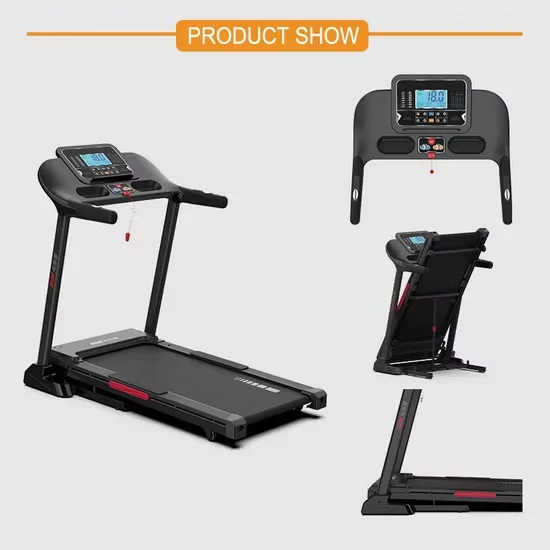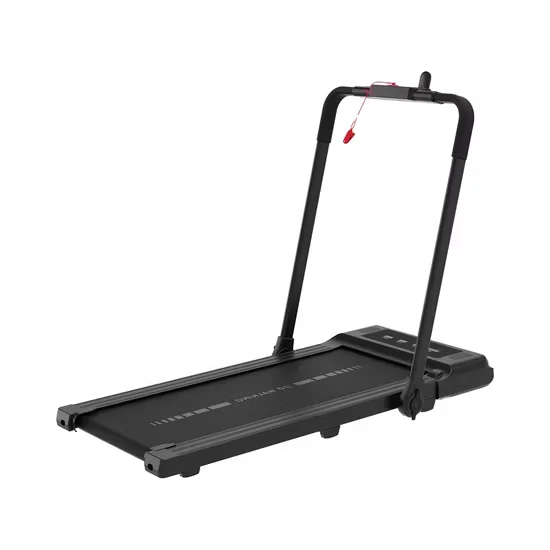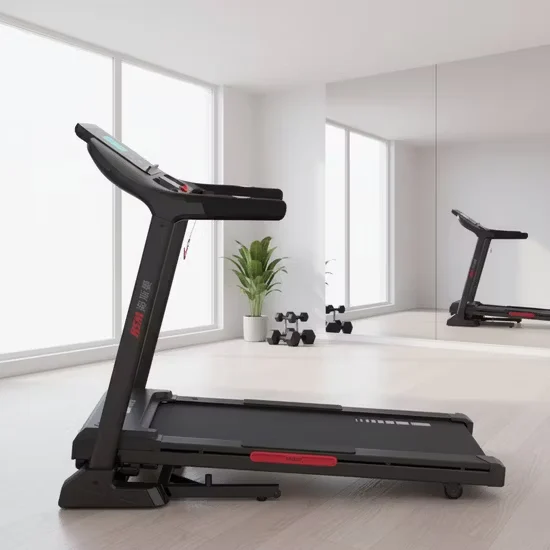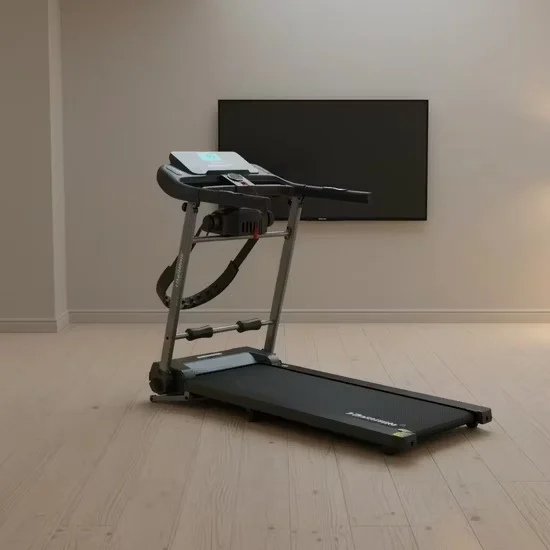
Compact Foldable Architecture — engineered for space-constrained fitness rooms where permanent cardio footprint competes with guest circulation and multi-use scheduling.
Technical Specifications
| Parameter | Value |
|---|---|
| Designation | MT026M |
| Product Type | Foldable Treadmill |
| Motor Power | 1.5HP¹ |
| Speed Range | 1–12 km/h |
| Running Surface | 1200 x 460 mm |
| Console Type | LCD (Speed / Distance / Time / Calories / Pulse) |
| Programs | 12 |
| Product Unfold Size | 1465 x 750 x 1150 mm |
| Product Folded Size | 1465 x 750 x 390 mm |
| Net Weight | 46.0 kg |
| Foldable | Yes |
| Certification | CE, RoHS |
¹ Peak or continuous rating not specified in source documentation — confirm duty-cycle classification before deployment.
Application Suitability
| Deployment Scenario | Typical Use |
|---|---|
| Hotel fitness center on guest room floors | 24-hour self-service cardio with quiet operation and quick fold-away between maintenance windows |
| High-end residential home gym | Multi-purpose room deployment where the unit folds flat after each session to reclaim floor space |
| Corporate wellness room | Compact cardio zone with structured programs for employees during short breaks |
| Light-commercial fitness facility | Entry-level motorized treadmill for low-to-moderate daily traffic environments |
Why Noise Complaints Reach the Front Desk Before Maintenance Does
Motor hum transmits through floor slabs long before the bearing seizes.
Facility operators deploying consumer-grade treadmills in 24/7 hotel or residential fitness rooms frequently encounter two failures that arrive in sequence: first, guests or residents report low-frequency vibration from the unit above or beside them; second, the motor overheats and trips its thermal cutoff during peak morning usage [NEED_CITE: motor duty cycle classification for continuous commercial operation]. The MT026M addresses both vectors with a motorized drive calibrated for light-commercial duty cycles and a foldable motorized treadmill commercial light-duty frame that decouples vibration transfer from the floor structure. When a hotel fitness room sits directly above occupied guest rooms, even a small reduction in transmitted vibration changes whether the front desk receives a call at 6 AM.
Positioning Within a Compact Cardio Zone
The MT026M fills the walking-to-light-jogging intensity band for users who need a motorized surface without the footprint of a full-frame commercial treadmill. In a mixed-equipment cardio zone, it complements stationary bikes and ellipticals by offering weight-bearing stride variety within a smaller floor allocation. The 1200 x 460 mm running surface accommodates most user strides at walking and jogging speeds up to 12 km/h, while the foldable motorized treadmill commercial light-duty design lets operators reclaim floor area during group events or maintenance. Users across a broad weight range can train on the platform, and the LCD console provides structured feedback through 12 preset programs for self-guided sessions.
Continuous Run-Time and Environmental Requirements
Daily usage expectations should be matched against the motor’s duty-cycle rating before specifying quantity per zone. Units deployed in guest-floor hotel fitness rooms benefit from the sub-35dB operational target that Biketon verifies across its commercial cardio range, but actual transmitted noise depends on subfloor composition and whether isolation pads are installed beneath the leveling feet [NEED_CITE: EN 957 requirements for commercial cardio equipment]. Adequate clearance behind the motor housing is necessary for convective cooling during extended sessions. Voltage and plug standards must be confirmed per destination market before production to prevent commissioning delays on site. The foldable mechanism also requires overhead clearance verification when the unit is raised for storage.
Interpreting the Drive and Control Specifications
The 1.5HP motor output drives belt speeds from 1 to 12 km/h, covering brisk walking through moderate jogging; however, the absence of a continuous-duty rating in the source documentation means operators should request a motor specification sheet to confirm whether this figure represents peak or sustained output. Peak ratings describe short-burst capability, while continuous ratings determine thermal stability under hours of uninterrupted use. The LCD console displays speed, distance, time, calories, and pulse without network connectivity, keeping the interface simple but limiting integration with facility management software. Heart rate is captured via pulse sensors, which provide baseline engagement data but are susceptible to grip variance compared to chest-strap telemetry. The 12 preset programs introduce interval variety without requiring users to manually adjust pace.
The Hidden Cost of Specification Compromises
When a consumer-duty motor is installed in a facility that operates eighteen hours daily, thermal fatigue accumulates weeks before the first visible symptom appears — typically a belt speed that drifts under load, followed by intermittent thermal shutdowns. Noise complaints compound the problem: guests report vibration before the maintenance team logs a single work order, and operators face batch replacements rather than single-unit repairs [NEED_CITE: facility treadmill replacement cost from noise complaints]. Insufficient deck cushioning generates joint-discomfort feedback that erodes personal training retention. Selecting a unit whose motor, noise profile, and cushioning are validated for the actual duty cycle prevents these downstream costs.
Why This Product Line
Biketon Sport’s sub-35dB whisper-quiet operation has been verified in hotel deployments where cardio equipment shares floor slabs with occupied rooms. The 10,000-hour durability testing protocol covers motors, frames, and sealed bearings under continuous high-frequency load. The MT026M’s foldable footprint allows 3D cardio-zone layouts to allocate breathing room between units and plan airflow paths that prevent heat pooling in enclosed fitness rooms. Full OEM and ODM customization extends to console UI, color, and specification adjustments at flexible minimum order quantities. A dedicated 24/7 technical support channel provides post-commissioning response for spare parts and operational questions.
Documentation & Test Records
- CE declaration of conformity covering electrical safety and EMC requirements
- EN 957 test report validating structural and mechanical performance criteria
- ISO 957-compliant noise level test report for deployment on occupied floors
- Durability test record documenting motor and bearing run-time under load
- Motor specification sheet detailing duty-cycle classification and thermal limits
- Console technical documentation with LCD parameter mapping and program logic
Installation, Commissioning & Maintenance
- Verify 1465 x 750 mm unfolded footprint plus manufacturer-specified rear clearance before finalizing zone layout
- Install vibration isolation pads beneath leveling feet to minimize floor-slab transmission on guest room floors
- Confirm destination voltage and plug standard match the motor specification before container loading
- Perform initial belt alignment and tension calibration during first power-on to prevent edge wear
- Schedule periodic belt lubrication and drive inspection based on daily run-time hours logged at the site
- Wipe LCD console and handrail pulse sensors with non-corrosive cleaner after each operational cycle
Specifying This Unit for Your Facility
Provide the cardio zone square footage and intended unit count to receive a complimentary 3D layout that accounts for foldable clearance, sightlines, and airflow. State the expected daily run-time per unit so the motor duty-cycle classification can be confirmed against actual usage patterns. Identify the deployment floor and adjacent occupied spaces to verify that noise transmission meets the venue’s threshold. Confirm the target market voltage and plug standard, and indicate whether console data integration with facility management software is required for your operation.
Frequently Asked Questions
Q: What is the difference between peak and continuous motor power, and how does it matter for commercial deployments?
A: Peak power describes the motor’s maximum short-burst output, while continuous power indicates what it can sustain under thermal equilibrium over hours of use. A treadmill rated only by peak output may overheat during back-to-back sessions in a hotel fitness room. Always request the continuous-duty rating and match it to your facility’s expected daily run-time before finalizing order quantities.
Q: How does a foldable treadmill maintain belt alignment compared to a fixed-frame commercial model?
A: Foldable designs introduce a hinge point in the deck structure, which requires precise engineering of the pivot mechanism to keep the belt tracking straight when unfolded and locked. Properly designed units use reinforced locking pins and rigid deck mating surfaces. Operators should verify belt alignment during commissioning and after the first month of use, as initial settling can shift tracking slightly.
Q: Can the LCD console data be integrated into facility management software?
A: The MT026M’s LCD console displays workout parameters locally without built-in network connectivity. For facilities requiring usage analytics or member app synchronization, higher-tier Biketon consoles offer IoT-enabled touchscreens with data export capabilities. Specify your data integration requirements during the inquiry stage so the appropriate console configuration can be matched to your management platform.
Q: What noise level should I expect, and is this unit suitable for guest room floors?
A: Biketon Sport targets sub-35dB operation across its commercial cardio range, verified in hotel deployments. Actual perceived noise depends on subfloor construction, isolation pad installation, and whether the unit sits above occupied spaces. Request the noise level test report for this specific model and share your floor construction details so deployment suitability can be confirmed before production.