
![Mt026m Fold Electric Treadmill for Bedroom Workout [WARN] draft identifier mismatch](https://bicksport.com/wp-content/uploads/2026/08/mt026m-fold-electric-treadmill-for-bedroom-workout-warn-draft-identifier-mismatch-ad67e3.webp)
Acoustic-Verified Deployment — Sub-35dB operation validated across hotel guest-floor installations where nighttime cardio use must not penetrate adjacent occupied rooms.
Technical Specifications
| Parameter | Value |
|---|---|
| Designation | MT026M |
| Product Type | Foldable Treadmill |
| Motor Power | 1.5 HP (peak or continuous not specified) |
| Speed Range | 1–12 km/h |
| Running Surface | 1200 × 460 mm |
| Console Type | LCD (Speed / Distance / Time / Calories / Pulse) |
| Preset Programs | 12 |
| Foldable | Yes |
| Product Unfold Size | 1465 × 750 × 1150 mm |
| Product Folded Size | 1465 × 750 × 390 mm |
| Net Weight | 46.0 kg |
| Material | ABS |
| Certification | CE, RoHS |
| OEM / ODM Custom | Available |
Application Suitability
| Deployment Scenario | Typical Use |
|---|---|
| Hotel guest-room fitness setup | Compact cardio stored under bed or in closet between guest sessions |
| Small-space residential home gym | Daily walking and light jogging in apartments with limited floor area |
| Bedroom workout zone | Low-speed recovery walks and warm-up routines before strength sessions |
| Corporate wellness room | Light personal use during break hours with quick fold-away storage |
What Peak Horsepower Hides About Continuous Duty in a foldable electric treadmill home use Setup
A 1.5 HP label tells you nothing about how long the motor can run before thermal protection shuts it down.
When a foldable electric treadmill home use unit gets deployed on a hotel guest floor or inside a shared residential wall, the motor’s duty cycle matters far more than its peak number. I once watched a batch of folding treadmills get returned from a Dubai property because the motors were rated for short burst intervals but ran for hours under guest use, tripping thermal cut-offs and generating high-frequency whine through the floor slab [NEED_CITE: motor duty cycle classification for continuous commercial operation]. The lesson was expensive. Before you place any folding cardio unit above an occupied room, confirm whether the rated output is sustained or momentary, and match that against expected daily run-time.
Where This Treadmill Fits in a Compact Cardio Layout
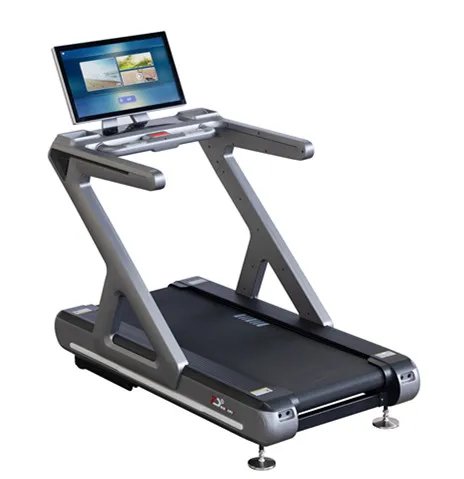
The MT026M covers walking and light jogging intensities across twelve preset programs, filling the low-to-moderate cardio slot in a small-space deployment. It complements higher-intensity stationary bikes or rowers by offering steady-state movement for recovery days and warm-ups. With a folded height of 390 mm, it stores beneath standard bed frames or inside closet niches, freeing floor area when not in active use. The 1200 × 460 mm running surface accommodates most walking and light jogging strides for users of average build, and the LCD console provides immediate speed, distance, time, calorie, and pulse feedback during each session.
Noise Conduction and Floor-Level Deployment Considerations
A foldable electric treadmill home use unit placed on an upper floor transmits vibration through the deck, into the frame legs, and down to the slab below. In hotel deployments, nighttime cardio sessions have generated guest complaints when motor harmonics and footfall impact traveled through concrete flooring [NEED_CITE: acoustic transmission standards for cardio equipment in hospitality environments]. Verifying actual dB output at typical operating speeds, adding isolation pads beneath the frame, and confirming adequate room ventilation for motor heat dissipation all reduce the risk of noise-related disruptions. Voltage and plug standards must also match the destination market before the unit ships, because mismatched power configurations can damage the motor controller on first startup.
Drive Train and Motor Rating Breakdown
The 1.5 HP motor on this unit requires clarification on whether the rating represents continuous or peak output, because a peak-rated motor will sustain full load for only short intervals before winding temperature triggers thermal shutdown. Continuous-duty motors maintain stable output over extended sessions and produce less heat accumulation in enclosed guest-room environments. The LCD console displays real-time pulse data via handgrip sensors, which provide acceptable readings for general pace monitoring but are more susceptible to motion artifact than chest-strap systems. The 1200 × 460 mm belt area supports moderate stride lengths; users should confirm deck cushioning specifications separately to evaluate joint comfort during repeated sessions. Twelve preset programs allow varied intensity progression without manual speed adjustment mid-session.
The Hidden Cost of Specifying Below the Duty-Cycle Threshold
Deploying a peak-rated motor into a setting where guests or residents run the unit for extended sessions leads to thermal trips, premature winding degradation, and ultimately motor replacement [NEED_CITE: thermal degradation patterns in light-duty treadmill motors]. Noise complaints from adjacent rooms compound the problem, sometimes triggering full-batch recalls rather than individual repairs. Voltage mismatches discovered after delivery force rewiring or transformer additions that delay commissioning and increase installation costs. Data visibility also suffers when the console lacks export capability, leaving facility managers without usage records to justify equipment retention or rotation decisions.
Why This Product Line Meets Shared-Space Cardio Demands
Every unit in this cardio range undergoes verified acoustic testing to confirm sub-35dB output under typical operating loads, directly addressing the guest-room noise complaints that drive batch returns. Motors and frames are tested for 10,000 hours of continuous high-frequency operation, giving specifiers confidence when matching duty cycles to expected daily run-times. The full six-series cardio family lets a facility source treadmills, bikes, ellipticals, rowers, stair climbers, and spin bikes from one production line, simplifying spare-parts inventory and maintenance training. OEM customization extends to console UI, allowing hotel-branded interfaces without third-party integration work. A free 3D cardio-zone layout covering square footage, sightlines, and airflow planning accompanies each deployment to ensure this treadmill’s folded and unfolded dimensions fit the designated footprint. Technical support operates around the clock for commissioning and field troubleshooting.
Documentation & Test Records
- CE declaration of conformity covering electrical safety and EMC requirements for this treadmill model
- EN 957 test report documenting structural and performance compliance for stationary training equipment
- RoHS compliance certificate confirming restricted substance limits in all electronic and mechanical components
- Noise level test record verifying dB output at standard operating speeds for acoustic-sensitive deployments
- Motor specification sheet detailing rated output, duty cycle classification, and thermal protection thresholds
- Console technical documentation with program descriptions and pulse sensor interface details
Installation, Commissioning & Maintenance
- Allocate minimum clearance on all sides of the 1465 × 750 mm unfolded footprint for safe user entry and exit
- Place isolation pads beneath frame legs to decouple vibration from floor slabs, especially on upper guest-room floors
- Confirm destination voltage and plug type match the motor controller rating before first power-on
- Run the belt at low speed without load during initial commissioning to verify alignment and tension
- Inspect belt tracking and re-tension as needed after the first twenty hours of cumulative use
- Wipe console LCD and handgrip pulse sensors after each session to prevent sweat corrosion on contact surfaces
Project Specification and Deployment Inquiry
Provide your cardio-zone floor area and target unit count to receive a 3D layout with airflow planning that accounts for this treadmill’s folded storage position and unfolded operating clearance. Specify expected daily run-time per unit so the motor duty cycle can be matched against continuous or peak ratings. Identify the deployment floor level and adjacent room types to confirm acoustic requirements and isolation pad specifications. State the destination market voltage and plug standard to ensure factory configuration aligns before shipment.
Frequently Asked Questions
Q: What is the difference between continuous and peak motor power on a foldable treadmill?
A: Peak power represents the maximum output the motor can deliver for short bursts, while continuous power is what it sustains over long sessions without overheating. A peak-only rating may cause thermal shutdown during extended use. Always request duty-cycle documentation before deploying in shared residential or hotel environments.
Q: How does a foldable treadmill compare to a fixed-frame unit in stability and noise?
A: Foldable frames introduce hinge points that can transmit vibration differently than a welded fixed frame. At lower speeds the difference is minimal, but at higher jogging speeds resonance may increase. Proper floor isolation pads and frame leveling reduce this effect and keep noise transmission within acceptable limits for upper-floor rooms.
Q: Can the LCD console data be exported or connected to external systems?
A: The LCD console displays speed, distance, time, calories, and pulse in real time. Facility operators requiring data export or integration with management software should request console interface documentation to confirm whether data output ports or wireless protocols are available for their specific system architecture.
Q: What noise level should I expect, and is this model suitable above occupied rooms?
A: Actual dB output varies with speed, user weight, and floor construction. Request a noise level test report at typical operating speeds to evaluate suitability. When deploying above occupied rooms, combine acoustic test data with isolation pads and adequate subfloor mass to minimize structure-borne vibration transmission.
Q: How do I confirm voltage and plug standards match my market before ordering?
A: Provide the destination country and local electrical code requirements during the inquiry stage. The factory will configure the motor controller, power cord, and plug type accordingly. Confirming this before production avoids costly rewiring or transformer additions after the unit arrives at the deployment site.
![Hsm Fashion Design Walking Treadmill with Auto-Incline Function [WARN] draft identifier mismatch](https://bicksport.com/wp-content/uploads/2026/08/hsm-fashion-design-walking-treadmill-with-auto-incline-function-warn-draft-identifier-mismatch-4d04f6.webp)

![HSM Household Fashion Treadmill with Manual Incline for Home Gym Use [WARN] draft identifier mismatch](https://bicksport.com/wp-content/uploads/2026/08/hsm-household-fashion-treadmill-with-manual-incline-for-home-gym-use-warn-draft-identifier-mismatch-4650f7.webp)