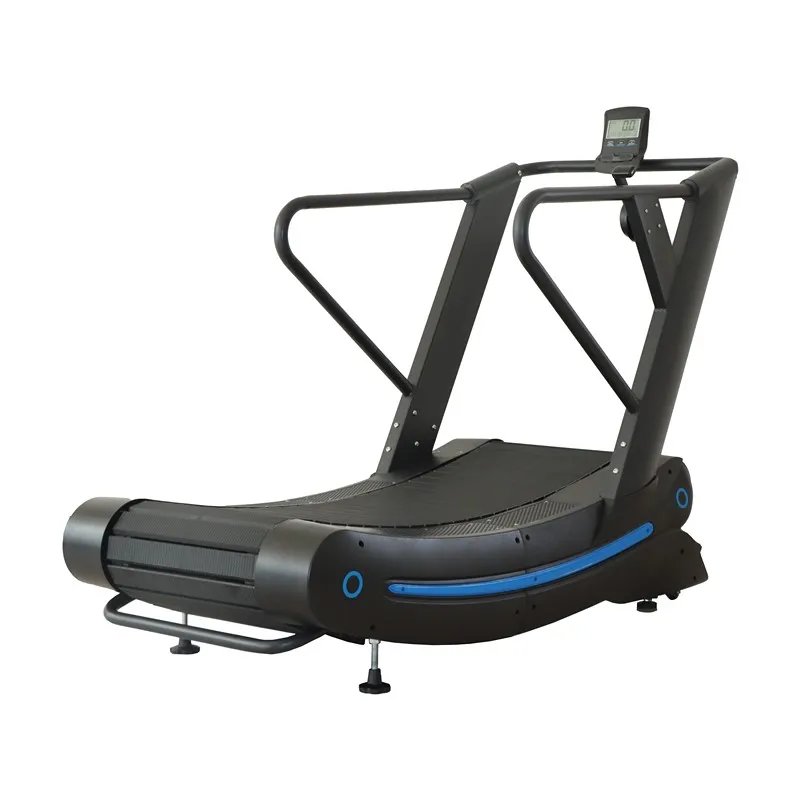
![Mt026m Fold Electric Running Treadmill for Maintaining Health [WARN] draft identifier mismatch](https://bicksport.com/wp-content/uploads/2026/08/mt026m-fold-electric-running-treadmill-for-maintaining-health-warn-draft-identifier-mismatch-73d523.webp)
Whisper-Quiet DC Drive — Foldable frame and sub-compact footprint enable residential cardio deployment without triggering neighbor noise complaints or floor space conflicts.
Technical Specifications
| Parameter | Value |
|---|---|
| Designation | MT026M |
| Motor Type | DC |
| Motor Power | 1.5 HP (peak or continuous not specified in source) |
| Speed Range | 1–12 km/h |
| Running Surface | 1200 x 460 mm |
| Console Type | LCD (Speed / Distance / Time / Calories / Pulse) |
| Programs | 12 preset programs |
| Product Unfold Size | 1465 x 750 x 1150 mm |
| Product Folded Size | 1465 x 750 x 390 mm |
| Net Weight | 46.0 kg |
| Foldable | Yes |
| Material | ABS |
| Certification | CE, RoHS |
| OEM/ODM Custom | Yes |
Application Suitability
| Deployment Scenario | Typical Use |
|---|---|
| High-end residential home gym | Daily personal cardio sessions with quiet motor operation and fold-away storage between uses |
| Apartment fitness space with noise sensitivity | Intermittent walking and jogging routines where DC motor acoustics remain compatible with shared-wall environments |
| Compact personal workout area | Space-constrained rooms where the foldable frame recovers floor area after each session |
Why DC Motor Selection Matters More Than Brochure Horsepower
Continuous duty rating determines whether a motor survives beyond the warranty period, not the peak number printed on the box.
Residential treadmill users frequently deploy equipment above or beside occupied living spaces, and noise complaints arrive before anyone checks the motor plate. A foldable treadmill DC motor home use platform addresses the acoustic constraint directly — DC motors run cooler and quieter under intermittent residential duty cycles than AC counterparts sized for continuous commercial operation. The problem surfaces when buyers spec peak horsepower without verifying the continuous rating, then wonder why thermal cutouts interrupt evening runs [NEED_CITE: motor duty cycle classification for residential intermittent use].
Cardio Role in a Residential Fitness Setup
This foldable treadmill DC motor home use unit fills the steady-state walking and light jogging slot in a home gym. It pairs with free weights or resistance bands for users who rotate between strength and cardio within a single session. The 1200 x 460 mm running surface accommodates walking and moderate-paced jogging for users of average stride length. The LCD console tracks speed, distance, time, calories, and pulse, giving basic workout feedback without app dependency. Twelve preset programs introduce interval variety without requiring manual speed adjustments mid-session. The foldable frame suits environments where the room serves multiple functions throughout the day.
Deployment Environment and Continuous Run Constraints
The DC motor in this unit suits intermittent residential duty — think two or three sessions per day rather than a 16-hour continuous hotel gym rotation. Deploying it in a shared-wall apartment requires attention to floor coupling: a rubber isolation mat beneath the frame reduces structure-borne vibration transmission to rooms below. The 1465 x 750 mm footprint demands clearance behind the deck for safe mounting and dismounting, plus lateral space for the user’s arm swing. Standard single-phase household power supplies the motor without dedicated circuit requirements, though voltage confirmation for the target market should happen before shipment [NEED_CITE: residential voltage and plug standard variations by export market]. Ambient room temperature and ventilation affect DC motor thermal management — enclosed closets without airflow accelerate brush wear.
Reading the Drive and Console Specifications
DC motors deliver smooth torque at lower speeds, making them well-matched to walking and jogging ranges up to 12 km/h. The distinction between peak and continuous horsepower matters here: peak rating describes short-burst output during startup or rapid acceleration, while continuous rating indicates sustainable thermal performance over a full session. When the source does not specify which value the 1.5 HP figure represents, procurement should request the motor specification sheet before committing to volume orders. The LCD console provides five real-time data fields — speed, distance, time, calories, pulse — through a straightforward membrane interface rather than a touchscreen. Pulse sensing via handlebar contacts gives a general heart rate zone indication, though握把-style sensors drift during high-sweat sessions compared to chest-strap telemetry. The 12 preset programs modulate speed within the 1–12 km/h envelope, giving users structured interval options without programming knowledge. ABS material in the shroud and console housing keeps unit weight at 46 kg, supporting the foldable mechanism without adding structural mass.
What Happens When Residential Specs Enter Commercial Environments
A DC motor rated for home use cycles will overheat and trip thermal protection when subjected to continuous multi-user operation in a gym or hotel. Noise levels acceptable in a detached home gym become lease violations in apartment buildings with shared floor assemblies. Running surfaces narrower than 480 mm generate user complaints from taller runners whose stride exceeds the belt width, leading to equipment abandonment. LCD consoles without data export capabilities leave facility operators blind to utilization patterns, preventing evidence-based equipment rotation decisions. Voltage mismatches discovered at destination ports turn entire shipments into costly rework projects [NEED_CITE: export market voltage and frequency compatibility requirements].
Why This Product Line Addresses Those Gaps
Sub-35 dB whisper-quiet operation verified in hotel deployments ensures that cardio equipment installed on guest room floors does not generate front-desk complaints. The six-series cardio family — treadmills, bikes, ellipticals, rowers, stair climbers, and spin bikes — lets a facility source every discipline from one engineering platform. OEM customization extends to console UI, so residential integrators can match branding without third-party software. The 3D cardio-zone layout service covers square footage, sightlines, and member flow for this unit’s foldable footprint, ensuring the folded and unfolded positions both fit the planned space. ISO 9001 manufacturing and 10,000-hour component durability testing apply across the commercial range, establishing a reliability baseline that residential products inherit. Full technical documentation and 24/7 support response mean installation questions do not wait for business hours in a different time zone.
Documentation & Test Records
- CE declaration of conformity covering electrical safety and EMC requirements for this unit
- EN 957 test report validating mechanical safety and structural performance
- RoHS compliance documentation confirming restricted substance limits in all components
- Motor specification sheet detailing continuous and peak duty ratings
- Console technical documentation with wiring diagrams and data field descriptions
- Installation and commissioning guide with foldable mechanism adjustment procedures
Installation, Commissioning & Maintenance
- Maintain minimum 500 mm clearance behind the unfolded deck and 200 mm laterally on each side for safe user mounting
- Place a rubber isolation mat under the 1465 x 750 mm base frame to decouple vibration from residential floor structures
- Confirm household outlet voltage matches motor nameplate rating before first power-on to prevent DC motor damage
- Verify foldable hinge locking pins engage fully before each use to prevent mid-session frame collapse
- Inspect running belt alignment and tension on the 1200 x 460 mm deck every 90 days under typical home use frequency
- Wipe LCD console membrane and handlebar pulse sensors after each session to prevent sweat corrosion on contacts
Equipment Selection and Inquiry Parameters
Provide the room dimensions and intended foldable treadmill placement zone to receive a 3D layout confirming both operational and stored positions fit the space. Specify the daily session count and average run duration so the motor duty cycle can be matched to actual usage patterns. Identify the deployment floor level and adjacent occupied rooms to validate acoustic compatibility. Confirm the destination country voltage and plug standard to ensure the correct power configuration ships with the unit. Indicate whether console data output to any monitoring system is required for the installation.
Frequently Asked Questions
Q: What is the difference between peak and continuous horsepower on a DC treadmill motor?
A: Peak horsepower describes the motor’s maximum output during brief acceleration bursts, while continuous horsepower reflects sustainable performance under thermal equilibrium. A 1.5 HP peak motor may deliver considerably less continuous output. For residential use with two or three daily sessions, peak rating often suffices. For shared facilities with back-to-back users, continuous rating is the selection criterion that prevents thermal shutdown.
Q: Is a foldable treadmill frame stable enough for running at higher speeds?
A: Foldable frames introduce hinge points that can flex under dynamic loading, particularly at speeds above 10 km/h. This unit’s 1200 x 460 mm running surface suits walking and moderate jogging within its speed range. Users should verify that the locking mechanism engages completely before each session and avoid sprint intervals on foldable platforms designed for residential duty cycles.
Q: How reliable are handlebar pulse sensors compared to chest straps?
A: Handlebar pulse sensors use contact electrodes that read heart rate through the palms, providing general zone indication during steady-state exercise. They tend to drift during high-sweat sessions or when grip pressure varies. Chest strap monitors using ECG-based telemetry deliver more consistent readings for interval programming where heart rate accuracy affects training decisions.
Q: What noise considerations apply when installing a treadmill in an apartment?
A: Treadmill noise reaches neighbors through two paths — airborne sound from the motor and structure-borne vibration transmitted through the floor assembly. DC motors produce less airborne noise than AC equivalents at residential speeds. Structure-borne vibration requires a rubber isolation mat between the frame and floor surface, particularly in multi-story buildings where rooms below are occupied during evening hours.
Q: Can the LCD console on this unit export workout data to external apps?
A: The LCD console on this model displays real-time speed, distance, time, calories, and pulse readings on-screen but does not include Bluetooth or Wi-Fi connectivity for data export. Users seeking app-synced workout logging should evaluate models with IoT-enabled consoles from the broader product range, which offer wireless data transmission and virtual coaching integration.