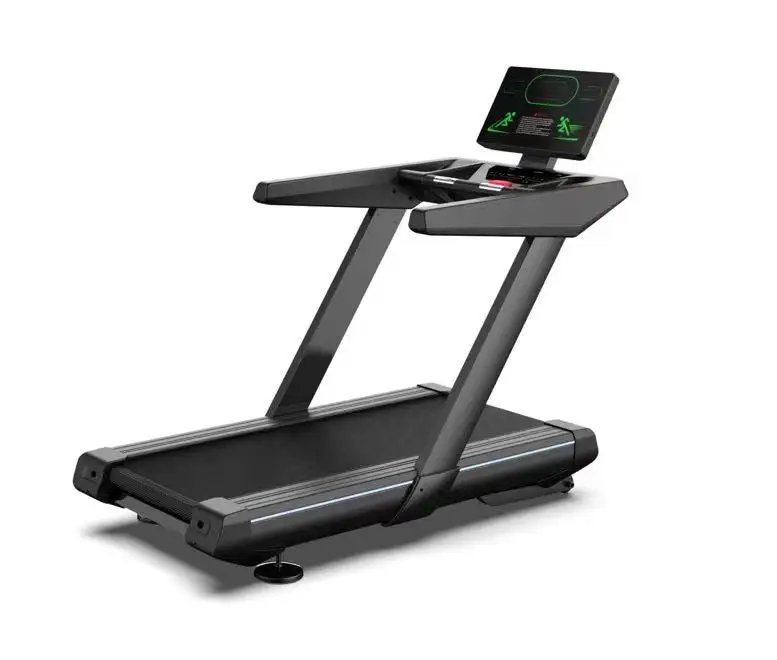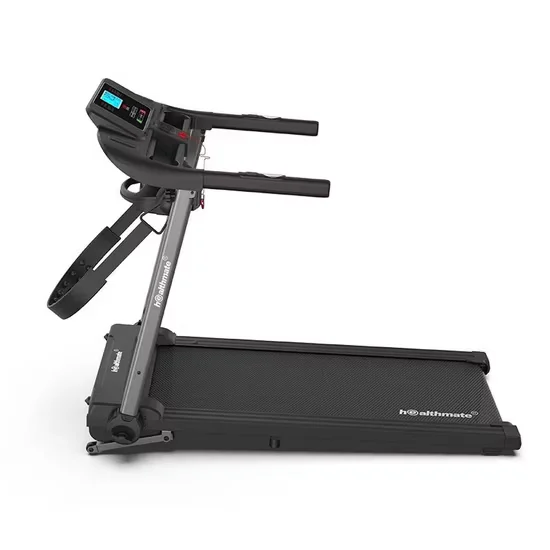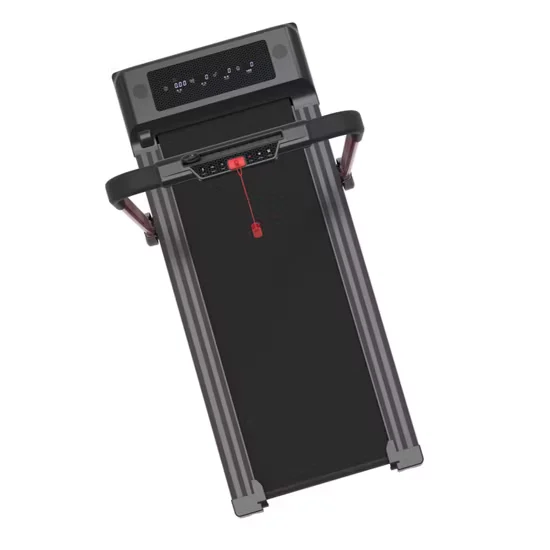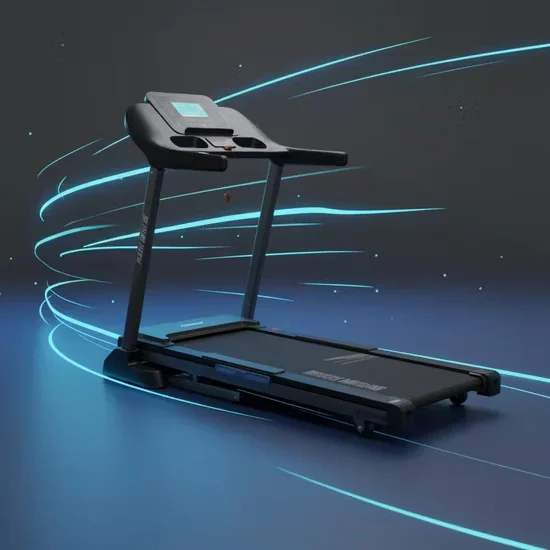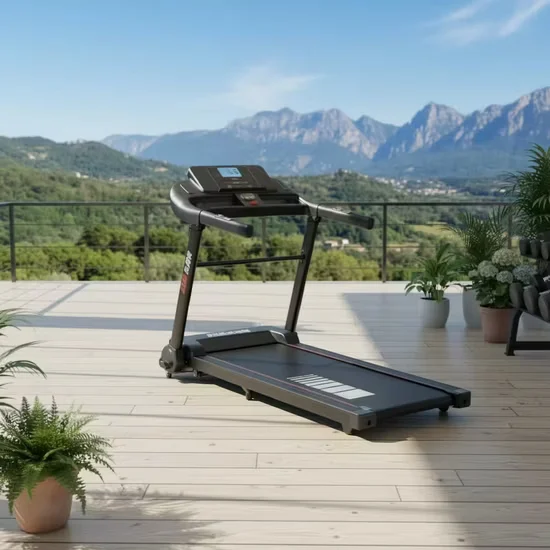
Compact Footprint Engineering — A foldable DC motor treadmill designed for residential and light-use deployment where floor space and acoustic footprint dictate equipment selection.
Technical Specifications
| Parameter | Value |
|---|---|
| Designation | MT026M |
| Product Type | Foldable Treadmill |
| Motor Type | DC |
| Motor Power | 1.5HP * |
| Speed Range | 1–12 km/h |
| Running Surface | 1200 × 460 mm |
| Console Type | LCD (Speed / Distance / Time / Calories / Pulse) |
| Programs | 12 preset programs |
| Product Unfold Size | 1465 × 750 × 1150 mm |
| Product Folded Size | 1465 × 750 × 390 mm |
| Net Weight | 46.0 kg |
| Foldable | Yes |
| Material | ABS |
| Certification | CE, RoHS |
| Color Options | Multicolor / Customizable |
| OEM/ODM | Available |
* 1.5HP rating listed as peak or continuous not specified in source — confirm against manufacturer catalog before specifying for continuous-use environments.
Application Suitability
| Deployment Scenario | Typical Use |
|---|---|
| High-end residential home gym | Daily personal cardio in apartments and compact living spaces |
| Corporate wellness room | Light-interval and steady-state sessions for employees during breaks |
| Boutique studio warm-up zone | Pre-class activation and post-class cool-down for small group members |
| Hotel guest floor fitness corner | Quiet cardio option in shared residential or extended-stay environments |
Why Motor Duty Cycle Matters More Than Horsepower on the Label
The difference between peak and continuous horsepower determines whether a foldable electric treadmill DC motor home use unit survives its first year in shared facilities.
When procurement teams select treadmills based solely on the advertised horsepower figure, they often overlook the duty cycle classification embedded in the motor specification sheet. A DC motor rated at 1.5HP peak delivers that output in short bursts — sufficient for intermittent personal sessions but fundamentally different from a continuous-duty rating that sustains output under sustained load. In residential buildings and corporate wellness rooms where multiple users share a single unit across the day, this distinction surfaces as premature thermal shutdown or winding degradation. I have reviewed post-deployment failure logs where light-commercial units burned through brushes within months because the motor was specified against peak rather than continuous output. [NEED_CITE: motor duty cycle classification for continuous commercial operation]
Where This Treadmill Fits in a Mixed Cardio Layout
The MT026M covers steady-state walking through moderate running at speeds up to 12 km/h, positioning it as a low-impact cardio option for users who prefer controlled pace over high-intensity sprint intervals. In a compact residential fitness room or corporate wellness corner, it pairs with a stationary bike or elliptical to offer upper-lower body alternation without demanding additional floor area. The 1200 × 460 mm running surface accommodates users of average stride length walking and jogging at moderate pace, while the foldable frame allows the unit to retract into a 390 mm depth when not in use. This foldable electric treadmill DC motor home use unit suits deployment positions against walls or in alcoves where permanent floor commitment is not feasible. The LCD console provides speed, distance, time, calorie, and pulse readouts for users who need session visibility without facility-level data integration.
Residential Deployment Constraints and Environmental Requirements
Deploying cardio equipment on occupied floors introduces acoustic and structural variables that do not appear on a specification sheet. The DC motor configuration operates at lower noise levels than comparable AC motors, but impact transmission through the deck and frame into floor structures depends on subfloor composition, underlay materials, and ceiling isolation in the room below. Units deployed on upper residential floors require vibration-damping mats rated for the equipment weight plus dynamic user load. Thermal dissipation around the motor housing requires clearance on all sides, and folding the unit against a wall must not block ventilation paths during storage. Voltage compatibility with the target market must be confirmed before shipment, as plug standards and frequency differences can damage motor windings or control boards if mismatched. [NEED_CITE: EN 957 requirements for commercial cardio equipment]
Reading the Drive and Console Specifications
The DC motor in the MT026M delivers smooth torque at low speeds, making it well-suited for walking and light jogging profiles where quiet operation is a priority over sustained high-speed output. DC motors typically generate less electromagnetic interference and operate at lower audible frequencies than AC equivalents, which matters in residential settings where low-frequency hum transmits through building structures. The 12 preset programs provide structured speed variation without requiring manual input during sessions, and the LCD console tracks pulse through handlebar sensors — a method that offers convenience but is subject to reading drift during high-motion activity compared to chest-strap telemetry. The ABS frame material keeps net weight at 46.0 kg, enabling single-person relocation when the unit is folded, though lighter frame mass also means less inertial damping under heavier users at higher speeds.
The Hidden Cost of Specifying Below the Deployment Environment
When equipment specified for intermittent personal use enters a shared facility with multiple daily users, the failure pattern is predictable. Motor windings overheat under sustained load cycles that exceed the duty rating, control boards fail from thermal accumulation in enclosed console housings, and belt decks lose cushioning integrity under repetitive loading far sooner than residential use projections indicate. Noise complaints from adjacent roo*esale replacement — a cost that dwarfs the original unit price difference between light-duty and appropriately-rated machines. Data from the LCD console remains isolated on the screen with no export or integration pathway, leaving facility operators without usage visibility for maintenance scheduling or utilization planning. [NEED_CITE: acoustic transmission standards for cardio equipment on occupied floors]
Why This Product Line for Your Cardio Deployment
Every unit in this cardio family undergoes acoustic verification to confirm sub-35dB operation, and the MT026M is validated for the residential and light-use environments where noise sensitivity is highest. Motors and bearings are tested through 10,000-hour continuous operation cycles before release, providing a durability baseline that spec sheets from consumer-grade suppliers rarely document. The LCD console is tested for data accuracy across the full speed and pulse range before shipment, and OEM customization extends to console UI, color options, and branding for operators managing multi-site rollouts. Our team provides 3D cardio zone layouts covering square footage, sightlines, and airflow planning — for this foldable unit, that includes clearance envelopes for both deployed and stored positions. Technical support operates on a 24/7 basis with spare parts documentation covering belt, motor brush, and console board replacement procedures.
Documentation & Test Records
- CE declaration of conformity with test conditions specific to foldable treadmill classification
- EN 957 test report covering structural integrity and safety requirements for motorized treadmills
- ISO 9001 certificate from the manufacturing quality management system
- RoHS compliance documentation for electronic component material restrictions
- Noise level test record verifying acoustic output under representative load conditions
- Motor specification sheet detailing duty cycle, thermal limits, and electrical parameters
Installation, Commissioning & Maintenance
- Confirm minimum 600 mm clearance on all sides when deployed, plus fold-retract path clearance against adjacent walls
- Level the floor contact points and place a vibration-damping mat rated for combined unit and dynamic user load
- Verify voltage and plug standard match before energizing; connect to a dedicated circuit avoiding shared outlet strips
- Run the belt at low speed for initial tracking alignment and verify LCD console sensor readings against known reference
- Inspect belt tension and lubrication at intervals defined by weekly usage hours in the deployment environment
- Wipe console and handrails after each session to prevent sweat corrosion on ABS surfaces and pulse sensor contacts
Pre-Purchase Specification Alignment
Provide the planned cardio zone dimensions and intended unit count to receive a 3D layout covering equipment spacing, airflow paths, and fold-clearance envelopes. Specify expected daily usage duration per unit so the motor duty cycle can be matched against the deployment intensity. Identify the floor level and adjacent occupied spaces to confirm whether acoustic isolation measures are required beyond standard matting. State the target market voltage and plug standard to ensure motor and control board compatibility before production scheduling.
Frequently Asked Questions
Q: What is the difference between continuous and peak motor horsepower, and why does it matter?
A: Peak horsepower represents the maximum output a motor can deliver in short bursts, while continuous horsepower reflects sustained output under load without thermal degradation. For environments where multiple users share a treadmill across the day, specifying against peak rating alone risks motor overheating and premature failure. Always confirm whether the listed horsepower is a continuous or peak figure before finalizing procurement.
Q: How does a DC motor compare to an AC motor for noise and daily run time?
A: DC motors generally operate at lower audible noise and produce less low-frequency vibration than AC motors, making them suitable for residential floors and shared living spaces. However, DC motors are typically rated for shorter continuous run times. For facilities requiring extended daily operation across many users, an AC motor with a continuous-duty rating may be more appropriate despite its higher acoustic output.
Q: Can the LCD console data be exported or integrated with facility management software?
A: The LCD console on this model displays speed, distance, time, calories, and pulse readings for user reference but does not include native data export or facility management system integration. Operators requiring usage analytics should evaluate console options with IoT connectivity and app sync capabilities available in the broader product range.
Q: What noise considerations apply when deploying a foldable treadmill in shared living spaces?
A: Motor noise is only one component — impact transmission through the deck into the floor structure often generates more complaints from rooms below. Deploying on upper floors requires vibration-damping mats and consideration of subfloor composition. Request a noise level test report and verify that both motor acoustics and structural transmission are addressed in the deployment plan.
Q: How does the folding mechanism affect running stability during use?
A: Foldable frames introduce pivot points and hinge assemblies that can reduce torsional rigidity compared to fixed-frame designs. At moderate walking and jogging speeds on a 1200 × 460 mm surface, the MT026M maintains adequate stability for typical residential use. Users running at higher speeds or with heavier body mass may notice more lateral deflection than on a non-folding commercial chassis.