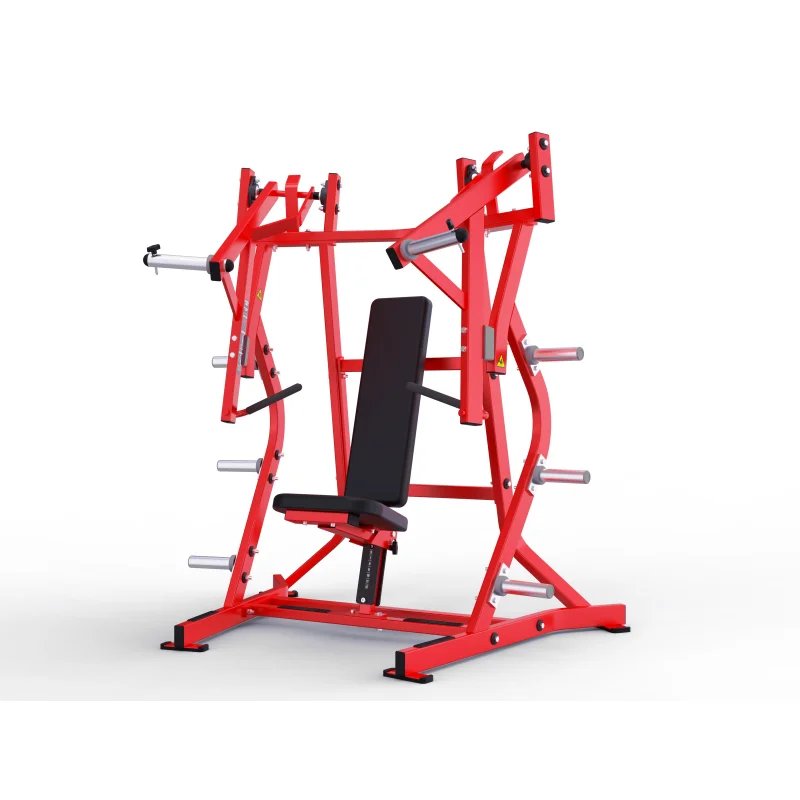
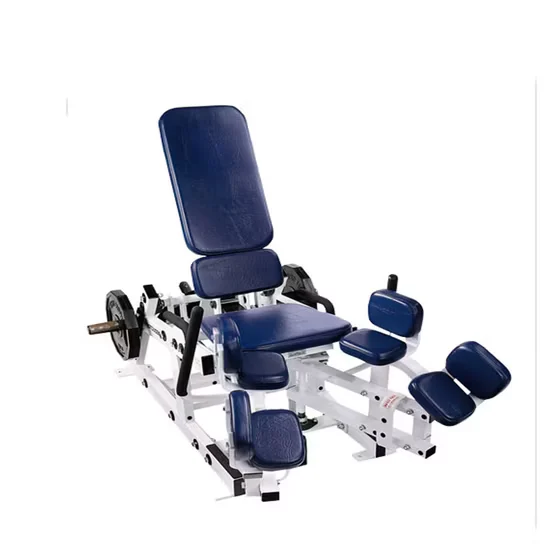
Engineered for Endurance — Lateral Raise Machine 5010 undergoes 10,000-hour continuous high-frequency testing to ensure structural integrity and consistent resistance progression in demanding commercial environments.
Technical Specifications
| Parameter | Value |
|---|---|
| Designation | 5010 |
| Product Type | Lateral Raise Machine |
| Exercise Part | Arm |
| Resistance Type | Weight Stack (Plate-Loaded Optional) |
| Maximum User Weight | 180 kg |
| Frame Material | Reinforced Steel |
| Pivot System | Sealed Bearing |
| Product Dimensions | 1050 × 1506 × 1300 mm |
| Net Weight | 102 kg |
| Upholstery | Commercial-Grade with Antimicrobial Treatment Options |
| Color | Optional |
| OEM Customization | Available |
| Certification | CE, ISO 9001 |
Application Suitability
| Deployment Scenario | Typical Use |
|---|---|
| Hotel fitness center strength zone | 24/7 guest access for shoulder isolation training |
| International gym chain network | High-frequency use across multiple locations requiring consistent resistance feel |
| Corporate wellness facility | Employee strength conditioning during peak hours with low maintenance overhead |
| Professional sports training center | Athlete shoulder rehabilitation and precise deltoid isolation |
| High-end residential home gym | Space-efficient arm training in dedicated strength corners |
Why Pivot Wear Dictates the Lifecycle of Your Shoulder Training Stations
Sealed bearings eliminate the maintenance cycle that wears out commercial shoulder equipment before the frame itself fatigues.
When lateral raise machines enter continuous public use, the pivot joint takes thousands of articulation cycles daily. Conventional bushing systems develop mechanical play that degrades the smooth resistance arc users expect. Facility operators often discover that resistance inconsistency drives members away faster than cosmetic wear [NEED_CITE: pivot bearing lifecycle standards for commercial strength equipment]. Light-duty pivot assemblies require periodic lubrication and realignment, creating maintenance windows that conflict with peak member hours. The sealed bearing pivot system in this commercial lateral raise machine strength equipment maintains arc consistency without scheduled downtime, preserving the isolation movement pattern that makes shoulder work effective.
Shoulder Isolation Positioned in the Commercial Strength Floor Layout
This lateral raise station targets medial deltoid activation through a fixed arc of motion, complementing overhead press stations and free-weight dumbbell racks in a comprehensive upper-body zone. Its footprint suits high-traffic placement near cable machines where members transition between isolation and compound movements. The 180 kg maximum user weight capacity accommodates the full range of body types encountered in commercial environments, while the reinforced steel frame remains stable during high-intensity sets with minimal lateral flex. The commercial lateral raise machine strength equipment occupies a defined footprint that fits standard strength floor spacing protocols.
Continuous Operation Demands and Environmental Considerations
Strength machines deployed in hotel fitness centers or 24-hour gym networks face near-constant use without the thermal management concerns of motorized cardio equipment, yet bearing and guide rod performance still degrades under sustained load cycles. The sealed bearing pivot requires no scheduled lubrication, aligning with facilities that operate around the clock and cannot accommodate equipment taken offline for maintenance. Deployment on elevated floors demands attention to vibration transmission, and the 102 kg frame mass provides inherent stability without supplementary anchoring in most commercial flooring configurations [NEED_CITE: structural load requirements for elevated fitness facility floors]. Proper leveling during installation prevents uneven guide rod wear that would otherwise accelerate cable friction degradation over extended operation.
Decoding the Mechanical Specifications That Determine Long-Term Performance
The reinforced steel frame construction resists the lateral torsional forces generated during heavy shoulder abduction sets, maintaining structural alignment that keeps resistance feel consistent from first rep to last. Precision-machined guide rods in the weight stack mechanism prevent lateral play that would otherwise cause cable friction and uneven resistance progression through the range of motion. Commercial-grade upholstery with antimicrobial treatment options addresses the hygiene demands of shared facilities where equipment contact points see continuous use throughout operating hours. The weight stack or plate-loaded resistance mechanism gives facility operators flexibility in configuration — weight stack delivers pin-selected convenience for high-turnover gym floors, while plate-loaded variants serve specialized training centers where athletes require incremental load adjustments beyond standard stack increments. Sealed bearing pivot design isolates moving surfaces from dust and perspiration ingress that typically drives premature wear in commercial environments [NEED_CITE: sealed bearing performance standards in high-frequency strength equipment]. Frame reinforcement at stress concentration points — particularly the base-to-upright junction — prevents the structural fatigue that manifests as subtle flex during loaded movements.
The Accumulated Cost of Under-Specified Shoulder Stations
Purchasing decisions based on upfront pricing often reveal themselves when pivot assemblies develop play within months of installation, generating member complaints about wobbly or inconsistent movement patterns. Facilities that deploy light-duty lateral raise machines frequently face wholesale replacement cycles because individual bearing rebuilds exceed the cost-effectiveness threshold when multiplied across an entire strength floor. Noise from deteriorating pivot joints carries through open gym spaces, contributing to an acoustic environment that members associate with aging equipment [NEED_CITE: acoustic degradation patterns in commercial strength equipment]. The data gap compounds when members simply avoid the station rather than report the issue, leaving operators unaware of utilization decline until revenue audits reveal underperformance in the shoulder training zone.
Why This Product Line Anchors Commercial Shoulder Training Zones
The 10,000-hour continuous operation testing protocol validates frame and pivot integrity under load cycles that mirror the most demanding commercial deployment scenarios. Sealed bearing pivot architecture eliminates the maintenance intervals that disrupt high-traffic facility operations, keeping equipment available during all operating hours. Full OEM customization scope covers frame color, upholstery material selection, and logo placement to align with facility branding requirements. When integrated into a cardio and strength floor layout, this station’s footprint and clearance requirements feed into the 3D zone planning process, ensuring proper spacing for user safety and equipment accessibility. Twenty-four-hour technical support response ensures that any commissioning questions or adjustment needs receive attention without extended equipment downtime.
Documentation & Test Records
- CE declaration of conformity covering strength equipment safety requirements
- EN 957 test report validating structural and mechanical performance standards
- ISO 9001 certificate confirming manufacturing quality management compliance
- Frame durability test record documenting 10,000-hour continuous operation certification
- Pivot bearing specification sheet detailing seal type and maintenance-free lifespan
- OEM customization scope document covering color, upholstery, and branding options
Installation, Commissioning & Maintenance
- Allocate minimum 1050 × 1506 mm footprint plus clearance zones for user approach and weight stack access
- Level frame on facility flooring using integrated adjustable feet to prevent guide rod binding
- Verify weight stack cable tension and guide rod alignment during initial commissioning before member access
- Inspect sealed bearing pivot assembly annually for seal integrity despite maintenance-free operational design
- Clean upholstery and contact points daily with antimicrobial-compatible solutions to preserve surface treatment
- Review OEM customization documentation for touch-up paint and replacement upholstery specifications
Request Configuration Guidance for Your Facility
Provide your strength zone square footage and adjacent equipment list to receive a 3D layout incorporating clearance requirements and member flow patterns around this lateral raise station. Specify your facility’s daily operating hours and expected peak utilization to confirm the equipment’s duty cycle alignment with your deployment demands. Indicate your target market and facility standards so OEM customization options — frame finish, upholstery selection, and branding placement — can be scoped to your exact requirements.
Frequently Asked Questions
Q: How does sealed bearing pivot design eliminate maintenance requirements in high-traffic commercial environments?
A: Sealed bearings enclose the pivot race behind protective shields that block dust, perspiration, and particulate ingress from reaching lubricated surfaces. Unlike exposed bushing systems requiring periodic re-lubrication, sealed pivots maintain consistent arc smoothness throughout their operational lifespan without scheduled maintenance windows, keeping equipment available during all operating hours.
Q: What frame construction standards differentiate commercial-grade lateral raise machines from light-duty alternatives?
A: Commercial frames use reinforced steel sections at stress concentration points — particularly the base-to-upright junction — engineered to resist torsional flex during heavy loaded sets. This structural approach maintains alignment of pivot bearings and guide rods over thousands of articulation cycles, preventing the wobble and resistance inconsistency that characterize degraded light-duty frames.
Q: How do precision-machined guide rods prevent cable friction and resistance inconsistency over extended use?
A: Guide rods machined to tight dimensional tolerances maintain straight-line travel of the weight stack, preventing lateral binding that causes uneven resistance through the movement arc. This precision eliminates the cable wear and friction degradation that develop when guide rods allow stack wobble during high-frequency commercial operation.
Q: What OEM customization options are available for facility branding and color matching?
A: Customization scope includes frame color selection, upholstery material and color options, and logo placement on frame surfaces. Console panel branding is not applicable to this mechanical strength station. All OEM specifications are confirmed during the scoping phase before production to ensure exact alignment with facility design standards.
Q: How does 180 kg maximum user weight capacity accommodate diverse member demographics in commercial settings?
A: The 180 kg rating ensures structural and mechanical integrity across the full spectrum of body types encountered in public fitness facilities, from rehabilitation clients to strength athletes. This capacity margin prevents frame deflection and pivot stress under maximum load, preserving movement consistency regardless of user size.