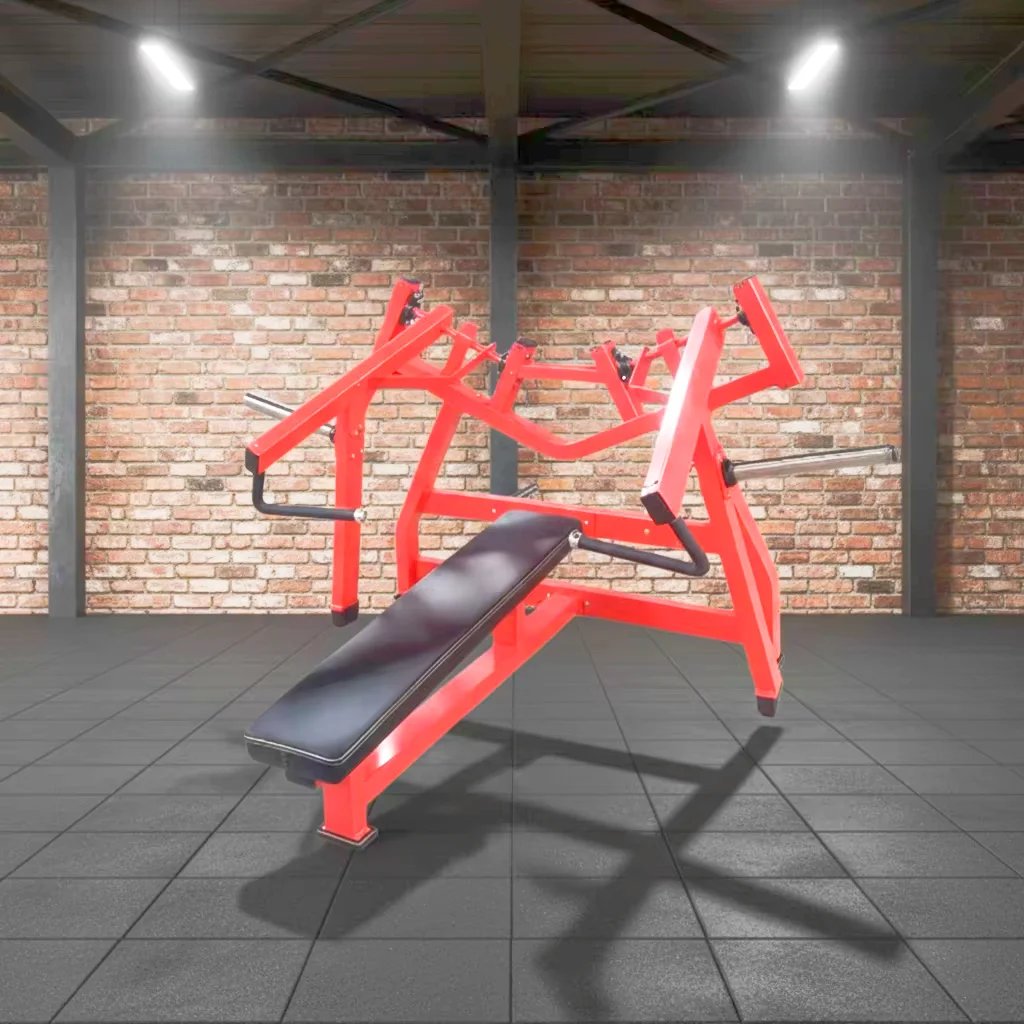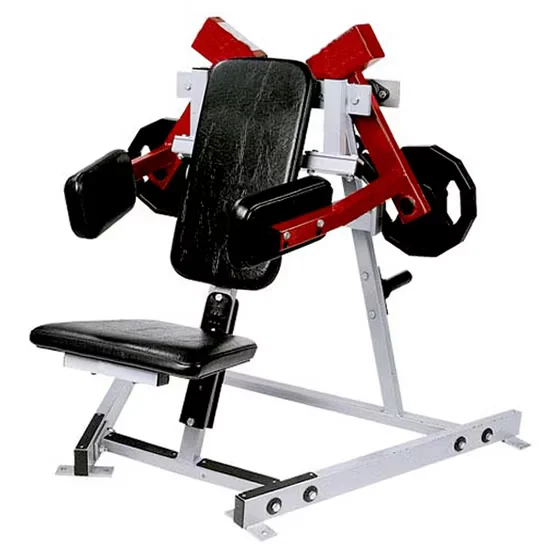
Commercial Lateral Raise Machine — engineered with reinforced steel frame and sealed bearings to sustain high-frequency shoulder training cycles without structural degradation.
Technical Specifications
| Parameter | Value |
|---|---|
| Product Type | Lateral Raise Machine (Strength Equipment — Shoulder) |
| Exercise Part | Shoulder |
| Material | Steel |
| Power Source | Manual |
| Product Dimensions | 1050×1506×1300mm |
| Net Weight | 102kg |
| Max User Weight | 180kg |
| Resistance Type | Manual (weight stack) |
| Frame Construction | Reinforced steel, welded joints |
| Foldable | Unfolded |
| Customization | Available (color, logo, specifications) |
| OEM/ODM | Available |
| Certification | ISO 9001, CE |
Application Suitability
| Deployment Scenario | Typical Use |
|---|---|
| hotel fitness center on guest room floors | 24-hour access shoulder isolation training in compact cardio and strength zones |
| chain gym cardio zone | high-frequency member use across peak hours with continuous load cycles |
| corporate wellness room | employee strength training with low-maintenance equipment requirements |
| community fitness center | supervised and unsupervised shoulder conditioning for general population |
| sports performance training center | athlete-grade lateral deltoid development with consistent resistance curve |
Why Frame Rigidity Determines Equipment Lifespan in Commercial Facilities
A commercial lateral raise machine shoulder strength equipment unit either holds alignment through ten thousand repetitions or it does not.
I have walked into gym floors where the weight stack guides on lateral raise machines developed visible play within months. The root cause traces back to frame steel thickness and welding quality at the pivot nodes. When a facility runs six-day weeks with high member throughput, micro-deflections compound into audible rattling and uneven resistance delivery. Facilities that spec equipment based on brochure dimensions rather than structural validation end up scheduling premature bearing replacements and cable re-tensioning [NEED_CITE: structural fatigue patterns in commercial strength equipment under continuous load].
Positioning Within a Commercial Strength Training Zone
This commercial lateral raise machine targets the medial deltoid through a fixed-path isolation movement, filling the shoulder-specific gap that compound pressing stations leave open. It pairs naturally with overhead press machines and rear deltoid flyers to complete a three-plane shoulder training cluster. The 1050×1506mm footprint fits standard strength-zone spacing grids, leaving adequate passage clearance when placed against a wall or between rack bays. The 180kg user weight capacity accommodates the full spectrum of facility members without requiring multiple frame variants. Resistance adjustment follows a weight stack selector, keeping the interaction intuitive for unsupervised use.
Deployment Density and Environmental Considerations
Facilities running twelve-hour or longer daily schedules need to verify that pivot bearings and cable routing can handle the repetition volume without accelerated wear. The manual resistance system eliminates motor and electronic dependencies, reducing the failure points associated with continuous power cycling. Floor leveling matters here: an uneven base introduces lateral load on the guide rods, accelerating bushing wear. Deployment on upper floors in hotel or residential settings benefits from the absence of motor-generated vibration, though impact noise from weight stack return still requires isolation pads [NEED_CITE: vibration transmission standards for strength equipment on suspended floor slabs]. Adequate overhead clearance must account for the 1506mm frame height plus user arm extension during full-range movement.
Decoding the Mechanical Specifications That Matter
The steel frame construction forms the baseline for commercial durability. Welded joint reinforcement at the seat-to-upright junction and the pivot arm mounting points determines whether the unit maintains geometric alignment after repeated loading cycles. The sealed bearing and bushing specification at the pivot axis directly controls the smoothness of the resistance arc and the interval before re-lubrication becomes necessary. Cable and pulley routing quality dictates whether the weight stack delivers consistent resistance or develops slack zones partway through the range of motion. The 102kg net weight reflects the material mass invested in structural rigidity rather than cosmetic panels, which is the correct priority for commercial deployment.
The Hidden Cost of Specification Compromises
Facilities that install strength equipment with undersized frame tubing or unsealed pivot bearings face a predictable cascade. Bearing play develops within the first high-throughput quarter, introducing wobble that members notice immediately. Cables that lack proper strand count and sheathing fray at the pulley contact points, creating uneven resistance and eventually requiring full re-cabling. Weight stack guide rods without adequate surface treatment develop scoring, producing friction that alters the intended resistance curve. These failures rarely occur in isolation; a unit with one compromised component typically shows accelerated wear across adjacent systems [NEED_CITE: commercial strength equipment maintenance frequency correlation with component specification grade].
What This Product Line Delivers for Facility Operators
The commercial lateral raise machine shoulder strength equipment in this range shares the same steel-frame engineering discipline applied across the full six-series cardio and strength catalog. OEM and ODM customization extends to frame color, logo placement, and specification adjustments, allowing chain operators to maintain brand consistency across locations. Each unit ships with documentation covering structural testing and bearing durability records. The 3D layout service accounts for this machine’s footprint alongside adjacent equipment, ensuring member flow and sightline considerations are addressed before the floor plan is finalized. Technical support remains available around the clock for commissioning questions and spare parts identification.
Documentation & Test Records
- CE declaration of conformity for commercial strength equipment
- EN 957 test report covering structural integrity and safety requirements
- ISO 9001 certificate for manufacturing quality management
- Durability test record documenting pivot bearing and cable cycle performance
- Motor and mechanical component specification sheets
- Installation and commissioning guide with spare parts list
Installation, Commissioning & Maintenance
- Verify floor leveling within tolerance before anchoring the 1050×1506×1300mm frame to prevent guide rod binding.
- Place vibration isolation pads beneath the base feet to contain weight stack return noise on upper-floor deployments.
- Ensure overhead clearance exceeds 1506mm plus full arm extension range for safe lateral raise movement.
- Inspect cable tension and pulley alignment during initial commissioning and at quarterly intervals.
- Apply manufacturer-specified lubricant to weight stack guide rods per the maintenance schedule.
- Wipe down steel contact surfaces daily with non-corrosive cleaner to prevent sweat-induced oxidation.
Requesting a Facility-Specific Equipment Proposal
Share your strength zone square footage and planned equipment count to receive a 3D layout incorporating this unit’s footprint and member flow corridors. Specify expected daily usage hours so that bearing and cable specifications can be matched to your throughput. Indicate deployment floor level and adjacent occupied spaces to confirm whether additional noise isolation measures are warranted. State your market voltage standards if any electronically monitored variants are under consideration. Clarify whether console data integration or facility management system connectivity is required for your operation.
Frequently Asked Questions
Q: What structural differences separate commercial lateral raise machines from residential-grade equivalents?
A: Commercial units use heavier-gauge steel tubing with reinforced welding at pivot and seat junctions to withstand continuous high-frequency use. Residential frames prioritize cost and weight reduction, which leads to premature joint play under commercial load cycles. The sealed bearing specification and cable strand count also differ substantially between the two tiers.
Q: How does bearing seal quality affect maintenance intervals on a commercial lateral raise machine?
A: Sealed bearings prevent dust and moisture ingress at the pivot axis, maintaining smooth rotation through extended use cycles. Unsealed bearings require periodic cleaning and re-lubrication, and they develop play faster in humid or high-dust gym environments. This directly determines whether maintenance is scheduled quarterly or monthly.
Q: What is the typical cable replacement timeline and what should inspections cover?
A: Cable lifespan depends on strand count, sheathing quality, and pulley alignment. Inspections should check for fraying at pulley contact points, sheathing cracks, and any slack developing in the weight stack connection. Properly specified commercial cables maintain integrity through thousands of full-range cycles before replacement becomes necessary.
Q: What customization options are available and what minimum order quantities apply?
A: OEM and ODM services cover frame color, logo placement, upholstery material, and specification adjustments to match facility branding requirements. Minimum order quantities remain flexible to accommodate both single-venue deployments and multi-location rollouts. Custom console UI options are available for electronically monitored variants.
Q: How should a lateral raise machine be positioned within a strength zone layout?
A: Place it within a shoulder-training cluster alongside overhead press and rear deltoid stations to create a logical member flow. Allow standard passage clearance on all sides and verify that overhead height accommodates the full frame plus arm extension. Sightline positioning near mirrors supports form checking during unsupervised use.
![Commercial Gym Equipment Hammer Strength Smith Machine 5045 for Professional Gyms [WARN] draft identifier mismatch](https://bicksport.com/wp-content/uploads/2026/08/commercial-gym-equipment-hammer-strength-smith-machine-5045-for-professional-gyms-warn-draft-identifier-mismatch-db4eae.webp)
![Professional Hammer Strength Full Rack Commercial Gym Equipment H5084 [WARN] draft identifier mismatch](https://bicksport.com/wp-content/uploads/2026/08/professional-hammer-strength-full-rack-commercial-gym-equipment-h5084-warn-draft-identifier-mismatch-5b9980.webp)