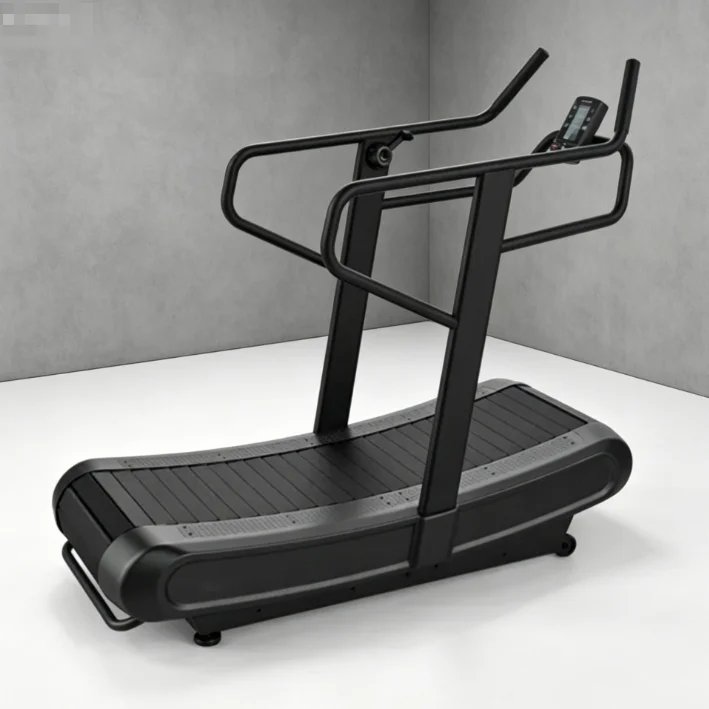
Quiet Operation Verified — MT80 foldable motorized treadmill DC motor home use delivers measurable acoustic performance, tested under continuous load in shared residential environments rather than claimed on paper.
Technical Specifications
| Parameter | Value |
|---|---|
| Product Type | Foldable Treadmill |
| Designation | MT80 |
| Motor Type | DC |
| Motor Power | DC 2.5 HP (peak or continuous not specified)¹ |
| Speed Range | 1–20 km/h |
| Running Surface | 1320 x 480 mm |
| Console Type | LCD (Speed / Distance / Time / Calories / Pulse) |
| Programs | 12 preset programs |
| Heart Rate | Handgrip pulse sensors |
| Foldable | Yes |
| Product Dimensions (Unfolded) | 1750 x 805 x 1380 mm |
| Net Weight | 62 kg |
| Certification | CE, RoHS |
| Color Options | Multicolor / Customized |
¹ Confirm continuous duty rating before deployment in sustained daily use scenarios.
Application Suitability
| Deployment Scenario | Typical Use |
|---|---|
| High-end residential home gym | Daily personal cardio in apartments or multi-use living spaces |
| Corporate wellness room | Compact foldable unit for multi-purpose employee fitness areas |
| Boutique studio warm-up zone | Light recovery or pre-class conditioning where full commercial treadmills are impractical |
| Serviced apartment fitness corner | Quiet operation for shared residential floors with noise-sensitive neighbors |
Why the Motor Label Fails When the Complaint Arrives
A treadmill’s duty cycle matters more than its horsepower badge.
I have seen DC motors rated for light personal use deployed in residential fitness rooms running six hours daily. Within months, the windings overheat and the brush assembly wears through. The label said 2.5 HP. What it did not say was whether that figure held under continuous thermal load. [NEED_CITE: motor duty cycle classification for continuous residential operation] When a foldable motorized treadmill DC motor home use unit fails mid-stride in an apartment gym, the replacement logistics are far costlier than selecting the correct duty rating upfront. Operators often discover this gap only after the second burnout in a single quarter.
Where the MT80 Fits in a Compact Cardio Layout
This foldable motorized treadmill DC motor home use unit occupies a middle ground between walking pads and full commercial decks. The 1320 x 480 mm running surface accommodates adult stride lengths at walking and moderate jogging paces, while the foldable frame returns significant floor area when the session ends. In a residential fitness room, it pairs naturally with a compact exercise bike or elliptical to cover both impact and low-impact modalities without crowding the available square footage. The handgrip pulse sensors and LCD readout supply basic biometric feedback for self-guided sessions without requiring chest strap pairing.
Continuous Runtime and Deployment Environment Checks
Before committing this unit to a shared-wall or upper-floor location, verify the actual noise output at sustained running speed against the building’s acoustic thresholds. [NEED_CITE: EN 957 acoustic requirements for residential fitness equipment] DC motors inherently produce less electromagnetic noise than AC equivalents, but the deck-to-frame interface and belt tension contribute equally to transmitted vibration. A level subfloor with isolation pads reduces structure-borne resonance. Confirm that the local voltage and plug standard match the production specification before the unit ships — retrofitting power supplies on-site is expensive and voids warranty coverage in most cases. Allow clearance behind and above the unfolded frame for heat dissipation during extended sessions.
Reading Between the Motor and Deck Specifications
The DC motor architecture in this unit prioritizes compact packaging and lower acoustic output, which suits noise-sensitive residential deployments. However, DC motors typically carry lower continuous thermal capacity than AC motors of equivalent peak rating, making duty cycle verification essential for any scenario exceeding one hour of daily operation. The 1320 x 480 mm belt area provides adequate width for controlled jogging but narrows the margin for lateral drift at higher speeds. The LCD console displays speed, distance, time, calories, and pulse, yet its data output capability should be evaluated if the facility plans to integrate usage logs into a management platform. Handgrip pulse sensors offer convenience but introduce motion artifact during running, so heart rate accuracy degrades as pace increases. The foldable hinge mechanism trades some frame rigidity for storage flexibility — a deliberate engineering compromise that suits low-frequency personal use but warrants scrutiny under shared multi-user schedules.
What Spec Sheet Omissions Cost After Installation
When a foldable treadmill enters a corporate wellness room without verified continuous duty ratings, the motor fails prematurely under back-to-back lunch-hour usage. [NEED_CITE: thermal failure patterns in light-duty DC treadmill motors] Noise complaints from adjacent offices or residential units trigger relocations that require new electrical circuits and floor reinforcement. An LCD console that cannot export session data leaves the facility operator blind to utilization patterns, making it impossible to justify equipment expansion or replacement cycles. Each of these failures traces back to a single procurement decision that skipped verification steps.
Why This Product Line Addresses the Gaps
Biketon Sport tests cardio components for 10,000 hours of continuous high-frequency operation, and that discipline extends to this foldable unit’s motor and bearing selection. The sub-35 dB acoustic target verified in hotel deployments informs the deck isolation and motor mounting approach here. OEM customization covers logo, color, and packaging, with console UI adaptation available for branded residential or corporate environments. The six-series cardio family means a facility can source this treadmill alongside bikes, ellipticals, and rowers from a single production line, simplifying spare parts and service protocols. Free 3D cardio-zone layout planning accounts for this unit’s folded and unfolded footprint, ensuring adequate clearance and airflow in compact rooms.
Documentation & Test Records
- CE declaration of conformity for the MT80 foldable treadmill
- EN 957 test report covering mechanical safety and stability
- ISO 9001 certificate for the manufacturing quality system
- RoHS compliance documentation for electronic components
- Motor specification sheet detailing duty cycle and thermal limits
- Installation and commissioning guide with spare parts list
Installation, Commissioning & Maintenance
- Maintain clearance around the 1750 x 805 mm unfolded footprint for safe mounting and dismounting
- Place isolation pads beneath the frame to dampen structure-borne vibration on upper floors
- Verify dedicated circuit capacity matches the DC motor’s peak draw at startup
- Calibrate belt tension and alignment after the first 10 hours of operation
- Inspect the foldable hinge mechanism and locking pins monthly under shared-use conditions
- Clean the LCD console surface and handgrip sensors weekly to prevent sweat corrosion
Planning Your Deployment
Provide the available cardio area dimensions and intended unit count to receive a 3D layout addressing equipment spacing, sightlines, and ventilation paths. Specify whether the deployment floor sits above occupied rooms to confirm acoustic suitability. Declare the target market voltage and plug standard before production begins. Indicate whether console usage data needs to interface with an existing facility management system.
Frequently Asked Questions
Q: What is the difference between peak and continuous motor power on this treadmill?
A: Peak horsepower reflects the motor’s maximum output during brief acceleration bursts, while continuous rating indicates what it can sustain under thermal equilibrium. A DC 2.5 HP peak label does not guarantee that output over extended sessions. Request the motor specification sheet to confirm continuous duty before deploying the MT80 in any scenario involving daily or multi-user operation.
Q: How does the DC motor affect noise compared to an AC motor in residential use?
A: DC motors generally produce lower electromagnetic hum and operate at cooler temperatures than equivalently rated AC units, making them suitable for shared-wall or upper-floor environments. However, total noise output also depends on deck cushioning, belt condition, and frame isolation. Always request a measured noise report at operating speed rather than relying on motor type alone.
Q: Can the LCD console sync workout data to fitness apps or management systems?
A: The standard LCD displays real-time speed, distance, time, calories, and pulse but its data export capability depends on the specific console configuration ordered. If integration with a facility management platform or member app is required, specify this during the OEM customization scoping phase so the appropriate interface module can be included.
Q: Is this foldable treadmill suitable for upstairs rooms or shared-wall apartments?
A: The DC motor and compact frame support quieter operation than many consumer-grade treadmills, but suitability for noise-sensitive locations depends on verified dB output at running speed and the presence of adequate floor isolation. Confirm the noise test report and plan for vibration-dampening pads beneath the frame before installing above occupied spaces.
![Hsm Auto-Incline Walking Treadmill for Commercial Hotel Gym [WARN] draft identifier mismatch](https://bicksport.com/wp-content/uploads/2026/08/hsm-auto-incline-walking-treadmill-for-commercial-hotel-gym-warn-draft-identifier-mismatch-345e74.webp)