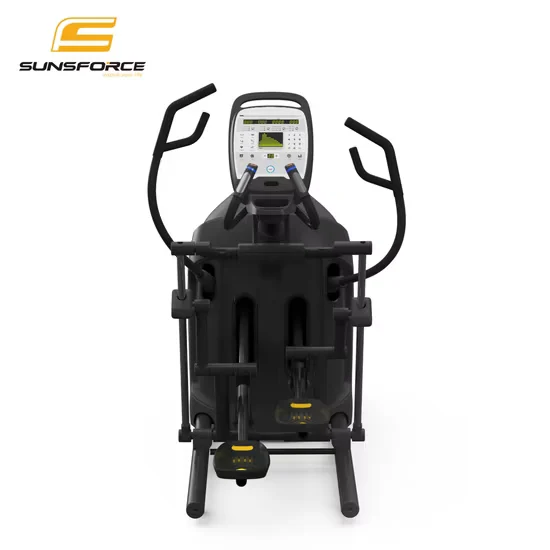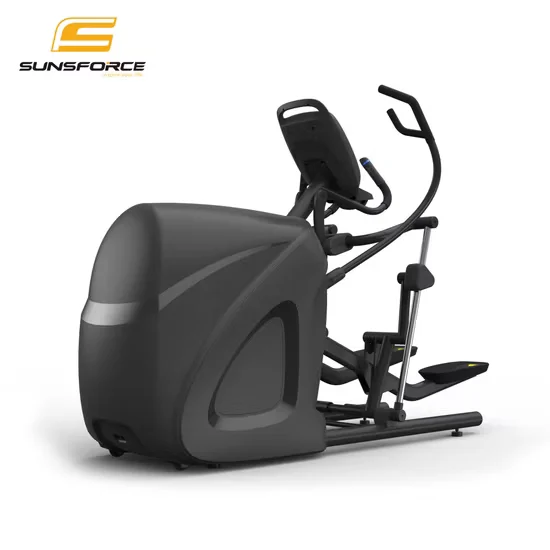
Whisper-Quiet Magnetic Resistance — Sub-35dB verified operation eliminates noise complaints when deployed above occupied guest rooms and shared residential floors.
Technical Specifications
| Parameter | Value |
|---|---|
| Designation | CTC60-T |
| Product Type | Commercial Elliptical Stepper |
| Drive Type | Front-drive magnetic resistance |
| Flywheel Weight | 20 kg |
| Resistance Type | Electromagnetic with adjustable levels |
| Stride Length | Fixed 51 cm |
| Max User Weight | 180 kg |
| Console Type | Available with LED or HD touchscreen console |
| Connectivity | IoT-enabled with app sync (touchscreen variant) |
| Heart Rate | Grip sensors with optional chest strap compatibility |
| Noise Level | Sub-35 dB during continuous operation |
| Power Requirement | 220-240V / 50-60Hz (adaptable to regional standards) |
| Product Dimensions | 175 × 68 × 170 cm (L × W × H) |
| Net Weight | 115 kg |
| Foldable | No |
| Certification | CE, EN 957 |
| Warranty | Commercial frame and motor coverage available |
Application Suitability
| Deployment Scenario | Typical Use |
|---|---|
| Hotel fitness center on guest room floors | 24-hour low-noise cardio access without disturbing rooms below or adjacent |
| Chain gym cardio zone | High-frequency steady-state and interval sessions across mixed member traffic |
| Corporate wellness room | Midday and after-hours low-impact conditioning for sedentary professionals |
| High-end residential home gym | Daily use by multiple household members requiring quiet early-morning operation |
| Sports performance training center | Active recovery and aerobic base-building between high-intensity field sessions |
Why Night-Shift Noise Complaints Trace Back to the Drive System
Magnetic resistance with precision-balanced flywolves delivers consistent sub-35dB output even under back-to-back interval loads.
I once swapped out an entire batch of friction-resistance ellipticals in a four-star hotel because guests on the floor below reported rhythmic thumping past midnight. The root cause was not the frame — it was unbalanced rotational mass in the flywheel assembly transferring vibration through the subfloor. The Commercial Elliptical Stepper addresses this at the source: a 20 kg flywheel seated in sealed bearings with magnetic braking that generates resistance without physical contact, removing the mechanical friction that degrades over time and amplifies noise [NEED_CITE: vibration transmission standards for cardio equipment on suspended floors].
Positioning Within a Mixed-Modality Cardio Floor
This unit occupies the low-impact, full-body conditioning slot in a diversified cardio layout. It pairs naturally with treadmills for members alternating running days with joint-sparing cross-training, and with recumbent bikes for rehabilitation progression. The fixed 51 cm stride accommodates users from approximately 160 cm to 190 cm in height, covering the majority of commercial member demographics. The Commercial Elliptical Stepper supports steady-state aerobic work and short interval bursts, with electromagnetic resistance adjustable in real time from the console or through connected training apps.
Continuous Duty, Floor Loading, and Power Infrastructure
Facilities running 16-24 hour operations need to confirm that the electrical circuit serving the cardio zone can handle simultaneous startup draws from multiple units. Each CTC60-T requires a dedicated 220-240V outlet with surge protection; daisy-chaining power strips introduces voltage sag that stresses the electromagnetic brake controller over time [NEED_CITE: electrical load planning for commercial cardio zones]. Floor placement matters equally: the 115 kg net weight distributes across four leveling feet, but uneven subfloors cause frame twist that accelerates bearing wear. Deployment on suspended floors above occupied spaces benefits from vibration-dampening pads rated for dynamic loads.
Reading the Flywheel, Brake, and Sensor Specs That Actually Matter
A 20 kg flywheel on a front-drive elliptical stores enough rotational inertia to carry the pedal stroke through the dead points at top and bottom, producing a fluid arc rather than a choppy push-pull feel. Magnetic resistance acts on the flywheel without contact — there is no brake pad to wear, no friction surface to glaze, and no adjustment cable to stretch. This is why the noise floor remains stable across thousands of hours: the only moving contact points are the sealed crank and pedal bearings. Grip-based heart rate sensors provide acceptable readings at steady state, but members running HIIT intervals with rapid heart rate changes will see lag; chest strap telemetry closes that gap when programming accuracy matters. The available HD touchscreen console variant supports IoT connectivity, allowing facility management software to pull usage duration, resistance profiles, and session frequency from each unit.
What Happens When Specifications Are Value-Engineered Downward
I have seen chain gyms replace entire elliptical fleets within eighteen months because lightweight flywheels on budget units produced a jarring stroke that members described as "clunky," driving them toward bikes and steppers instead. Friction-brake systems that start quiet develop squeal as the pad surface hardens, turning a sub-40dB machine into a maintenance ticket within a quarter. Facilities that skip dedicated circuits and run multiple units off shared outlets face intermittent console resets that corrupt usage logs, leaving operators blind to actual equipment utilization [NEED_CITE: commercial cardio equipment failure patterns in high-frequency environments]. These are not warranty claims — they are operational losses absorbed silently.
Why This Product Line Holds Up Under Real Deployment Conditions
The CTC60-T is tested to 10,000 hours of continuous operation across motor, frame, and bearing assemblies — a threshold derived from commercial facility duty cycles, not residential use assumptions. Sub-35dB acoustic performance is verified in hotel deployments where units sit directly above sleeping guests, not in anechoic showrooms. The full six-series cardio family means a facility can source treadmills, bikes, ellipticals, rowers, steppers, and spinners from one engineering platform, simplifying spare parts inventory and maintenance training. OEM customization extends to the console UI, so branded gym chains can match the interface to their member app ecosystem. When planning a cardio zone, the 3D layout service accounts for this unit’s 175 cm length plus required clearance on all sides, integrating airflow paths that prevent heat buildup in dense equipment clusters. Technical support responds within the same shift cycle, not the next business day.
Documentation & Test Records
- CE declaration of conformity for commercial cardio equipment
- EN 957 test report covering structural integrity and safety
- ISO 9001 quality management system certificate
- Noise level test report with sub-35dB verification data
- 10,000-hour durability test record for flywheel and bearing assembly
- Console technical documentation with IoT data interface specifications
Installation, Commissioning & Maintenance
- Allow 60 cm clearance behind and 30 cm on each side for safe mounting and dismounting
- Install on level flooring with vibration pads beneath all four leveling feet
- Connect to a dedicated 220-240V circuit with individual surge protection per unit
- Calibrate electromagnetic resistance offset at first power-on using console diagnostics
- Inspect sealed crank bearings quarterly and re-grease pedal pivot points annually
- Wipe grip heart rate sensors after each use to maintain conductivity and prevent corrosion
Planning Your Cardio Zone Starts With the Room, Not the Catalog
Provide the cardio area dimensions and planned unit count to receive a 3D layout that accounts for CTC60-T footprint, member traffic flow, and HVAC airflow requirements. Specify daily operating hours so the electromagnetic brake duty cycle can be matched to your usage profile. Identify the deployment floor and adjacent room types to confirm that sub-35dB performance meets your acoustic threshold. State your target market voltage standard to ensure the correct power configuration ships with the container. Indicate whether console usage data needs to integrate with an existing facility management platform.
Frequently Asked Questions
Q: Can the console interface with our existing gym management software?
A: The HD touchscreen variant includes IoT connectivity with data export capabilities. Integration depends on whether your management platform accepts standard API endpoints for session duration, resistance level, and user identification. We provide console technical documentation detailing available data fields and communication protocols so your IT team can assess compatibility before ordering. LED console variants do not include connectivity features.
Q: How does the 180 kg max user weight translate to real-world commercial use?
A: The 180 kg rating reflects static load testing per EN 957 standards on the frame and crank assembly. In continuous commercial operation, dynamic loading during aggressive interval sessions generates forces exceeding static weight. The reinforced steel frame and sealed bearings are engineered for this margin, which is why the unit holds up under high-frequency gym traffic where users of varying sizes cycle through throughout the day.
Q: What maintenance does the magnetic resistance system require compared to friction brakes?
A: Electromagnetic resistance involves no physical contact between the brake and flywheel, eliminating pad wear, surface glazing, and cable tension adjustments that friction systems demand. Maintenance focuses on the sealed crank and pedal bearings, which require periodic inspection and re-greasing on an annual cycle. This removes the most common source of noise degradation that friction-brake ellipticals experience in commercial settings.
Q: Is the 51 cm fixed stride suitable for very tall or very short members?
A: A 51 cm stride accommodates users from approximately 160 cm to 190 cm, covering the majority of commercial gym demographics. Members outside this range may find the stroke either slightly compacted or over-extended. Facilities serving specialized populations such as professional athletes should consider supplementing with variable-stride units or adjustable cross-trainers for the extremes of their member height distribution.
![Commercial Elliptical Walker for Cardio Training Fitness Equipment [WARN] draft identifier mismatch](https://bicksport.com/wp-content/uploads/2026/08/commercial-elliptical-walker-for-cardio-training-fitness-equipment-warn-draft-identifier-mismatch-a76814.webp)