
![Folding Pilates Reformer Bed Metal Frame Yoga Training Core Exercise Equipment [WARN] draft identifier mismatch](https://bicksport.com/wp-content/uploads/2026/08/folding-pilates-reformer-bed-metal-frame-yoga-training-core-exercise-equipment-warn-draft-identifier-mismatch-1d06d7.webp)
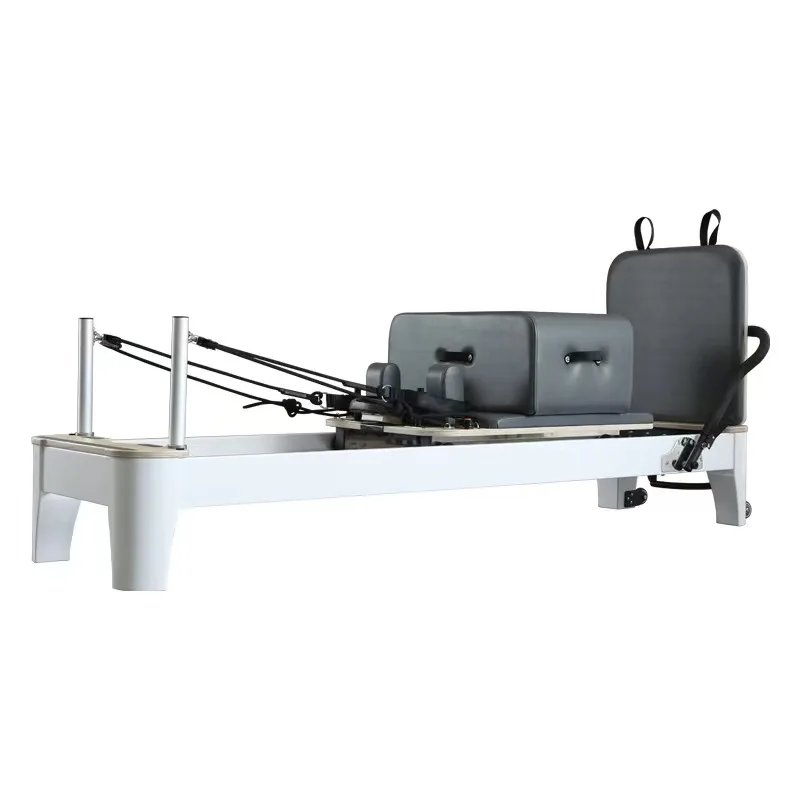
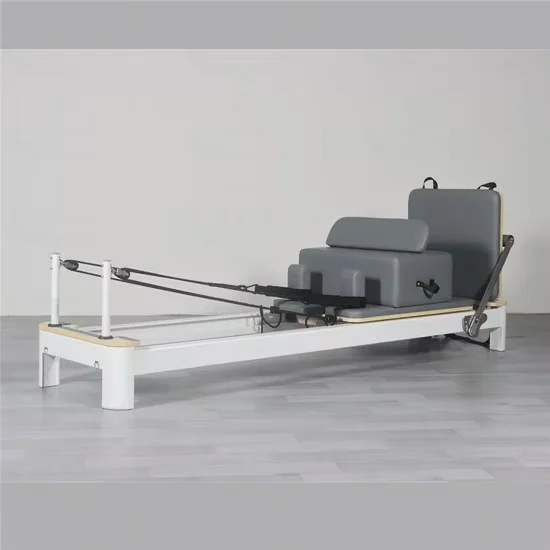
Structural rigidity — Metal-frame folding Pilates reformer maintains carriage track alignment under repeated high-load spring tension across continuous studio class rotations.
Technical Specifications
| Parameter | Value |
|---|---|
| Designation | SRY-11B |
| Product Type | Folding Pilates Reformer Bed |
| Frame Material | Metal Frame |
| Foldable | Yes |
| Accessory Options | Long Box / Jump Board / Platform |
| Product Dimensions | 2000 x 500 x 340 mm |
| Net Weight | 50 kg |
| Color | Solid Color (customizable) |
| Logo | Customized Is Allowed |
| User Demographic | Adult, Unisex |
| Warranty | 3 Years |
| Production Capacity | 80 Pieces/Month |
Application Suitability
| Deployment Scenario | Typical Use |
|---|---|
| Boutique Pilates studio | Full-range reformer classes with jump board and long box circuits in limited square footage |
| High-end residential home gym | Fold-away storage between sessions, maintaining living space functionality |
| Rehabilitation and physiotherapy facility | Low-profile stable apparatus for controlled movement therapy and post-injury protocols |
| Yoga studio multi-use room | Equipment stowed during mat-based sessions, deployed for reformer-focused programming |
| Franchise fitness network | Brand-coherent deployment with customized logo and color across multiple locations |
What Frame Material Decides Before the First Class Begins
Metal-frame construction prevents carriage drift that wood frames develop within months of high-frequency spring loading.
Boutique studios running back-to-back reformer classes need equipment that holds dimensional tolerance through thousands of fold-unfold cycles. When a wood-frame reformer absorbs moisture and seasonal humidity shifts, the carriage track develops lateral play that instructors feel before members complain. Metal frames eliminate this variable. The hinge mechanism on a folding Pilates reformer bed commercial metal frame unit must withstand daily articulation under full load without latch degradation [NEED_CITE: EN 957 structural fatigue requirements for folding fitness equipment]. Studios deploying reformers in multi-use spaces face a second constraint: if the unit requires two staff to fold safely, turnaround time between class formats extends beyond acceptable scheduling windows.
Where This Reformer Fits in a Studio Equipment Matrix
The SRY-11B covers full-spectrum Pilates programming from fundamental footwork through advanced jump board plyometrics when configured with accessory attachments. In a mixed-format studio, this folding Pilates reformer bed commercial metal frame unit pairs with mat zones for warm-up sequences and Cadillac apparatus for advanced spinal articulation work. Deployment density depends on fold-away clearance: units stored vertically require ceiling height verification and wall-anchoring hardware. The 180 kg user capacity accommodates most adult practitioners without spring tension compromise, though heavier users may require upgraded spring sets not included in standard configuration.
Continuous Class Rotations and Environmental Constraints
A reformer running six classes daily with twelve participants per session accumulates carriage cycles rapidly. Metal frame rigidity maintains rail parallelism under this duty cycle, whereas composite frames develop micro-deflections that accelerate wheel wear. Noise transmission matters when reformer studios sit above occupied retail or office floors — metal-on-metal contact points generate different frequency profiles than wood-frame damping, requiring floor isolation pads in multi-story deployments [NEED_CITE: acoustic transmission standards for fitness equipment in mixed-use buildings]. Ambient humidity affects carriage wheel bearing lubrication intervals, particularly in coastal markets where salt air accelerates corrosion on exposed steel components. Voltage and power requirements do not apply to spring-loaded reformers, eliminating electrical compliance concerns during international deployment.
Decoding the Spring and Carriage Specifications
Metal frame construction delivers consistent track geometry because steel does not expand or contract with seasonal humidity the way hardwood does. The carriage rides on wheels that must match rail hardness — harder wheels reduce rolling resistance but transmit more vibration to the frame, while softer wheels dampen vibration but develop flat spots under static load. Spring tension determines resistance curve: lighter springs suit rehabilitation protocols where joint loading must remain controlled, while heavier springs support athletic conditioning where muscular overload drives adaptation. The folding hinge represents a structural compromise point; engineering focus belongs on latch engagement depth and pivot pin diameter rather than folding speed. Accessory attachment interfaces — whether the long box slots into a fixed receiver or requires tool-based mounting — directly affect class turnaround efficiency when instructors switch between reformer and box work mid-session.
The Hidden Cost of Specifying Below Commercial Threshold
Studios that purchase residential-grade reformers for commercial deployment discover frame flex within the first quarter of continuous use. Carriage wobble develops when track alignment drifts beyond tolerance, generating member complaints about smoothness and prompting premature equipment replacement. Folding mechanisms rated for occasional home use fail catastrophically under daily studio articulation — latch pins shear, pivot bearings develop play, and the unit becomes a liability rather than an asset [NEED_CITE: commercial vs. residential equipment duty cycle classification]. Accessory compatibility issues surface when studios attempt to source jump boards from third-party suppliers, only to find mounting interfaces incompatible. Custom logo and color specifications require production lead time that disrupts studio opening timelines if not confirmed during initial procurement.
Why This Product Line Addresses Studio Procurement Gaps
Metal frame verification through load-cycle testing confirms the folding mechanism survives daily studio articulation without latch degradation. Production capacity of eighty units monthly supports franchise rollout timelines without compromising per-unit QC inspection. Accessory ecosystem integration — long box, jump board, platform — arrives from a single source, eliminating compatibility verification headaches. OEM customization covering logo placement and frame color supports brand consistency across multi-location networks. Three-dimensional studio layout planning accounts for fold-away clearance, instructor sightlines during group classes, and airflow considerations that prevent humidity buildup around stored equipment. Documentation packages include CE declarations and structural test records that satisfy commercial insurance requirements without additional third-party certification procurement.
Documentation & Test Records
- CE declaration of conformity for commercial fitness equipment classification
- EN 957 structural integrity test report covering frame and folding mechanism
- ISO 9001 quality management certification for manufacturing process
- Metal frame load-cycle and fatigue test documentation
- Accessory interface compatibility verification records
- Installation guide with fold-away clearance and anchoring specifications
Installation, Commissioning & Maintenance
- Verify ceiling height exceeds folded unit dimension plus clearance for safe articulation
- Install floor isolation pads beneath frame contact points in multi-story deployments
- Confirm wall-anchoring hardware matches stud spacing at designated storage location
- Test carriage travel across full rail length, adjusting wheel tension if lateral play detected
- Lubricate folding pivot bearings at intervals specified for local humidity conditions
- Inspect spring attachment hooks for metal fatigue cracks during quarterly maintenance cycles
Equipment Selection and Deployment Scoping
Provide studio square footage and ceiling height to receive three-dimensional layout incorporating fold-away storage zones and instructor sightline optimization. Specify expected daily class count and participant capacity per session to confirm spring set configuration matches usage intensity. Identify deployment floor level and adjacent occupied spaces to determine floor isolation and acoustic treatment requirements. Confirm target market for any applicable regional compliance documentation beyond standard CE marking.
Frequently Asked Questions
Q: How does metal frame construction compare to wood frame for commercial Pilates reformer deployment?
A: Metal frames maintain dimensional stability across seasonal humidity fluctuations that cause wood frames to expand, contract, and develop carriage track misalignment. Commercial studios running multiple daily classes accumulate cycles that expose wood-frame flex and joint loosening within months. Metal construction eliminates moisture absorption variables, though it requires floor isolation pads to manage vibration transmission in multi-story buildings where acoustic complaints reach management before maintenance receives work orders.
Q: What load rating should the folding mechanism carry for daily studio articulation?
A: Commercial folding mechanisms require hinge pins and latch engagement depth rated for the unit weight plus dynamic loading during fold-unfold cycles. Residential-rated hinges develop play and eventual failure under daily studio use, creating safety liability. Verify pivot bearing specifications and latch security features before procurement, as replacement parts for discontinued mechanisms may not remain available throughout the equipment service life.
Q: How do I verify long box and jump board compatibility across different reformer models?
A: Accessory attachment interfaces vary between manufacturers — some use tool-free slot-in receivers while others require bolt-based mounting. Confirm interface documentation matches your reformer model before ordering accessories from third-party suppliers, as incompatible mounting hardware delays class programming and forces last-minute equipment substitution that disrupts instructor lesson plans.
Q: What floor space calculations apply when planning foldable reformer storage in multi-use studios?
A: Folded unit dimensions plus operator clearance for safe articulation determine minimum storage zone depth. Ceiling height must accommodate vertical storage orientation with margin for lifting hardware. Group deployment requires spacing between stored units for individual access without sequential movement of adjacent equipment, affecting total square footage allocation beyond simple footprint multiplication.
![Commercial Pilates Wall Unit Spring Board for Studio [WARN] draft identifier mismatch](https://bicksport.com/wp-content/uploads/2026/08/commercial-pilates-wall-unit-spring-board-for-studio-warn-draft-identifier-mismatch-763791.webp)
![Foldable Pilates Reformer Equipment for Studio Gym Use [WARN] draft identifier mismatch](https://bicksport.com/wp-content/uploads/2026/08/foldable-pilates-reformer-equipment-for-studio-gym-use-warn-draft-identifier-mismatch-9f1ab4.webp)