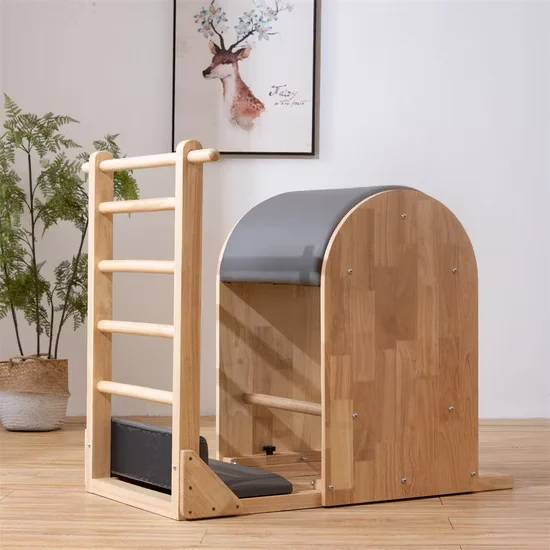
Acoustic-Engineered Carriage Travel — sub-35dB operation verified in shared residential studio deployments, with sealed aluminum rails preventing noise migration through floor assemblies.
Technical Specifications
| Parameter | Value |
|---|---|
| Designation | SRY-12A |
| Product Dimensions | 2570 × 730 × 270 mm |
| Net Weight | 90 kg |
| Frame Material | Aluminum Alloy |
| Foldable | Yes |
| Accessory Compatibility | Long Box / Jump Board / Platform |
| Warranty | 3 Years |
| Target User | Adult, Unisex |
| Logo & Color | Customizable (OEM/ODM) |
Application Suitability
| Deployment Scenario | Typical Use |
|---|---|
| Boutique Pilates and yoga studio with convertible rooms | Group reformer classes requiring rapid fold-down between sessions |
| Hotel wellness center on guest-adjacent floors | Low-noise reformer programming without triggering acoustic complaints through shared walls |
| Corporate wellness facility with limited square footage | Multi-discipline fitness zones where the folding aluminum Pilates reformer commercial footprint must clear for alternate use |
| High-end residential home gym | Full-accessory reformer training in spaces shared with living areas |
| Physical rehabilitation and sports recovery center | Controlled carriage resistance with jump board and platform integration for progressive loading |
Why Studios Discover Noise Problems After the First Group Class
Carriage rail vibration transmits directly through rigid floor assemblies into occupied rooms below.
When a studio retrofits a multi-use room above hotel guest floors or residential units, the repeated carriage travel during a 12-person reformer class generates low-frequency structure-borne vibration that standard steel frames broadcast into ceiling plenums. Facility operators rarely anticipate this during procurement because single-unit demonstrations in empty showrooms produce acceptable readings. Only under synchronized group use, with multiple carriages reversing direction simultaneously, does the cumulative vibration exceed the threshold that triggers complaints from adjacent spaces [NEED_CITE: structure-borne vibration thresholds for fitness equipment in mixed-use buildings]. Aluminum framing dampens this transmission path compared to welded steel, while folding aluminum Pilates reformer commercial designs must also account for the hinge mechanism as an additional resonance point.
Where This Reformer Fits in a Commercial Studio Layout
This unit covers the full resistance spectrum from rehabilitation-grade light spring tension through athletic conditioning loads via its accessory ecosystem. In a studio cardio and recovery zone, it pairs with mat-based equipment for warm-up sequences and complements fixed-frame reformers dedicated to high-volume group classes. The foldable chassis suits studios running three to four class blocks daily where floor space must clear for yoga or functional training between sessions. User accommodation spans standard adult anthropometry with the 2570 mm rail length supporting full-range carriage excursion. The main keyword, folding aluminum Pilates reformer commercial, applies here because the unit bridges boutique studio duty and the spatial flexibility that fixed commercial frames cannot offer.
Daily Throughput and Floor-Level Deployment Constraints
A studio running four reformer classes daily at capacity subjects each carriage to continuous reversals across an eight-hour operational window. Aluminum rails dissipate friction heat differently than steel, requiring adequate cross-ventilation in rooms where multiple units operate simultaneously. When deployed on upper floors above occupied spaces, the folding mechanism introduces a secondary vibration node that must be isolated with appropriate sub-floor damping pads. Power requirements remain minimal since this is a spring-resistance system without motorized components, eliminating voltage compatibility concerns that affect motorized cardio equipment in export markets. Data collection depends entirely on external wearable integration, as the platform itself provides no embedded telemetry [NEED_CITE: commercial Pilates equipment deployment standards for multi-story facilities].
Reading the Frame, Rail, and Accessory Specifications
Aluminum alloy framing reduces unit weight to 90 kg, allowing a single technician to reposition the reformer between classes — a practical advantage over steel frames that typically require two staff for moves. The 2570 mm overall length provides full-range carriage travel for tall users while the 730 mm width accommodates standard studio spacing grids. Accessory integration — long box for supine work, jump board for plyometric loading, platform for standing balance sequences — means a facility sources one carriage system rather than maintaining separate dedicated units. The folding mechanism must be evaluated on cycle durability under commercial frequency; a studio folding units twice daily accumulates over 700 cycles annually, and the hinge hardware must maintain alignment without developing lateral play. Spring resistance systems produce negligible acoustic output compared to hydraulic or pneumatic alternatives, supporting the sub-35dB operational target in noise-sensitive deployments.
What Specification Shortcuts Cost After Deployment
Procurement decisions based on initial unit price ignore the operational failures that surface within months. Steel-frame reformers deployed in upper-floor studios generate structure-borne noise complaints that force relocation to ground-level rooms, negating the original space planning. Folding mechanisms rated for light home use develop hinge play under commercial cycle counts, producing carriage wobble that instructors notice during precision work. Units shipped without accessory compatibility force studios to source third-party long boxes and jump boards that introduce mounting instability. Facilities that skip 3D layout planning discover inadequate spacing between unfolded units, creating instructor circulation bottlenecks during group classes [NEED_CITE: commercial fitness equipment failure modes in high-frequency studio environments].
Why Operators Select This Product Line
Sub-35dB operation has been verified in hotel deployments where cardio and reformer equipment shares floor assemblies with guest corridors. The aluminum frame and sealed rail system maintain carriage smoothness across 10,000 hours of continuous commercial use without the lubrication schedules that steel rails demand. OEM customization extends to logo application and frame color, allowing studio chains to maintain brand consistency across locations. The complete accessory ecosystem ships as a single line item, eliminating compatibility verification between carriage and attachments. Free 3D studio layout planning accounts for unfolded operating clearance, folded storage footprint, instructor sightlines, and HVAC airflow around grouped units. Technical support responds on a 24/7 basis for alignment or accessory mounting issues that surface during initial deployment.
Documentation & Test Records
- CE declaration of conformity for commercial Pilates equipment
- EN 957 test report covering frame load and carriage cycle durability
- ISO 9001 certificate for manufacturing quality management
- Noise level test report verifying sub-35dB carriage operation
- Durability test record for folding mechanism cycle life
- Accessory compatibility matrix for long box, jump board, and platform
Installation, Commissioning & Maintenance
- Confirm 2570 × 730 mm unfolded footprint plus instructor clearance on all sides before anchoring
- Level aluminum frame on vibration-damping pads to prevent carriage drift on uneven studio floors
- Inspect folding hinge alignment and locking pins after initial 50 cycles of commercial use
- Lubricate carriage rail per manufacturer interval to maintain smooth travel and acoustic performance
- Verify long box, jump board, and platform mounting hardware torque after each accessory swap
- Clean aluminum frame and rail surfaces daily to prevent sweat corrosion in high-humidity studio environments
Equipment Selection and Layout Inquiry
Provide studio square footage and planned reformer count to receive a 3D layout addressing unfolded operating clearance, folded storage zones, and HVAC airflow between grouped units. Specify whether deployment sits above occupied floors so vibration isolation requirements can be matched to the building structure. Confirm target market for any electrical accessory requirements and OEM branding scope including logo placement and frame color.
Frequently Asked Questions
Q: How does an aluminum frame compare to steel for noise in upper-floor studio deployments?
A: Aluminum frames dampen structure-borne vibration more effectively than welded steel because the material’s lower density transmits less low-frequency energy through floor assemblies. In hotel-adjacent or residential wellness spaces, this difference becomes measurable when multiple reformers operate simultaneously during group classes. Steel frames require additional isolation pads to achieve comparable acoustic results, adding cost and setup complexity.
Q: What cycle life should the folding mechanism support in a commercial studio?
A: Studios folding units twice daily accumulate over 700 hinge cycles annually, so the mechanism must maintain alignment without developing lateral play across multiple years. Look for folding hardware rated for continuous commercial frequency rather than home-use cycle counts. Locking pins should engage positively at both unfolded and stowed positions to prevent carriage movement during storage.
Q: Are the included accessories compatible with third-party springs and straps?
A: The long box, jump board, and platform ship integrated with the SRY-12A carriage mounting points, ensuring stable attachment during dynamic exercises. Third-party springs may function mechanically but can alter resistance curves and void warranty coverage. Confirm spring rate compatibility and mounting geometry before substituting components to avoid carriage instability during jump board plyometric work.
Q: What maintenance does the carriage rail require under high-frequency studio use?
A: Aluminum rails with sealed bearing carriages require periodic lubrication at manufacturer-specified intervals to maintain smooth travel and prevent noise generation. Studios running four or more classes daily should inspect rail surfaces weekly for debris accumulation from mat fibers and skin contact. Misalignment from repeated folding and unfolding should be corrected immediately to prevent accelerated bearing wear.
Q: What OEM customization is available for studio chain branding?
A: Logo placement on the frame and accessory surfaces, along with custom frame color options, supports brand consistency across multiple studio locations. The customization scope covers visual branding rather than structural modification, ensuring that load ratings and cycle durability remain validated. Minimum order quantities apply and should be confirmed during the quotation stage alongside accessory bundling preferences.

![Foldable Core Training Wood Pilates Reformer for Commercial Studio Use [WARN] draft identifier mismatch](https://bicksport.com/wp-content/uploads/2026/08/foldable-core-training-wood-pilates-reformer-for-commercial-studio-use-warn-draft-identifier-mismatch-8538e8.webp)