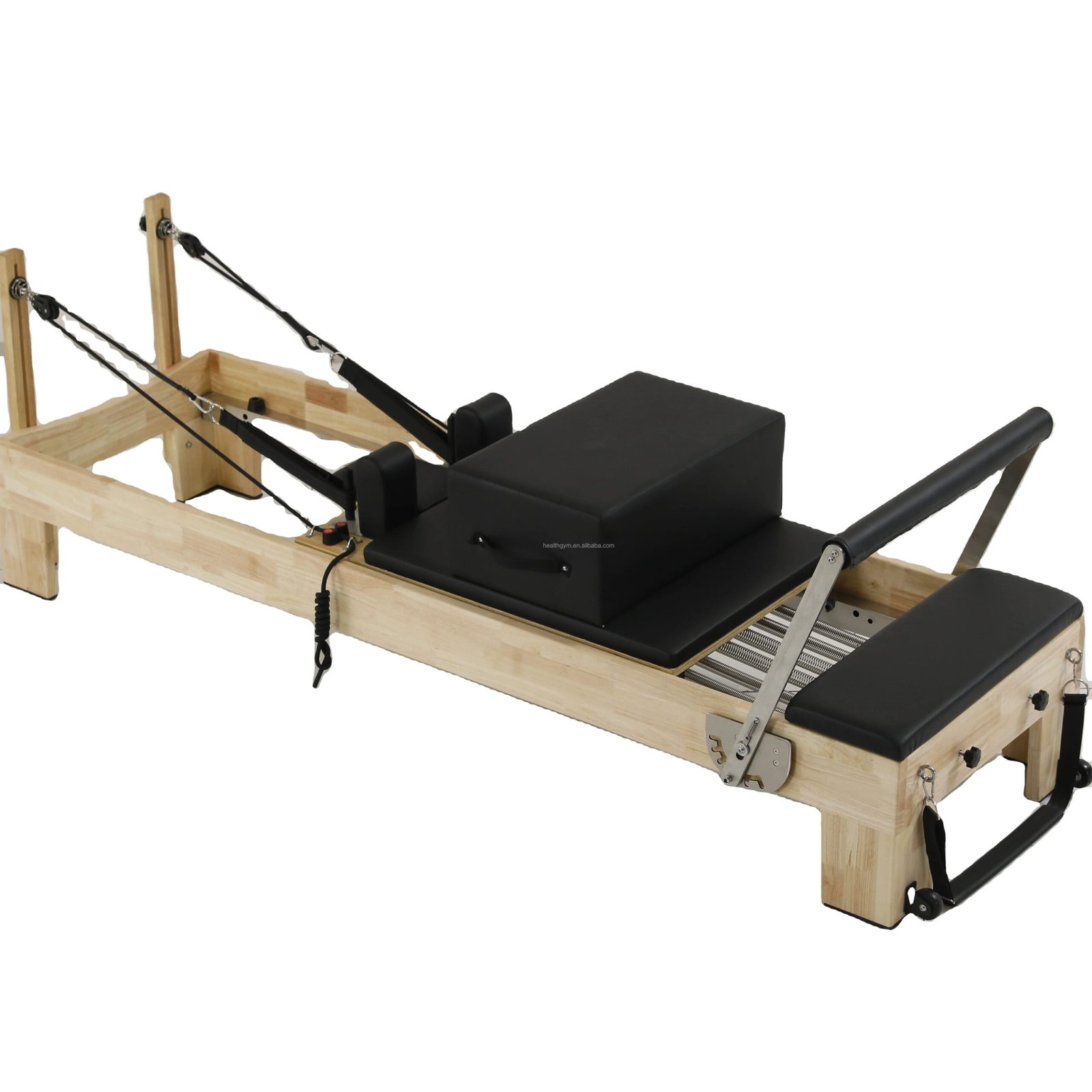
![Foldable Wooden Pilates Reformer for Studio and Wellness Facilities [WARN] draft identifier mismatch](https://bicksport.com/wp-content/uploads/2026/08/foldable-wooden-pilates-reformer-for-studio-and-wellness-facilities-warn-draft-identifier-mismatch-8e325e.webp)
Acoustic Solid-Wood Engineering — A solid wood carriage and frame eliminate motor hum and spring squeak, keeping multi-use wellness floors quiet under back-to-back classes.
Technical Specifications
| Parameter | Value |
|---|---|
| Product Type | Pilates Reformer |
| Model NO. | SRY-20c |
| Material | Wood |
| Color | Solid Color (customizable) |
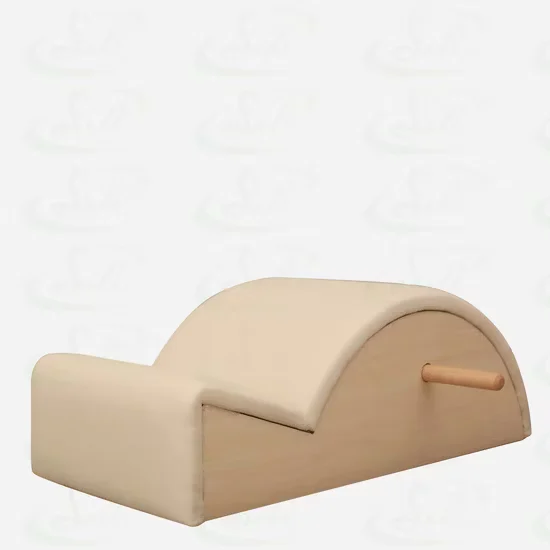
| Accessory | Long Box / Jump Board / Platform |
| Product Dimensions | 2300690580mm |
| Net Weight | 70kgs |
| Foldable | Yes |
| Age Group | Adult |
| Gender | Unisex |
| Certification | ISO 9001, CE |
| Warranty | 3 Years |
| Customization | Available (logo, color, console UI, specification) |
Application Suitability
| Deployment Scenario | Typical Use |
|---|---|
| Boutique Pilates studio | Daily group reformer classes with back-to-back scheduling and premium client expectations |
| Hotel wellness floor adjacent to guest rooms | Low-noise private and semi-private sessions where acoustic bleed triggers complaints |
| Corporate wellness room with shared footprint | Fold-and-store flexibility for multi-purpose rooms that convert between modalities |
| High-end residential home gym | Aesthetically refined equipment in living-adjacent spaces where visual and acoustic quality matter |
| Rehabilitation and physical therapy center | Controlled-resistance movement therapy requiring stable carriage travel and quiet operation |
Why Spring Squeak and Frame Vibration Reach the Front Desk Before Maintenance Does
Solid wood construction removes the two most common noise sources in reformer carriages: motorized drives and metal-on-metal spring anchors.
In a Phuket hotel wellness floor I once equipped, a steel-frame foldable reformer developed carriage rail squeak within weeks of consecutive class use. The spa treatment room directly below filed noise complaints, and the operator had to pull the unit mid-season. That failure is what pushed me into examining how frame material and spring anchoring affect acoustic transmission in shared buildings. A foldable wooden Pilates reformer commercial studio operators choose must address vibration at the source, not with after-the-fact damping pads [NEED_CITE: acoustic transmission through floor slabs in multi-story hospitality buildings]. When wood replaces steel in the primary carriage and frame, the resonance frequency shifts away from the range that travels through concrete subfloors and into occupied rooms below.
Where This Reformer Sits in a Mixed-Modality Studio Layout
This unit covers full-spectrum reformer programming — classical repertoire, contemporary flow, and jump board intervals — across beginner to advanced intensity bands. In a studio cardio-and-strength zone, it complements tower and chair stations by absorbing the highest volume of one-on-one and small-group sessions. The 2300mm length fits standard studio bays, and the foldable frame allows operators to reclaim floor space between class blocks. Users across a wide height and resistance range can train without carriage swap or spring reconfiguration delays. The foldable wooden Pilates reformer commercial studio planners specify for high-throughput rooms benefits from accessory integration that eliminates separate equipment purchases for Long Box, Jump Board, and Platform work.
Continuous Class Scheduling and Room-Level Deployment Constraints
A boutique studio running six to eight group classes daily demands a carriage that travels smoothly from first session to last without mid-day lubrication or spring tension drift. The solid wood frame handles this duty cycle without the thermal expansion issues that affect metal frames in non-climate-controlled rooms [NEED_CITE: wood dimensional stability under continuous humidity fluctuation in fitness environments]. For hotel and residential deployments, the absence of motorized components means zero electromagnetic interference and zero motor-burnout risk, but it also means noise performance depends entirely on carriage rail finish and spring anchor integrity. Ground-floor installations avoid slab-transmitted vibration entirely; upper-floor placements require a level subfloor and isolation pads beneath the four contact points. Facilities planning 3D layouts should account for the 2300mm operational length plus clearance at both ends for Jump Board use and instructor circulation.
Reading the Wood Grade, Joint Method, and Accessory Load Ratings
The frame material listing says "Wood," but commercial durability hinges on whether that wood is laminated hardwood or solid softwood, and whether carriage joints use mortise-and-tenon reinforcement or simple dowel connections. Laminated hardwood resists the repeated lateral load of jump board landings and resists warping under humidity swings common in coastal resort deployments. The foldable mechanism is the highest-wear component: its locking pins and hinge bearings must tolerate thousands of open-close cycles without developing play that introduces rattle during carriage travel. Accessories like the Jump Board and Platform add point loads at the carriage ends, so their attachment hardware and the host frame’s local reinforcement determine whether the platform remains stable under dynamic use. Customization of logo, color, and specification allows facility branding alignment but also lets operators request reinforced joint methods or specific spring tension ranges matched to their client demographic.
The Hidden Cost of Specifying Below Commercial Duty
Operators who select light-duty reformers for high-frequency studios face predictable failures: carriage rail wear that introduces lateral play within months, spring anchor fatigue that produces audible ping under load, and foldable mechanisms that develop hinge slop and compromise locking safety. In hotel settings, these acoustic failures surface as guest complaints before maintenance logs them, forcing reactive equipment swaps during peak season [NEED_CITE: equipment replacement lead time impact on hotel wellness operations]. For rehabilitation centers, carriage play degrades the controlled-resistance precision that therapy protocols depend on, making outcomes harder to track. The cumulative cost of pulling, repairing, and redeploying under-specced units exceeds the initial price differential of commercial-grade construction.
Why This Product Line Holds Up Across Deployment Types
Biketon Sport’s sub-35dB acoustic standard, verified across hotel cardio deployments, extends to this reformer through its motor-free, solid-wood architecture — there is simply no electromechanical noise source to exceed the threshold. The 10,000-hour continuous-operation durability protocol applied to motors and bearings in the cardio range informs the testing regimen for this unit’s carriage rail and foldable mechanism cycle life. Full OEM and ODM capability covers logo, color, console UI, and specification customization at flexible minimums, so a hotel chain can align equipment finish with interior design without separate procurement streams. The 3D layout and airflow planning service addresses reformer placement alongside cardio stations, ensuring instructor sightlines and participant spacing work for the full room, not just this unit in isolation. Round-the-clock technical support means a failed locking pin on a Friday evening gets a response before Saturday’s first class.
Documentation & Test Records
- CE declaration of conformity covering the complete reformer assembly and accessories
- EN 957 test report validating structural load and carriage travel under cyclic use
- ISO 9001 certificate for the manufacturing quality management system
- Noise level test record documenting acoustic output during loaded carriage operation
- Durability test log for foldable mechanism open-close cycle life
- Accessory load testing documentation for Jump Board and Platform attachments
Installation, Commissioning & Maintenance
- Verify 2300mm operational length plus front and rear clearance before final placement
- Level the subfloor and place isolation pads at all four frame contact points
- Inspect foldable mechanism locking pins and hinge bearings before first client use
- Confirm spring tension range matches studio programming and client demographic
- Schedule periodic carriage rail inspection and lubrication per usage volume
- Wipe wood surfaces with pH-neutral cleaner after each session to prevent sweat damage
Requesting the Right Configuration for Your Facility
Share your studio floor plan and planned equipment count so the 3D layout can address reformer spacing, instructor circulation, and airflow in the full room context. Specify your daily class volume to confirm the foldable mechanism and carriage rail are matched to your duty cycle. Identify whether the deployment floor sits above occupied rooms to determine whether isolation pads and subfloor preparation are required. State your target market so spring tension ranges and accessory configurations can align with local training conventions.
Frequently Asked Questions
Q: How does solid wood frame construction compare to steel-frame reformers in noise and durability?
A: Solid wood eliminates motor noise entirely and dampens spring vibration before it reaches the floor slab. Under continuous studio use, laminated hardwood maintains dimensional stability and resists the warping that humidity swings cause in softer materials. Steel frames transmit higher-frequency vibration through anchor points, which becomes audible in rooms below. Wood also avoids the galvanic corrosion that affects metal spring anchors in coastal deployments.
Q: What lifespan should I expect from the foldable mechanism under commercial use?
A: The foldable mechanism endures thousands of open-close cycles before hinge bearings or locking pins require service. Commercial studios folding units between class blocks daily should schedule periodic hinge inspection and lubrication. The locking pins must remain free of play to prevent carriage rattle during use. Replacement parts are available through the standard spare parts list provided at commissioning.
Q: Can the reformer be customized for facility branding and specific resistance needs?
A: Yes. Logo, color, and specification customization are available at flexible minimums, allowing facility branding alignment across an entire equipment order. Spring tension ranges can be specified to match the studio’s client demographic and programming style. Console UI customization applies to any integrated digital components. Lead times vary by customization scope and should be confirmed during the quotation stage.
Q: What accessories are available and how do they integrate with the base platform?
A: The Long Box, Jump Board, and Platform attach directly to the reformer frame using dedicated mounting hardware included with each accessory. The Jump Board requires verified load ratings at the carriage attachment points to ensure stability under dynamic use. All three accessories expand programming range without requiring separate freestanding equipment, preserving floor space in the studio layout.
Q: How does the absence of motorized components affect maintenance and operating cost?
A: Without motors, circuit boards, or electronic drives, there are no electrical components to fail, no firmware to update, and no power supply to maintain. Maintenance focuses on mechanical elements: carriage rail condition, spring anchor integrity, and foldable mechanism wear. This reduces both scheduled maintenance labor and unplanned downtime, lowering total cost of ownership compared to motorized reformer platforms.