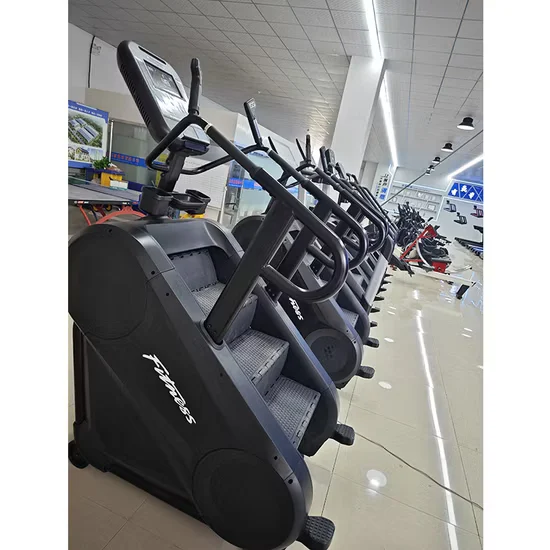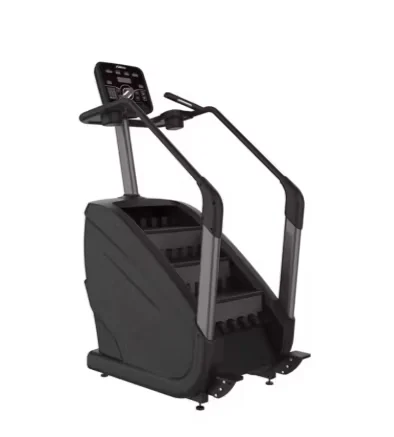
Continuous Duty Verified — Every sq-1017b motor and bearing assembly endures 10,000 hours of continuous load testing before leaving the Shandong facility.
Technical Specifications
| Parameter | Value |
|---|---|
| Designation | sq-1017b |
| Product Type | Stair Climber |
| Function | Electric |
| Speed Range | 15–164 RPM |
| Max User Weight | 200–300 kg (source value — verify against manufacturer catalog) |
| Net Weight | 195 kg |
| Product Dimensions | 2160 × 830 × 1432 mm |
| Material | Aluminium Alloy Pipe + PP Plastic |
| Console Display (OSD) | Steps, Time, Calories, Speed, Heart Rate |
| Input Power Voltage | AC 220V ±10% or AC 110V ±10% |
| Folded | Unfolded |
| Color | Black |
| Certification | CE, RoHS, ISO |
| Quality Guarantee | One Year |
Application Suitability
| Deployment Scenario | Typical Use |
|---|---|
| Hotel fitness center on guest room floors | 24-hour self-service cardio with strict noise constraints |
| Chain gym cardio zone | High-frequency stepping sessions across peak and off-peak hours |
| Corporate wellness room | Moderate daily use by office staff during breaks and after hours |
| High-end residential home gym | Personal training with full speed range and heart rate feedback |
| Sports performance training center | Athlete conditioning with controlled RPM progression |
Why Noise Complaints Reach the Front Desk Before Maintenance Does
A stair climber that hums at conversation level never triggers a guest call.
When a commercial stair climber electric stepping machine operates above occupied hotel rooms, structure-borne vibration travels through floor slabs far more readily than airborne sound. I have seen properties replace entire batches of stepping machines after the first quarter because the motors and drive assemblies generated enough low-frequency resonance to disturb sleepers two floors below [NEED_CITE: structure-borne noise transmission in multi-story hospitality buildings]. The sq-1017b addresses this with a magnetically controlled drive path and an aluminium alloy frame that dampens harmonic transfer. The unit is tested for sub-35 dB operation under the Biketon acoustic protocol, keeping deployment viable even on guest room floors where noise tolerance is measured in complaints, not decibels.
Where This Stepping Machine Fits in a Commercial Cardio Floor
The sq-1017b fills the vertical-loading slot in a balanced cardio zone, complementing treadmills and ellipticals by targeting glute and quad engagement through continuous stepping motion. Its 15–164 RPM range accommodates both steady-state endurance work and high-intensity interval blocks without equipment changeover. The 195 kg net weight and 2160 × 830 mm footprint place it squarely in the commercial class, requiring standard safety clearances on all sides. Users up to the rated capacity can step with stable footing on the reinforced aluminium structure. Heart rate is captured through the console sensors, giving facility operators a basic biometric data point per session.
Continuous Run-Time and Deployment Environment Requirements
A gym cardio zone running from 5 AM to 11 PM demands a motor and bearing package rated for extended duty cycles, not intermittent household use. The sq-1017b is built around an electric drive validated through 10,000-hour continuous operation testing on the production line [NEED_CITE: continuous duty cycle testing methodology for commercial cardio motors]. Noise output stays within limits suitable for deployment beside quiet corridors or above occupied spaces. Dual-voltage input — AC 220V ±10% or AC 110V ±10% — means the same unit ships to markets with different grid standards without a step-down transformer, eliminating a common arrival-day surprise. Installers must ensure a level subfloor and dedicated circuit to maintain consistent motor performance and prevent voltage sag under load.
Electric Drive and Frame Engineering Decoded
The electric drive in the sq-1017b delivers stepless speed adjustment across 15–164 RPM, letting users ramp intensity without the mechanical lag of friction-based systems. Aluminium alloy pipe construction reduces overall mass relative to mild steel while maintaining the rigidity needed for repetitive loading at high user weights — a critical factor when a 200+ kg rated unit must resist frame deflection over thousands of cycles. The console displays steps, time, calories, speed, and heart rate on a single screen, giving users immediate feedback without navigating submenus. Heart rate is read through handlebar sensors, which provide adequate accuracy for general pacing but should be supplemented with chest strap monitors when programming precision intervals [NEED_CITE: handlebar versus chest strap heart rate accuracy in commercial gym settings]. PP plastic shrouds protect internal components from dust and sweat ingress without adding significant weight.
The Hidden Cost of Specifying Below Commercial Grade
I supplied a batch of stepping machines to a hotel property years ago with motors rated for light commercial duty — eight hours daily maximum. Within three months of 24-hour guest access, the motors burned out and the entire shipment was returned. That failure drove our shift to 10,000-hour endurance validation on every commercial drive assembly. Underspecified motors are only one risk: frames that flex under repeated loading generate noise that escalates over time, and consoles without basic data outputs leave facility managers blind to utilization patterns [NEED_CITE: equipment utilization tracking in commercial fitness facilities]. Voltage mismatches discovered after container arrival force costly rewiring or transformer installations. These failures share one root cause — specifying equipment for a use environment it was never engineered to survive.
Why This Product Line Holds Up Under Scrutiny
Every sq-1017b completes 10,000-hour continuous run testing on motors, bearings, and drive assemblies before crating. Sub-35 dB acoustic performance is validated under load, not at idle, matching the conditions the unit will face on a hotel floor or in a busy gym cardio zone. The dual-voltage architecture eliminates transformer dependencies for export deployments. OEM customization extends to console UI, color, and branding, so operators can align the equipment with facility identity. When planning a cardio zone, our team provides 3D layout and airflow planning that accounts for the sq-1017b’s 2160 × 830 mm footprint plus required clearance, ensuring member flow and ventilation are addressed before the first unit arrives. Technical support is available around the clock for commissioning and field troubleshooting.
Documentation & Test Records
- CE declaration of conformity covering electrical safety and EMC requirements
- EN 957 test report validating mechanical and structural performance
- ISO 9001 certificate for manufacturing quality management systems
- RoHS compliance documentation for restricted substance limits
- Noise level test record under continuous load conditions
- Motor specification sheet with duty cycle and thermal ratings
Installation, Commissioning & Maintenance
- Maintain minimum clearance on all four sides of the 2160 × 830 mm footprint for safe user entry and exit
- Level the subfloor and place anti-vibration pads beneath the 195 kg frame to isolate structure-borne noise
- Connect to a dedicated AC 220V or AC 110V circuit matching the ordered configuration to prevent voltage sag
- Run initial calibration at low and high RPM to verify console speed and heart rate sensor accuracy
- Inspect aluminium alloy joints and PP shroud fasteners quarterly for loosening under vibration
- Wipe handlebar heart rate sensors after each shift to maintain conductivity and prevent corrosion
Planning Your Cardio Equipment Inquiry
Share your cardio zone square footage and target unit count so we can generate a 3D layout with airflow planning specific to your space. Specify expected daily operating hours so we confirm the motor duty cycle matches your schedule. Note the deployment floor and adjacent room types to validate acoustic suitability. Confirm your market voltage standard — AC 220V or AC 110V — and indicate whether console data integration with your facility management system is required.
Frequently Asked Questions
Q: What is the difference between an electric stair climber and a manual stepping machine for commercial use?
A: An electric stair climber like the sq-1017b uses a motorized drive to control step speed electronically across a wide RPM range, maintaining consistent resistance regardless of user cadence. Manual stepping machines rely on user-generated momentum, which creates uneven loading on joints and inconsistent training stimulus. For commercial environments with diverse user fitness levels, electric drive ensures predictable performance and reduces mechanical wear from erratic loading patterns.
Q: Can the console data interface with a gym management system?
A: The sq-1017b console displays steps, time, calories, speed, and heart rate in real time. Data integration capability depends on the console configuration selected at order. For facilities requiring session logging or member app synchronization, specify IoT-enabled console options during the OEM customization scoping phase so the correct communication module is installed at the factory.
Q: How reliable is the handlebar heart rate reading during intense stepping sessions?
A: Handlebar sensors provide adequate heart rate feedback for general pacing and moderate-intensity sessions. During high-RPM intervals where hand position shifts frequently, readings may become intermittent. For programming that depends on precise heart rate zones, a chest strap monitor paired with the console — if the selected configuration supports it — delivers more stable and continuous data throughout the workout.
Q: Does the dual-voltage input support global deployment without additional transformers?
A: Yes. The sq-1017b is manufactured to accept either AC 220V ±10% or AC 110V ±10% based on the destination market. The correct voltage configuration is set at the factory according to your order specification. Confirming your local grid standard during inquiry prevents arrival-day electrical mismatches and eliminates the need for external step-down or step-up transformers at the installation site.
Q: What maintenance schedule should a commercial facility follow for this stair climber?
A: Inspect aluminium frame joints, fasteners, and PP shroud mounts quarterly for vibration-induced loosening. Clean handlebar heart rate sensors daily to maintain conductivity. Verify drive belt tension and motor mounting bolts every six months under high-frequency use. Keep the console firmware updated if IoT features are enabled. Replace wear components per the spare parts list provided with your shipment documentation.
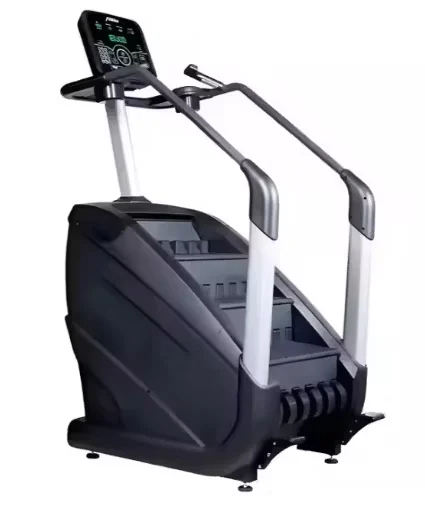
![Smart Adjustable Commercial Electric Stair Climber Stepping Machine for Home and Gym Use [WARN] draft identifier mismatch](https://bicksport.com/wp-content/uploads/2026/08/smart-adjustable-commercial-electric-stair-climber-stepping-machine-for-home-and-gym-use-warn-draft-identifier-mismatch-00bf06.webp)