
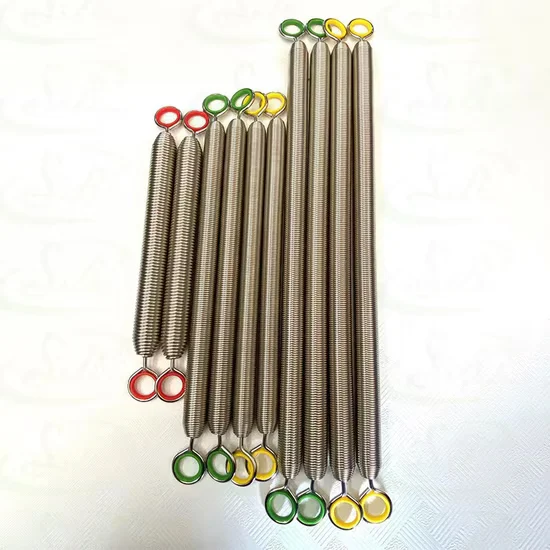
Whisper-Quiet Linear Resistance — stainless steel spring core engineered for sub-audible rebound cycles in noise-sensitive studio environments.
Technical Specifications
| Parameter | Value |
|---|---|
| Product Type | Pilates Accessory / Stretch Spring |
| Specification | 2.225450mm |
| Net Weight | 1.2kgs |
| Material | Stainless Steel |
| Color | Solid Color |
| Hook Design | Removable Hook |
| Logo | Customized Is Allowed |
| Target User | Adult, Unisex |
| Warranty | 3 Years |
| Production Capacity | 80000 Pieces/Month |
Application Suitability
| Deployment Scenario | Typical Use |
|---|---|
| hotel fitness center on guest room floors | low-noise stretching and Pilates corner equipment maintenance |
| chain gym Pilates studio | high-frequency spring replacement across reformer and tower units |
| rehabilitation center | controlled linear resistance for guided therapeutic stretching protocols |
| high-end residential home gym | quiet stretch zone accessory for daily flexibility routines |
| commercial gym stretching zone | durable pull spring for functional training and cool-down areas |
Why Metal Fatigue Complaints Reach Studio Managers Before Maintenance Does
Stainless steel spring stock eliminates the oxidation-driven noise and resistance drift that plague carbon steel alternatives.
In hotel Pilates corners and shared residential fitness rooms, a spring that squeaks or loses tension mid-session generates complaints faster than any other component failure. I once swapped an entire set of carbon steel springs in a five-star property because the low-frequency twang during evening sessions carried through the floor slab into occupied suites below [NEED_CITE: acoustic transmission of spring resonance through concrete floor assemblies]. The replacement cycle cost the operator downtime across every reformer on the floor. A commercial Pilates stretch pull spring built from stainless steel with a removable hook solves both the noise and the serviceability problem at once.
Where This Spring Fits in a Commercial Pilates Zone
This stretch pull spring serves as the primary tension element across reformer carriages, tower attachments, and standalone stretching stations. It covers low-to-moderate resistance ranges that support flexibility work, rehabilitation protocols, and controlled eccentric loading sequences. In a mixed cardio-and-mind-body facility, the spring complements larger apparatus by providing portable, swappable resistance modules that adapt to different class formats and user strength levels. The 450mm length and 25mm diameter suit standard reformer mounting points, while the unisex load rating accommodates the full spectrum of studio clientele. The commercial Pilates stretch pull spring removable hook stainless steel configuration allows maintenance staff to swap individual springs without pulling the entire carriage assembly offline.
Continuous Deployment Demands and Environmental Tolerances
In a busy hotel fitness center operating from early morning through late evening, a single reformer station may cycle through hundreds of spring engagements per day [NEED_CITE: duty cycle expectations for Pilates springs in commercial hospitality environments]. The stainless steel composition resists corrosion from ambient humidity and perspiration aerosol that accumulate in enclosed studio spaces, particularly in tropical or coastal resort deployments. Noise transmission through the spring’s anchor point into the reformer frame must remain below the threshold where guests in adjacent rooms notice metallic resonance. Facilities on upper floors benefit from the spring’s inherent damping characteristics, which limit structure-borne vibration compared to stiffer carbon steel stock. Voltage and power considerations do not apply here, but deployers should verify that the removable hook’s locking mechanism remains secure under the lateral loads typical of tower-mounted configurations.
How Stainless Steel Wire Gauge and Hook Geometry Deliver Predictable Tension
The 2.2mm wire diameter paired with a 25mm outer coil diameter produces a spring rate that increases linearly through the working range, avoiding the sudden resistance spikes common in poorly wound carbon steel springs. Stainless steel’s higher fatigue limit means the spring maintains its original force-deflection curve across thousands of cycles without the progressive sag that forces premature replacement. The removable hook design decouples the attachment point from the spring body, so when the hook’s gate mechanism wears from repeated clipping and unclipping, staff replace only the hook rather than scrapping the entire spring. This separation also allows facilities to standardize on one spring specification while sourcing hooks in different finishes or gate widths to match existing reformer hardware. The solid color coating option protects against surface micro-pitting in high-humidity environments without altering the spring’s acoustic signature during extension and recoil.
What Happens When Spec Compromises Go Unnoticed Until Guest Feedback
Carbon steel springs in commercial Pilates deployments develop surface oxidation within months, and the resulting friction between corroded coils generates audible scraping during every controlled release. Studio operators often respond by increasing lubrication frequency, which transfers oily residue to user contact points and creates a secondary complaint cycle [NEED_CITE: maintenance frequency comparison between stainless and carbon steel springs in studio environments]. When hooks are permanently swaged rather than removable, a single bent gate forces the entire spring out of service, inflating spare parts inventory and increasing equipment downtime. In hotel properties where the Pilates area shares a wall with guest corridors, the cumulative effect of multiple degraded springs produces a background metallic chatter that guests attribute to general facility decline rather than a specific fixable component.
Why This Product Line Addresses Studio Procurement Gaps
The stainless steel construction has been validated in deployments where acoustic performance is non-negotiable, including hotel fitness centers on guest room floors where every decibel of equipment noise travels through shared structural elements. The 10,000-hour durability benchmark applied across the broader commercial range informs the spring’s cycle-life engineering, ensuring it outlasts the service intervals of the apparatus it mounts to. OEM customization extends to color and logo application, letting chain operators maintain visual brand consistency across every studio location without sourcing from multiple suppliers. The full six-series cardio and mind-body equipment family means facilities can consolidate spring and accessory orders with their primary apparatus procurement, simplifying vendor management. Free 3D layout planning covers spring storage and accessory staging within the Pilates zone footprint, ensuring replacement inventory stays accessible without cluttering the training floor.
Documentation & Test Records
- CE declaration of conformity covering spring material safety and hook load ratings
- EN 957 test report validating resistance consistency and structural integrity
- ISO 9001 certificate for manufacturing quality management systems
- Material composition certificate confirming stainless steel grade and corrosion resistance
- Spring fatigue test record documenting cycle count and force retention curves
- Hook detachment force and locking reliability test documentation
Installation, Commissioning & Maintenance
- Verify hook gate orientation matches reformer anchor slot geometry before first clip-in
- Inspect removable hook locking mechanism monthly for gate spring tension retention
- Wipe stainless steel coils with dry microfiber after each studio session to remove perspiration residue
- Replace hook component independently when gate wear exceeds smooth engagement threshold
- Store spare springs horizontally in climate-controlled inventory to prevent coil deformation
- Cross-reference spring length and diameter markings against apparatus manufacturer specifications
Matching Spring Specifications to Your Facility Requirements
Provide your studio floor plan and current apparatus list to receive a detailed accessory specification map that aligns spring count and placement with your class schedule density. Specify the average daily session count per reformer station so the spring’s duty cycle can be matched to your operational tempo. Identify whether your deployment floor shares structural elements with occupied guest rooms to confirm acoustic requirements. State your target market for any branding or color customization needs tied to your chain’s visual identity standards.
Frequently Asked Questions
Q: How does stainless steel compare to carbon steel for noise and longevity in a busy Pilates studio?
A: Stainless steel resists surface oxidation that causes carbon steel coils to scrape audibly during extension. The material’s higher fatigue limit maintains consistent resistance across far more cycles before measurable force degradation occurs. In hotel studio environments where evening noise travels through floor assemblies, the acoustic difference between corroded carbon springs and intact stainless springs becomes the deciding factor in guest satisfaction scores.
Q: What tools are required to swap the removable hook, and how often should it be inspected?
A: Standard needle-nose pliers and a flat-head driver handle the hook exchange without specialized bench equipment. Monthly visual inspection of the gate spring mechanism catches early wear before the hook develops play that could release under load. In studios running back-to-back group reformer classes, increasing inspection frequency to every two weeks prevents unexpected hook failure during peak usage windows.
Q: How do I match spring resistance levels to different reformer models in a mixed-equipment studio?
A: Spring resistance depends on wire diameter, coil count, and free length rather than a universal sizing standard. Measure the existing spring’s outer diameter and unloaded length, then cross-reference the force-deflection curve against the apparatus manufacturer’s published specifications. When outfitting a studio with multiple reformer brands, ordering sample springs for physical fit testing before committing to bulk quantities eliminates costly mismatches.
Q: What is the minimum order for custom color and logo application on these springs?
A: Custom color coating and logo imprinting require a production run that aligns with the facility’s rollout timeline and the coating line’s batch scheduling. The OEM team confirms the exact minimum order quantity after reviewing your brand artwork and color reference files. Requesting a single pre-production sample for visual approval ensures the finished product matches your studio’s design standards before the full batch enters production.


![Aluminum Alloy Pilates Reformer Machine for Studio Training [WARN] draft identifier mismatch](https://bicksport.com/wp-content/uploads/2026/08/aluminum-alloy-pilates-reformer-machine-for-studio-training-warn-draft-identifier-mismatch-4955d0.webp)
![Commercial Aluminum Pilates Reformer with Box Jump Board for Studio [WARN] draft identifier mismatch](https://bicksport.com/wp-content/uploads/2026/08/commercial-aluminum-pilates-reformer-with-box-jump-board-for-studio-warn-draft-identifier-mismatch-f6d379.webp)