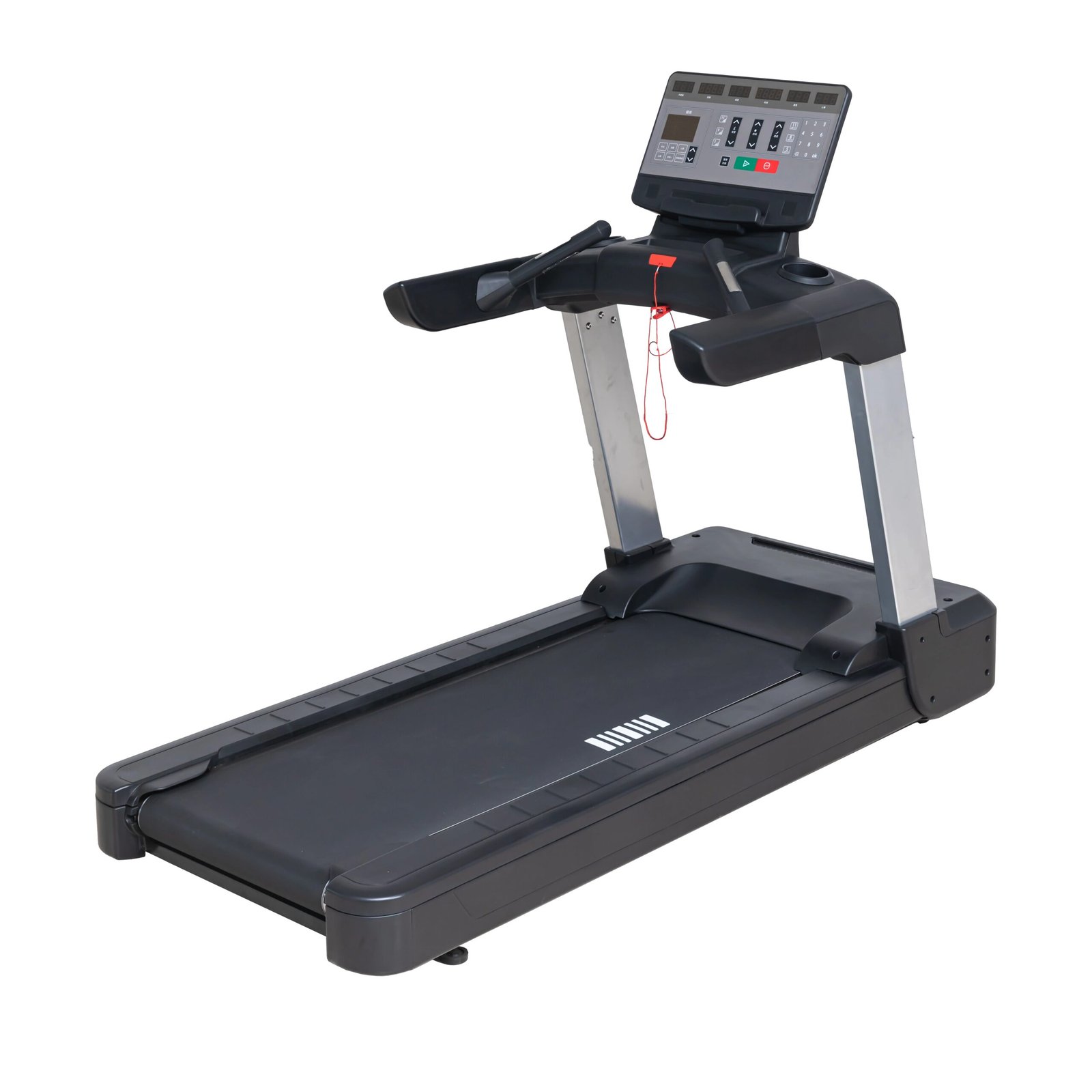
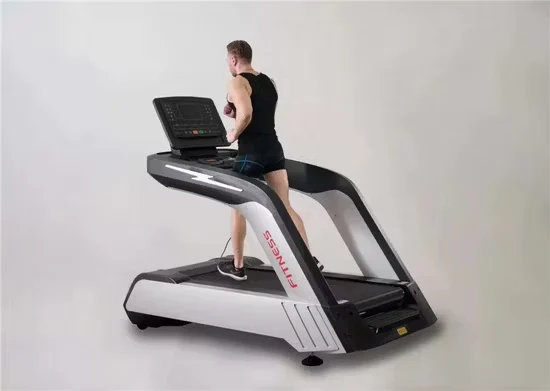
Acoustic Engineering — The MT296 pairs a DC motor with a foldable chassis, targeting residential zones where vibration and clearance dictate every placement decision.
Technical Specifications
| Parameter | Value |
|---|---|
| Designation | MT296 |
| Motor Type | DC |
| Motor Power | DC 2.0 HP (peak or continuous not specified in source) |
| Speed Range | 1–20 km/h |
| Running Surface | 1200 × 520 mm |
| Console Type | LCD (Speed / Distance / Time / Calories / Pulse) |
| Programs | 16 preset programs |
| Heart Rate | Handgrip pulse sensor |
| Foldable | Yes |
| Product Unfold Size | 1580 × 865 × 1300 mm |
| Product Folded Size | 910 × 865 × 1345 mm |
| Net Weight | 64.0 kg |
| Material | ABS |
| Certification | CE, RoHS |
| OEM / ODM Custom | Available |
Application Suitability
| Deployment Scenario | Typical Use |
|---|---|
| High-end residential home gym | Daily walking and jogging in apartments where fold-away storage is required between sessions |
| Corporate wellness room | Compact cardio station for employees during breaks, stowed when the room serves other functions |
| Boutique studio warm-up zone | Low-profile unit for member warm-up before group classes, positioned against a wall when not in use |
What Peak Horsepower Conceals About Continuous Duty in a Foldable Home Treadmill DC Motor
Confirm continuous duty rating before assuming daily runtime capacity.
When a motor plate reads DC 2.0 HP without specifying whether that figure is peak or continuous, the real-world output under sustained load can fall well below expectation. I once inspected a batch of residential-grade units deployed in a hotel fitness corner — the motors ran hot within weeks because the duty cycle was designed for short bursts, not back-to-back guest sessions. A foldable home treadmill DC motor rated only at peak output will draw higher current to maintain belt speed under load, accelerating brush wear and thermal degradation [NEED_CITE: motor duty cycle classification for continuous commercial operation]. Asking the manufacturer for the continuous horsepower figure and the corresponding test duration eliminates this guesswork before the purchase order is signed.
Where the MT296 Fits in a Mixed Cardio Floor Plan
This unit covers steady-state walking through moderate-speed jogging across its 1–20 km/h range, addressing the most common warm-up and active-recovery intensity zones. In a compact cardio layout it complements ellipticals and rowing machines by providing a belt-driven linear movement pattern without demanding a dedicated footprint — the foldable frame reclaims floor space when the zone transitions to functional training or group sessions. The 1200 × 520 mm running surface accommodates users of average stride length comfortably, while the handgrip pulse sensor supplies basic heart rate feedback for effort monitoring. Its foldable home treadmill DC motor configuration suits environments where the equipment must coexist with occupied rooms directly above or beside it.
Noise Transmission and Residential Deployment Constraints
Daily runtime expectations should stay within what a DC motor at this class can sustain without excessive thermal buildup; continuous shifts exceeding a few hours warrant a larger commercial unit. In apartment floors or hotel-adjacent corridors, structure-borne vibration travels further than airborne noise — placing the unit on a dense rubber isolation mat decouples the frame from the slab and reduces transmitted impact noticeably. Adequate clearance around the motor housing supports convective cooling, so positioning the foldable home treadmill DC motor flush against a wall without lateral gap invites heat soak during longer sessions [NEED_CITE: EN 957 requirements for residential cardio equipment ventilation]. Voltage and plug configuration must match the target market before the unit leaves the production line, because adapter-based workarounds introduce connection resistance and potential failure points.
DC Drive Characteristics and Console Feedback at This Price Point
DC motors in home-grade equipment deliver smooth low-speed starts and generally operate at lower acoustic output than comparably rated AC units, making them the default choice for living-space deployments. The trade-off is that DC brushes are a wear component absent in brushless AC designs, so the expected service interval shortens under heavy use. The onboard LCD presents speed, distance, time, calories, and pulse across 16 preset programs — it provides structured session tracking without Bluetooth or app connectivity, which means workout data remains on-device rather than syncing to external platforms. Handgrip pulse sensors offer convenient spot-checks but introduce motion artifact during higher-speed running; users who need continuous heart rate accuracy during intervals should pair a compatible chest strap if the console supports telemetry input. The foldable frame hinge introduces a structural joint that, while engineered for repeated cycling, will never match the torsional rigidity of a welded commercial frame at top speed.
The Hidden Cost of Specifying Below the Application’s Duty Cycle
Deploying a motor rated for intermittent home use in a setting where multiple users log consecutive sessions accelerates brush wear and winding insulation breakdown, often surfacing as mid-shift shutdowns within months. Noise complaints in shared residential buildings tend to arrive at property management before maintenance staff notices the problem, leading to wholesale equipment replacement rather than targeted repair. When the console cannot export usage data, facility operators lose visibility into peak-hour utilization patterns and cannot plan preventive maintenance around actual runtime — they end up scheduling service by calendar instead of by wear [NEED_CITE: cardio equipment utilization data gaps in managed facilities]. Voltage mismatches discovered after delivery force entire shipments into rework or adapter dependency, neither of which inspires buyer confidence.
Why This Product Line Earns Its Placement
Every unit in this cardio family undergoes 10,000-hour durability testing on motors, frames, and bearings, so the MT296 benefits from the same validation protocol applied to larger commercial models. Sub-35 dB operation has been verified in hotel floor deployments, giving buyers of the foldable home treadmill DC motor a documented noise baseline for shared-space installations. OEM customization extends to console UI language, color, and branding, while the six-series product range lets a facility source treadmills, ellipticals, bikes, rowers, stair climbers, and spinning bikes from one production line. Our team provides a free 3D cardio-zone layout that accounts for the MT296’s folded and unfolded footprint, required safety clearances, and airflow paths — ensuring the foldable mechanism has room to cycle without hitting adjacent walls or furniture. Technical support responds around the clock with spare parts sourcing to keep downtime short.
Documentation & Test Records
- CE declaration of conformity covering the MT296 electrical safety and EMC requirements
- EN 957 test report validating structural load and safety mechanisms
- ISO 9001 certificate for the manufacturing quality management system
- RoHS compliance record for restricted substance limits in electronic components
- Noise level test report with measured dB values at representative speeds
- Durability test record documenting motor and frame performance over extended operation
Installation, Commissioning & Maintenance
- Maintain minimum clearance on all sides of the MT296 to allow fold-cycle movement and motor ventilation
- Place a high-density rubber isolation mat beneath the frame to dampen vibration transfer to the floor slab
- Verify the site voltage matches the motor plate rating before powering on; use a dedicated circuit for the foldable home treadmill DC motor
- Run a calibration cycle at low speed after first assembly to confirm belt tracking and LCD sensor readings
- Inspect belt tension and apply manufacturer-approved lubricant at intervals stated in the commissioning guide
- Wipe the LCD console and handgrip sensors after each session to prevent sweat-induced corrosion
Equipment Selection and Layout Inquiry
Provide your cardio zone dimensions and unit count to receive a 3D layout with airflow planning that positions the MT296 and companion units for clear sightlines and member flow. Specify expected daily runtime per unit so we can confirm whether the DC motor duty cycle matches your operational pattern, and indicate the deployment floor and adjacent room types to finalize noise isolation recommendations. State your target market voltage and plug standard early to avoid post-production rework, and let us know whether console data export is needed so we can scope connectivity options before the proforma invoice is issued.
Frequently Asked Questions
Q: What is the difference between continuous duty and peak horsepower in DC treadmill motors?
A: Peak horsepower is the maximum output a DC motor can deliver for a brief surge, while continuous duty is the sustained output it can maintain without overheating. A foldable home treadmill DC motor rated only at peak may struggle during longer sessions at higher speeds or inclines. Always request the continuous duty figure from the manufacturer to match expected daily runtime.
Q: How does a foldable treadmill frame affect stability and vibration at higher speeds?
A: A folding hinge introduces a structural joint that cannot replicate the torsional rigidity of a fully welded commercial frame. At higher speeds, this joint can transmit more vibration to the running surface and the floor beneath. Proper placement on an isolation mat and adherence to the manufacturer’s maximum speed recommendation help manage the difference.
Q: Can the LCD console connect to external apps or facility management software?
A: The MT296 LCD console displays real-time workout metrics including speed, distance, time, calories, and pulse, but Bluetooth and app connectivity are not specified in the current configuration. Facilities requiring data integration should confirm available output protocols with the manufacturer before placing an order, as OEM customization may address this need.
Q: What heart rate monitoring options are available, and how do handgrip sensors compare to chest straps?
A: The MT296 uses handgrip pulse sensors that provide convenient spot-check readings when the user holds the rails. However, grip pressure variation and motion during running introduce signal artifact. Chest straps using telemetry deliver more stable continuous readings, which matter when programming interval sessions that depend on accurate heart rate zones.
Q: What noise and vibration considerations apply when deploying a foldable treadmill in residential or shared spaces?
A: Structure-borne vibration transmits through floor slabs more readily than airborne motor noise, so a dense rubber isolation mat is strongly recommended. The foldable home treadmill DC motor runs quieter than many AC equivalents at low speeds, but confirming the unit’s measured dB level at typical operating speed ensures it meets the acoustic threshold of the surrounding occupied rooms [NEED_CITE: acoustic threshold standards for cardio equipment in multi-occupancy buildings].
![W08 Electric Folding Treadmill for Cardiopulmonary Function Training [WARN] draft identifier mismatch](https://bicksport.com/wp-content/uploads/2026/08/w08-electric-folding-treadmill-for-cardiopulmonary-function-training-warn-draft-identifier-mismatch-e07899.webp)