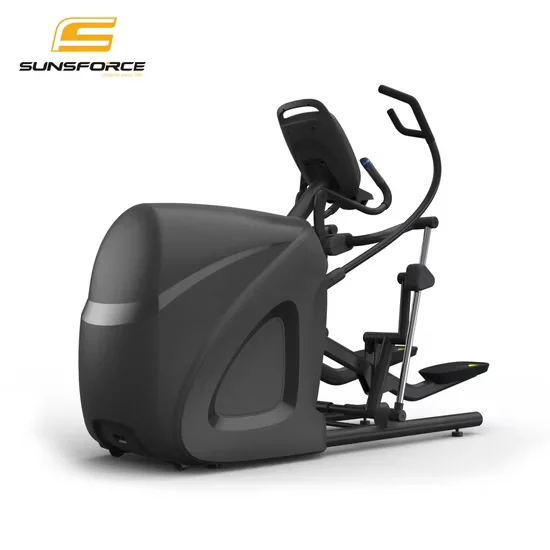
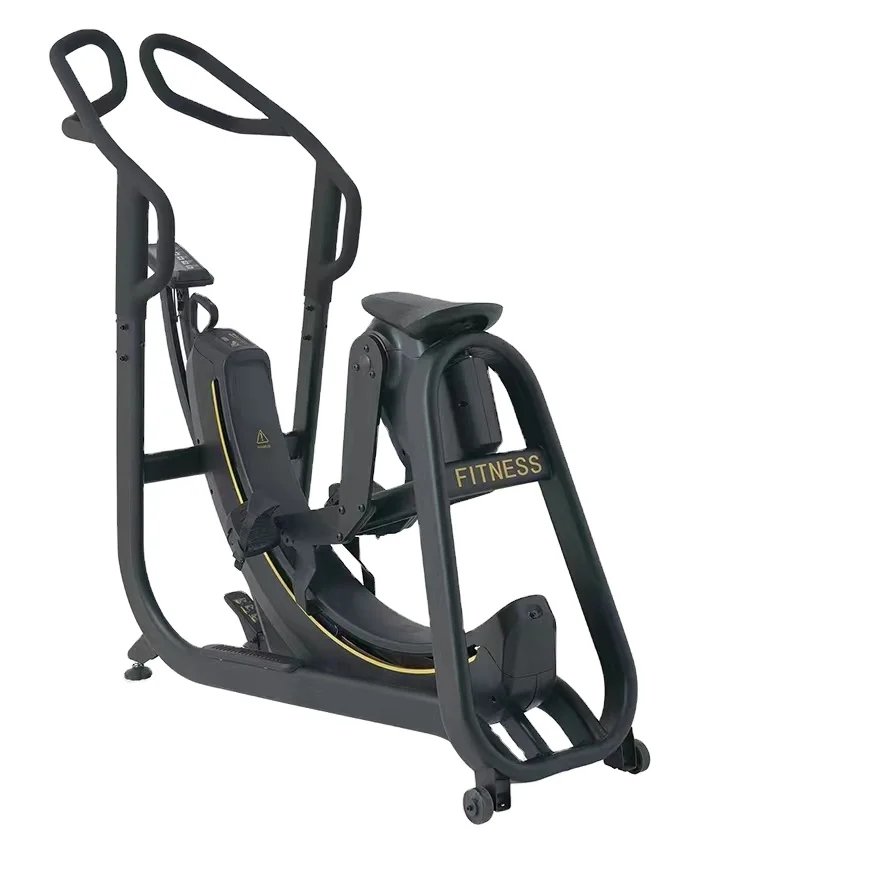
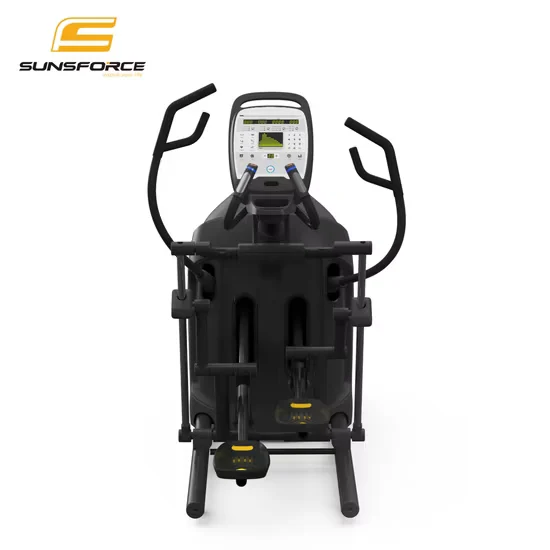
![Elliptical LED Screen Commercial Gym Fitness Equipment Crosstrainer [WARN] draft identifier mismatch](https://bicksport.com/wp-content/uploads/2026/08/elliptical-led-screen-commercial-gym-fitness-equipment-crosstrainer-warn-draft-identifier-mismatch-405954.webp)
Acoustic-Optimized Engineering — Magnetic resistance drive verified for sub-35dB output, enabling deployment directly above occupied hotel suites and shared residential floors without generating noise complaints.
Technical Specifications
| Parameter | Value |
|---|---|
| Designation | CTC60 |
| Product Type | Elliptical Trainer |
| Console Type | LED |
| Resistance Type | Magnetic |
| Resistance Level | 1-25 |
| Stride Grade | 1-10 |
| Step Depth Grade | 1-15 |
| Pedal Center Distance | 230mm |
| Drive Type | Magnetic flywheel |
| Max User Weight | 180kg |
| Product Dimensions | 21207901680mm |
| Net Weight | 240kg |
| Certification | ISO, RoHS, CE, EN 957 |
Application Suitability
| Deployment Scenario | Typical Use |
|---|---|
| hotel fitness center on guest room floors | 24-hour access cardio for guests requiring whisper-quiet operation near sleeping areas |
| chain gym cardio zone | High-frequency continuous use during peak morning and evening hours |
| corporate wellness room | Low-impact joint-friendly exercise available throughout the workday |
| high-end residential home gym | Shared facility equipment serving multi-family complexes without acoustic disturbance |
| sports performance training center | Steady-state conditioning and active recovery sessions for athletes |
Why Magnetic Resistance Matters When the Room Below Is Occupied
Zero-contact resistance eliminates friction-based noise at the source, keeping output below ambient conversation levels even during high-intensity intervals.
When a front desk receives a noise complaint at 2 AM from a guest whose suite sits directly beneath the fitness center, the maintenance team traces the source to the elliptical trainer running its evening self-lubrication cycle or a late-night user [NEED_CITE: acoustic transmission through floor assemblies in commercial hospitality environments]. Home-grade magnetic systems often suffer resistance drift and bearing degradation under continuous public use, forcing operators into reactive replacement cycles rather than planned maintenance windows. The commercial elliptical trainer magnetic resistance LED console architecture addresses this by removing physical contact points from the braking system entirely.
Low-Impact Conditioning Across the Full Intensity Spectrum
The 25-level magnetic resistance range covers rehabilitation-grade minimal loading through high-intensity interval resistance without requiring mechanical adjustment between users. Within a mixed cardio zone, this commercial elliptical trainer magnetic resistance LED console pairs logically with treadmills for users seeking impact-free alternatives, while the adjustable stride and step depth grades accommodate varying femur lengths and mobility ranges. The 180kg user capacity and 230mm pedal center distance support a broad demographic without compromising pedal stability under lateral load.
Continuous Duty Requirements for 24/7 Deployment Environments
Equipment on hotel guest floors or in apartment amenity spaces operates without scheduled downtime, meaning the drive system must sustain near-continuous load across varied user weights and resistance selections [NEED_CITE: continuous duty cycle standards for commercial fitness equipment in hospitality settings]. The 240kg net weight anchors the frame against harmonic vibration that would otherwise transmit through structural flooring to occupied rooms below. Adequate lateral clearance and subfloor leveling remain critical to prevent resonant frequency transfer, while the electrical circuit must match local voltage and amperage standards before the container clears customs.
Magnetic Drive and Structural Mass: Engineering Rationale
Magnetic resistance generates braking force through proximity rather than contact, producing a linear resistance curve that remains consistent regardless of ambient temperature or humidity levels — a critical factor in unclimate-controlled amenity spaces. The sealed bearing specification eliminates the need for periodic lubrication schedules that friction-based systems demand, directly reducing scheduled maintenance hours. The 240kg net weight functions as passive vibration damping; mass absorbs the residual oscillation from pedal stroke inertia before it reaches the floor structure. LED console output provides core training metrics — elapsed time, distance, stride count, resistance level, heart rate — with the option for OEM interface customization to align with facility branding or management software protocols.
What Specifying Undersized Components Costs in Practice
Operators who source residential-rated ellipticals for commercial environments typically encounter bearing failure within months, as the sealed components were never designed for the thermal and mechanical load of continuous public rotation [NEED_CITE: mean time between failure comparisons for residential versus commercial sealed bearings]. Noise complaints in mixed-use residential buildings generate tenant friction and potential lease liability, forcing emergency equipment swaps that disrupt the cardio zone layout. Data stranded on equipment that cannot interface with facility management software leaves operators without usage analytics to justify capital allocation or predict maintenance windows.
Why This Product Line Matches Commercial Deployment Constraints
Sub-35dB acoustic output has been validated in actual hotel floor deployments where equipment operates directly above sleeping quarters, not merely in laboratory isolation chambers. The 10,000-hour durability testing protocol covers motors, frames, and bearings under simulated continuous load, establishing a maintenance baseline rather than a theoretical maximum. The complete six-series cardio family allows a single facility to source treadmills, bikes, ellipticals, rowers, stair climbers, and spinning units from one engineering platform, simplifying spare parts inventory and service contracts. OEM customization extends to the console UI, enabling operators to embed facility branding or integrate with existing member management systems. The 240kg footprint and 2120mm length inform the 3D cardio zone layout service, which accounts for user clearance, airflow corridors, and sightlines when planning equipment density.
Documentation & Test Records
- CE declaration of conformity for European market compliance
- EN 957 test report covering structural and safety requirements for commercial cardio
- ISO 9001 certificate documenting manufacturing quality management
- Noise level test report validating sub-35dB operation under load
- 10,000-hour durability test record for drive system and bearings
- Console technical documentation with data interface specifications
Installation, Commissioning & Maintenance
- Maintain minimum 600mm lateral clearance on both sides of the 790mm frame width for user ingress and service access.
- Verify subfloor levelness within tolerance before anchoring; the 240kg mass amplifies vibration transfer if the unit rocks on an uneven surface.
- Confirm voltage and plug standard match local supply before connecting the LED console to facility power.
- Calibrate stride grade and step depth range during initial commissioning to verify full adjustment travel.
- Schedule sealed bearing inspection at intervals specified in the maintenance guide; magnetic resistance requires no lubrication adjustment.
- Apply UV-stable cleaner to console housing; avoid solvent-based products that degrade LED panel seals.
Planning the Deployment Conversation
Facility operators specifying this commercial elliptical trainer magnetic resistance LED console should provide the cardio zone square footage and planned unit count to receive a 3D layout accounting for user flow, sightlines, and HVAC clearance. Confirming the target deployment floor and adjacent room types allows acoustic matching verification against the sub-35dB specification. Voltage and plug standard for the destination market must be established before production to avoid customs or commissioning delays.
Frequently Asked Questions
Q: How does magnetic resistance differ from friction-based systems in maintenance requirements?
A: Magnetic resistance generates braking force through proximity rather than physical contact, meaning there are no brake pads to replace or friction surfaces to degrade over time. The sealed bearing specification eliminates lubrication schedules that friction systems require, reducing planned maintenance hours. This architecture maintains consistent resistance output regardless of accumulated operating hours, making it suitable for continuous-duty commercial environments.
Q: What structural differences separate commercial ellipticals from residential models?
A: Commercial units feature reinforced steel frames and sealed bearings rated for continuous high-frequency operation rather than intermittent home use. The 240kg net weight in this specification provides passive vibration damping critical for deployment on upper floors. Components undergo extended durability testing under simulated continuous load, establishing realistic maintenance intervals rather than theoretical lifespan estimates.
Q: Can the LED console interface with facility management or member tracking systems?
A: The LED console provides core training data output with OEM customization available for UI configuration and data interface protocols. Operators seeking integration with specific facility management software should request the console technical documentation during specification review to verify compatibility with their existing system architecture before confirming the order.
Q: How does equipment placement affect noise transmission to adjacent rooms?
A: Deploying cardio equipment on floors above occupied spaces requires attention to structural vibration transfer, not just airborne noise. The 240kg unit mass and magnetic drive minimize acoustic output, but subfloor levelness, lateral clearance, and proximity to structural load paths all influence what reaches the room below. A 3D layout service accounts for these variables when planning equipment positioning.