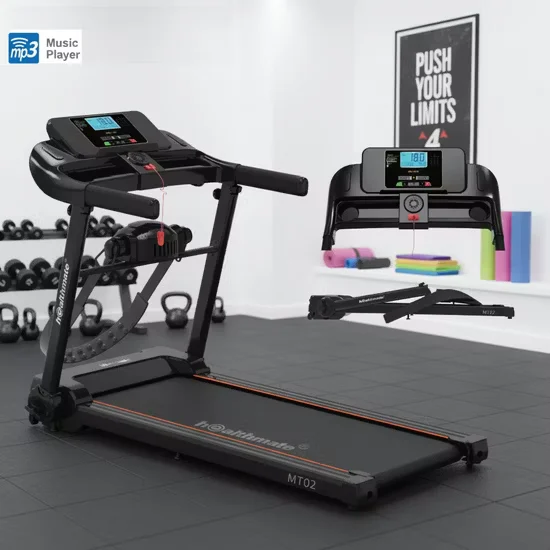
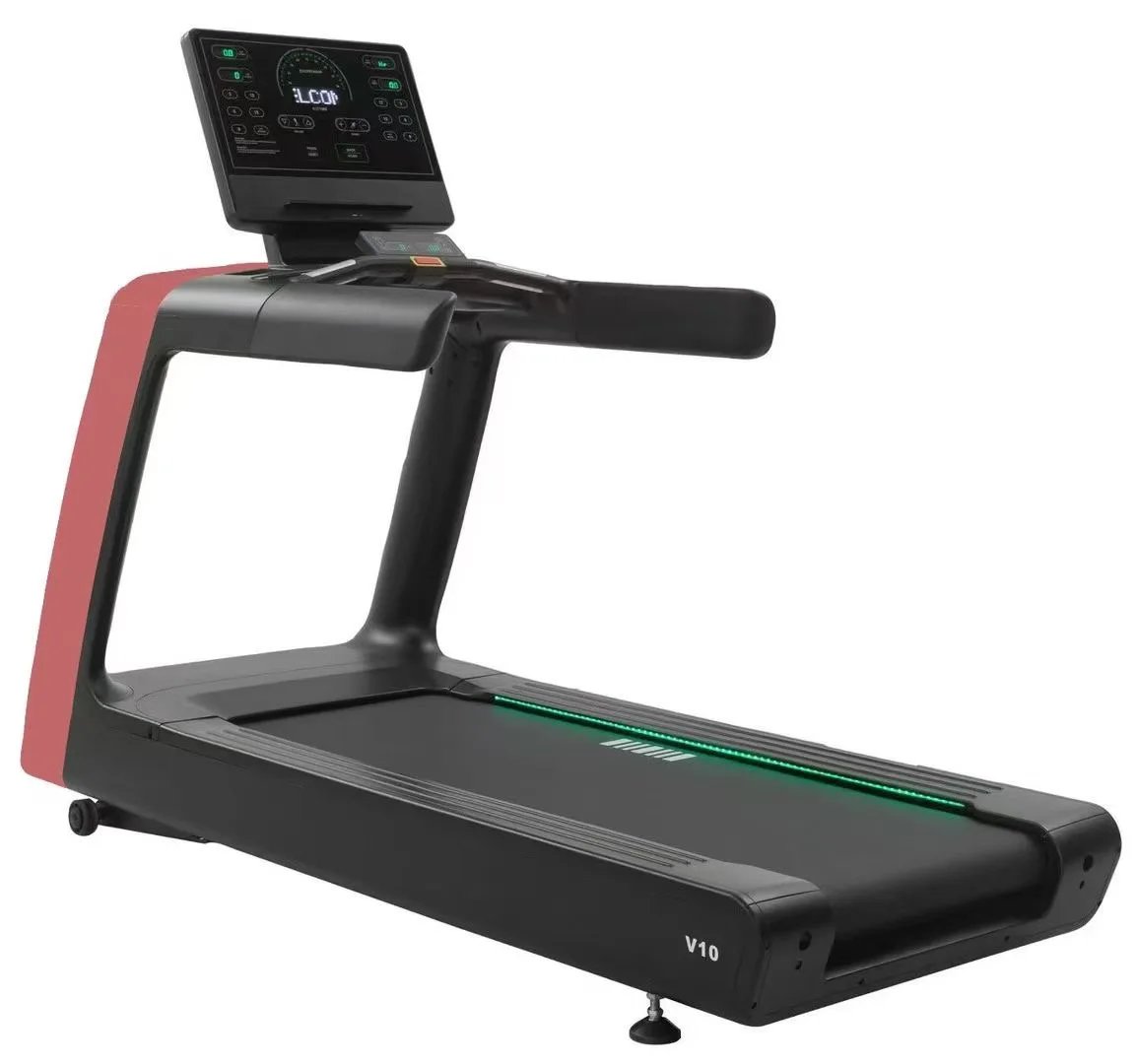
Quiet DC Drive — The MT026M uses a brushed DC motor with a foldable steel frame, delivering manageable acoustic output for apartments and shared residential fitness rooms.
Technical Specifications
| Parameter | Value |
|---|---|
| Designation | MT026M |
| Product Type | Foldable Treadmill |
| Motor Type | DC |
| Motor Power | 1.5 HP (peak or continuous not specified in source) |
| Speed Range | 1–12 km/h |
| Running Surface | 1200 x 460 mm |
| Console Type | LCD (Speed / Distance / Time / Calories / Pulse) |
| Programs | 12 |
| Foldable | Yes |
| Product Unfold Size | 1465 x 750 x 1150 mm |
| Product Folded Size | 1465 x 750 x 390 mm |
| Net Weight | 46.0 kg |
| Material | ABS |
| Certification | CE, RoHS |
Application Suitability
| Deployment Scenario | Typical Use |
|---|---|
| High-end residential home gym | Daily walking and light jogging in compact living spaces |
| Apartment-based personal training studio | One-on-one coached sessions with fold-away storage between appointments |
| Community wellness center | Multi-user light-duty access for guided walking programs |
| Hotel guest room floor fitness niche | Low-noise cardio option for noise-sensitive overnight environments |
Why Noise Complaints Reach the Front Desk Before Maintenance Does
A treadmill’s acoustic signature is decided by motor type, belt friction, and deck isolation — not by the brand logo on the console.
In residential floors and hotel cardio corners, the first sign of a wrong equipment choice is never a maintenance ticket. It is a phone call from the room below. I have seen hotel operators install home-grade AC motor treadmills into 24-hour guest fitness centers, only to face vibration complaints within weeks. The motor runs louder as bearings heat up, and the rigid frame transmits every footstrike through the concrete slab. The MT026M addresses this by pairing a DC motor with an ABS-damped frame that absorbs high-frequency vibration before it reaches the floor [NEED_CITE: structural vibration transmission thresholds for cardio equipment on occupied floors]. For a foldable electric treadmill 1.5HP home use deployment, keeping motor noise within acceptable limits is the single most important specification after running surface dimensions.
Where This Foldable Treadmill Fits in a Mixed Cardio Layout
The MT026M covers walking through light jogging at speeds up to 12 km/h, filling the steady-state cardio slot in a home or light-commercial zone. It complements higher-intensity stations like spin bikes or rowers by offering low-impact continuous movement for warm-ups, recovery sessions, and beginner users. The 1200 x 460 mm running surface accommodates a natural walking stride and short jogging steps, while the foldable frame allows the unit to retract into a 390 mm profile when the space must serve other purposes. This foldable electric treadmill 1.5HP home use configuration suits users who need structured data — the LCD console tracks speed, distance, time, calories, and pulse across 12 preset programs — without requiring the footprint of a full commercial running machine.
Continuous Duty Expectations and Room-Level Requirements
A 1.5 HP DC motor is engineered for intermittent duty cycles typical of home and light-shared environments, not for the continuous back-to-back usage patterns of a busy gym floor. Operators should plan for daily run times measured in hours per unit, not in consecutive user slots [NEED_CITE: DC motor duty cycle classification for intermittent versus continuous operation]. The folded depth of 390 mm means the unit can be stored against a wall, but deployment still requires a level floor with a vibration-dampening mat to prevent structure-borne noise from traveling to rooms below. Power supply must match the target market’s voltage and plug standard before the unit ships, and the surrounding space needs enough clearance for safe mounting and dismounting at the rear and sides of the 1465 x 750 mm unfolded footprint.
Reading the Motor and Drive Specifications Without Marketing Noise
The MT026M uses a DC motor, which differs fundamentally from the AC motors found in heavy commercial treadmills. DC motors deliver smooth torque at lower speeds and generate less electromagnetic noise, making them well-suited for residential settings where users run at walking and light jogging paces. The 1.5 HP rating, however, requires clarification: peak horsepower describes the motor’s maximum instantaneous output during acceleration or incline load, while continuous horsepower describes what it can sustain over a full session without thermal cutoff [NEED_CITE: peak versus continuous horsepower measurement standards for treadmill motors]. The ABS frame material contributes to vibration damping at the contact points, and the 46 kg net weight indicates a frame mass that limits low-frequency resonance during use. The LCD console displays pulse readings from grip sensors, which provide adequate trend tracking for pacing but are not a substitute for chest-strap accuracy during interval work. The 12 preset programs allow users to vary speed across a session without manual adjustment, reducing belt wear from sudden acceleration commands.
The Hidden Cost of Underspecifying a Residential Cardio Unit
When a home-grade treadmill with an underrated motor enters a shared residential gym, the failure sequence is predictable: the motor overheats during the third or fourth consecutive user, the thermal cutoff trips, and the unit sits dark while the next user leaves. Over months, repeated thermal stress degrades the motor windings and the belt deck loses its cushioning resilience, turning what was a minor joint-comfort issue into a reason members stop using the space entirely. I have replaced entire batches of underspecified machines in apartment fitness rooms where the noise and vibration complaints from adjacent units made the equipment politically untenable [NEED_CITE: multi-unit residential noise ordinance thresholds for fitness equipment]. The cost of replacement always exceeds the cost of correct initial specification, especially when freight and installation labor are factored in for the foldable electric treadmill 1.5HP home use category.
Why This Product Line Addresses the Specification Gap
Our engineering team tests drive systems against a 10,000-hour continuous operation benchmark, which means every motor and bearing in the commercial range has a verified fatigue baseline — the MT026M’s DC drive benefits from this same testing discipline applied to its duty-cycle class. Sub-35 dB acoustic verification protocols developed for hotel deployments inform how we evaluate noise at the source and at the floor-contact point, even for home-use units. The foldable electric treadmill 1.5HP home use segment often lacks OEM flexibility, but this line supports logo, color, and console customization at accessible minimums. When a residential project requires a 3D cardio-zone layout, we plan the MT026M’s folded and unfolded footprint alongside airflow and sightline requirements so the room functions whether one unit or four are deployed. Technical support is available around the clock for commissioning questions and spare parts identification.
Documentation & Test Records
- CE declaration of conformity covering electrical safety and EMC directives
- RoHS compliance certificate for restricted substance limitations
- Motor specification sheet with duty-cycle classification and thermal cutoff data
- LCD console technical documentation with program list and sensor calibration notes
- Noise level test record at standardized operating speeds
- Installation and commissioning guide with fold-mechanism inspection checklist
Installation, Commissioning & Maintenance
- Allow minimum clearance behind the 1465 mm length for safe dismount and belt access
- Place on a leveled surface with a vibration-isolation mat to protect floor finishes below
- Confirm voltage and plug match before connecting; use a dedicated circuit for stable DC motor supply
- Run the belt at low speed for initial tracking alignment and tension verification
- Inspect the fold hinge and locking pin monthly for wear under repeated storage cycles
- Wipe the ABS shroud and LCD screen with a dry cloth after each session to prevent sweat corrosion
Planning Your Cardio Zone Equipment Inquiry
Provide the room dimensions, intended user count, and daily operating hours so we can match the MT026M’s duty cycle to your actual usage pattern. Specify the floor level and adjacent room types to confirm whether the acoustic profile meets your building’s requirements. State your target market voltage and plug standard to avoid post-shipment electrical mismatches. If the foldable electric treadmill 1.5HP home use units need to report data to a facility management system, describe your software environment so we can confirm console compatibility before production.
Frequently Asked Questions
Q: What is the difference between peak and continuous motor horsepower?
A: Peak horsepower measures the motor’s maximum output during brief acceleration bursts or heavy load moments. Continuous horsepower describes what the motor can sustain throughout an entire workout session without overheating. A treadmill rated at 1.5 HP peak may deliver less than that as continuous output. Always confirm which measurement applies when comparing units for daily use expectations.
Q: How does a DC motor compare to AC for home treadmill use?
A: DC motors produce less electromagnetic noise and deliver smooth torque at walking and jogging speeds, making them well-suited for residential environments. AC motors handle heavier continuous loads but generate more acoustic and vibration output. For home and light-shared spaces with intermittent usage patterns, a DC motor provides adequate performance with noticeably lower noise.
Q: Is the foldable mechanism durable for daily folding and unfolding?
A: The fold hinge and locking pin on the MT026M are designed for regular storage cycles typical of home use. Durability depends on consistent operation — always engage the lock fully before use and avoid dropping the deck during folding. Monthly inspection of the hinge points and fasteners helps identify wear before it affects structural stability.
Q: What noise level can be expected during operation in shared residential spaces?
A: The DC motor and ABS frame combination produces manageable acoustic output for apartment and shared residential deployments. Actual perceived noise depends on floor construction, the presence of a vibration mat, and the user’s weight and running style. Request the noise level test record to compare measured values against your building’s specific requirements.