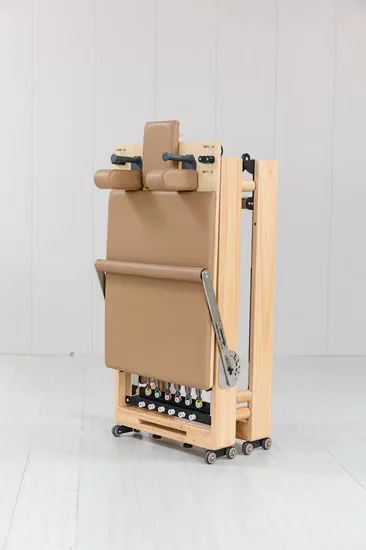
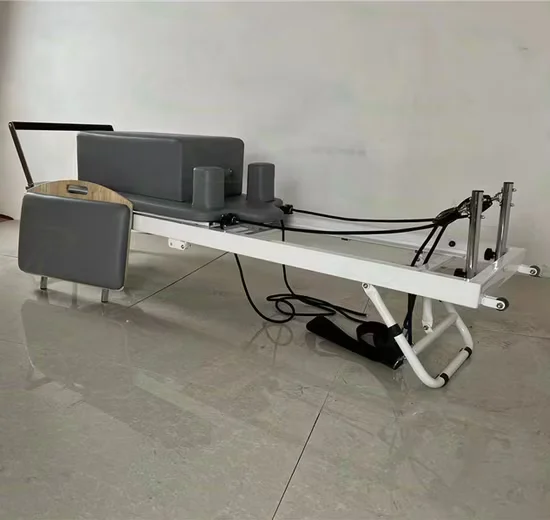
Naturally Silent Operation — Solid wood construction eliminates motor, belt and bearing noise entirely, making this apparatus compatible with shared residential floors and boutique studio environments.
Technical Specifications
| Parameter | Value |
|---|---|
| Product Type | Pilates Equipment |
| Material | Wood |
| Color | Solid Color (customization available) |
| Product Dimensions | 1100×770×980 mm |
| Net Weight | 50 kg |
| Max User Weight | Commercial-grade load capacity |
| Warranty | 3 Years |
| Customization | Logo and color available |
| Age / Gender | Adult / Unisex |
Application Suitability
| Deployment Scenario | Typical Use |
|---|---|
| Boutique Pilates studio apparatus floor | Core training, flexibility work and spinal articulation sequences |
| Hotel wellness and spa floor | Guest-accessible stretching and recovery station alongside reformer zones |
| High-end residential fitness room | Personal core and mobility training in shared building environments |
| Corporate wellness center | Employee flexibility sessions between meetings |
| Physical rehabilitation facility | Assisted stretching and controlled range-of-motion exercises |
Why Acoustic Performance Dictates Apparatus Selection on Shared Floors
A wooden ladder barrel generates zero mechanical noise, removing the most common source of wellness floor complaints before they occur.
When Pilates apparatus sits directly above guest rooms or beside treatment spaces, metal-frame equipment transmits low-frequency vibration through floor slabs every time a user mounts or dismounts. Facility operators discover this only after the first complaint reaches the front desk. Wood-frame apparatus avoids metal-on-metal contact at every joint, so the commercial Pilates ladder barrel wooden design performs silently even during high-frequency class rotation [NEED_CITE: acoustic transmission standards for wellness equipment on occupied floors].
Positioning Within the Studio Apparatus Layout
This ladder barrel fills the dedicated stretching and core isolation zone where reformers and cadillacs cannot reach. It supports full spinal articulation, hip flexor release and advanced balance work that requires the curved barrel contour and ladder rungs for progressive difficulty. In a multi-apparatus studio, it occupies a compact footprint between reformer stations, allowing instructors to rotate small groups through without congestion. The 1100×770 mm base fits standard studio spacing grids and accommodates users across a wide height range thanks to adjustable ladder positioning.
Daily Throughput and Deployment Environment Considerations
Solid wood apparatus does not carry a motor duty-cycle rating, but the joinery and upholstery must withstand repeated mounting, dismounting and sustained body-weight loading across dozens of sessions per day. Studios running back-to-back classes need stable floor contact and non-marring feet that grip hardwood or rubber flooring without creep. Because there are no electronic components, the commercial Pilates ladder barrel wooden unit requires no dedicated electrical circuit and introduces zero electromagnetic interference in spaces with sensitive audio or biometric equipment [NEED_CITE: load testing requirements for commercial Pilates apparatus]. Deployment on upper floors is straightforward since the 50 kg net weight avoids structural reinforcement concerns common with heavier steel-frame machines.
How Solid Wood Joinery Handles Repeated Loading
Wood-frame Pilates apparatus relies on mortise-and-tenon or dowel-reinforced joints rather than welded steel connections. This construction method distributes user load across a broader surface area at each connection point, reducing stress concentration that leads to fatigue cracking over time. The barrel curve itself is formed from laminated wood layers bonded under pressure, creating a contour that resists deformation under sustained body weight. Upholstery attachment points are recessed and reinforced to prevent tearing during vigorous stretching sequences. Unlike metal frames that can develop squeaks at bolt connections, properly maintained wood joints remain quiet throughout the equipment service life.
What Material Compromise Costs in a Commercial Setting
Apparatus built with particle board or low-density fiber cores cannot survive the repeated point-loading of daily studio use; joints loosen, barrel curves flatten and surface veneers chip within months. Metal-frame alternatives may offer lower unit cost but introduce audible squeaking and floor-transmitted vibration that generates complaints in shared-occupancy buildings. Facilities that selected underspecified apparatus report pulling entire sets from service for reupholstery and structural repair far sooner than projected [NEED_CITE: commercial Pilates equipment failure patterns in high-frequency studios]. The upfront savings disappear when replacement and member disruption costs are tallied.
Why This Product Line Meets Studio Procurement Requirements
The wood selection and joinery on this ladder barrel are verified through repeated load cycling that mirrors daily studio throughput. Every unit ships with material grade documentation so buyers can confirm species, density and treatment specifications match their procurement standard. Full OEM capability covers custom color staining, logo engraving and dimensional adjustments to align with facility branding. The compact footprint allows integration into 3D studio layout plans that account for reformer spacing, instructor sightlines and member circulation paths. Production capacity of 800 pieces per month supports multi-location rollout without extended lead times, and three-year warranty coverage reflects confidence in long-term structural integrity.
Documentation & Test Records
- CE declaration of conformity for commercial fitness apparatus
- Wood material grade and treatment certification
- Load-bearing durability test record for joints and barrel curve
- Noise level verification report confirming silent operation
- Dimensional and upholstery specification sheet
- OEM customization scope and approval documentation
Installation, Commissioning & Maintenance
- Position with minimum clearance on all sides for safe mounting and dismounting movements
- Verify floor levelness; use non-marring pads beneath the 1100×770 mm base to prevent creep
- Inspect all wood joints and fasteners after the first two weeks of studio use
- Wipe vinyl upholstery with pH-neutral cleaner after each session to prevent sweat degradation
- Re-torque ladder rung connections annually or per studio maintenance schedule
- Avoid placing near direct heat sources that may cause wood expansion or finish cracking
Equipment Selection and Layout Inquiry
Provide your studio floor area and full apparatus list to receive a 3D layout plan that positions the ladder barrel within member flow and instructor sightline requirements. Specify deployment floor level and adjacent room use so acoustic compatibility can be confirmed. Indicate target market for documentation language and any OEM branding requirements including color, logo and dimensional customization.
Frequently Asked Questions
Q: How does a wood-frame ladder barrel compare acoustically to metal-frame apparatus?
A: Wood frames eliminate the metal-on-metal contact points that generate squeaking and floor-transmitted vibration during use. In shared-occupancy buildings such as hotels and residential complexes, this means zero mechanical noise reaches adjacent or lower-floor spaces. Metal frames require periodic bolt tightening and lubrication to control noise, while properly joined wood maintains silent operation throughout its service life.
Q: What load testing applies to commercial wooden Pilates equipment?
A: Commercial-grade wooden apparatus undergoes repeated point-load and distributed-load cycling that simulates daily studio throughput across users of varying body weight. Joint integrity, barrel curve retention and upholstery attachment strength are all verified. Buyers should request the specific test record documenting cycle count and load values to confirm the equipment matches their facility usage profile.
Q: What OEM customization options are available for studio branding?
A: Customization covers color staining, logo engraving or embossing and dimensional adjustments to match facility identity. Minimum order quantities apply depending on the scope of modification. Buyers should provide brand guidelines and Pantone references early in the inquiry process so custom samples can be produced and approved before full production begins.
Q: How should ladder barrel spacing be planned in a multi-apparatus studio?
A: Allow sufficient clearance on all sides for users to mount, dismount and perform full-range stretching movements safely. The 1100×770 mm footprint fits standard studio grid spacing. Layout planning should also account for instructor sightlines, natural light positioning and member circulation paths between reformer zones and the stretching area.
Q: What maintenance does a wooden Pilates apparatus require in a high-traffic studio?
A: Regular maintenance includes wiping upholstery after each session, inspecting wood joints for tightness and checking non-marring floor pads for wear. Ladder rung connections should be re-torqued on an annual schedule. Avoid harsh chemical cleaners that strip wood finish. Studios running high daily throughput may need more frequent joint inspections during the first quarter of deployment.
![Wall-Mounted Yoga Pilates System Commercial Studio Unit [WARN] draft identifier mismatch](https://bicksport.com/wp-content/uploads/2026/08/wall-mounted-yoga-pilates-system-commercial-studio-unit-warn-draft-identifier-mismatch-e483ad.webp)