![Commercial Wood Plyometric Box for Elite Fitness Training [WARN] draft identifier mismatch](https://bicksport.com/wp-content/uploads/2026/08/commercial-wood-plyometric-box-for-elite-fitness-training-warn-draft-identifier-mismatch-e7e4b8.webp)
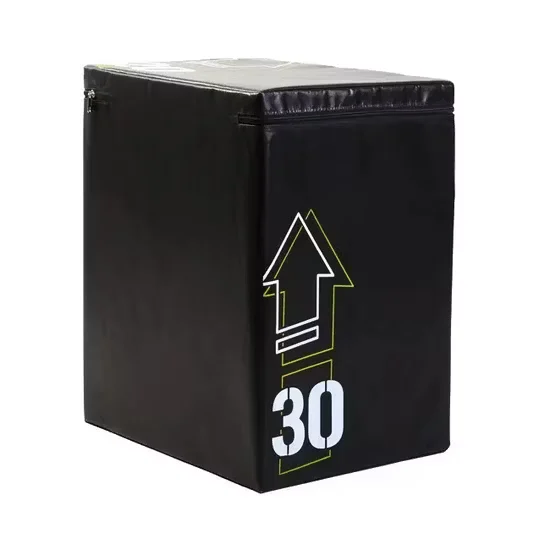
Impact-Tested Construction — Solid wood plyometric box engineered for repeated high-impact landings in commercial functional training zones.
Technical Specifications
| Parameter | Value |
|---|---|
| Product Type | Plyometric Box |
| Specification | 20"x24"x30" |
| Net Weight | 25kg |
| Custom Logo | Available |
| MOQ | 50 PCS |
| Trademark | WEKEEPING |
| Production Capacity | 10,000 / Year |
Application Suitability
| Deployment Scenario | Typical Use |
|---|---|
| Commercial gym functional training zones | Box jumps, step-ups, and depth jumps during group HIIT sessions |
| Professional sports training centers | Progressive plyometric programming for athletic performance development |
| Corporate wellness and community fitness centers | High-repetition functional circuits with multi-height progressions |
| Hotel fitness centers with functional zones | Durable jump platform for 24/7 guest access environments |
Why Plyo Boxes Fail Within Months in High-Traffic Functional Zones
Solid wood construction and reinforced joints prevent the cracking and splintering that plague particle-board alternatives under continuous box jump use.
In functional training zones where members cycle through box jumps and depth drops across dozens of sessions daily, the platform absorbs repeated high-impact landings that expose material fatigue quickly. Boxes built with inferior wood grades or unreinforced corner joints develop hairline cracks within weeks, eventually splintering under barefoot or shoe-sole contact and creating member safety complaints that force facility operators to pull equipment from the floor [NEED_CITE: commercial plyometric box durability standards for high-frequency use]. The commercial wood plyometric box plyo jump training platform addresses this with solid wood panels and joint reinforcement designed to withstand thousands of repeated impact cycles without structural degradation.
Positioning Within the Functional Training Zone
The 20"x24"x30" tri-height configuration supports progressive plyometric programming across beginner, intermediate, and advanced athlete levels without requiring multiple separate platforms. In a commercial functional zone, this plyometric box sits alongside kettlebells, battle ropes, and sleds as a foundational bodyweight power tool, complementing cardiovascular equipment by targeting explosive lower-body strength and reactive neuromuscular conditioning. The commercial wood plyometric box plyo jump training unit accommodates users across a wide weight range thanks to its 25kg mass, which keeps the platform grounded during intense lateral and vertical movements.
Deployment Considerations for Continuous High-Impact Environments
Facilities running functional training circuits six or more hours daily need to account for cumulative impact loading on the floor surface beneath the platform. Rubber flooring at minimum 15mm thickness absorbs residual shock transmitted through the box base, protecting both the subfloor and the box joints from compounding vibration damage [NEED_CITE: flooring specifications for plyometric training zones in commercial facilities]. Placement should maintain clearance on all sides to prevent collision risk during box jump approaches, and the zone should have adequate ceiling height for full-extension jumps. Unlike motorized cardio equipment, the plyo box requires no electrical supply or data connectivity, simplifying deployment in retrofit spaces where power access is limited.
Material Selection and Joint Engineering
Solid wood outperforms engineered wood and particle board in impact fatigue resistance because its continuous grain structure distributes landing forces across the panel rather than concentrating stress at bonding seams. The 20"x24"x30" dimensions create a stable base footprint that resists tipping even during off-center landings, while the 25kg unit weight provides inertia that prevents the platform from shifting or walking across the floor during consecutive repetitions. Multi-height design eliminates the need for separate single-height boxes, reducing floor clutter and allowing coaches to adjust difficulty by rotating the box rather than swapping equipment. Surface finish selection matters for splinter prevention: commercial-grade sanding and sealed coating protect against grain lift that develops under repeated shoe and barefoot contact [NEED_CITE: wood surface treatment standards for athletic equipment].
The Hidden Cost of Specifying Below Commercial Grade
Operators who source consumer-grade plyo boxes for commercial functional zones typically see corner joint failures within the first quarter of deployment, triggering replacement cycles that cost more annually than investing in commercial-spec units from the start. Splintered surfaces generate member injury reports and liability exposure that extend beyond equipment replacement costs into insurance and reputation damage. Lightweight boxes under 15kg shift during use, forcing coaches to interrupt sessions and reposition platforms, degrading training flow and member experience across high-throughput group classes [NEED_CITE: equipment failure rates comparing commercial versus consumer grade plyometric platforms].
Why This Product Line Fits Commercial Deployment
Solid wood construction and reinforced joint design deliver the impact durability that high-traffic functional zones demand, verified through repeated load testing protocols. The customizable logo and finish options allow facilities to integrate the commercial wood plyometric box plyo jump training units into branded functional zones without resorting to aftermarket vinyl applications that peel under sweat and shoe contact. MOQ at 50 units supports full-zone outfitting for new facility buildouts and multi-location chain rollouts. The production capacity of 10,000 units annually ensures consistent supply for large-scale procurement without extended lead times that delay facility opening schedules.
Documentation & Test Records
- Load-bearing and impact durability test records for solid wood construction
- Surface finish and splinter-resistance verification report
- Wood grade and joint reinforcement specification sheet
- Custom logo placement and color matching approval documentation
- Installation spacing guide and maintenance schedule
Installation, Commissioning & Maintenance
- Place on level rubber flooring minimum 15mm with clearance on all four sides for safe jump approaches
- Inspect corner joints and surface finish weekly for hairline cracks or grain lift in high-volume zones
- Rotate box orientation monthly to distribute impact wear evenly across all three height configurations
- Clean surfaces with non-abrasive, non-solvent cleaners to preserve sealed coating and prevent wood grain damage
- Reapply protective surface coating annually or when visible wear exposes untreated wood beneath the finish
Planning Your Functional Zone Procurement
Provide your functional training area dimensions and target unit count to receive a layout plan that accounts for jump approach clearance, member flow between stations, and equipment spacing for group class configurations. Specify whether units will serve dedicated athletic performance programming or general-access functional circuits to confirm appropriate volume and finish specifications. Confirm target market destination to ensure shipping documentation and packaging meet local import requirements.
Frequently Asked Questions
Q: What wood grade and joint construction is used for commercial durability?
A: The platform uses solid wood panels with reinforced corner joints engineered to withstand repeated high-impact landings without developing structural fatigue. Joint reinforcement prevents the separation failures common in stapled or glued consumer-grade boxes, and each unit undergoes load testing to verify performance under continuous commercial use before shipment.
Q: How does unit weight affect stability during high-intensity plyometric use?
A: At 25kg, the box has sufficient mass to resist shifting and tipping during consecutive box jumps and lateral step-ups without requiring floor anchoring. This weight provides stability during off-center landings while remaining manageable for staff who need to rotate the box between height configurations during coaching sessions.
Q: Can the box be customized with facility logo and color scheme?
A: Custom logo application and finish color matching are available for orders meeting the 50-unit MOQ, allowing facilities to integrate equipment branding into functional zone design. Color samples are provided for approval before bulk production to ensure the finish matches existing facility aesthetics and brand guidelines.
Q: What surface finish is applied to prevent splintering under repeated impact?
A: Each unit receives commercial-grade sanding followed by a sealed protective coating that prevents wood grain lift under shoe and barefoot contact. This finish preserves surface smoothness across thousands of impact cycles and can be reapplied during annual maintenance to extend the platform service life.
Q: How does multi-height design support progressive training programming?
A: The 20"x24"x30" tri-height configuration allows coaches to adjust difficulty by simply rotating the box rather than storing multiple single-height platforms. This supports progressive overload programming across different athlete capability levels while reducing equipment count and floor space requirements in functional training zones.